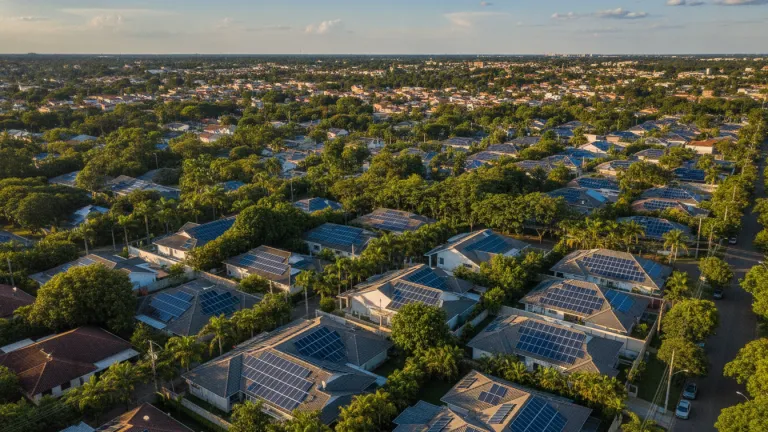
Does Solar Energy Pay for Itself in Brazil? Understanding Your Return on Investment Timeline
Brazil is one of the countries with the greatest solar potential in the world. Even the least sunny regions of the country receive solar irradiation levels higher than the European average — and Europe is a global reference in photovoltaic energy. Despite this, many Brazilians still hesitate when it comes to installing solar panels at home, mainly due to one legitimate concern: how long does it take for the investment to pay off?
The good news is that the scenario has evolved significantly in recent years. The costs of photovoltaic systems have dropped dramatically over the past decade, and Brazil’s regulatory framework — especially with the consolidation of Law No. 14,300/2022, which came into full effect — has created a more favorable environment for those who generate their own energy. By 2026, residential solar energy is already a reality for millions of Brazilians, and the number of installations in the country continues to grow.
In this article, we’ll explain clearly and practically how to calculate the return on investment timeline for solar energy in Brazil, which factors influence this timeline, and what you can do today to get started. If you’re considering this change, the following sections may provide the push you needed.
What is Solar Payback and Why It Matters
Payback is the time required for the savings generated by the solar system to cover the amount invested in installation. It’s the most important calculation for those evaluating the financial viability of solar panels.
In Brazil, the payback period for residential systems generally ranges between 4 and 8 years, depending on a series of variables. Since the useful life of modern photovoltaic panels is 25 to 30 years, this means that after the return period, the consumer generates energy for almost free for two decades or more.
To understand this number in greater depth, you need to know the factors that influence it.
Factors That Determine Solar Payback Time in Brazil
Geographic location and solar irradiation
Brazil has an enormous natural advantage. According to data from the Brazilian Solar Energy Atlas (published by INPE in partnership with other institutions), virtually the entire national territory receives global horizontal irradiation above 4.5 kWh/m²/day — values that make solar energy economically viable in any state.
The Northeast leads with rates frequently above 5.5 kWh/m²/day, which means more energy generation with the same system. But even in São Paulo, Rio de Janeiro, and southern Brazil, the numbers are quite favorable.
- Northeast and Center-West: higher generation, shorter payback
- Southeast and South: slightly lower generation, but still highly viable
- North (Amazon): high irradiation, but logistical challenges can increase installation costs
Cost of the photovoltaic system
The price of a residential solar system varies according to installed capacity, equipment quality, and the company responsible for installation. In 2026, a system of 3 to 5 kWp — sufficient for most residences with average consumption — can cost between R$ 15,000 and R$ 30,000, depending on the region and brands chosen.
This cost includes panels, inverter, mounting structure, cables, electrical protections, and labor. It’s essential to request at least three quotes and verify that the company is registered with ANEEL and certified by INMETRO.
Electricity tariff
The more you pay for electricity from your utility, the faster your solar system pays for itself. Rates vary significantly between states and tariff flags. States with historically high tariffs — such as Acre, Roraima, and some distributors in the Northeast — tend to offer shorter paybacks.
The current tariff flag (green, yellow, or red) also affects the calculation. During red flag periods, monthly savings increase, accelerating the return.
Compensation system: how net metering works
Law No. 14,300/2022 regulated the energy compensation system (net metering) in Brazil, ensuring that excess energy generated by the panels is injected into the electrical grid and credited on the consumer’s electricity bill. This is fundamental to maximizing system performance.
It’s worth noting that, according to current rules, compensation is made in energy credits (not cash), and there’s a minimum availability fee that continues to be charged even with your own generation. This detail should be considered in the viability calculation.
How to Calculate Solar Payback: Step by Step
You don’t need to be an engineer to make a realistic estimate. Follow this roadmap:
- Determine your average monthly consumption. Check your last 12 energy bills and calculate the average in kWh/month.
- Estimate system cost. Based on your consumption, request quotes for systems that meet 80% to 100% of your demand. Request proposals from at least three companies.
- Calculate your estimated monthly savings. Multiply the energy generated by the system (provided by the installer) by your current utility rate. Don’t forget to subtract the minimum availability fee.
- Divide the total system cost by monthly savings.
- Simplified example: R$ 20,000 system with R$ 400/month savings → 50-month payback (about 4 years)
- Adjust for future tariff increases. Historically, electricity rates in Brazil rise above inflation. This means savings tend to grow over time, shortening the actual payback period.
- Consider financing. If you finance the system, the monthly payment should be compared with the savings generated. In many cases, the payment is less than the savings, making cash flow positive from day one.
- Check tax incentives. Several Brazilian states exempt ICMS tax on energy generated by residential solar systems. Some municipalities also offer IPTU discounts for properties with installed panels. Check local regulations.
Practical Simulation: Three Consumption Profiles
The table below illustrates payback estimates for different residential consumer profiles, considering an average Brazilian scenario in 2026. Attention: values are illustrative and should be confirmed with actual quotes in your region.
| Profile | Average consumption/month | Estimated system | Approximate cost | Estimated monthly savings | Estimated payback |
|---|---|---|---|---|---|
| Small apartment | 150 kWh | 1.5 kWp | R$ 8,000–12,000 | R$ 150–250 | 4–6 years |
| Average home | 350 kWh | 3–4 kWp | R$ 18,000–25,000 | R$ 350–500 | 4–7 years |
| Large home / air-conditioning | 600 kWh | 5–6 kWp | R$ 25,000–35,000 | R$ 550–800 | 4–6 years |
Is Solar Energy Worth It Even With Financing?
Yes, in many cases. Specific credit lines for solar energy are offered by public and private banks, with terms of up to 84 months and competitive rates. Banco do Brasil, Caixa Econômica Federal, and BNDES have lines dedicated to this segment.
The logic is simple: if the monthly financing payment is less than your electricity bill savings, you start earning from day one, even without paying the full amount upfront.
Practical tip: when simulating financing, ask the installer to present the comparative cash flow between the payment and projected savings month by month.
Benefits Beyond Financial Returns: Environmental and Property Value
Solar energy returns aren’t just monetary. There are other concrete benefits that enter the equation:
- Property value appreciation: real estate market studies show that properties with installed solar systems tend to be valued higher and have greater liquidity in the market.
- Reduced carbon footprint: solar generation avoids greenhouse gas emissions associated with thermal power plants that make up part of Brazil’s electricity matrix, especially during periods of water scarcity.
- Energy independence: with storage batteries (gradually being adopted in Brazil), it’s possible to have power even during blackouts.
- Contribution to the planet: every kilowatt-hour generated by the sun is one kilowatt-hour that doesn’t need to be produced by polluting sources. For those already adopting other sustainable practices — such as reducing meat consumption or growing food at home — solar energy is a natural and powerful step.
If you want to better understand the universe of clean energy sources available, it’s worth checking out this comprehensive guide on types of renewable energy that we published here on the blog.
Checklist Before Installing Your Solar System
Before closing a contract, make sure you:
- Analyzed at least 12 months of energy bills
- Requested quotes from at least three different companies
- Verified that the installation company is authorized with ANEEL and certified by INMETRO
- Confirmed that the electrical project will be submitted to your local utility (mandatory by law)
- Understood the compensation system conditions (net metering) of your utility
- Checked for ICMS and IPTU incentives in your state and municipality
- Evaluated the financing option and compared the payment with projected savings
- Read the warranty terms for panels (usually 25 years performance) and inverter (5 to 12 years, depending on manufacturer)
Conclusion: The Time to Act Is Now
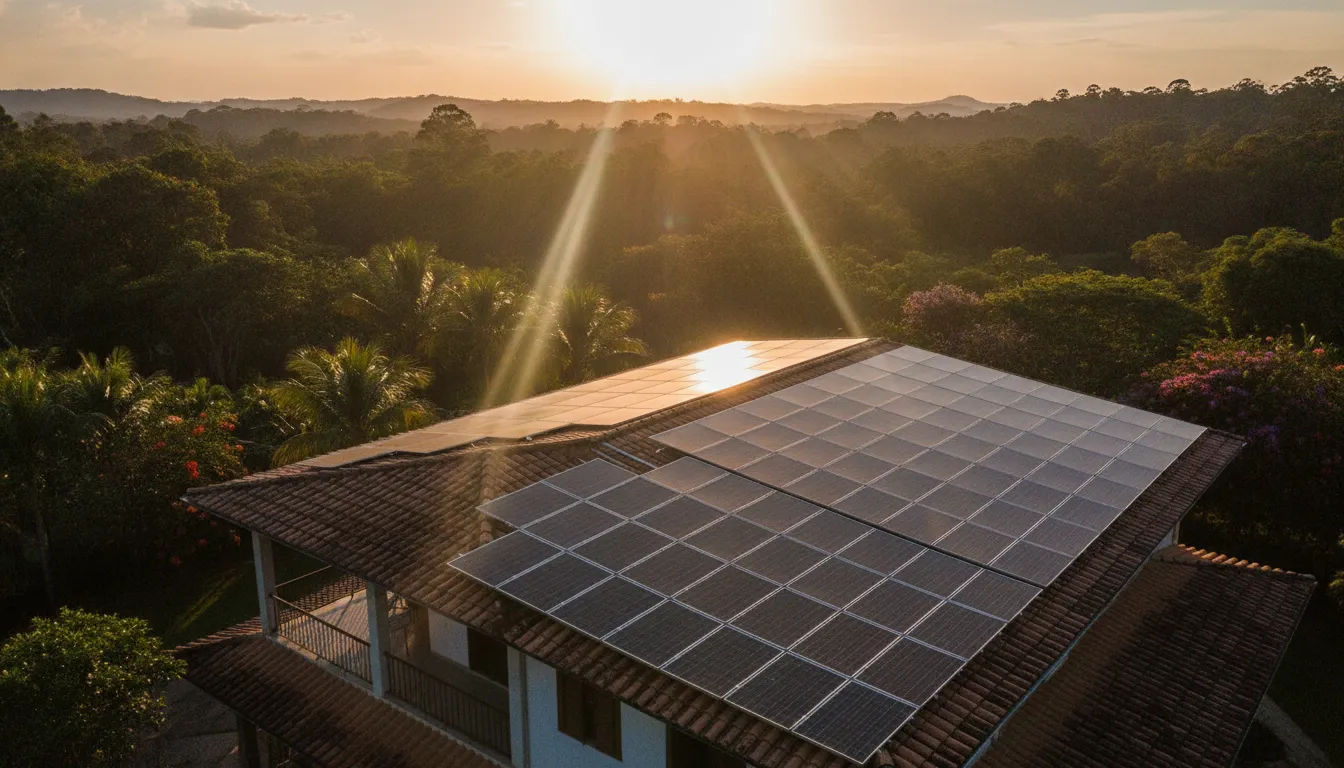
By 2026, the question is no longer “is solar energy worth it in Brazil?” — the answer for the vast majority of homes is yes. The more relevant question now is: when will you get started?
With payback periods ranging from 4 to 8 years on a system with a useful life of 25 to 30 years, solar energy represents one of the smartest financial and environmental decisions a Brazilian can make today. You save on your electricity bill, increase your property value, and actively contribute to a cleaner future.
The first step is simple: grab your last energy bill, note your average monthly consumption, and request a quote. From there, the numbers speak for themselves.
The planet thanks you — and so does your wallet.
