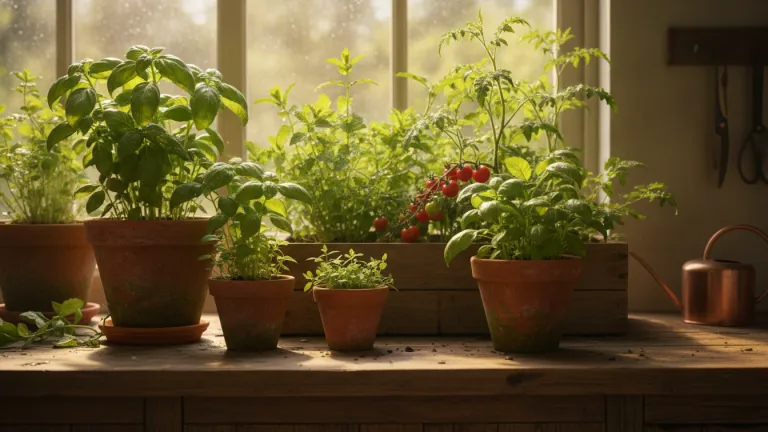
Home Gardening: Easy Guide for Beginners
Have you ever stopped to think that a small pot on your windowsill could be the beginning of a completely different relationship with nature — and with what you eat? Growing plants at home is one of the most accessible, satisfying, and sustainable practices anyone can adopt, regardless of apartment size or previous gardening experience. You don’t need a backyard, a tractor, or an agronomy degree: just willpower, a little patience, and the right guidance.
In 2026, with urbanization advancing at a rapid pace — according to IBGE data, more than 87% of Brazil’s population already lives in urban areas — reconnecting with the growth cycle of plants goes far beyond a hobby. Cultivating your own food, even on a small scale, reduces dependence on long distribution chains, decreases plastic waste, and puts something invaluable on your table: the certainty of knowing where it came from.
This guide was designed for those starting from zero. We’ll walk through each step together, from choosing what to plant to harvesting your first results — with practical tips, no complications, and plenty of encouragement to take your first step today.
Why Home Gardening Makes a Difference for the Planet
Before talking about pots and seeds, it’s worth understanding the real impact of this choice. Conventional agriculture is responsible for a significant portion of global greenhouse gas emissions, and much of that impact comes from the transportation, refrigeration, and packaging of the food that reaches us.
When you grow herbs, greens, or vegetables at home, you drastically shorten that path. In addition, plants in indoor spaces and balconies contribute to improving local air quality, help regulate room temperatures — reducing air-conditioning use — and create green islands amid urban concrete.
There’s also a less measurable but equally real benefit: well-being. Research in environmental psychology indicates that regular contact with plants is associated with stress reduction and improved mood. Home gardening cares for the planet and for you at the same time.
Choosing What to Plant: The Best Options for Beginners
Choosing the wrong plant can discourage anyone right at the start. That’s why begin with species that forgive the most common beginner mistakes: too much or too little water, irregular light, inadequate soil.
Aromatic herbs: the perfect entry point
Herbs are by far the best choice for those starting out. They grow quickly, fit in small pots, tolerate indoor environments, and have immediate culinary use.
Recommendations for beginners:
- Basil — loves direct light and heat; perfect for sunny windows
- Chives — extremely resistant; tolerates watering variations
- Parsley — grows well in partial shade; ideal for kitchens without large windows
- Mint — grows vigorously; be careful not to mix with other plants (it takes over the space)
- Rosemary — requires little water; excellent for those who forget to water
Compact leafy greens and vegetables
- Lettuce and arugula grow quickly (harvest in about 30 to 40 days) and adapt well to planters
- Spinach tolerates environments with less direct light
- Kale is robust and can be harvested leaf by leaf for months
Options for those with a balcony or outdoor area
- Cherry tomatoes in pots of at least 15 liters
- Chili peppers and bell peppers in medium pots with good sun exposure
- Cucumber with vertical support (takes advantage of vertical space)
What You’ll Need: Essential Materials to Get Started
The good news is that you don’t need to spend much to set up your first home garden. Many materials can be reused or improvised creatively.
Basic materials list:
- Pots or containers with drainage holes (can be milk cartons, cut PET bottles, old buckets)
- Quality potting soil — avoid pure garden soil, which compacts and suffocates roots
- Organic fertilizer (worm castings or organic compost are great options and ecologically correct)
- Watering can with a fine nozzle to avoid damaging seedlings
- Seeds or seedlings (seedlings speed up the process for those who want faster results)
- Small plates to catch excess water
Sustainable tip: before buying new pots, check what you already have at home. Tin cans, yogurt containers, and even old shoes can become creative containers — with proper drainage, anything works.
Step by Step: How to Plant Aromatic Herbs from Scratch
If you’re planting for the first time, follow this guide at your own pace. We’ll use basil as an example, but the logic applies to most herbs.
- Choose the container: use a pot with at least 15 cm depth and make sure it has holes in the base for drainage.
- Prepare the potting soil: mix commercial vegetable potting soil with worm castings in approximately 3 parts soil to 1 part castings. This ensures nutrition and good drainage.
- Plant the seeds or seedling: if using seeds, spread them superficially and cover with a thin layer of soil (about 0.5 cm). If using a seedling, make a central hole, insert the seedling, and press the soil lightly around it.
- Water carefully: moisten the soil without waterlogging. The soil should be moist, never soggy — excess water is the number one cause of potted plant death.
- Position in the right place: basil needs at least 4 to 6 hours of direct sun per day. Windows facing north or west are usually ideal in Brazil.
- Maintain a regular watering routine: on hot days, watering once a day may be necessary. Touch the soil with your finger: if the first 2 cm are dry, it’s time to water.
- Make your first harvest at the right time: when the plant reaches at least 15 to 20 cm, start harvesting from the upper branches, never removing more than a third of the plant at once. This encourages growth.
Light, Water, and Soil: The Triangle of Plant Health
Understanding these three elements solves most problems a beginner can face.
Light: the fuel of plants
Without enough light, the plant “stretches” toward the window, becomes weak and yellowish. If your environment has little natural light, prefer shade species like parsley, cilantro, and some lettuce varieties. Full-spectrum LED lamps (called “grow lights”) are an affordable alternative for those without sunny windows.
Water: less is more (almost always)
The most common mistake beginners make is watering too much. Excess water prevents root oxygenation and causes rot. The practical rule: only water when the first few centimeters of soil are dry to the touch.
Soil: the foundation of everything
Common garden soil tends to compact in pots, harming roots. Invest in good commercial potting soil and enrich it with organic compost. If you already compost at home, your mature compost is perfect for this — and reducing city pollution starts with you when we make use of what we produce.
Common Mistakes and How to Avoid Them
| Mistake | Why it happens | How to fix it |
|---|---|---|
| Overwatering | Lack of routine or excessive care | Touch the soil before watering |
| Pot without drainage | Improvised container without holes | Make holes with a drill or hot nail |
| Insufficient light | Inadequate pot placement | Move closer to window or use grow light |
| Inadequate soil | Use of pure garden soil | Mix with commercial potting soil and compost |
| Early harvest | Beginner’s eagerness | Wait for the plant to reach minimum maturity |
Going Further: Composting and Closed-Loop Cycle
When you start growing plants, you naturally produce organic waste: peels, stalks, old leaves. Instead of throwing it away, you can turn this material into fertilizer for your own plants.
Home composting — whether in worm bins (vermicomposting) or simple plastic box composters — is compatible with apartments and produces no odor when done correctly. The result is a rich compost that feeds your plants without the need for chemical fertilizers.
This closed-loop cycle — plant, harvest, compost, fertilize — is the essence of truly sustainable home gardening. Each step reinforces the other, and you’ll realize that kitchen “waste” has value you’d never seen before. For other ways to reduce your daily impact, it’s worth taking a look at how offsetting your carbon footprint goes beyond just one action.
Conclusion: Your Garden Starts with a Single Pot
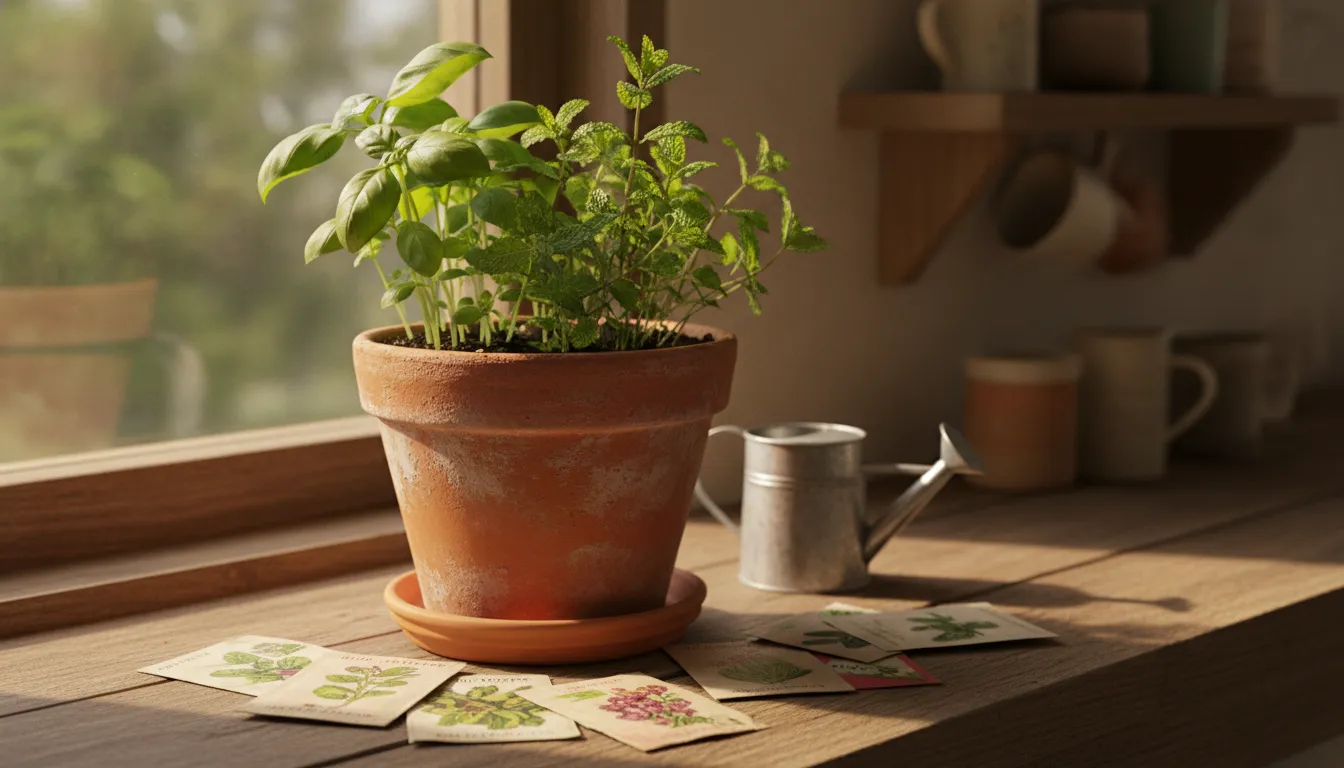
Don’t wait for the ideal space, the perfect kit, or the right moment. Start with what you have — a pot, a yogurt cup, a single chive seed. Home gardening doesn’t need to be grand to be meaningful.
Every leaf you harvest from your own plant is a small victory: over automatic consumerism, over the distance from nature, over the idea that caring for the planet is something others will do for you. Home gardening is an act of autonomy, connection, and responsibility — all at the same time.
Take your first step this week. Buy a chive seedling, find a container, place it near the window. In a few days, you’ll see new sprouts and understand, in practice, what it means to be part of something bigger. The planet is grateful — and so is your kitchen.
