Have you ever stopped to think about the air you breathe when you leave home in the morning? In Brazil’s major cities, this simple question carries enormous weight. Urban pollution is not just an aesthetic issue — dark smoke, gray skies — it directly affects the health of millions of people, shortens lives, and accelerates climate change. According to the World Health Organization (WHO), air pollution is considered one of the greatest environmental risks to human health in the world, responsible for millions of premature deaths annually on a global scale.
Brazil, with its enormous urban population concentrated in metropolises like São Paulo, Rio de Janeiro, Belo Horizonte, and Manaus, faces serious challenges in this area. Vehicles, industries, wildfires, waste, and even improper disposal of everyday products contribute to a cocktail of particles and gases that make city air increasingly difficult to breathe. The good news — and this article exists because of it — is that a significant part of this equation depends on our daily choices.
This is not about blaming individuals for a structural problem. It is about recognizing that real change happens when public policies, collective behavior, and individual actions move forward together. And you, reader, have a genuine role in this story. See what is possible to do now.
Why urban pollution is still such a serious problem in 2026
Despite technological advances and growing environmental awareness, Brazilian cities continue to face frequent episodes of poor air quality. In São Paulo, the vehicle rotation system has existed for decades, but the fleet has grown much faster than public transportation and cycling infrastructure. The result is congested traffic that emits pollutants for many more hours than necessary.
Urban pollution is composed of a complex mixture of agents: fine particulate matter (PM2.5 and PM10), nitrogen dioxide (NO₂), sulfur dioxide (SO₂), tropospheric ozone, and volatile organic compounds. Each of these elements has different effects on human health, from respiratory irritation to chronic cardiovascular and pulmonary diseases. More vulnerable groups — children, the elderly, people with asthma or heart conditions — feel these effects more immediately.
Beyond health, there is the climate impact. The same processes that pollute city air also release greenhouse gases into the atmosphere. The IPCC (Intergovernmental Panel on Climate Change) consistently reinforces that emissions from transportation and fossil fuel combustion in urban areas are one of the main sources of CO₂ and methane on a global scale. Solving local pollution and tackling the climate crisis are, in large measure, the same challenge.
The real role of transportation in urban emissions
The transportation sector is by far the biggest culprit in air quality in Brazilian cities. Vehicles powered by gasoline, diesel, and ethanol emit not only CO₂ but also particulate matter, carbon monoxide, and nitrogen oxides — especially when engines are poorly maintained or when traffic is congested.
But here lies an enormous opportunity for the average citizen. Mobility choices have direct and immediate impact. See some concrete alternatives:
- Using public transportation significantly reduces the number of vehicles on the streets, even though buses or subways also emit pollutants — the balance per passenger transported is much more favorable.
- Cycling is the zero-emission option par excellence for distances up to 10 km, and cycling infrastructure in many Brazilian cities has grown in recent years.
- Walking for short trips completely eliminates emissions and brings health benefits.
- Shared rides (carpooling) with coworkers or neighbors reduce the number of cars in circulation without giving up a vehicle.
- Remote or hybrid work, when possible, is one of the most effective ways to reduce daily commute emissions.
If you need a car, prefer vehicles with up-to-date maintenance — a well-tuned engine emits fewer pollutants. And if you are considering replacing your vehicle, electric and plug-in hybrid vehicles are increasingly accessible options in the Brazilian market. To dive deeper into this topic, check out our complete guide on sustainable transportation: options for better mobility.
How to reduce pollution inside your home (and in your neighborhood)
Many people don’t know that pollution starts inside the home. Cleaning products with volatile organic compounds, aerosol sprays, paints, varnishes, and even cigarette smoke release substances that, in enclosed spaces, can be more concentrated than outdoor air — and, when released outside, contribute to urban pollution.
Step by step to reduce household pollutants
- Replace conventional cleaning products with versions without chlorine, ammonia, and harsh petrochemical compounds. Homemade recipes with baking soda, vinegar, and essential oil work for most household tasks.
- Avoid aerosol sprays (deodorants, insecticides, cleaning products) whenever there is an alternative in solid, liquid with manual pump, or concentrated packaging.
- Do not burn trash in your yard or on nearby lots. In addition to being illegal in most Brazilian municipalities, burning waste releases dioxins and highly harmful particulate matter.
- Dispose of correctly batteries, electronics, and fluorescent bulbs. These items contain heavy metals that, in common trash, contaminate soil, water, and air.
- Choose low-VOC paints and varnishes (volatile organic compounds) for your next renovation. Several options already exist in the national market with less impact.
Conscious consumption: the invisible link between purchases and urban pollution
Every product you buy has a production and logistics chain. The shorter and cleaner this chain, the lower the environmental impact. But there are more direct choices that clearly impact urban pollution:
- Buy local whenever you can. Products from farmer’s markets, regional producers, or neighborhood stores travel shorter distances by truck, reducing diesel emissions.
- Avoid unnecessary fragmented deliveries. Consolidating online purchases into fewer deliveries reduces the number of vehicles in circulation — especially motorcycles and vans, which circulate in large quantities in cities and emit pollutants in frequent stop-and-start conditions.
- Reduce beef consumption. Livestock farming is one of the largest sources of methane — a very potent greenhouse gas — and is also associated with wildfires in the Amazon and Cerrado, whose impact on air quality reaches cities hundreds of kilometers away.
- Prefer products with recyclable or reusable packaging. Incineration or improper disposal of plastics and other materials is a direct source of air pollution.
Urban trees: the oldest and most underestimated solution
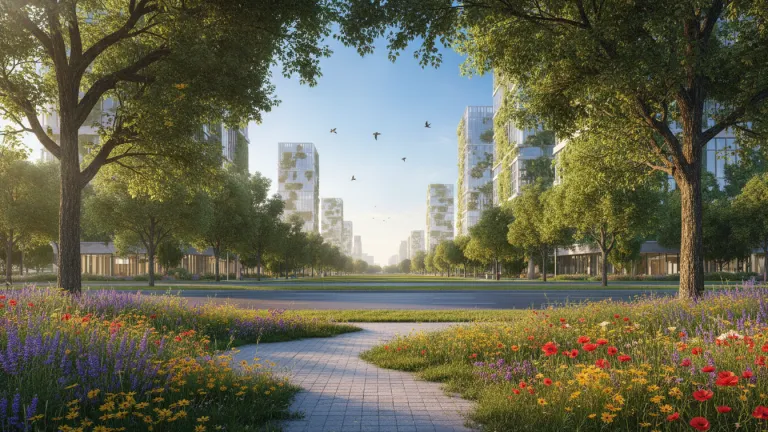
Planting trees is not just symbolic. Urban vegetation filters air particles, absorbs CO₂, reduces city temperatures (fighting so-called “heat islands”), and improves the psychological well-being of the population. Neighborhoods with more vegetation have, demonstrably, better air quality.
What you can do:
- Adopt a tree-lined sidewalk. Many city governments have free seedling donation programs. Inquire in your city.
- Take care of existing trees. Do not cut branches unnecessarily, do not throw trash at the base of trees, and report cases of vandalism or disease to the appropriate authorities.
- Support or participate in planting initiatives promoted by neighborhood associations, NGOs, or city governments.
- Create a vertical garden or urban farm on your balcony or window. Even in apartments, potted plants help purify indoor and outdoor air.
Collective engagement: when the individual becomes a movement
There is a limit to what individual actions can achieve on their own. Urban pollution has structural causes — aging vehicle fleet, lack of quality public transportation, weak industry oversight, absence of cycling infrastructure — that demand collective and policy responses.
This does not mean you are powerless. It means your individual action gains strength when added to that of others. Some ways to amplify impact:
- Vote for candidates with serious environmental agendas in municipal and state elections. Cities are governed by local policies, and air quality is directly affected by municipal decisions.
- Participate in or support local environmental organizations that push for more bike lanes, rigorous vehicle inspection, parks, and industrial emission monitoring.
- Talk about the topic with friends, family, and colleagues. Collective awareness begins in everyday conversations.
- Demand transparency from companies where you work or from which you consume. Organizations committed to responsible environmental practices — in what we call ESG in companies — tend to have less impact on urban air quality.
A practical summary: what to do today, this week, and this month
| Timeframe | Action |
|---|---|
| Today | Walk or use public transportation for a short trip |
| Today | Do not burn trash; dispose of waste properly |
| This week | Replace a cleaning product with an eco-friendly version |
| This week | Consolidate online purchases into a single delivery |
| This month | Inquire about seedling donation programs at your city hall |
| This month | Participate in a local community environmental initiative |
| Throughout the year | Evaluate changing your daily transportation mode |
Conclusion: breathing better depends on all of us
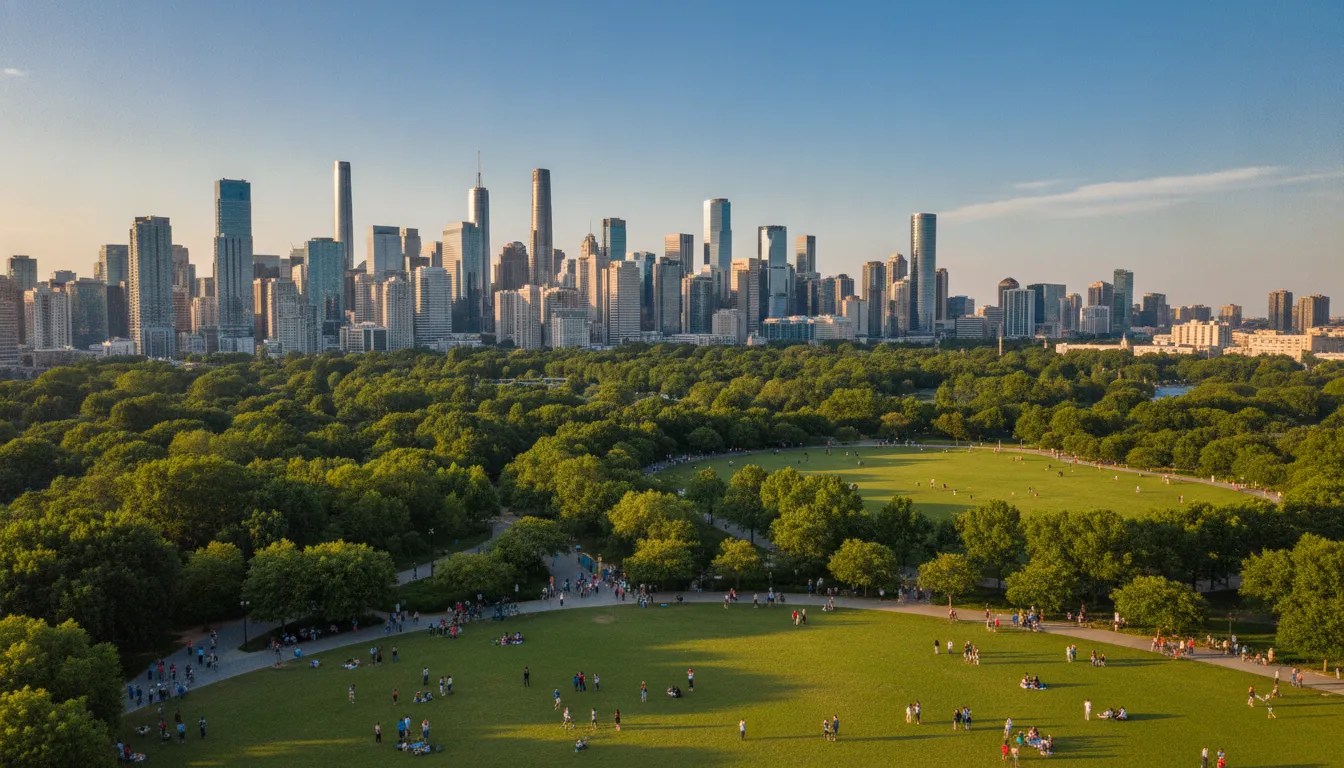
Pollution in cities is not inevitable. It is the result of choices — by governments, companies, and people. And, therefore, it can be reversed with different choices. The scenario is not perfect and the challenges are real, but the tools are available: cleaner technology, alternative transportation, conscious consumption, urban greening, and civic engagement.
You do not need to do everything at once. Start with one change, consolidate the habit, and add another. Over time, these choices create an identity, influence people around you, and fuel a collective demand for healthier cities. Reducing pollution in cities starts with you — but it does not end there.
The air you will breathe tomorrow depends, in part, on what you decide to do today.
