Why preserving food at home is a powerful environmental act
Have you ever opened the refrigerator and found that wilted lettuce leaf, the softened tomato, or the container of leftovers forgotten for days? This scene, repeated in millions of Brazilian homes, has a much larger cost than it appears on the supermarket receipt. Food waste is now one of the most urgent environmental problems — and also one of the ones that has the most solutions within our own homes.
According to the United Nations Food and Agriculture Organization (FAO), about one-third of all food produced in the world for human consumption is lost or wasted along the supply chain. In Brazil, estimates from IBGE and researchers in the field point out that waste occurs at all stages — from harvest to plate — with a significant portion happening precisely at the domestic level. This represents not only money thrown away, but also water, energy, land, and labor wasted with each food item that goes to the trash.
The climate impact is real: when organic foods decompose in landfills without access to oxygen, they release methane, a gas with global warming potential far superior to CO₂ in the short term. Reducing waste at home is, therefore, one of the most concrete and immediate actions any person can take for the planet — and the good news is that there are simple, inexpensive, and effective techniques to do this.
What happens to the food you throw away
Before talking about solutions, it’s worth understanding the cycle each food has gone through before reaching you. Producing 1 kg of beef, for example, requires an enormous amount of water, feed, pasture, and energy over months. A head of lettuce required irrigation, seeds, transportation, and refrigeration. When this food goes to the trash without being consumed, all that environmental investment goes with it.
The methane generated by the decomposition of organic matter in landfills is a problem that the IPCC (Intergovernmental Panel on Climate Change) identifies as relevant in emissions from the waste sector. Moreover, waste pressures the food system to produce even more to meet the same demand, intensifying the use of pesticides, deforestation, and water consumption in already-pressured regions.
Changing this scenario begins in your home refrigerator.
Refrigerator organization: the first step to better preservation
The way you organize your refrigerator directly influences the shelf life of food. Many people store everything haphazardly and are then surprised when items spoil ahead of schedule.
How to organize your refrigerator to keep food fresh longer
- Apply the FIFO method (First In, First Out): place older foods in front and newly purchased items in back. This way, you always consume what has been there the longest first.
- Respect temperature zones: the coldest part of the refrigerator (usually the middle and bottom shelves) is ideal for meats, dairy, and leftovers. The vegetable drawer has controlled humidity — use it for greens and vegetables.
- Don’t store everything together: fruits that release ethylene (like bananas, apples, and pears) accelerate the ripening of nearby vegetables. Store them separately or in sealed containers.
- Maintain the correct temperature: the refrigerator should operate between 1°C and 4°C. Higher temperatures create favorable conditions for bacteria.
- Use transparent containers: when you can see what you have stored, the chances of forgetting are lower. Glass containers with lids are excellent allies.
- Avoid storing hot foods: let them cool before placing in the refrigerator to avoid raising the internal temperature and compromising other items.
Preservation techniques that actually work
In addition to organization, there are proven conservation methods that significantly extend the shelf life of foods — many of them used for centuries.
Freezing: your greatest ally against waste
Freezing is one of the most effective tools to prevent waste. When done properly, it preserves flavor, texture, and nutritional value for weeks or months.
- Raw meats: can be frozen for 3 to 6 months, depending on the type.
- Bread and pasta: slice before freezing to make thawing the right portion easier.
- Ripe fruits: bananas, strawberries, and mangoes freeze very well and are great for smoothies and drinks afterward.
- Fresh herbs: chop and freeze in ice cube trays with a little water or olive oil. Ready to use for seasoning.
- Cooked beans and chickpeas: freeze in portions and avoid cooking from scratch every week.
Important tip: label everything with the name and freezing date. Without this, the food tends to be forgotten and ends up in the trash anyway.
Preserves and fermentation: tradition that saves food
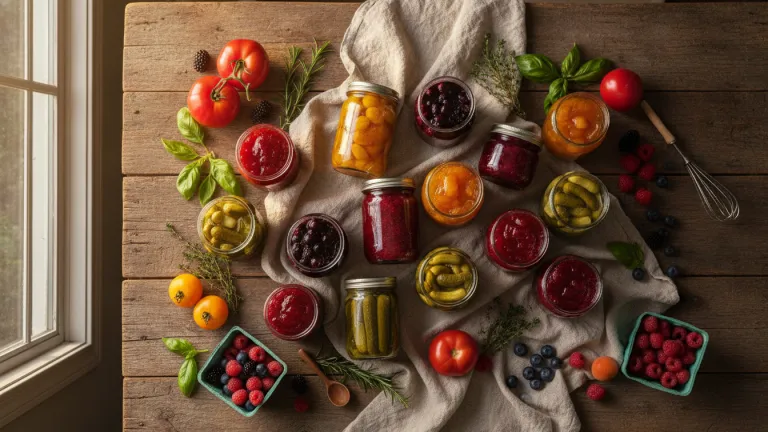
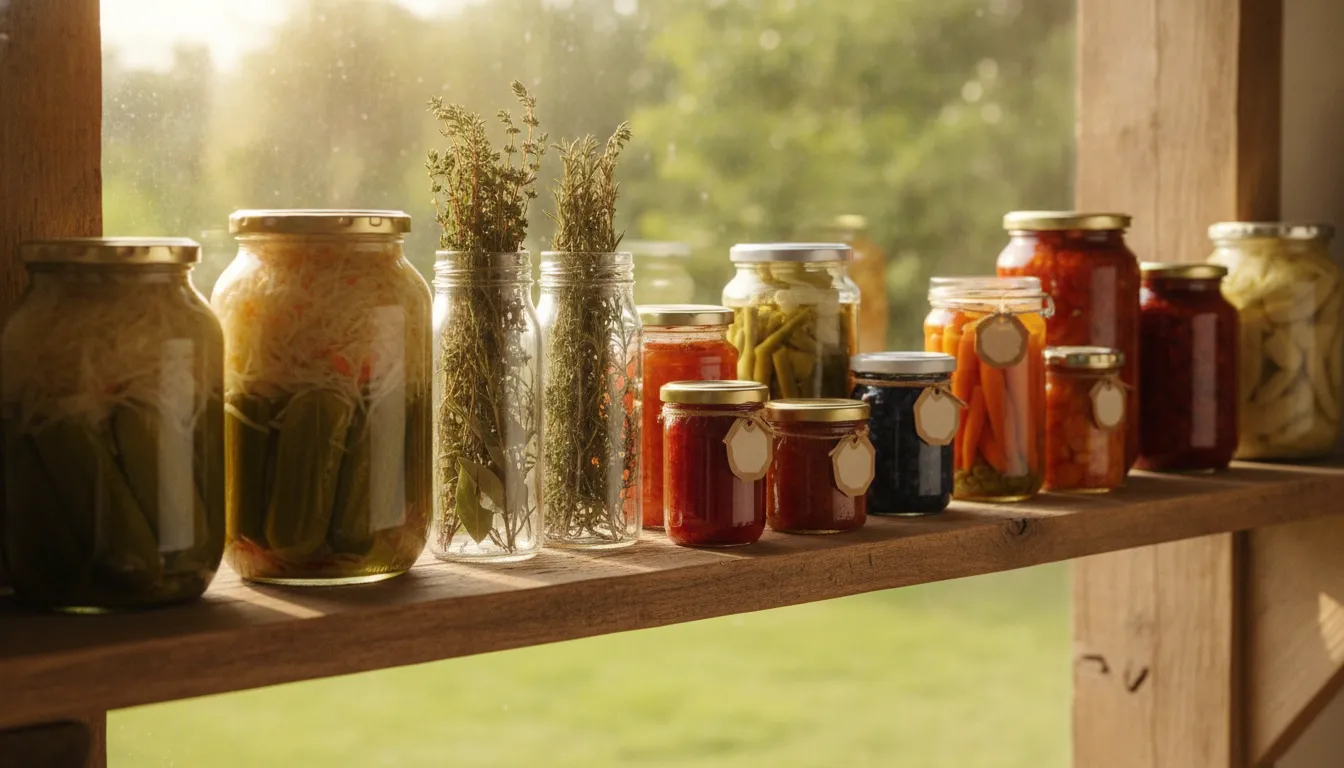
Vinegar preserves (pickles) and natural fermentation (such as sauerkraut and kimchi) are ancient techniques that allow you to preserve vegetables for weeks or even months outside the refrigerator, once prepared.
- Carrots, cucumbers, onions, and peppers become delicious in quick vinegar preserves with water, salt, and sugar.
- Lactic acid fermentation, in addition to preserving, increases the bioavailability of some nutrients and benefits gut microbiota.
Blanching before freezing vegetables
Vegetables like broccoli, green beans, and spinach lose quality if frozen raw. Blanching — quickly dipping in boiling water and then in ice water — stops the action of enzymes that cause deterioration and preserves color, texture, and flavor.
Menu planning: the root of the solution
No preservation technique substitutes for planning. Most foods wasted at home were purchased without a clear plan for use.
How to plan purchases and meals to avoid waste
- Take an inventory before going to the market: see what you already have at home, especially items close to expiration.
- Create a simple weekly menu: it doesn’t have to be rigid, but having an idea of what will be prepared prevents impulsive purchases.
- Make a list and follow it: shopping without a list often results in excess and foods that are forgotten.
- Prefer to buy less and more frequently for perishable products, rather than making large stockpiles that aren’t always consumed.
- Plan meals that use common ingredients: this way, you avoid buying half a bunch of parsley to use just a spoonful.
This habit connects directly to what we covered in the article Conscious shopping: habits that make a real difference — small decisions at the moment of purchase have enormous impact over time.
What to do with leftovers and “disposable” parts of foods
One of the most powerful mindset shifts is to stop seeing certain parts of foods as trash.
Whole food utilization
- Stems of kale, broccoli, and parsley can be sautéed, used in soups, or blended into green juices.
- Peels of beets, carrots, and zucchini (well washed) can be roasted or fried as chips.
- Carrot tops and leaves work well in vegetable broths.
- Stale bread becomes French toast, croutons, breadcrumbs, or savory pie crust.
- Leftover rice and beans transform into fritters, soups, or baked rice.
- Very ripe fruits are perfect for cakes, homemade jams, or smoothies.
This whole utilization — known in some countries as “nose-to-tail” for meats and “root-to-leaf” for vegetables — drastically reduces the volume of waste generated and still diversifies your meals.
When food spoils anyway: what to do with organic waste
Even with all care, something will spoil. The correct destination for organic waste is not the landfill.
Home composting transforms food scraps into nutrient-rich fertilizer for plants — and can be done in apartments with compact composters or worm bins. You eliminate the methane that would be generated in the landfill and still produce material for a garden or plants.
Cities like São Paulo, Curitiba, and Belo Horizonte already have organic waste collection points or community composting programs — it’s worth researching what exists in your city.
And if you cook with oil, it’s also worth reading Used cooking oil: what to do to avoid pollution — disposing of oil incorrectly is another common mistake with serious environmental consequences.
Practical checklist: 15 anti-waste habits to adopt today
- Organize your refrigerator with older foods in front
- Label everything going to the freezer with name and date
- Create a weekly menu before going shopping
- Shop with a list and avoid impulse purchases
- Use edible stems, peels, and leaves
- Freeze ripe fruits before they spoil
- Make quick preserves with leftover vegetables
- Use transparent containers for leftovers and ingredients
- Prepare soups and sautés with what’s left in the fridge
- Freeze fresh herbs in ice cubes with olive oil
- Start a home composter or find local composting points
- Check what you have at home before each shopping trip
- Keep refrigerator temperature between 1°C and 4°C
- Blanch vegetables before freezing
- Plan at least one weekly meal using only what you already have
Conclusion: every food saved is a real victory
Preserving food at home doesn’t require high investment or a revolution in routine. It requires attention, a bit of planning, and the willingness to experiment with new habits. Over time, these practices become natural — and results appear both in your grocery bill and in the knowledge that you’re contributing in a concrete way to a more just and sustainable food system.
Food waste is a collective problem, but the solution starts with individual choices repeated day after day. Each banana frozen before rotting, each leftover transformed into a new meal, each preserve made with what was left from the week represents a small victory with real impact.
Start with just one change — organize your refrigerator today, or make a list before your next shopping trip. Then add another. The planet thanks you, and your wallet does too.
