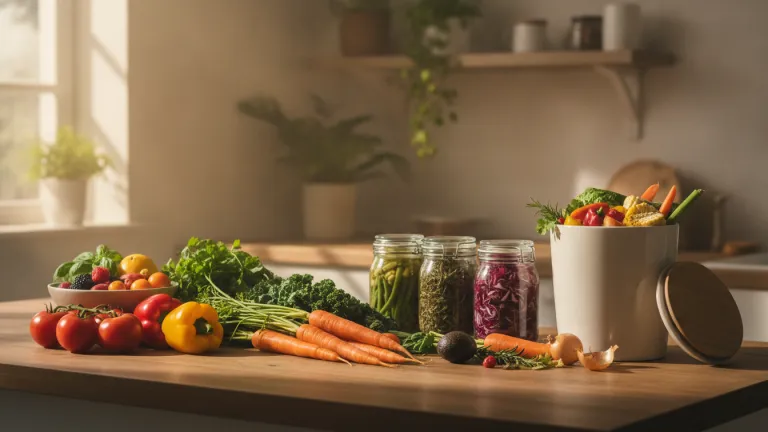
You open the refrigerator and find that head of lettuce wilting in the corner, yogurt that expired yesterday, and leftover rice that no one will eat. Sound familiar? For most families, this scenario repeats every week — almost without us noticing. Food waste at home is silent, constant, and costs much more than the value thrown in the trash.
According to the Food and Agriculture Organization of the United Nations (FAO), about one-third of all food produced worldwide for human consumption is lost or wasted along the supply chain. In Brazil, studies conducted by Embrapa and Instituto Akatu indicate that waste occurs at all stages — from production to final consumption — and that the household environment is responsible for a significant portion of this problem. At the same time, IBGE data shows that a considerable portion of the Brazilian population still faces food insecurity, making the contrast even more urgent.
The good news is that small habit changes at home can make a real difference — both for your wallet and for the planet. In this article, you’ll find practical, organized, and easy-to-apply strategies to reduce food waste in your daily life. No perfectionism, no guilt — just concrete action.
Why Food Waste Is a Serious Environmental Problem
When we throw food away, we’re not just discarding nutrients and money. We’re also discarding all the water, energy, land, and human labor required to produce, transport, and store that food. This process has a technical name: water and carbon footprint of food.
When organic materials end up in landfills — the most common destination for household waste in Brazil — they decompose under anaerobic conditions and release methane, a gas with a global warming potential much higher than CO₂ in the short term. The IPCC (Intergovernmental Panel on Climate Change) points to food systems, including losses and waste, as one of the main sources of global greenhouse gas emissions.
Furthermore, deforestation to open new agricultural areas — including in the Cerrado and the Amazon — is directly linked to growing food demand. When we waste, we indirectly pressure these ecosystems. Reducing waste at home is, therefore, an act of care for Brazilian biodiversity, including the many species that depend on preserved habitats to survive. To better understand this impact, check out our guide on endangered animals in Brazil in 2026.
Understanding Where Waste Happens in Your Home
Before taking action, it’s important to identify the critical points. Household waste rarely happens all at once — it accumulates through small daily oversights.
The most common culprits of household waste
- Overbuying: bringing home more than the family consumes in a week, especially perishable items.
- Lack of meal planning: without a plan, we buy ingredients that never get used.
- Incorrect storage: fruits and vegetables stored in the wrong place wilt or spoil much faster.
- Date confusion: many people discard food upon seeing “expired” without understanding the difference between “expiration date” and “best before date.”
- Miscalculated portions: cooking more than necessary and not using the leftovers.
- Ignored food parts: stems, peels, and seeds that are discarded but have high nutritional and culinary value.
Identifying which of these patterns apply to your routine is the first step toward change.
How to Plan Your Shopping to Avoid Waste
Weekly planning is, by far, the most effective strategy for reducing food waste at home. It doesn’t need to be complicated — just a few minutes before going to the store.
- Take inventory of your refrigerator and pantry before making your list. Note what you already have and what’s about to expire.
- Plan the week’s meals based on what you already have at home. Only then add the missing ingredients.
- Create an objective list and stick to it at the store. Avoid impulse buying, especially perishable items on sale that you won’t be able to consume in time.
- Prefer smaller quantities of fruits, vegetables, and greens, shopping more frequently if necessary — especially for small families.
- Prioritize seasonal foods, which tend to be fresher, cheaper, and have a lower environmental footprint from transportation.
Extra tip: the “use first” method
Organize your refrigerator and pantry with items closest to expiration at the front and newer ones in the back. This simple habit, called FIFO (First In, First Out) in inventory contexts, works equally well at home and prevents food from “disappearing” at the back of the shelf.
Proper Storage: The Secret to Making Food Last Longer
Storing food correctly can double or even triple its shelf life. Many foods are discarded prematurely not because they actually spoiled, but because they were stored improperly.
| Food | Where to store | Preservation tip |
|---|---|---|
| Banana, mango, avocado | Outside the refrigerator | Away from other ripe fruits |
| Leafy greens | Refrigerator, lower section | Wrap in slightly damp paper towel |
| Fresh herbs (parsley, cilantro) | Refrigerator | In a glass with water, like flowers |
| Bread | Outside the refrigerator | In a closed bag or airtight container |
| Meal leftovers | Refrigerator | In closed containers; consume within 3 days |
| Cut fruits | Refrigerator | With lemon juice to slow oxidation |
Investing in airtight glass or BPA-free plastic containers is one of the best decisions for a sustainable pantry. Besides preserving food better, they reduce the use of plastic wrap and aluminum foil.
Whole Food Utilization: Cooking with Zero Waste
One of the most transformative — and delicious — changes is learning to use parts of food that normally go in the trash. The concept of whole food utilization is already taught in federal government programs, such as the Food Acquisition Program, and has been gaining more space in home kitchens.
What you can use
- Beet, carrot, and radish stems and leaves: sautéed with garlic, they’re delicious.
- Watermelon rind: can become candy, jam, or be sautéed.
- Kale and broccoli stems: great for soups and broths.
- Pumpkin seeds: roasted with salt, they become a nutritious snack.
- Banana peel: can be used in preparations like vegan “pulled pork” or cake.
- Vegetable cooking water: excellent base for broths and sauces.
The logic is simple: before throwing away, ask if you can cook it. Most of the time, the answer is yes.
What to Do with Leftovers: Practical Ideas to Avoid Waste
Leftovers aren’t scraps — they’re ingredients waiting for a new form. With a little creativity, yesterday’s meal becomes today’s lunch with a fresh twist.
- Day-old rice: becomes fried rice, rice balls, or a base for quick risotto.
- Cooked vegetables: combine perfectly in omelets, savory pies, or creamy soups.
- Roasted chicken or meat: shredded, they go into taco fillings, sandwiches, or shepherd’s pie.
- Stale bread: can become homemade breadcrumbs, French toast, croutons, or bread pudding.
- Overripe fruits: ideal for smoothies, jams, compote, or as a base for cakes and muffins.
A practice that has been growing among families is the so-called “empty fridge day” — one meal per week dedicated exclusively to using what’s left over and what’s about to expire. Besides being creative, it’s economical.
Home Composting: The Right Destination for What Can’t Be Used
Even with all the care, there will always be peels, coffee grounds, fruit pulp, and other organic waste that have no culinary use. For these, the most sustainable solution is home composting.
Composting at home is simpler than it seems and can be done in apartments with compact worm bins or countertop composters.
- Separate organic waste (peels, coffee grounds, paper filters, fruit and vegetable scraps).
- Avoid including meat, dairy, and very fatty foods at first — they can attract pests and generate odors.
- Alternate layers of wet waste (organic) with dry materials (paper, cardboard, dry leaves) to maintain balance.
- Turn the composter every few days to oxygenate the material.
- In a few weeks, you’ll have rich fertilizer for plants, vegetable gardens, and gardens.
The compost generated closes the cycle: what would leave as trash returns to the earth as nutrients. This reduces the amount of waste sent to landfills and improves the soil — a practice aligned with the principles of sustainable living without complicating your daily life.
How Much Can You Save by Reducing Waste?
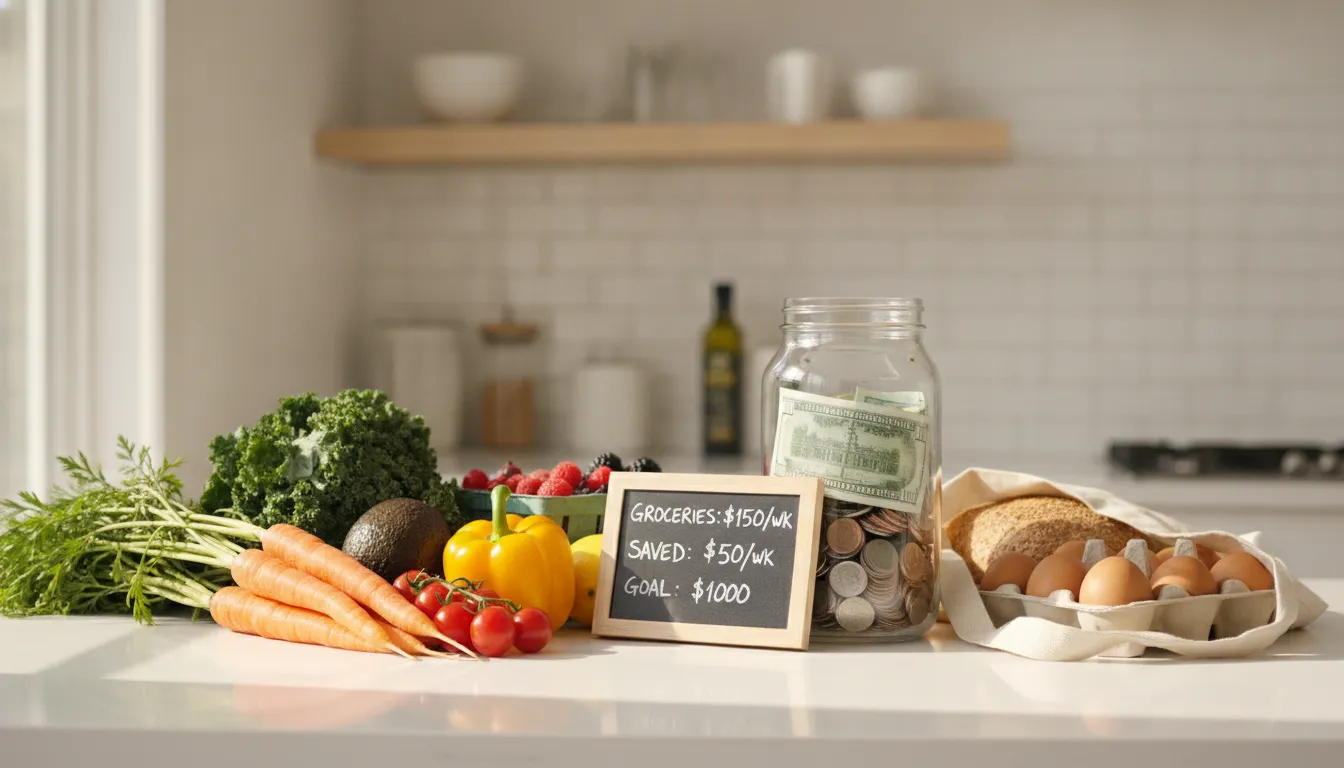
The financial impact of wasting less is concrete and immediate. Although values vary according to family size and consumption habits, any reduction in food disposal directly represents less money thrown away.
Think about it this way: if a family buys $100 worth of produce per week and discards 30% before consuming it, that’s $30 thrown away weekly — over $1,500 per year in that category alone. Cutting that waste in half already represents significant savings in the family budget.
Beyond direct savings, there are indirect gains: fewer trips to the store, less need for additional storage, and more creative and varied meals with what you already have at home.
Taking better care of what we have in the kitchen is a small gesture with big consequences. Every time you use carrot tops instead of discarding them, plan the week before shopping, or transform leftovers into a new meal, you’re contributing to a fairer, less polluting, and more efficient food system.
Start with just one change — the empty fridge day, the FIFO method, or your first composter. You don’t need to transform everything at once. The important thing is to start. And when you notice the difference in the waste you produce and the money you save, you’ll want to go further. The planet thanks you — and so does your wallet.
