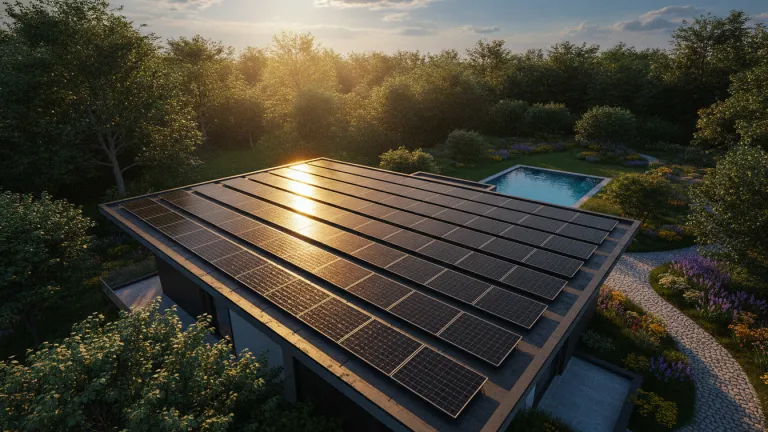
Why More and More Homeowners Are Installing Solar Panels
If you’ve noticed solar panels spreading across rooftops in your neighborhood, you’re not imagining it. Residential solar energy has gone from being a luxury for the few to one of the smartest financial and environmental decisions a homeowner can make in 2026. With electricity bills weighing increasingly heavy on family budgets and environmental awareness growing, the question everyone asks is: how much does it really cost to install solar energy at home?
The answer isn’t simple — and anyone who gives you a number without asking questions first is just guessing. The cost depends on your home’s size, your monthly energy consumption, your region, and the type of system you’ll install. But the good news is real: prices have dropped significantly over recent years, access to credit has improved, and the return on investment has become even more attractive.
In this article, we’ll break down everything you need to know before making this decision — from initial costs to long-term benefits — with information based on real industry data. No exaggerated promises, no hidden fine print.
The Residential Solar Energy Landscape in 2026
Brazil has consolidated its position as one of the world’s largest solar energy markets. According to ANEEL (National Electric Energy Agency) and data from ABSOLAR (Brazilian Solar Photovoltaic Energy Association), the country has surpassed tens of gigawatts installed in distributed generation — a category that includes residential systems — with significant growth recorded in recent years.
This growth is driven by combined factors:
- Abundant solar irradiation: Brazil receives one of the highest solar energy incidences on the planet, with a competitive advantage over European countries that have led the sector for decades.
- Microgeneration Legal Framework (Law 14.300/2022): regulated the rights of consumers with self-generation systems and established the rules for the energy compensation system, providing greater legal security for investments.
- Drop in equipment prices: photovoltaic panels have become much cheaper over the past decade, making systems accessible to a broader segment of the population.
Even so, installation costs still represent a significant investment, and understanding each component is essential for making an informed choice.
How Much Does a Residential Solar System Cost: The Real Numbers
The cost of a residential solar system in Brazil varies primarily according to installed capacity, measured in kilowatt-peak (kWp). The required capacity depends directly on your average monthly electricity consumption.
As a general market reference (average prices practiced in Brazil in 2026, subject to variation by region and supplier):
| Average Monthly Consumption | Estimated System Capacity | Cost Range (installed) |
|---|---|---|
| Up to 200 kWh | 1.5 to 2 kWp | R$ 8,000 to R$ 14,000 |
| 200 to 400 kWh | 2 to 4 kWp | R$ 14,000 to R$ 25,000 |
| 400 to 600 kWh | 4 to 6 kWp | R$ 22,000 to R$ 35,000 |
| Above 600 kWh | 6 kWp or more | Starting at R$ 32,000 |
> Note: these values are average market estimates. Request at least three quotes from certified companies before making any decision. Prices vary by region, equipment brand, and installation complexity.
The total cost of a system includes:
- Photovoltaic panels (solar modules)
- Inverter (converts solar energy into usable current)
- Mounting structure (roof support)
- Wiring and electrical protections
- Installation labor
- Electrical project and approval with the local utility company
Return on Investment Timeline: When You Start Profiting
The payback — time to recover the invested amount — is one of the most important indicators for evaluating system viability. In Brazil, the average payback time for residential systems is around 4 to 7 years, depending on your electricity rate, system size, and location.
Some factors that directly influence this timeframe:
- Electricity rate: the more expensive your bill, the faster the return.
- Rate flags: during red flag periods, savings are greater.
- Roof orientation and tilt: roofs facing geographic north with good inclination generate more energy.
- Shading: trees, water tanks, and neighboring buildings can reduce generation.
The lifespan of modern solar panels is 25 to 30 years, with performance warranties generally between 10 and 25 years depending on the manufacturer. In other words, after payback, you’ll still have decades of virtually free energy.
How to Finance Installation: Available Options
The initial cost is historically the biggest barrier to entry. But in 2026, there are concrete paths to make the investment viable even without the full amount in hand:
Bank Financing with Solar-Specific Credit Lines
Banks such as Caixa Econômica Federal, Banco do Brasil, Bradesco, and Santander offer credit lines aimed at solar energy, generally with more competitive rates than regular personal credit. Some lines are linked to sustainability or energy efficiency programs.
Practical tip: compare the monthly financing payment with the amount you’ll save on your electricity bill. In many cases, the savings already cover or exceed the payment from the first month.
Solar Consortium
An interest-free alternative (but with administration fees) for those with medium-term planning who don’t need to install immediately.
Government Programs
The Minha Casa Minha Vida Program has included energy efficiency requirements and incentives in its most recent versions, benefiting part of the population. It’s worth checking with your city hall and local utility company for specific programs in effect in your region.
Step by Step: How to Safely Hire a Solar Installation
Solar installation is not something you should rush. Follow this guide to avoid mistakes and scams:
- Analyze your electricity bills from the last 12 months. Calculate your average monthly consumption in kWh. This number is the basis for all system sizing.
- Research certified companies. Require that the installation company and technical manager be registered with CREA (Regional Council of Engineering and Agronomy) or CFT (Federal Council of Technicians). Check reviews and references.
- Request at least three detailed quotes. Compare not only the price but the equipment brand, warranties offered, and what’s included in the service.
- Check equipment warranties. Quality panels have 25-year performance warranties. Inverters generally have 5 to 10-year warranties.
- Understand the electrical project. The company must prepare and present the project before installation. It will be necessary for approval with the energy utility.
- Follow the grid connection process. After installation, the company must request connection and meter replacement from the local utility. This process can take weeks — be prepared.
- Monitor generation after installation. Most modern inverters have monitoring apps. Check if the system is generating as expected from the start.
Benefits Beyond Savings: The Real Environmental Value
Installing solar energy at home isn’t just a financial decision — it’s a concrete contribution to reducing carbon emissions. Photovoltaic generation doesn’t emit greenhouse gases during operation, and even considering the panel production cycle, the environmental balance is largely positive over the system’s lifespan.
At a time when climate change is already impacting the lives of millions — with more severe droughts, extreme rainfall, and increasing pressure on water resources that supply hydroelectric plants — reducing dependence on the conventional electrical grid is also a way to preserve the environment with simple and effective actions.
Additionally, residential solar systems contribute to:
- Reducing pressure on the national electrical system, especially during water crisis periods.
- Increasing your home’s energy resilience, especially when combined with storage batteries.
- Increasing property value, as real estate market studies indicate that properties with solar systems tend to be more valued.
Frequently Asked Questions Before Installing
- Can I install in an apartment? Yes, but with more restrictions. Condominiums can install collective systems or in common areas, as long as there’s assembly approval. Check local legislation and condominium rules.
- Does the system work on cloudy days? Yes, with reduced efficiency. Modern panels capture diffuse light, not just direct sunlight.
- Do I need a battery? Not necessarily. In the compensation system (net metering), you inject the surplus into the grid and receive credits to use at night. Batteries offer more autonomy but increase the cost.
- Is maintenance expensive? No. Periodic cleaning of the panels (with water, no abrasives) and annual system verification are sufficient in most cases.
Conclusion: An Investment Worth Considering Now
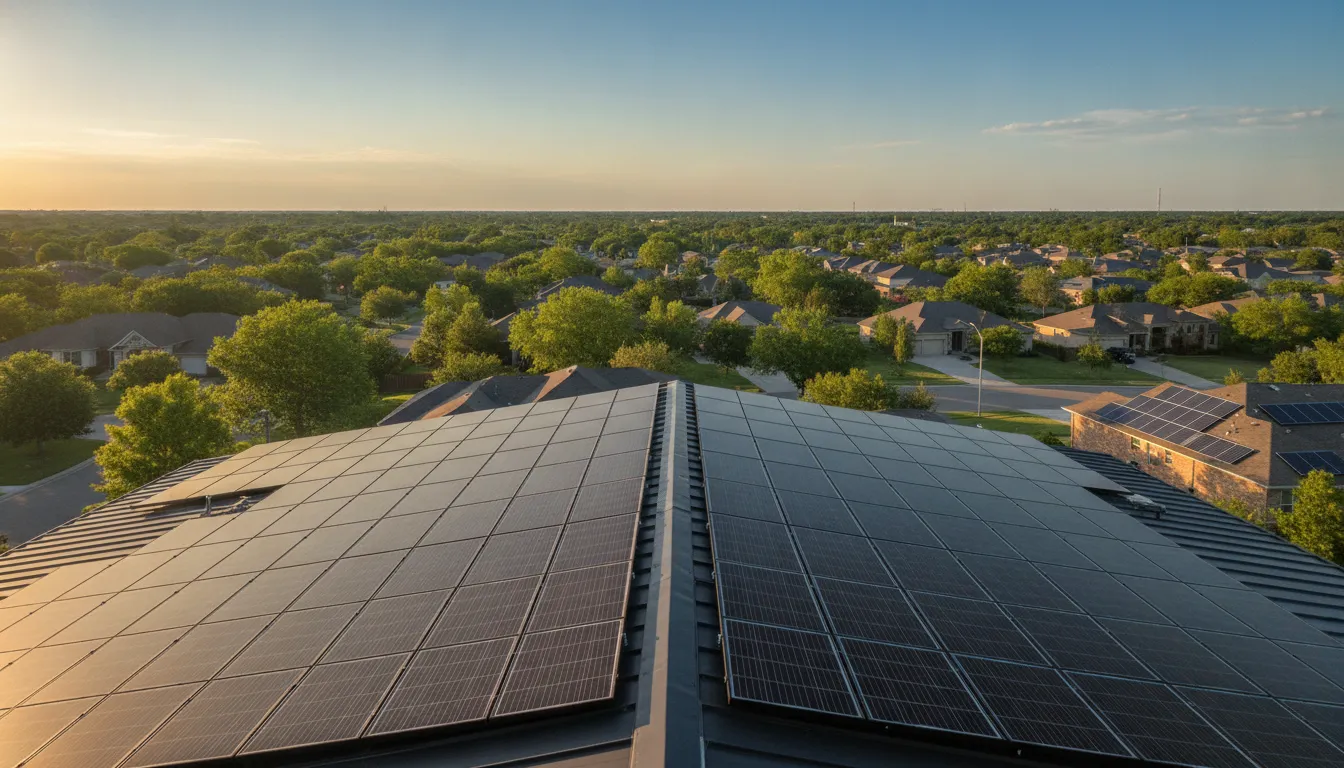
Installing residential solar energy in 2026 is, for most Brazilian homes, a decision that makes financial and environmental sense. Costs have dropped, access to credit has improved, and the return is real and measurable. Of course, each situation is unique — and that’s why the first step isn’t to close a deal, but to get well informed and request quotes.
If you want to go beyond your electricity bill and think about all your consumption choices and impact, it’s also worth learning about how to offset your carbon footprint in a real way, combining energy efficiency with other sustainable practices in your daily life.
The transition to clean energy doesn’t need to be radical or happen all at once. It can start with research, a conversation with a certified company, and a no-obligation quote. The sun that shines on your roof every day is a resource you’re not yet using — and in 2026, the tools to change that have never been more accessible.
