What Is the Zero Waste Movement?
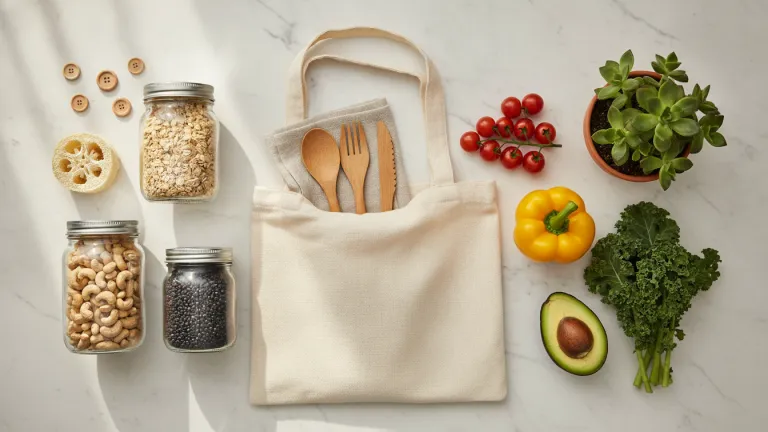
Imagine opening your trash bin at the end of an entire week and finding only a handful of waste — enough to fit in a small glass jar. Sounds like utopia? For thousands of people around the world, this is already reality. The Zero Waste movement proposes exactly that: rethinking our relationship with consumption and waste so profoundly that trash stops being inevitable and becomes a choice — a choice we can avoid.
The concept goes far beyond recycling more. It questions the entire chain: why we buy what we buy, how products are packaged, what we do when they’re finished, and where everything ends up. In a world where urban solid waste generation grows alongside urbanization, adopting the Zero Waste philosophy is one of the most concrete steps an individual can take toward a more sustainable lifestyle.
And the good news is that you don’t need to be perfect to start. Zero Waste isn’t a race for absolute purity — it’s a journey of progress, made one habit at a time.
Why Waste Matters So Much for the Planet
Brazil is one of the largest generators of solid waste in the world. According to the Solid Waste Panorama in Brazil, published by the Brazilian Association of Public Cleaning and Special Waste Companies (Abrelpe), the country generates tens of millions of tons of waste per year — and a significant portion still has inadequate destinations, being discarded in open-air dumps or landfills without proper treatment.
Beyond the local problem, waste has a direct climate impact. Organic waste deposited in landfills releases methane, a gas with a global warming potential much higher than CO₂ in the short term, according to IPCC data. Plastics that escape into the environment persist for decades, fragmenting into microplastics that have already been found in oceans, soils, fish, and even human blood, according to studies published by researchers in partnership with UN Environment.
Reducing the waste we generate, therefore, isn’t just a matter of household organization. It’s an act with real consequences for the climate, biodiversity, and public health.
The 5 Rs of Zero Waste: The Roadmap
Writer and activist Bea Johnson, one of the leading global references of the movement, popularized the 5 Rs hierarchy, which works as a priority guide:
| Principle | What it means | Practical example |
|---|---|---|
| Refuse | Don’t accept what we don’t need | Refuse plastic bags, disposable freebies |
| Reduce | Consume less overall | Buy only what’s necessary, avoid impulse purchases |
| Reuse | Give new life to objects | Use glass jars, upcycle clothes |
| Recycle | Separate what can be recycled | Paper, metal, glass, clean plastic |
| Rot | Compost organic waste | Home or community composting |
The order matters: Refuse and Reduce always come before Recycle. Recycling is important, but it remains a form of waste management — not elimination of the problem at its root.
How to Get Started in Practice: Step-by-Step Guide for Beginners
The transition to a Zero Waste lifestyle doesn’t happen overnight, and that’s okay. Here’s a gradual and realistic path:
- Do an audit of your current waste. For one week, separate and observe what you discard. You’ll be surprised by what appears most frequently — plastic film packaging? Juice boxes? Toilet paper with plastic wrapping? This diagnosis is the starting point.
- Eliminate the easiest single-use disposables. Plastic straws, disposable cutlery, coffee cups, supermarket bags — these items have immediate and accessible substitutes. Carry a reusable bottle, use reusable bags, and keep a cutlery set in your bag.
- Change the way you shop. Prefer products with less packaging, choose glass or metal packaging (more recyclable and reusable), and try buying in bulk at farmers’ markets and specialized stores — where you bring your own containers.
- Create a recycling separation system at home. Wash packaging before discarding, separate by category, and find the nearest selective collection point or collection day in your neighborhood. Many municipalities have selective collection, although coverage is still uneven.
- Start composting your organic waste. Fruit peels, coffee grounds, vegetable scraps — all of this can become fertilizer. If you live in an apartment, know that there are practical and odor-free solutions for this. Check out our guide at Compostagem em Apartamento: Guia Prático Passo a Passo.
- Gradually replace hygiene and cleaning products. When an item runs out, research an alternative with less packaging: shampoo bars, bar soap, toothpaste tablets, cleaning product refills. Don’t throw away what still works — wait until it’s finished and switch consciously.
- Involve those who live with you. Habit changes are easier and more lasting when shared. Talk, propose gently, and show the practical benefits — including economic ones.
Smart Swaps: Simple Substitutions with Big Impact
One of the most efficient Zero Waste strategies is the concept of gradual swaps: instead of changing everything at once, you replace disposable products with durable alternatives as they run out. Here are some of the most impactful:
- Plastic bags → cloth tote bags or reusable mesh bags
- PET water bottles → stainless steel, glass, or aluminum bottles
- Plastic cotton swabs → bamboo versions or reusable silicone ones
- Paper tissues → washable cloth handkerchiefs
- Synthetic dish sponges → natural fiber sponges or loofah
- PVC plastic wrap → silicone lids, beeswax wraps
- Disposable pads and tampons → menstrual cups, cloth pads, or period underwear
- Shampoo and conditioner bottles → bar products or refills
- Coffee capsules → moka pot, French press, or reusable cloth filter
- Disposable cups at work → personal mug
Each swap, individually, seems small. Added up over a year, they represent hundreds fewer items discarded.
Zero Waste Beyond Home: Conscious Consumption in Daily Life
Zero Waste is also a lens for viewing consumption more critically outside the home. Some attitudes that make a difference:
- Prefer repairing over replacing. Torn clothes can be sewn. Broken electronics can go to a repair shop. Shoes with worn soles can be resoled. The culture of immediate disposal is expensive for your wallet and the planet.
- Buy secondhand when possible. Physical and digital thrift stores, swap groups, used goods fairs — the secondhand market has grown significantly in recent years and offers great options.
- Refuse unnecessary freebies and samples. That event keychain, the product sachet you won’t use, the disposable pen — all of this has a very short useful life and a real environmental footprint.
- Plan your food shopping. Food waste is one of the largest sources of household trash. Making a list, buying the right amount, and using leftovers creatively in the kitchen are simple habits with great returns.
Zero Waste and Minimalism: Natural Allies
The Zero Waste movement naturally connects with minimalism: the idea that owning less can mean living better. When you start questioning each purchase before making it — “Do I really need this? Where will it end up when I no longer want it?” — consumption decreases, waste decreases, and often your budget improves too.
This connection is especially relevant in 2026, when discussions about conscious consumption and circular economy have gained space in Brazilian public policies and corporate sustainability reports. Brazil’s National Solid Waste Policy (PNRS), current law in the country, already establishes principles such as shared responsibility for the product life cycle — meaning manufacturers, distributors, consumers, and government all have roles in this equation.
Reducing your waste generation is also a way to pressure the market: companies respond to consumer behavior. When consumers choose products with less packaging, industry notices. This makes Zero Waste both an individual and collective act.
If you want to go further in your sustainable lifestyle, it’s also worth exploring how to compensar sua pegada de carbono de verdade — another concrete step that complements the Zero Waste journey well.
Take the First Step Today
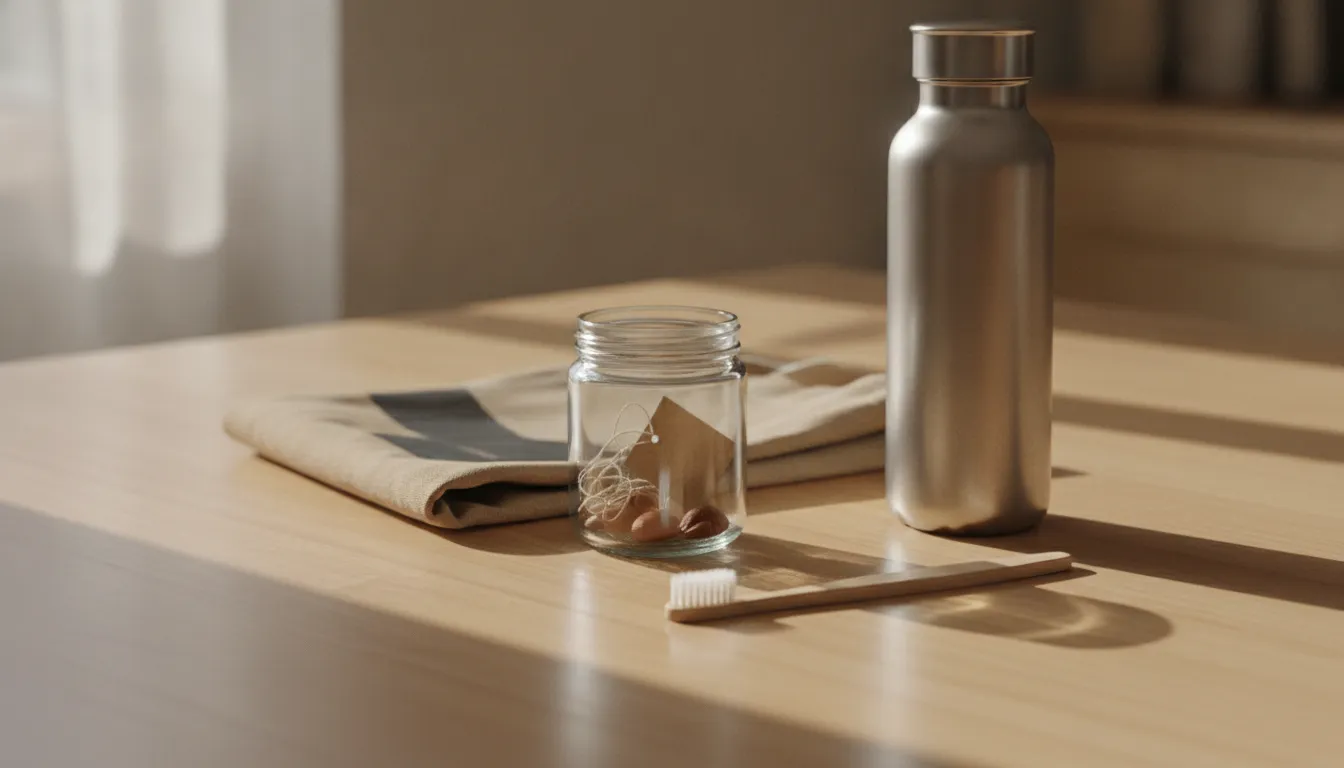
Zero Waste isn’t about perfection. It’s about direction. Every bag refused, every jar reused, every purchase thought over twice represents a different choice — and choices added together build different realities.
You don’t need to zero out your waste tomorrow. But you can choose one swap, one substitution, one new habit to start this week. Look at your trash bin with curiosity, not guilt. It will show you exactly where to begin.
The planet thanks every step — and you’ll probably discover that living with less waste also means living with more intention.
