Solar Energy in Apartments: Yes, It’s Possible!
Do you live in an apartment and have already given up on the idea of using solar energy because you think it’s a privilege reserved for those with houses and rooftops? Then get ready to reconsider that belief. In recent years, Brazil’s solar energy sector has undergone a quiet yet powerful transformation — and residents of high-rise condominiums are increasingly part of this change.
Brazil is one of the countries with the highest solar incidence in the world, making the use of this energy a huge opportunity for any type of housing. According to ANEEL (National Electric Energy Agency), the number of consumer units with distributed solar generation in the country has grown significantly over the last decade, surpassing the mark of 4 million installed systems by 2024. This growth is not exclusive to single-family homes — condominiums and apartments have definitively entered this equation.
In this article, you’ll understand how solar energy works in practice for apartment dwellers, what options are available, what Brazilian legislation allows, and how to take the first step toward a lighter — and greener — electricity bill.
How Solar Energy Works for Apartments
Before discussing what’s possible, it’s worth understanding the basics. Photovoltaic solar energy works through panels that capture sunlight and convert it into electricity. This energy can be used directly or injected into the power grid, generating credits that reduce your electricity bill.
In single-family homes, the system is installed on the roof and connected directly to the consumer unit. In apartments, the logic needs to be adapted — but it’s not impossible. There are basically two ways to access solar energy while living in a vertical condominium:
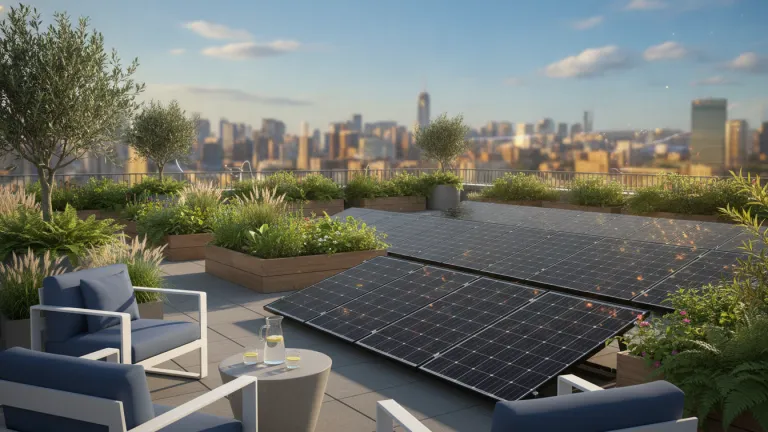
- Shared generation within the condominium: panels installed in common areas (rooftop, parking lots) generate energy that is distributed among the units.
- Remote generation by subscription (solar energy subscription): the resident “subscribes” to energy generated by a solar plant outside the condominium and receives credits on their electricity bill.
Both options are regulated by ANEEL and have been growing rapidly in Brazil.
The Law That Opened Doors: Solar Energy Legal Framework
A watershed moment for apartment residents was the approval of Law No. 14,300, dated January 6, 2022, known as the Legal Framework for Distributed Micro and Mini Generation. This legislation consolidated and expanded the rules for the electricity compensation system (the so-called net metering), providing greater legal security for both consumers and companies in the sector.
Among the most relevant points for apartment dwellers:
- Condominiums can install photovoltaic systems in common areas and distribute credits among residential units and the building’s common areas.
- Excess energy generated can be injected into the grid and compensated on each participating resident’s bill.
- The legal framework ensured that solar energy credits have a validity of 60 months (5 years) to be used.
- Compensation rules were protected for systems installed until the end of 2045 under the conditions in effect at the time of connection.
This means that if your condominium installs panels now, the favorable compensation conditions are guaranteed for decades — a powerful argument to present at the next residents’ meeting.
Solar Energy Subscription: The Option for Those Who Can’t Install Panels
What if your condominium doesn’t have the structure to install panels, or if the assembly hasn’t approved the project yet? There’s an accessible alternative that doesn’t require any construction: solar energy subscription.
In this model, specialized companies build or operate solar plants and sell energy “shares” to residential consumers — including apartment residents. You receive credits directly on your electricity bill without having to install anything.
How it works in practice:
- You contract a solar energy subscription company (there are several operating in Brazil, such as Setta, Voltz, BePower, and others).
- The company associates your consumer unit with a solar plant registered with the local utility.
- Monthly, the credits generated by your share appear as a discount on your electricity bill.
- You only pay for the compensated energy, usually at a discount compared to the conventional rate.
This model is especially interesting because it requires no initial investment, works in virtually any city where there’s a compatible utility, and can be canceled or adjusted as needed.
How to Bring Solar Energy to Your Condominium: Step by Step
If you want to go beyond subscription and install a collective system in the condominium, the path involves coordination with neighbors and following some important steps. Here’s how to do it:
- Gather basic technical information: identify whether the condominium’s roof or rooftop has sufficient area, adequate solar orientation (preferably facing north), and structure to support the panels. An engineer or specialized company can do this analysis for free or at low cost.
- Present the proposal at the residents’ meeting: bring data on estimated savings, investment payback period, and what the legislation allows. Show that the project benefits everyone, especially in common areas (lighting, elevators, pumps).
- Obtain at least three quotes: compare proposals from different installers certified by INMETRO and accredited with the local utility.
- Check available financing options: BNDES, banks like Santander, Itaú, and Bradesco, and credit cooperatives offer specific lines for solar energy projects with competitive conditions.
- Deliberate at the meeting and formalize the contract: installation in a condominium requires formal approval. Consult the building manager and internal regulations about the required quorum.
- Request connection from the utility: after installation, the system needs to be approved by the local utility (CEMIG, ENEL, COPEL, CPFL, etc.) before going into operation.
- Monitor results: most modern systems have apps that show real-time energy generation and savings.
How Much Does It Cost and How Much Can You Save?
This is the question everyone asks — and the answer depends on variables such as system size, city, and utility. But it’s possible to have a realistic idea.
| Factor | General Information |
|---|---|
| Average cost per installed kWp | Between R$ 3,500 and R$ 5,500 (reference values for 2025/2026) |
| Average payback period | 4 to 7 years, depending on local rates and system size |
| Panel lifespan | Between 25 and 30 years, with performance warranty |
| Average bill reduction | Can reach 90% in common areas, depending on the system |
For condominiums, the initial focus is usually on common area energy — which represents a significant fixed expense for all residents. Savings here are immediate and visible on the monthly condominium statement.
For those who opt for solar energy subscription, the average discount offered by companies in the sector typically ranges between 10% and 20% off the utility rate, with no implementation costs.
Practical Tips for Apartment Dwellers Who Want to Start Today
Regardless of the path you choose, there are actions you can take right now:
- Research solar energy subscription companies operating in your city and carefully compare contracts, paying attention to loyalty clauses and rate adjustments.
- Talk to the building manager about the possibility of installing panels in common areas — many managers are open to it but need a resident to take the initiative.
- Form an interest group in the condominium: the more engaged residents, the greater the negotiating power with installers.
- Consult the local utility about connection procedures for condominiums — each company has a specific process, and knowing it in advance avoids surprises.
- Check for municipal or state incentives in your city. Some Brazilian states still offer ICMS exemption on generated and compensated energy.
- Educate yourself on the topic: understanding the basics of how the photovoltaic system works makes you a more effective communicator with suppliers and the condominium.
If you’re already thinking about other ways to reduce your environmental impact in daily life, it’s also worth checking out Sustainability in Daily Life: Where to Start? — a guide full of practical and accessible actions for any type of housing.
The Future Is Solar — And Apartments Are Part of It
The idea that solar energy is “only for homeowners” is increasingly becoming a thing of the past. With advanced regulations, subscription models with no upfront cost, and growing interest from condominiums in reducing expenses, apartments are becoming protagonists of Brazil’s energy transition.
Brazil’s electrical matrix is already one of the most renewable in the world, with significant participation from hydroelectric plants. Adding more solar energy to this mix — including that generated by residential condominiums — further strengthens the system’s resilience and reduces dependence on thermal plants, which are activated during dry periods and have much higher costs and environmental impact.
Want to delve deeper into other clean energy sources? Also read Wind Energy: What It Is and How It Transforms Wind into Light and understand how wind is also transforming the way Brazil powers itself.
Conclusion: Your Apartment Can Be Part of This Change
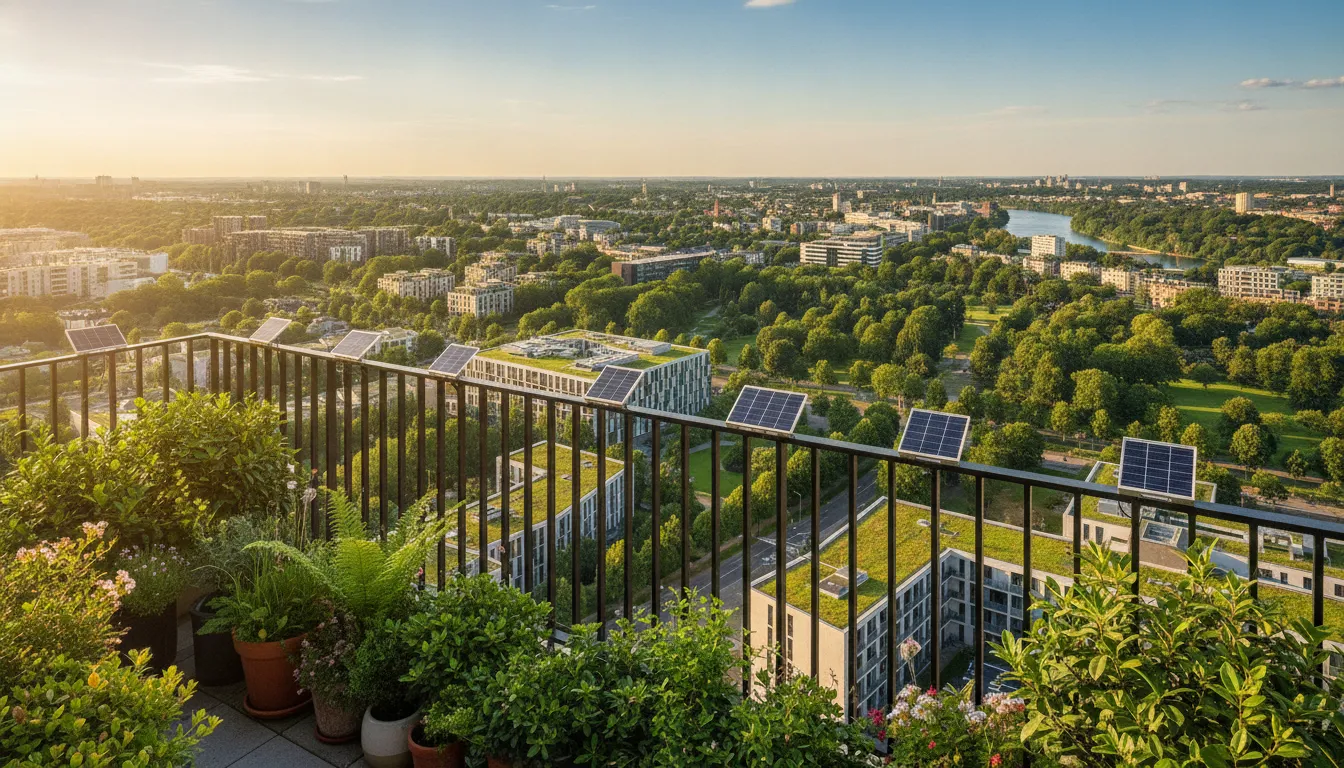
Living in an apartment is not an obstacle to contributing to the energy transition — it’s actually a collective opportunity. When an entire condominium adopts solar energy, the impact is multiplied by dozens or hundreds of families at once.
The journey can start with a conversation with the building manager, researching subscription companies, or simply sharing this article in the condominium’s WhatsApp group. Small collective movements have the power to transform larger realities — and your apartment’s electricity bill can be the first step.
The sun shines for everyone. Including those living on the tenth floor.
