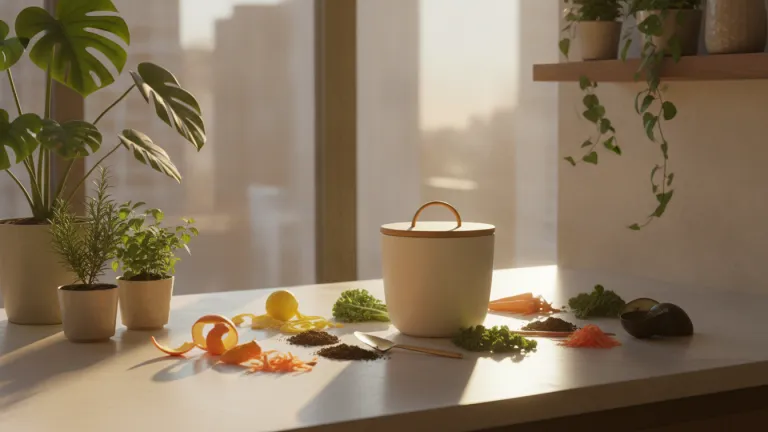
Do you live in an apartment and feel guilty throwing fruit peels, coffee grounds, and vegetable scraps into the regular trash? This feeling is increasingly common among urban dwellers who want to act more consciously but believe composting is “only for people with backyards.” The good news: that myth has long been debunked. Composting in an apartment is not only possible but also simple, affordable, and extremely effective.
Organic waste represents a significant portion of household trash. When this material ends up in landfills without proper treatment, it decomposes under anaerobic conditions and releases methane — a greenhouse gas with a global warming potential far greater than CO₂ in the short term, according to IPCC data. Transforming this waste into nutrient-rich compost in your own home is one of the most concrete actions an urban resident can take.
In this comprehensive guide, you’ll learn how to set up and maintain a home composter in your apartment, understand which waste can (and cannot) go into the process, solve the most common problems, and discover what to do with the fertilizer you produce yourself. Let’s get started!
Why Apartment Composting Is Worth It
Home composting isn’t just a symbolic gesture. It’s an action with real, measurable impact on your routine and the environment.
By diverting organic waste from regular trash, you reduce the volume of material going to landfills and recycling collection, decrease the weight of garbage bags (and the number of plastic bags you use), and produce quality organic fertilizer for potted plants, windowsill gardens, or to donate to neighbors and community projects.
From a practical standpoint, a well-maintained home composter doesn’t have a strong smell, doesn’t attract unwanted insects, and fits in small spaces. The misconception that composting is dirty or labor-intensive exists because most people have never seen the process working properly. With the right guidance, you’ll realize that giving your composter five minutes of attention a few times a week is enough to keep everything in order.
Choosing the Right Composter Model for Your Apartment
There are different systems adapted to the reality of living in small spaces. Here are the main ones:
Worm Composter (Vermicomposter)
This is the most popular option for apartments. It uses red wiggler worms (Eisenia fetida) to accelerate waste decomposition. It produces two valuable byproducts: solid humus (nutrient-rich fertilizer) and leachate (liquid that, when diluted in water, works as liquid fertilizer).
- Compact size: fits under the sink, in a utility area, or on a balcony
- Virtually odor-free when properly managed
- Worms reproduce and regulate their own population based on available food
Bokashi Composter
Based on effective microorganisms (EM), bokashi ferments waste rather than decomposing it conventionally. It accepts a wider variety of materials, including small amounts of meat and dairy scraps — something worm bins don’t tolerate well.
- Faster process (about two weeks of fermentation)
- Requires bokashi bran, available at garden stores and online marketplaces
- The fermented material still needs to be buried or mixed with soil to complete decomposition
Stackable Box Composter (DIY)
Made with drilled plastic storage bins, this is the most economical option. It works similarly to a worm bin but without worms — it relies only on natural microorganisms present in the waste and soil.
- Very low initial cost (can be made with repurposed materials)
- Requires more attention to material balance and aeration
What Can and Cannot Go in the Composter
This is the most common question for beginners. Saving this list on your phone or posting it on your fridge can make all the difference.
✅ Materials that can go in (“green” materials — nitrogen-rich)
- Fruit and vegetable peels
- Coffee grounds and paper filters
- Tea bags (without the metal staple)
- Raw salad scraps
- Eggshells (rich in calcium and help balance pH)
- Nail clippings and hair (in small amounts)
✅ Materials that can go in (“brown” materials — carbon-rich)
- Uncoated, unprinted cardboard, shredded
- Newspaper and non-glossy paper, torn
- Dry leaves (if you have access to a nearby park)
- Natural sawdust (no varnish or paint)
- Broken wooden sticks
❌ Materials that should not go in the worm bin
- Meat, fish, and seafood (attract pests and disturb worms)
- Dairy products and cooked eggs
- Large amounts of oil
- Excessive citrus fruits (lemon, orange, pineapple — acidity harms worms)
- Large amounts of onion and garlic
- Pet feces
- Materials with pesticides
Step-by-Step Guide: How to Set Up Your Apartment Composter
We’ll use the worm bin as the main model since it’s the most recommended for urban beginners.
What you’ll need:
- 2 or 3 plastic bins with lids (30 to 50 liters capacity each)
- Drill or hot iron to make holes
- Soil or worm castings (for the initial layer)
- Red wiggler worms (200g to 500g is enough to start)
- Dry materials (shredded cardboard, dry leaves)
Step by step:
- Prepare the bins: Make small holes (about 5mm) in the bottom and sides of the top bin for drainage and aeration. The middle bin should also have holes in the bottom. The bottom bin has no holes and serves to collect leachate.
- Assemble the stack: Place the bin with holes on top of the collector bin. If you have three bins, stack the second drilled one on top of the first.
- Create the worm bedding: In the top bin, place a 5 to 8 cm layer of moist soil or worm castings mixed with shredded, dampened cardboard. This is the “bed” where the worms will settle.
- Add the worms: Spread the worms over the bedding and cover lightly with more damp cardboard. Let them acclimate for 24 to 48 hours before adding waste.
- Start feeding: Add organic waste gradually — don’t add everything at once. Always cover with a thin layer of dry material (cardboard or leaves) to control odor and moisture.
- Maintain balance: The ideal ratio is approximately 1 part wet material (green) to 2 parts dry material (carbon). If a strong smell appears, add more dry material. If it seems too dry, spray a little water.
- Collect the leachate: Every week or two, remove the liquid accumulated in the bottom bin. Dilute 1 part leachate in 10 parts water and use on plants.
- Harvest the humus: In two to three months, the material in the lower bin will be transformed into dark, odorless humus — your homemade fertilizer is ready to use.
Solving the Most Common Home Composting Problems
| Problem | Likely Cause | Solution |
|---|---|---|
| Bad smell | Excess wet material or lack of aeration | Add shredded cardboard and turn lightly |
| Flies and fruit flies | Exposed or overly sugary scraps | Bury scraps and cover with dry material |
| Worms escaping | Acidic pH or high temperature | Reduce citrus fruits, check moisture |
| Process too slow | Low moisture or cold temperature | Moisten lightly and keep in a warmer spot |
| Excess leachate | Too much wet material | Balance with more dry material |
What to Do with Fertilizer Produced in Your Apartment
Producing humus is the most rewarding part of the process. But what if you don’t have a garden? There are several creative and useful options:
- Potted plants and vertical gardens: Use humus mixed with potting soil at a 1 to 4 ratio. Your plants will notice the difference.
- Donate to neighbors and condominiums: Many apartment buildings have gardens that need fertilizing. Offering humus is a great way to engage the community.
- Exchange groups and permaculture: Look for WhatsApp groups or social media focused on urban permaculture and collective composting — it’s common to find people who gladly accept fertilizer.
- Community garden projects: Many cities have urban garden initiatives that love receiving organic compost donations.
- Farmers markets and organic markets: Some local farmers accept homemade worm castings to enrich their soils.
If you’ve already adopted other sustainable habits at home, such as reducing disposable plastic use, composting is the natural next step to close the household waste cycle.
Collective Composting: An Option for Apartment Buildings
If maintaining an individual composter seems like too much for you right now, another powerful alternative is collective composting in your apartment building. Several municipalities have programs supporting this approach, providing composters, training, and even collection of the produced compost.
To propose this in your building, you can:
- Gather interest from at least three to five fellow residents
- Present the project at a building meeting with data on waste reduction
- Research municipal composting programs in your city (many city governments like São Paulo, Curitiba, and Belo Horizonte have active initiatives in this area in 2026)
- Invite an organization or environmental educator for an introductory talk
Collective scale amplifies results and distributes effort, making the practice even more socially sustainable.
Conclusion: Your Kitchen Can Be the Start of a Positive Chain
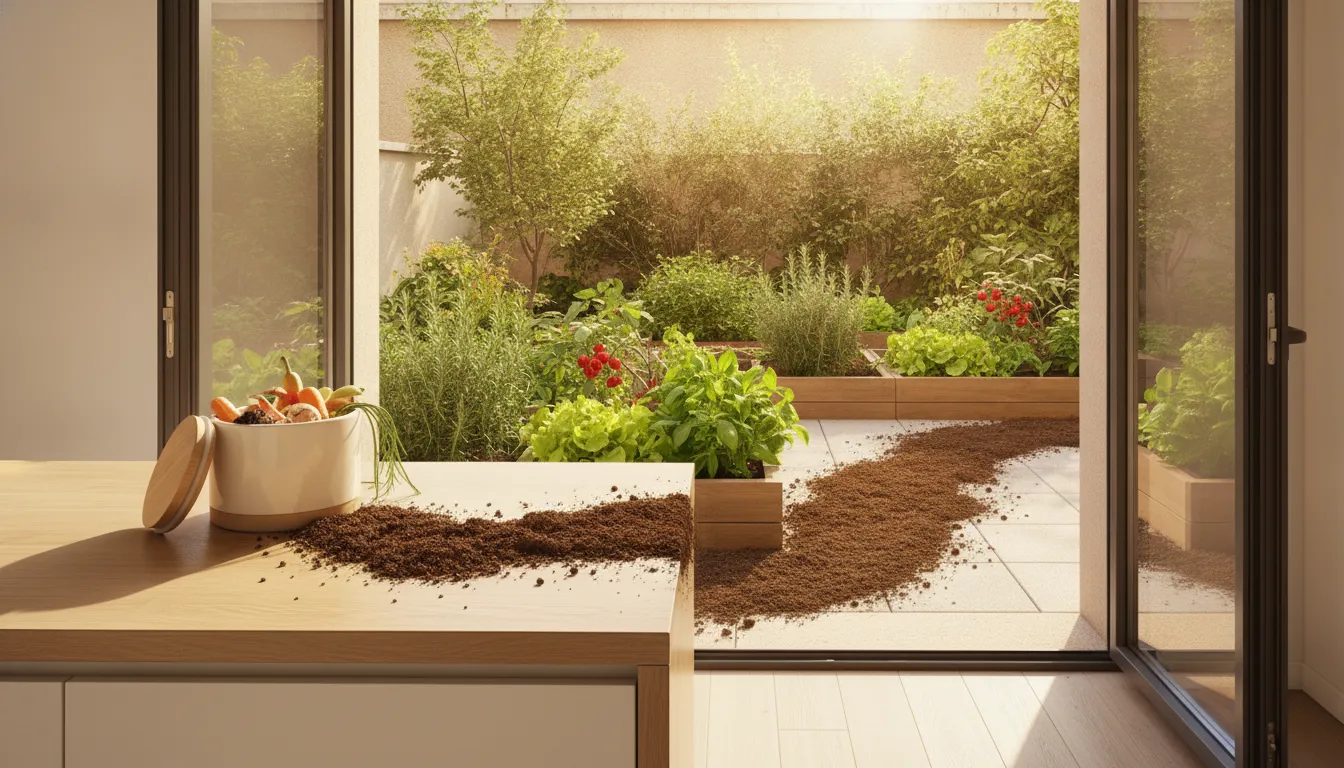
Composting in an apartment is one of the most complete gestures an urban person can adopt: it reduces waste, decreases emissions associated with improper organic matter disposal, produces a valuable input, and connects you concretely to life’s natural cycles — even on the 12th floor of a building.
You don’t need to do everything at once or have a perfect composter from day one. Start small: a little box, some worms, and the commitment to cover scraps with cardboard. Learning comes with practice.
If you also want to better understand how greenhouse gas emissions work and why every individual action matters, read our article on greenhouse effect: what it is and how it works.
Your next banana peel doesn’t have to become methane in a landfill. It can become fertilizer for the basil on your windowsill. That choice is in your hands — literally.
