Less Plastic at Home: Simple Habits That Actually Work
Have you ever stopped to count how many disposable plastic items pass through your home in a single week? Food packaging, shopping bags, containers, straws, synthetic sponges, cleaning product bottles — the list grows before we even finish breakfast. Plastic is convenient, cheap, and everywhere, but the environmental price we pay for this convenience is high and well-documented.
According to the United Nations Environment Programme (UNEP), more than 400 million tons of plastic are produced globally each year, and a significant portion of this total has a lifespan of just a few minutes — as is the case with disposables. Much of this material is not recycled and ends up in landfills, rivers, oceans, and soils. The impact on marine life, the food chain, and even human health is already the subject of serious research worldwide.
The good news is that the solution doesn’t require perfection or major sacrifices. Reducing plastic at home is a gradual process, made up of smart swaps and new habits that, over time, become natural. This article brings together practical strategies, organized by area of the house, so you can start today — at your own pace, with what you already have available.
Why Reducing Plastic Goes Beyond Recycling
There’s a lot of talk about recycling, and recycling is indeed important. But there’s a hierarchy of priorities in waste management, commonly known as the “R’s of sustainability,” which places reduction at the top of the list — even before reuse and recycling.
This means that plastic that never enters your home is always better than plastic that comes in, gets used once, and then needs to be properly disposed of. After all, even when recycled, the process consumes energy, and not every type of plastic is accepted by selective collection systems. In many regions, recycling infrastructure is still uneven, and many plastic materials simply have nowhere to go but the landfill.
Reducing at the source, therefore, is the most efficient action. And your home is the best laboratory to start.
In the Kitchen: The Swaps with Greatest Impact
The kitchen is usually the main entry point for disposable plastic in the home. Industrial food packaging, grocery bags, plastic wrap, yogurt containers, small bottles — all of this accumulates quickly.
Practical substitutions for everyday kitchen use
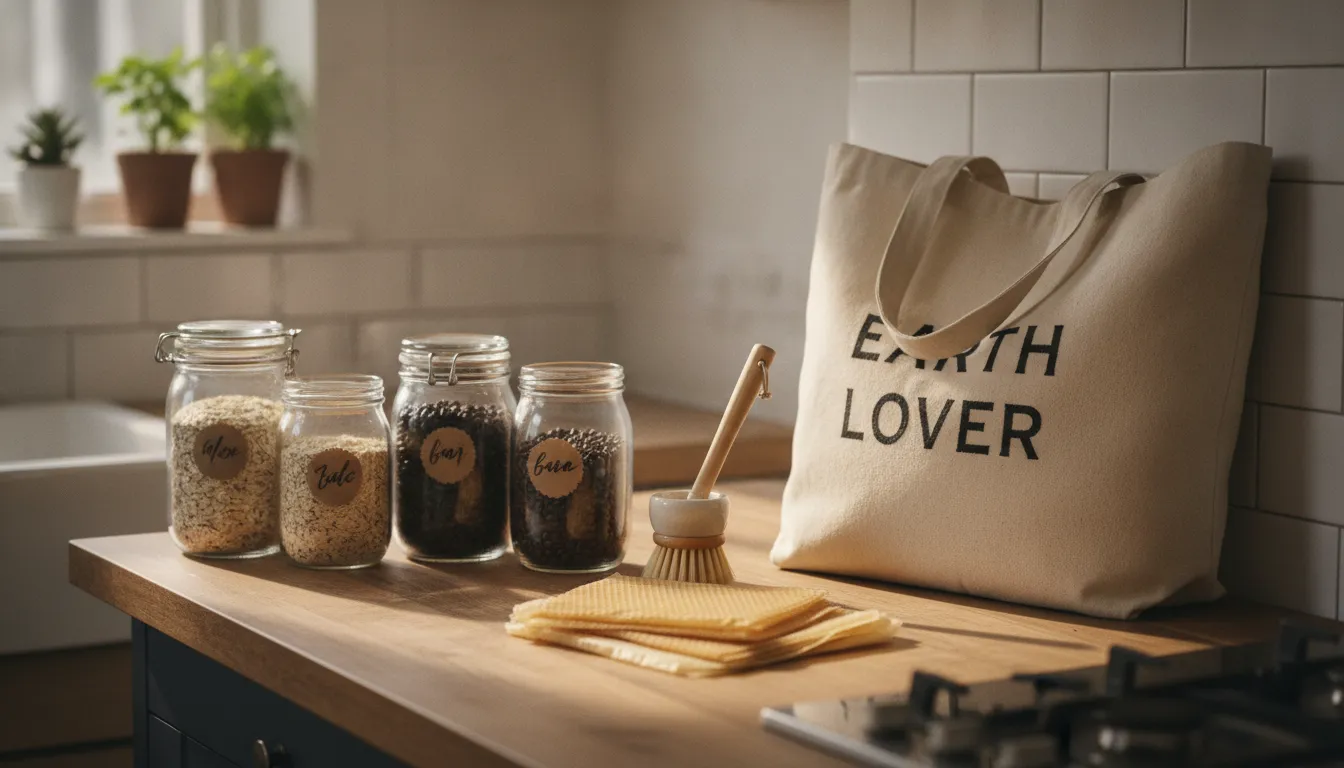
- Reusable bags: keep some in your purse or car so you’re never caught off guard at the store. Raw cotton or jute models are durable and washable.
- Beeswax wraps: replace plastic wrap for covering food. They work well with cheeses, cut fruits, and bowls.
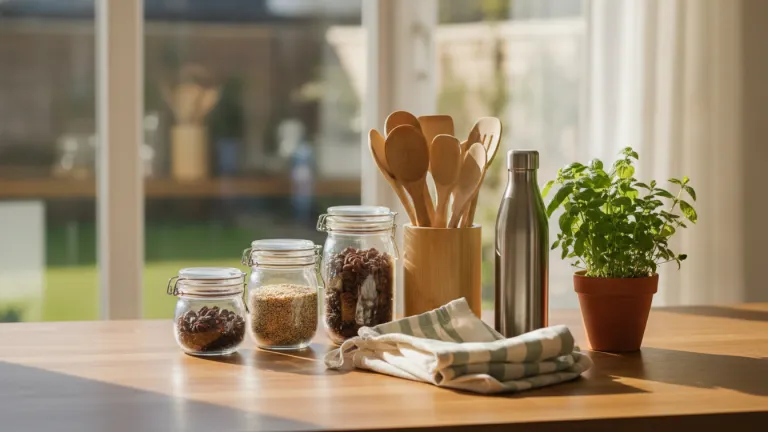
- Glass jars: reuse preserve jars to store grains, spices, leftovers, and even beverages. They’re free and durable.
- Bulk shopping: farmers’ markets and bulk stores allow you to buy rice, beans, nuts, flours, and other items in your own containers or with no packaging at all.
- Natural sponges: vegetable cellulose sponges or loofah replace synthetic nylon sponges, which release microplastics into water during use.
- Reusable bottles and cups: a good stainless steel or glass bottle eliminates the habit of buying water in plastic bottles, which are among the most common disposable plastic items found in beach and river cleanups.
If you want to go further and reduce even more waste in the kitchen, the article Como Reduzir o Desperdício de Alimentos no Dia a Dia offers complementary strategies that go hand in hand with plastic reduction.
In the Bathroom: Small Swaps, Big Difference
The bathroom is the second largest source of disposable plastic at home. Shampoo, conditioner, liquid soap, toothpaste, disposable razors, cotton swabs — the personal hygiene routine generates a surprising volume of waste.
How to reduce plastic in personal hygiene step by step
- Start with what you use first in the day. If you use shampoo every day, that’s the most impactful swap. Try a shampoo bar: it lasts considerably longer than the liquid version, comes without plastic packaging, and works for most hair types.
- Switch liquid soap for bar soap. Simple, economical, and usually packaged in paper or cardboard.
- Replace disposable razors with a metal-handled safety razor with replaceable blades. The blades are thin, stainless steel, and generate a fraction of the waste created by plastic razors.
- Say goodbye to plastic cotton swabs. Besides being unnecessary for ear cleaning (according to medical guidelines), plastic cotton swabs are among the most commonly found debris on beaches worldwide. Bamboo versions exist as an alternative if you prefer not to give up the item.
- Try toothpaste tablets or powder. Already available in specialized stores and online, they eliminate the plastic tube from the equation.
- Consider reusable cloth pads or a menstrual cup. For those who menstruate, this single swap eliminates hundreds of disposables per year.
You don’t need to do everything at once. As one product runs out, evaluate whether there’s an alternative with less plastic before buying the same thing again.
In Home Cleaning: Fewer Bottles, Better Results
Cleaning products are major culprits when it comes to plastic packaging. The good news is that there are effective, economical, and widely accessible alternatives.
Alternatives to reduce packaging in household cleaning
- Homemade all-purpose cleaner with vinegar and water: an efficient mixture for everyday surfaces like countertops, mirrors, and tiles. Dilute in a single reusable spray bottle.
- Baking soda: a gentle abrasive ideal for sinks, ovens, and bathrooms. Comes in cardboard packaging or can be purchased in bulk.
- Concentrated refills: many brands now offer refills in smaller packages or capsules that dissolve in water. A reusable spray bottle can last for years.
- Laundry powder or bar soap: some bar versions generate less packaging than conventional powder detergent boxes.
- Homemade soap from used cooking oil: a simple and economical practice that transforms waste into a useful product. Learn how to make it at Sabão Caseiro com Óleo Usado: Faça em Casa.
Conscious Shopping: How to Change Your Cart Without Changing Everything at Once
Much of the plastic that enters your home passes through the grocery cart. Some behavioral changes at shopping time have an immediate effect.
| Current habit | Alternative with less plastic |
|---|---|
| Fruits and vegetables in plastic bags | Reusable fabric bags for produce |
| Yogurt in individual plastic containers | Yogurt in larger glass containers or homemade |
| Water in plastic bottles | Reusable bottle and home filter |
| Products in individual packaging | Larger packages (less plastic per kg of product) |
| Bulk items in store plastic bags | Containers or fabric bags brought from home |
Also, plan your shopping with a list. Going to the store without planning increases the chance of impulse buying items with excessive packaging.
How to Involve the Family in This Change
Habit changes are easier — and more lasting — when the whole household participates. Imposing rules tends to generate resistance; involving and explaining tends to generate partnership.
- Start with light conversations, sharing interesting facts about the impact of plastic on the environment. Documentaries, articles, and even short videos on social media can help raise awareness in a non-invasive way.
- Make alternatives easy and accessible: if the reusable bottle is always filled and within reach, children will naturally use it instead of asking for a plastic bottle.
- Celebrate progress: counting the plastic containers that didn’t enter the house this month or calculating how many bottles were avoided are concrete ways to see progress.
- Avoid perfectionism: a household that consistently reduces plastic by 50% makes much more difference than an attempt to eliminate 100% that lasts two weeks.
Real Challenges and How to Deal with Them
Not everything is easy in this transition, and it’s important to acknowledge this without guilt.
Initial cost: some alternatives, like bamboo toothbrushes or stainless steel bottles, have a higher upfront cost. The savings logic appears in the medium term, when you stop repeatedly buying disposables. Prioritize the swaps that fit your budget now and progress gradually.
Limited access: those living in smaller towns may have less access to alternative products in physical stores. E-commerce, however, has democratized access to many of these alternatives.
Hidden packaging: some products seem sustainable but still contain plastic components (compostable coffee pods that don’t actually compost at home, for example). It’s worth researching before buying.
Social pressure: refusing a plastic straw at a restaurant or asking not to wrap something in plastic can still generate awkward reactions. Over time, these behaviors become more common and natural — and every refusal signals to the market that there’s demand for alternatives.
Conclusion: Every Swap Counts
No home will eliminate plastic completely — at least not all at once. And that’s okay. The goal isn’t perfection, but direction. Every reusable bag, every glass jar, every shampoo bar is a concrete step toward more conscious consumption and a home with less waste.
The impact of millions of people making better choices, even imperfect ones, is much greater than that of a few people living an absolutely zero-waste lifestyle. So, choose one swap from the list above, start this week, and see how it feels. Then, add another.
The planet thanks you — and so does your home.
