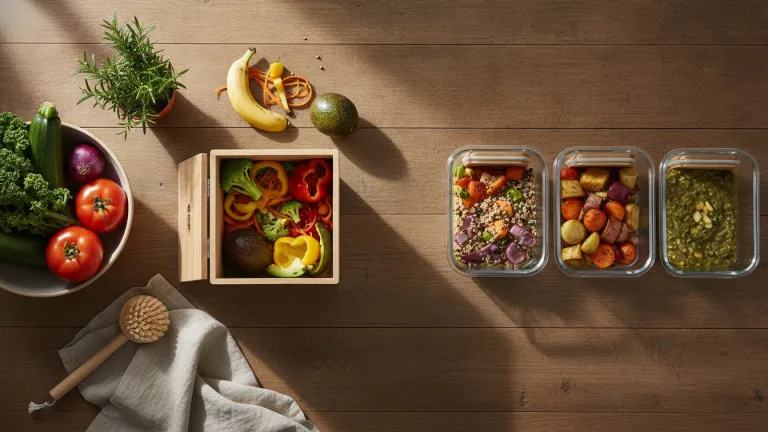
Every time you throw away that stale piece of bread or that fruit that softened before its time, it may seem too small to matter. But add that up with what happens in millions of homes around the world and the picture changes completely. According to data from the Food and Agriculture Organization of the United Nations (FAO), approximately one-third of all food produced on the planet for human consumption is lost or wasted along the production chain — from harvest to plate. In Brazil, studies by Instituto Akatu and Embrapa indicate that waste occurs at all stages of the food chain, with a significant portion happening within homes themselves.
The impact of this goes far beyond your wallet. When food rots in landfills, it releases methane — a gas with global warming potential dozens of times more intense than carbon dioxide in the short term, according to IPCC reports. This means that wasting food is not just an economic problem: it’s a real climate issue. And while we throw food away, millions of people in Brazil still face food insecurity, according to the National Survey on Food Insecurity in the Context of Covid-19 in Brazil and subsequent research by the PENSSAN Network.
The good news is that the solution starts at home, with simple and practical attitudes that anyone can adopt today. This article brings together tested strategies, organized by stage of your daily routine, to help you waste less, save more, and concretely contribute to a healthier planet.
Shopping Planning: The First Step to Reducing Food Waste
Most household waste starts even before reaching the kitchen: it happens at the supermarket, when we buy on impulse or without criteria. Planning your shopping is the highest-impact measure you can take.
How to plan efficiently before going shopping
- Take inventory of your fridge and pantry before leaving home. Note what you already have and what is close to expiring.
- Create a simple weekly menu — it doesn’t need to be detailed, just a general idea of meals for the next few days.
- Write a shopping list based on the menu and the items you’re missing, not what you “think” you might need.
- Buy only what’s on the list, especially for perishable items like fruits, vegetables, and dairy.
- Prefer smaller quantities of fresh products more frequently, instead of large volumes that may spoil.
This simple practice reduces the purchase of unnecessary items and ensures that what enters your home is actually consumed.
Proper Storage: Make Your Food Last Longer
A lot of food goes to waste not because we fail to consume it, but because we store it incorrectly. Small adjustments in organizing your fridge and pantry make a real difference.
Practical storage tips to extend food shelf life
- Follow the FIFO rule (First In, First Out): place older products in front and newer ones in back, both in the fridge and pantry.
- Store fruits and vegetables separately, as some fruits release ethylene — a natural gas that accelerates the ripening of nearby vegetables.
- Use airtight containers to store leftovers and opened foods. This prevents drying out and contamination.
- Keep your fridge organized and visible: items hidden behind others tend to be forgotten until they spoil.
- Know the ideal temperature for each compartment of your fridge — the coldest part (usually the middle or lower shelf) is ideal for meats and dairy.
- Freeze what you won’t consume within 2 days: bread, meat, ripe fruits, and even cooked rice keep well in the freezer.
| Food | Refrigerator | Freezer |
|---|---|---|
| Raw meat | up to 2 days | up to 6 months |
| Cooked rice | up to 5 days | up to 1 month |
| Cut fruits | up to 3 days | up to 3 months |
| Sliced bread | up to 5 days | up to 3 months |
| Soups and broths | up to 4 days | up to 3 months |
General reference based on food safety recommendations from ANVISA and USDA.
Whole Food Utilization: Using Everything You Bought
One of the most effective — and economical — strategies to reduce waste is whole food utilization: using parts that would normally be discarded, such as stems, peels, seeds, and leaves.
Embrapa and the Ministry of Health have promoted this practice for years as a way to improve both sustainability and nutrition. Beet peels, kale stems, pumpkin seeds, and carrot leaves are edible and nutritious — and often end up in the trash due to lack of knowledge.
Practical examples of whole food utilization
- Kale and broccoli stems: sauté with garlic and olive oil, just as you would with the leaves.
- Beet and carrot peels: bake in the oven with seasonings to make healthy chips.
- Pumpkin seeds: wash, season, and roast in the oven — they’re rich in zinc and magnesium.
- Carrot leaves: use in salads or sautés (they have a slightly bitter flavor, similar to watercress).
- Onion tips and stems: store in the freezer to use in homemade broths.
- Stale bread: turn into breadcrumbs, croutons, or French toast — don’t throw it away just because it hardened.
How to Use Leftovers Creatively in the Kitchen
Leftovers are not a problem — they’re raw material. With a little creativity, what was left over from last night’s dinner can become the tastiest lunch of the week.
Ideas for transforming leftovers into new meals
- Yesterday’s rice and beans: turn into fried or baked fritters, with the addition of eggs and seasonings.
- Cooked vegetables: blend with broth to make a creamy soup.
- Roast chicken: shred and use in tacos, wraps, salads, or pie fillings.
- Cooked pasta: sauté in a pan with olive oil, garlic, and whatever vegetables you have on hand.
- Very ripe fruits: turn into smoothies, homemade jam, compote, or add to cake batter.
Having a “fridge day” — a weekly meal dedicated to consuming leftovers and items that are about to expire — is a simple practice that families around the world have adopted with great results for both their wallet and the environment.
Composting: The Right Destination for What Really Can’t Be Used
Even with all the care, some organic waste inevitably remains: coffee grounds, eggshells, fruit and vegetable scraps. Instead of going to the landfill — where it decomposes without oxygen and generates methane — these materials can become rich fertilizer through composting.
Home composting is more accessible than it seems. It’s possible to do it in apartments, using compact worm composters (vermicomposting), which don’t smell bad when properly managed and produce excellent compost for plants.
How to start a simple composter at home
- Choose the model: for apartments, worm composters (vermicomposters) are ideal. For houses with a backyard, a ventilated bin or an open-air compost pile works well.
- Separate the “green” materials (wet): fruit scraps, vegetables, coffee grounds, eggshells.
- Add “brown” materials (dry): shredded paper, cardboard, dry leaves. The ideal ratio is about 1 part green to 2 parts brown.
- Turn the composter every few days to aerate and speed up decomposition.
- Avoid adding: meats, dairy, fats, and heavily seasoned foods, which attract pests and create bad odors.
- In 2 to 3 months, you’ll have dark, rich compost ready to nourish plants and gardens.
If you want to go further on the journey to a more sustainable lifestyle, see how being eco-friendly without spending much is easier than it seems — small changes, big impact.
Conscious Consumption: Rethinking Habits That Feed Waste
Some causes of waste are cultural and behavioral. Rethinking certain habits is an essential part of change.
- Resistance to “ugly” food: fruits and vegetables with irregular shapes or small visual imperfections have the same nutritional value and flavor. Give them preference when they’re cheaper at farmers’ markets.
- Oversized portions: serve smaller portions and go back for seconds if you want. It’s easier to control waste than to recover what’s already been thrown away.
- Best-by date vs. expiration date: “best by” is different from “use by.” Many products are still safe to consume days after the printed date — use your senses (smell, color, texture) to evaluate.
- Emotional shopping: avoid going to the supermarket hungry. This is one of the factors that most contributes to impulsive and excessive purchases of perishable foods.
Understanding that food waste is connected to other environmental problems — such as intensive water use in agriculture and pressure on biomes like the Amazon — helps put our daily behavior in perspective. Learn more about this impact in our article about what Amazon deforestation does to the planet.
Conclusion: Every Meal Is an Opportunity to Make a Difference
Reducing food waste doesn’t require perfection or great sacrifices. It starts with a more careful shopping list, continues with a better-organized fridge, and is consolidated with the habit of looking at leftovers as opportunities, not problems.
Every small action — properly storing leftovers, composting scraps, using the stem that would have gone to the trash — adds up with those of millions of other people. And together, these actions have the power to reduce emissions, save precious natural resources, and ensure that the effort of those who produced that food is not wasted.
Choose one action from this article and apply it today. It doesn’t matter where you start — what matters is that you start. The planet thanks you, your wallet thanks you, and often, your taste buds do too.
