Why Sorting Recyclables Is More Important Than You Think
Have you ever stopped to think about where everything you throw away ends up? In Brazil, urban solid waste generation is enormous — and a significant portion of this material could be recycled but ends up going straight to landfills or, worse, open dumps. According to the Panorama of Solid Waste in Brazil, published by the Brazilian Association of Public Cleaning and Special Waste Companies (Abrelpe), the country still faces a serious challenge in proper waste disposal, with millions of tons of recyclable materials being wasted annually due to failures in household sorting.
The good news is that correctly sorting recyclables is one of the most accessible and impactful actions anyone can take today, without spending money or radically changing their routine. When you sort waste correctly at home, you make the work of waste pickers and recycling cooperatives easier — essential professionals who drive an important production chain in the country — and ensure that more material actually reaches the transformation process.
This guide was created to answer all your questions about what can and cannot be recycled, how to organize your collection at home, and what mistakes to avoid. Clear and practical information is the first step. Let’s do this together?
Understanding Selective Collection in Brazil
The National Solid Waste Policy (PNRS), established by Law No. 12,305/2010, sets guidelines for waste management in the country and encourages selective collection in municipalities. Despite legislative advances, implementation is still uneven: large cities tend to have more structured systems, while smaller towns still depend almost exclusively on the work of independent waste pickers.
The most common selective collection system in Brazil uses the color code established by CONAMA Resolution No. 275/2001, which standardizes the identification of waste types:
| Color | Material |
|---|---|
| Blue | Paper and cardboard |
| Red | Plastic |
| Green | Glass |
| Yellow | Metal |
| Brown | Organic waste |
| Gray | Rejects (regular trash, non-recyclable) |
Before setting up your sorting station at home, it’s worth researching how collection works in your municipality. Many city halls provide schedules and routes on their official website or through apps. In cities without door-to-door collection, eco-points — voluntary drop-off points scattered throughout the neighborhood — are the most accessible alternative.
What Can and Cannot Be Recycled
This is the most common question — and also the source of the most frequent mistakes. Putting contaminated or non-recyclable material in selective waste can ruin an entire batch of material because cooperatives need to discard everything that cannot be processed.
Materials generally accepted for recycling
- Paper and cardboard: cardboard boxes, newspapers, magazines, notebook sheets, paper bags, cereal boxes (without food residue)
- Plastic: PET bottles, cleaning product containers, yogurt cups, caps, plastic bags (check specific collection points)
- Metal: aluminum cans, steel cans (such as peas or tomato paste), metal lids, clean aluminum foil, pipes and pans without non-stick coating
- Glass: bottles, preserve jars, perfume bottles (without the metal or plastic cap, which goes in another bag)
Materials that DO NOT go to regular recycling
- Used toilet paper, napkins, and tissue paper
- Greasy paper (such as pizza boxes with grease residue)
- Mirrors, window glass, and car glass (different composition from packaging)
- Disposable diapers and sanitary pads
- Long-life packaging (milk and juice cartons) — attention: some cooperatives and municipalities already accept this type of packaging, as it is recyclable when properly processed; check in your city
- Electronics, batteries, and cells (have specific disposal — see section below)
Step by Step: How to Organize Sorting at Home
Setting up a functional waste sorting system doesn’t have to be complicated. Here’s how to do it practically:
- Define a space in your kitchen or laundry area for sorting containers. It doesn’t need to be large — two or three buckets or bags are enough for most homes.
- Separate at least two main streams: dry recyclables (paper, plastic, metal, and glass together, if that’s how your collection works) and rejects (regular trash). If your collection is more detailed, use containers by category.
- Empty and rinse containers before disposing. You don’t need to wash with detergent, but removing food residue prevents contamination and bad odors.
- Crush cans and plastic bottles to save space in the container and make transportation easier.
- Remove caps and labels when possible — although many cooperatives can separate them, this practice speeds up the sorting process.
- Identify the days and times for selective collection in your neighborhood and put recyclables on the sidewalk only on those days to prevent the material from mixing with regular trash during conventional collection.
- Explain the system to the whole family. Sorting only really works when all household members participate. A simple agreement and visual posters near the bins help a lot, especially with children.
Common Mistakes That Sabotage Recycling
Even those who already have the habit of sorting waste make some mistakes that compromise all the effort. Keep an eye on these points:
- Putting dirty or wet material in recyclables. Food scraps contaminate paper and cardboard, which absorb moisture and become unusable.
- Throwing electronic waste in regular selective collection. Cell phones, batteries, cells, and light bulbs contain toxic substances and need specialized disposal.
- Thinking that recyclable packaging means it was recycled. The recycling symbol indicates that the material can be recycled, not that it will be automatically — that depends on the local collection system and the condition of the material.
- Disposing of plastic bags inside other plastic bags. Many cooperatives have difficulty processing bags and plastic films. Look for specific collection points, such as those available in supermarkets.
- Leaving broken glass loose. Broken glass should be wrapped in paper or placed in a closed and labeled box to protect collection workers.
Special Disposal: Electronics, Batteries, and Hazardous Waste
Some materials require extra attention because they contain substances that cause serious damage to soil and water when improperly disposed. The National Solid Waste Policy provides for reverse logistics for these items, meaning manufacturers and distributors are required to create collection systems.
Where to dispose correctly:
- Batteries and cells: pharmacies, supermarkets, electronics stores, and municipal eco-points usually have specific collectors.
- Cell phones, computers, and appliances: manufacturers have their own collection points, and many municipalities hold periodic collection campaigns. Companies like smartphone manufacturers maintain return programs — check the manufacturer’s website for your device.
- Fluorescent and LED bulbs: do not go in regular trash. Hardware stores and some supermarkets have collectors.
- Expired medications: pharmacies participating in the Conscious Disposal program collect medications for proper destination.
- Used cooking oil: many cooperatives, restaurants, and collection points accept oil to transform it into biodiesel or soap.
If you have difficulty finding collection points, the Cicloponto website and municipal environmental apps usually map the options in your region.
The Importance of Waste Pickers and Recycling Cooperatives
Talking about recycling in Brazil without mentioning waste pickers is impossible. According to data from the National Movement of Recyclable Material Collectors (MNCR), there are hundreds of thousands of waste pickers working in the country, and they are responsible for much of the recyclable material that is actually reused in industry. When you sort waste correctly, you are directly supporting the work of these people and their families.
Many cooperatives offer scheduled home collection, especially for large volumes of cardboard or electronics. Seeking out and supporting the cooperative closest to your home — including regularly donating material — is a concrete way to strengthen this chain. To learn how to reduce the volume of waste you generate even before needing to dispose of it, check out our article Reduce Household Waste and Save More at Home.
Quick Reference List: Does It Go in Recyclables or Not?
Use this list as a quick reference in your daily life:
- ✅ Clean PET bottle — yes
- ✅ Dry cardboard box — yes
- ✅ Aluminum can — yes
- ✅ Clean glass jar — yes
- ❌ Greasy pizza box — no
- ❌ Used toilet paper — no
- ❌ Broken mirror — no (special disposal)
- ❌ Used battery — no (specific collection point)
- ❌ Disposable diaper — no
- ⚠️ Long-life carton — depends on local collection; check
- ⚠️ Plastic bag — depends; prefer collection points at supermarkets
Conclusion: Every Action Counts, and Yours Makes a Difference
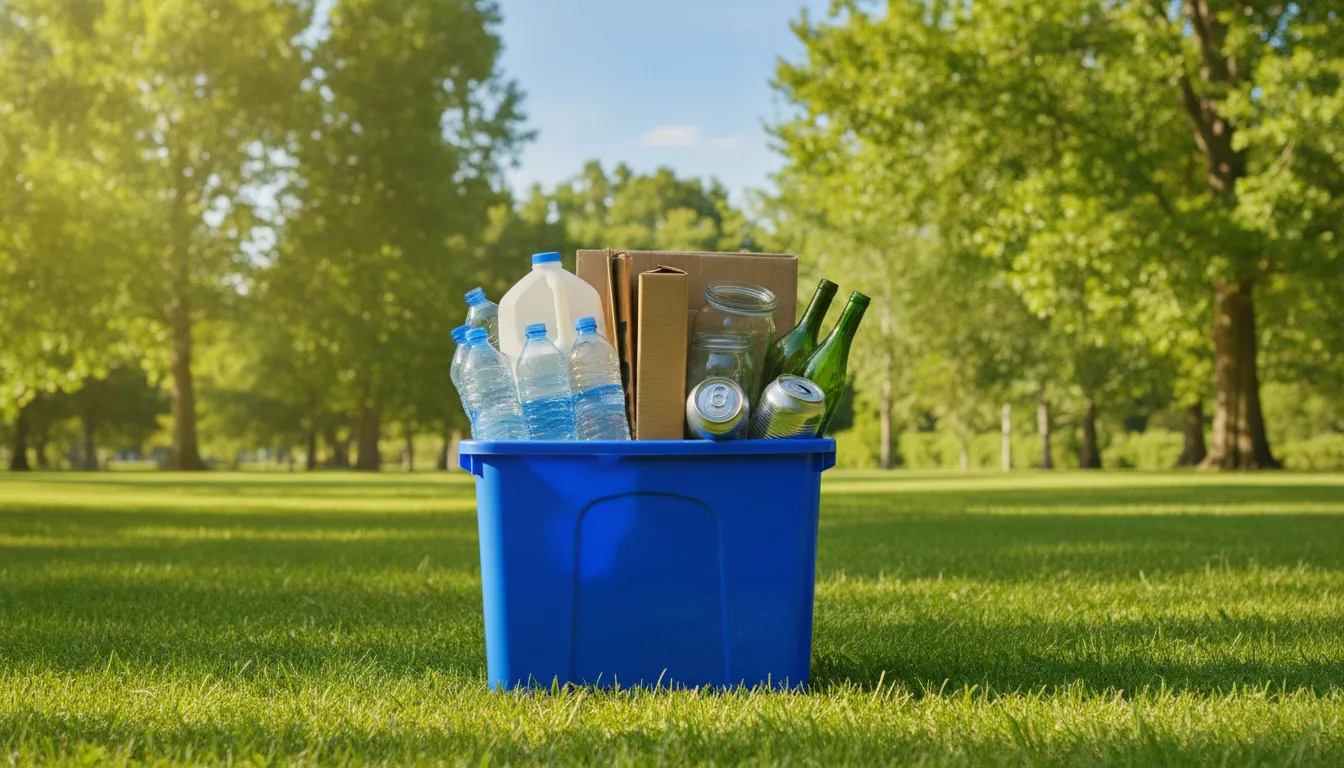
Sorting waste correctly is one of the simplest and most effective actions anyone can take to contribute to a healthier environment. It doesn’t require financial investment, just a little attention and the willingness to create a new habit. And, like any habit, it gets easier with time.
Start with the basics: two containers, rinsed packaging, and checking the selective collection days in your neighborhood. With this, you can already make a real difference. As the habit consolidates, you will naturally want to go further — get to know the local cooperative, reduce waste generation at the source, influence neighbors and coworkers.
Remember: recycling is one end of a larger system of caring for the planet. If you want to better understand how our daily choices connect to broader climate issues, the article Global Warming: Simple Causes You Need to Know is a great next step.
Did you sort your waste today? Start now — the planet thanks you, and so do the waste pickers.
