Why Straws Still Matter in 2026
It might seem too small to make a difference. After all, a plastic straw weighs less than five grams and lasts only a few minutes in your drink. But that lightness is exactly the problem: plastic straws are so light that they escape collection systems, blow away with the wind, and end up in rivers, beaches, and oceans with alarming ease. The image of a straw stuck in a sea turtle’s nostril that went viral in 2015 wasn’t an isolated incident — it captured something marine pollution researchers had been documenting for years.
Brazil is one of the countries with the highest consumption of single-use plastic in Latin America, and straws are among the items most frequently found during beach and waterway cleanup efforts. The good news is that, unlike other sources of plastic pollution — which require complex industrial changes — replacing disposable straws is one of the simplest, cheapest, and most accessible swaps anyone can make today. You don’t need to wait for public policy or a revolution in your lifestyle.
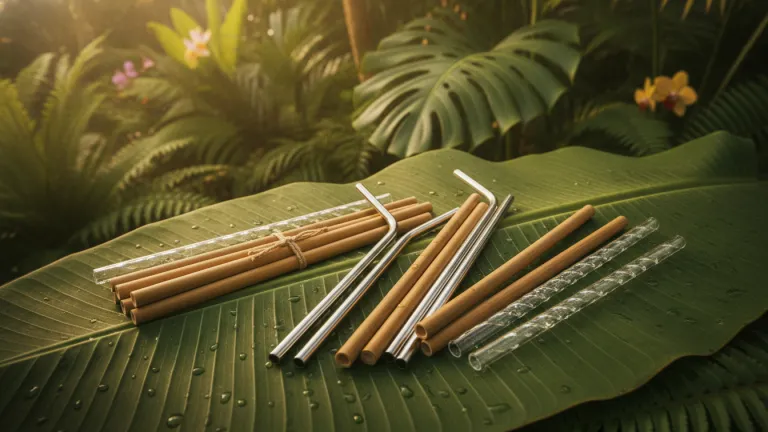
The challenge most people face, however, is choosing the right one. The reusable straw market has grown significantly in recent years and now offers at least five different materials, each with distinct advantages, limitations, and use profiles. In this article, we’ll compare the main types honestly — including the downsides that no one usually talks about — so you can make the best decision for your daily life.
The Real Problem with Disposable Plastic Straws
Before diving into alternatives, it’s worth understanding why conventional plastic straws are so problematic — not for alarmism, but to have clarity about what we’re replacing.
Disposable straws are generally made from polypropylene or polystyrene, plastics that aren’t accepted in most Brazilian recycling programs due to the small size of the item, which falls through the grates on sorting facility conveyor belts. In practice, even if you throw them in the correct bin, there’s a high chance they won’t be recycled.
In the environment, these plastics don’t biodegrade — they fragment into microplastics, tiny particles that have already been found in fish, sea salt, drinking water, and even breast milk, according to studies published by institutions like the WHO and UNEP (United Nations Environment Programme). The exact scale of the impact on human health is still being studied, but the precautionary principle already justifies the switch.
General Comparison: The 5 Main Types of Reusable Straws
Before detailing each material, here’s a comparative summary:
| Type | Durability | Average Cost (2026) | Best For | Weakness |
|---|---|---|---|---|
| Stainless Steel | High (years) | $3 to $8 | Daily use, juices, water | Can’t see internal cleanliness |
| Glass | High (with care) | $2 to $6 | Smoothies, home use | Fragile |
| Bamboo | Medium | $1.50 to $4 | Travel, casual use | Can develop mold if poorly dried |
| Silicone | High | $2.50 to $7 | Children, hot beverages | Retains odor |
| Paper/Oat | Very low | $0.20 to $0.60 | Transition, events | Not truly reusable |
Stainless Steel Straws: The Most Popular for Good Reasons
The stainless steel straw is by far the best-selling reusable option, and that’s no accident. It’s practically indestructible in household use, doesn’t retain flavor between uses (when properly washed), and comes in various diameters — from thin for juices and teas to wide for smoothies and bubble tea.
Main advantages:
- Years of durability with daily use
- Easy to clean with the brush that usually comes with the product
- Available in collapsible versions, ideal for carrying in your bag
- Neutral flavor for most cold beverages
Points to consider:
- Conducts temperature: can be uncomfortable with very hot or cold drinks on your lips
- Internal cleaning requires attention — always use the brush and let it dry completely before storing in a closed container
- Not transparent, so you can’t visually verify if it’s clean inside
Ideal for: those seeking a long-term solution for daily use at home, work, or coffee shops.
Glass Straws: Elegant But Requires Care
The borosilicate glass straw (the same used in laboratory containers and quality kitchen utensils) has very attractive aesthetics and is completely transparent — making it easy to check if it’s clean. It absolutely doesn’t interfere with the drink’s flavor and is an excellent option for those who use it mostly at home.
Main advantages:
- Completely transparent, facilitating hygiene verification
- Doesn’t retain smell or flavor
- Inert material, no risk of releasing substances into the drink
Points to consider:
- Fragile: can break if dropped, especially on hard floors
- Not recommended for small children
- Less practical to carry in a bag or backpack without a protective case
Ideal for: home use, especially for smoothies, fresh juices, and protein shakes.
Bamboo Straws: Natural But With Important Caveats
The bamboo straw has strong appeal for being natural and biodegradable. And it truly is — unlike plastic, bamboo decomposes in the environment without leaving toxic residues. This makes it an interesting option especially for events or situations where on-site washing isn’t feasible.
Main advantages:
- Biodegradable at the end of its useful life
- Lightweight and easy to transport
- Rustic and charming appearance
Points to consider:
- Can develop mold if not properly dried after each use — this is the biggest problem reported by consumers
- The porous surface of bamboo can retain residues from sweetened drinks
- Durability is lower than stainless steel or glass
Practical tip: after washing, always let the bamboo straw dry in a vertical or tilted position, with both ends open for air circulation. Never store it wet.
Ideal for: occasional use, short trips, people who value the natural and biodegradable aspect above all.
Silicone Straws: The Gentlest on Your Lips
The food-grade silicone straw is soft, flexible, and comfortable — making it especially popular for children and hot beverages, since it doesn’t conduct temperature like stainless steel. It’s virtually unbreakable and can be bent without damage.
Main advantages:
- Soft and safe for children and people with special needs
- Handles hot and cold beverages well
- Flexible and difficult to break
Points to consider:
- Tends to retain odor over time, especially with highly aromatic juices or fermented drinks
- Internal cleaning also requires a specific brush
- Some low-quality products on the market use inferior grade silicone — prefer products with food-grade certification
Ideal for: families with children, people who drink tea or hot beverages with a straw, use in therapy or accessibility needs.
How to Choose the Right Straw for Your Profile
There’s no universally best straw — there’s the straw most suitable for your lifestyle. Mentally answer these questions to decide:
- Where do you use straws most? At home → glass or stainless steel. Away from home → collapsible stainless steel or silicone.
- Do you have children at home? Silicone is the safest.
- Do you drink many hot beverages with a straw? Avoid stainless steel; prefer silicone.
- Do you value zero impact when disposing? Bamboo is the most biodegradable.
- Do you want maximum convenience without thinking much? Collapsible stainless steel with a case is the most versatile choice.
How to Properly Clean Reusable Straws
Having a sustainable straw is pointless if it becomes a breeding ground for bacteria. Proper cleaning is simple but requires attention:
- Wash immediately after use — milk, juice, and smoothie residues stick easily
- Use the specific brush that comes with most kits, running it through the entire internal length
- Let it dry completely before storing — residual moisture is the main cause of odor and mold
- Weekly deep cleaning (for stainless steel and glass): soak in a baking soda and warm water solution for 15 to 20 minutes
- For silicone with persistent odor: soak in a solution of white vinegar diluted in water for 30 minutes
Small Swaps, Big Accumulated Impact
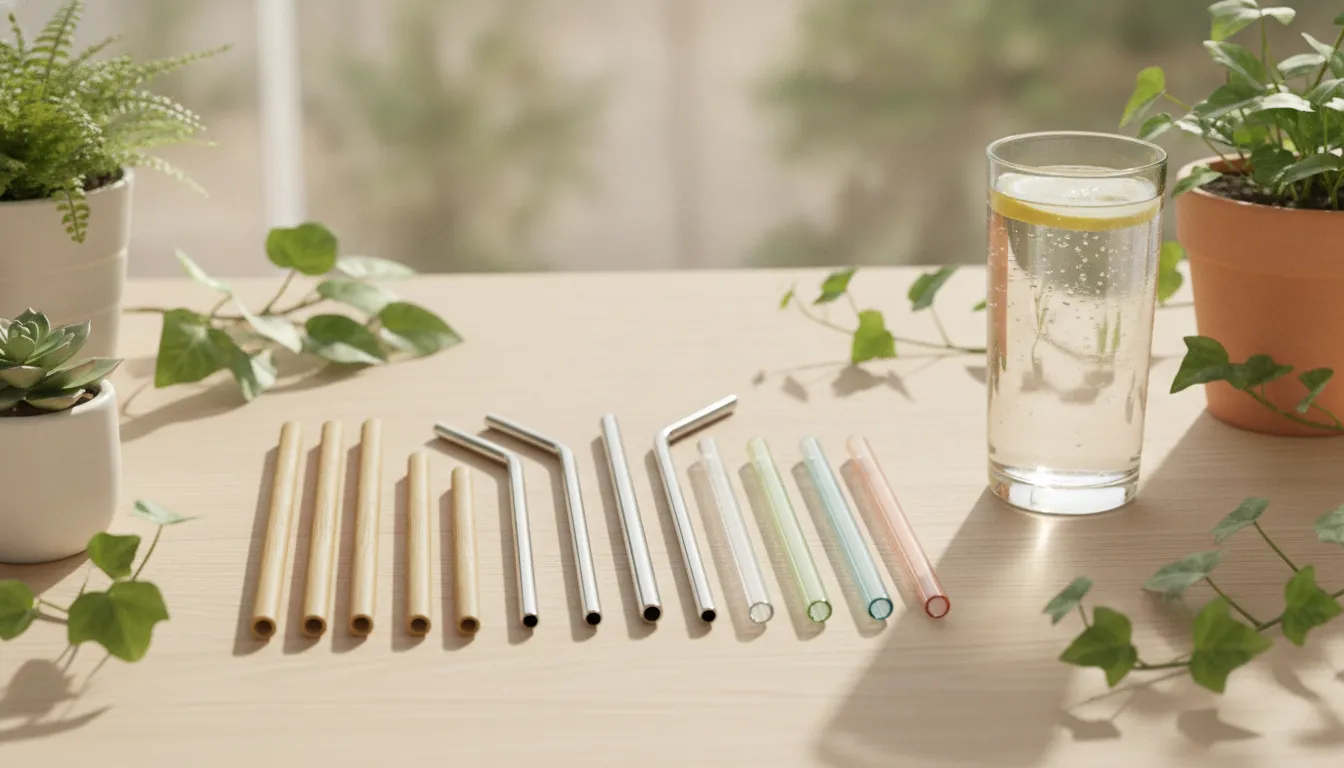
Replacing disposable straws with reusable ones is a small gesture, but one with genuine symbolic and practical value: each person who adopts this change removes hundreds of plastic pieces from the waste stream over a few years. And the habit often becomes the entry point for other broader changes — like eliminating disposable cups, plastic bags, and unnecessary packaging.
If you want to go beyond straws, check out our complete guide on how to eliminate single-use plastic from your daily life and discover other practical and accessible swaps. And if you want to understand how your everyday choices connect to a broader environmental impact, the article on ecological footprint is a great next step.
The transition to more conscious consumption doesn’t have to happen all at once. It can start with a stainless steel straw in your bag — and grow at your own pace, in a light and sustainable way.
