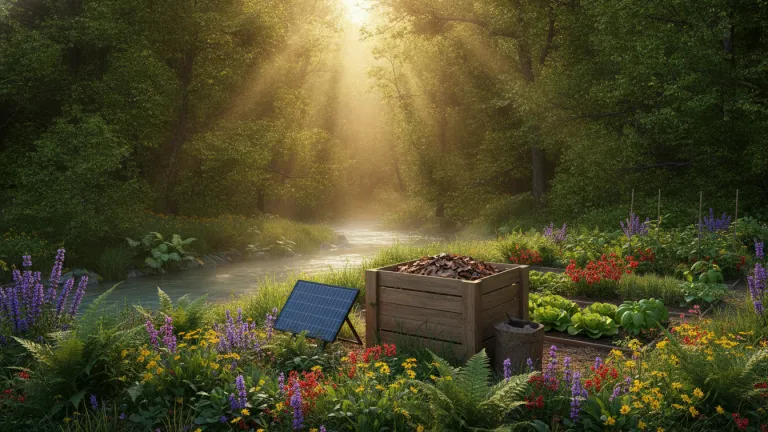
Why Your Daily Choices Matter More Than You Think
There’s a very common belief that protecting the environment is the exclusive task of governments, large corporations, or scientists in distant laboratories. This idea, while understandable, ignores a powerful fact: billions of individual decisions, made every day in kitchens, supermarkets, bathrooms, and streets, add up to an immense collective impact on the planet. Every time you choose a reusable bag, turn off an unnecessary light, or prefer the bus over a private car, you’re contributing to a larger system of change.
Data from the Intergovernmental Panel on Climate Change (IPCC) indicates that household consumption choices and individual lifestyles account for a significant portion of global greenhouse gas emissions — when considering not only direct energy consumption but also the production chain behind the products we buy, what we eat, and how we travel. This isn’t cause for paralyzing guilt, but rather for recognizing the real power each person holds in their hands.
The good news is that many of these changes don’t require enormous sacrifices or high investments. Some of the most effective actions are also the simplest, and can be adopted starting today. In this article, we’ve compiled a practical, evidence-based guide for anyone who wants to make a difference — without complication.
Conscious Consumption: Buying Less and Better
How excessive consumption affects the environment
The logic of the linear economy — produce, use, and discard — creates enormous pressure on natural resources and waste management systems. When we buy more than we need, especially disposable or low-durability products, we fuel production chains that are intensive in energy, water, and raw materials.
One of the most impactful actions anyone can take is simply buying less and with more intention. This doesn’t mean giving up quality of life, but rather questioning each purchase: do I really need this? Is there a more durable, repairable, or second-hand version?
Practical actions for more conscious consumption:
- Prefer products with reduced or returnable packaging
- Buy clothes at thrift stores or resale platforms before purchasing new items
- Repair appliances and electronics before replacing them
- Avoid impulse buying during sales: ask yourself if you would buy the item at full price
- Choose brands with verifiable sustainability commitments
- Give preference to local products, reducing transportation emissions
To explore this topic further at home, see our article on How to Reduce Household Waste and Spend Less — you’ll discover that saving money and caring for the planet go hand in hand.
Sustainable Eating: Your Plate as a Tool for Change
Food choices and environmental impact
Food production is one of the main sources of pressure on the global environment, involving land use, water, gas emissions, and deforestation. You don’t need to become vegan overnight — but reducing consumption of red meat and ultra-processed products already represents a significant step.
Food waste also deserves special attention. According to the Food and Agriculture Organization of the United Nations (FAO), about one-third of all food produced worldwide for human consumption is lost or wasted along the production chain. This means a significant portion of the resources used to produce food — water, energy, soil — is thrown away along with the food.
How to make your diet more sustainable:
- Plan your weekly meals before going to the store, buying only what’s necessary
- Store properly fruits, vegetables, and leftovers to extend the shelf life of food
- Use peels, stems, and leaves in broths, sautés, and creative recipes
- Gradually reduce red meat consumption, substituting with plant proteins, eggs, or sustainably sourced fish
- Buy from local producers and farmers’ markets whenever possible — food arrives fresher and with a smaller transportation footprint
- Compost organic waste: it’s simple, can be done in apartments, and transforms trash into fertilizer
Energy at Home: Small Habits, Big Difference
How to reduce electricity consumption in daily life
The Brazilian electricity sector has a relatively clean matrix compared to other countries, with strong participation from hydroelectric plants and significant growth in solar and wind energy. Nevertheless, saving energy remains important: it reduces costs, decreases pressure on the system, and for those using fossil fuels for heat generation or owning generators, directly cuts emissions.
Simple habits that make a difference on your electricity bill and the planet:
- Unplug devices when not in use — “standby mode” continuously consumes energy
- Replace incandescent or fluorescent bulbs with LEDs, which consume significantly less energy and last longer
- Use the washing machine with a full load and, when possible, with cold water
- Set the air conditioner to moderate temperatures (between 73°F and 75°F) and perform preventive filter maintenance
- Take advantage of natural light throughout the day, organizing work and study spaces near windows
- When buying appliances, check the energy efficiency rating and prefer the most efficient ones
If you’re interested in taking a bigger step, it’s worth learning about home solar energy options, which have already become economically accessible for many families.
Water: A Resource That Cannot Be Wasted
Practical actions to save water in everyday life
Brazil has one of the largest freshwater reserves in the world, but distribution is unequal and pressure on urban water sources is increasing. Extreme weather events — such as the prolonged droughts that affected various regions of the country in recent years — reinforce the importance of treating water as a precious resource, even in regions where it still seems abundant.
List of actions to save water at home:
- Turn off the faucet while brushing your teeth, shaving, or soaping dishes
- Take shorter showers — each minute less in the shower means liters saved
- Regularly check for leaks in faucets, toilets, and pipes
- Reuse rinse water from clothes to clean floors and sidewalks
- Install flow reducers on faucets and showerheads — they’re cheap and easy to install
- If you have a garden, water early in the morning or at dusk to reduce evaporation
- Consider collecting rainwater for irrigation and outdoor cleaning
Urban Mobility: How to Get Around with Less Impact
Sustainable transportation in daily life
Transportation is one of the largest sources of greenhouse gas emissions in urban centers. Opting for alternatives to private cars — especially when used individually — is one of the behavioral changes with the greatest potential for individual impact.
Walking and cycling are the cleanest options for short distances, while also bringing proven health benefits. For longer distances, public transportation offers a much smaller carbon footprint per passenger than private cars. Learn more about the benefits of this choice in our article on public transportation as an environmental ally.
Alternatives for more sustainable commuting:
- Prioritize walking and cycling for trips up to 3 miles
- Use public transportation whenever possible
- Organize carpools with coworkers or neighbors
- If you need a car, consider electric or hybrid vehicles when it’s time to replace yours
- Work from home when your job allows, eliminating unnecessary commutes
- Group appointments and shopping to avoid multiple outings on the same day
Nature and Biodiversity: Protecting What Exists Around You
Local actions that preserve ecosystems
Protecting the environment isn’t limited to reducing carbon emissions. Biodiversity — the variety of species, ecosystems, and genes that sustain life on Earth — is also under intense pressure. The International Union for Conservation of Nature (IUCN) maintains the Red List, which monitors thousands of threatened species globally, and the data is consistently concerning.
Even living in an urban area, you can contribute to nature preservation in concrete ways:
- Plant native species in pots, backyards, and gardens — they attract pollinators and support local wildlife
- Avoid using pesticides in home gardens and vegetable patches; prefer organic pest control methods
- Don’t release domestic animals like turtles, ornamental fish, and birds into the wild — they can become invasive species
- Participate in cleanup efforts in parks, beaches, rivers, and green areas in your city
- Support conservation areas by responsibly visiting national and state parks
- Report deforestation, illegal hunting, and improper waste disposal to the appropriate authorities
Conclusion: Your Action Starts Now

None of these actions, in isolation, will single-handedly solve the great environmental challenges of our time. But each one, practiced by more and more people, creates a mosaic of changes that transforms markets, pressures companies, and signals to governments that society demands a different path.
The transition to a more sustainable way of life doesn’t need to be perfect to be real. You don’t need to change everything at once — choose two or three actions from this list and start this week. Over time, what seemed like effort becomes habit, and habit becomes identity.
The planet doesn’t need a handful of people living sustainability flawlessly. It needs millions of people doing the best they can, with what they have, where they are.
Share this article with someone you know wants to do more for the environment — sometimes, a read is the push they needed.
