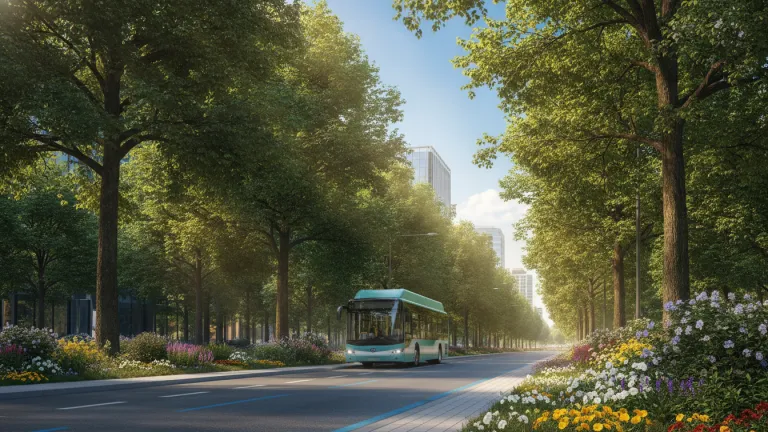
Picture this: you’re stuck in traffic, sitting in your car, staring at a miles-long line of vehicles that isn’t moving. The engine running, fuel burning, time passing — and outside, the air quality everyone breathes getting worse by the minute. This scene, so common in major cities around the world, hides an enormous environmental problem that we often don’t notice because we’re literally inside it.
The transportation sector is one of the largest contributors to greenhouse gas emissions globally. According to national emissions inventories, road transport accounts for a significant share of emissions from the energy sector, with private passenger transport being one of the main sources. This means that every time we choose a personal car as our only means of getting around, we contribute to a cycle that warms the planet and deteriorates air quality in cities.
The good news — and the central point of this article — is that one of the most effective solutions already exists, is available to many people, and costs far less than you might think: public transit. More than a matter of convenience or personal savings, choosing the bus, subway, train, or ferry is a concrete act of environmental care. Let’s understand why.
Why Public Transit Is a Climate Ally
The logic is simple when we put the numbers on the table. An articulated city bus can carry between 80 and 160 passengers per trip. If each of those passengers had used an individual car, we would have dozens of vehicles taking up road space and emitting pollutants. Even if the bus runs on diesel — a fuel with high polluting potential — the impact per person transported is dramatically lower than that of a private automobile.
This collective efficiency is called per capita CO₂ emissions, and it completely changes the picture when we talk about mass transit. Studies in the urban mobility sector, referenced by organizations like the International Association of Public Transport (UITP), consistently show that public transit systems generate emissions per passenger far lower than private cars — especially in corridors with high occupancy.
Beyond climate, there’s another environmental impact often forgotten: urban space. Each parked car takes up an average of 10 to 15 square meters of impermeable area — asphalt or concrete that prevents water infiltration into the soil, increases local temperature through the heat island effect, and contributes to urban flooding. Cities with efficient public transit can allocate these areas for plazas, tree planting, and permeability — essential elements for cities more resilient to climate change.
CO₂ Emissions: What the Real Data Tells Us
Without inventing percentages, we can speak precisely about what we know from reliable sources. The IPCC (Intergovernmental Panel on Climate Change) states in its reports that the transportation sector is responsible for approximately 16% of global greenhouse gas emissions, and that a large portion of this total comes from passenger road transport.
In various national contexts, emissions monitoring systems show that the energy sector — which includes transportation — is typically one of the largest sources of emissions. Within transportation, the road modal leads by a wide margin.
What does this have to do with your daily choice? Everything. Each car trip replaced by public transit represents a real reduction in emissions, even if small individually. When millions of people make this choice consistently, the collective impact is measurable and relevant to climate goals assumed under the Paris Agreement.
Electric and Hydrogen Transit: The Future Has Partially Arrived
One of the most encouraging transformations we’ve been witnessing in recent years is the electrification of public transit fleets. Cities worldwide are already operating or implementing fleets of electric buses or those powered by biomethane. Many major cities have announced ambitious goals for electrifying their municipal bus fleets as part of their climate plans.
When an electric bus is charged with energy from renewable sources — such as solar or hydroelectric power — the emissions associated with transportation drop to extremely low levels. The combination of mass transit + clean energy is one of the most powerful strategies for decarbonizing cities.
Subways and electric trains already represent this in practice. Metro systems, for example, operate primarily with electrical energy and transport millions of passengers daily with a fraction of the emissions that the equivalent in cars would generate. Similar systems exist in major cities worldwide — each with its particularities, but all with the environmental advantage of collective scale.
Other Environmental Benefits That Go Beyond CO₂
Talking about public transit and the environment isn’t limited to carbon emissions. There are several other positive impacts worth highlighting:
- Air quality: Fewer cars on the streets means less emission of particulate matter (PM2.5 and PM10), nitrogen oxides, and volatile organic compounds — pollutants associated with respiratory and cardiovascular diseases.
- Noise pollution: The constant noise of heavy traffic affects not only humans but also urban and peri-urban wildlife. Cities with subways and light rail vehicles (LRVs) significantly reduce surface noise.
- Land use: BRT (Bus Rapid Transit) systems and subways allow urban densification along corridors, reducing the disorderly horizontal expansion of cities — which encroaches on green areas, riparian forests, and fragile ecosystems.
- Reduction of heat islands: Less asphalt for parking and fewer vehicles in circulation contribute to milder urban temperatures.
- Resource consumption: Manufacturing a car requires significant amounts of steel, aluminum, plastic, rubber, and electronic components. Each person who gives up a private car indirectly reduces this industrial demand.
How to Use Public Transit More Consciously and Efficiently
If you want to start using public transit more — or want to optimize your current use — here’s a practical step-by-step guide:
- Map your regular routes. Identify which trips you make most frequently (work, school, shopping) and research the public transit options available for each one.
- Use mobility apps. Apps like Moovit, Google Maps, and official apps from local operators show routes, schedules, and wait times in real time — which greatly reduces the uncertainty that keeps people away from public transit.
- Combine modes. There’s no one-size-fits-all solution. Bicycle + subway, walking + bus, scooter + train are combinations that increase flexibility and also bring health benefits.
- Plan your schedule in advance. Knowing peak times helps you avoid the most crowded moments and makes the experience more pleasant.
- Calculate what you save. Add up fuel, parking, maintenance, and car insurance. The financial difference often surprises people and reinforces the motivation to continue.
- Try it for 30 days. Committing to a month of public transit for a specific route is enough to build the habit and notice the benefits in practice.
What You Can Do Beyond Using Public Transit
Individual change is important, but public transit improves when there’s collective pressure for more quality, coverage, and investment. Here are ways to amplify your impact:
- Participate in public consultations on urban mobility plans in your city — many local governments hold hearings open to the public.
- Support and vote for sustainable mobility policies, valuing candidates and administrators who include quality public transit in their proposals.
- Share your positive experience on social media. Normalizing public transit use as a smart and conscious choice helps break stigmas.
- Talk to employers about schedule flexibility to facilitate the use of public transit, avoiding extreme peak times.
- Support fare integration, which allows using different modes with a single payment — one of the greatest incentives for abandoning private cars.
These actions, combined with other sustainable choices in daily life — like those you’ll find in the article Sustainable Home: Which Items Do You Really Need? — build a lifestyle with an increasingly smaller environmental footprint.
Comparison: Private Transport vs. Public Transit
The table below summarizes the main differences from an environmental and urban perspective:
| Criterion | Private Car | Public Transit |
|---|---|---|
| CO₂ emissions per passenger | High | Low to very low |
| Urban space use | High (roads + parking) | Low (per passenger) |
| Noise pollution | Elevated in congested areas | Reduced (especially rail) |
| Natural resource consumption | High (manufacturing + fuel) | Diluted among many users |
| Electrification potential | Growing, but individual | High and already underway in cities |
| Impact on heat islands | Contributes negatively | Contributes positively |
Conclusion: Your Choice Carries Real Weight
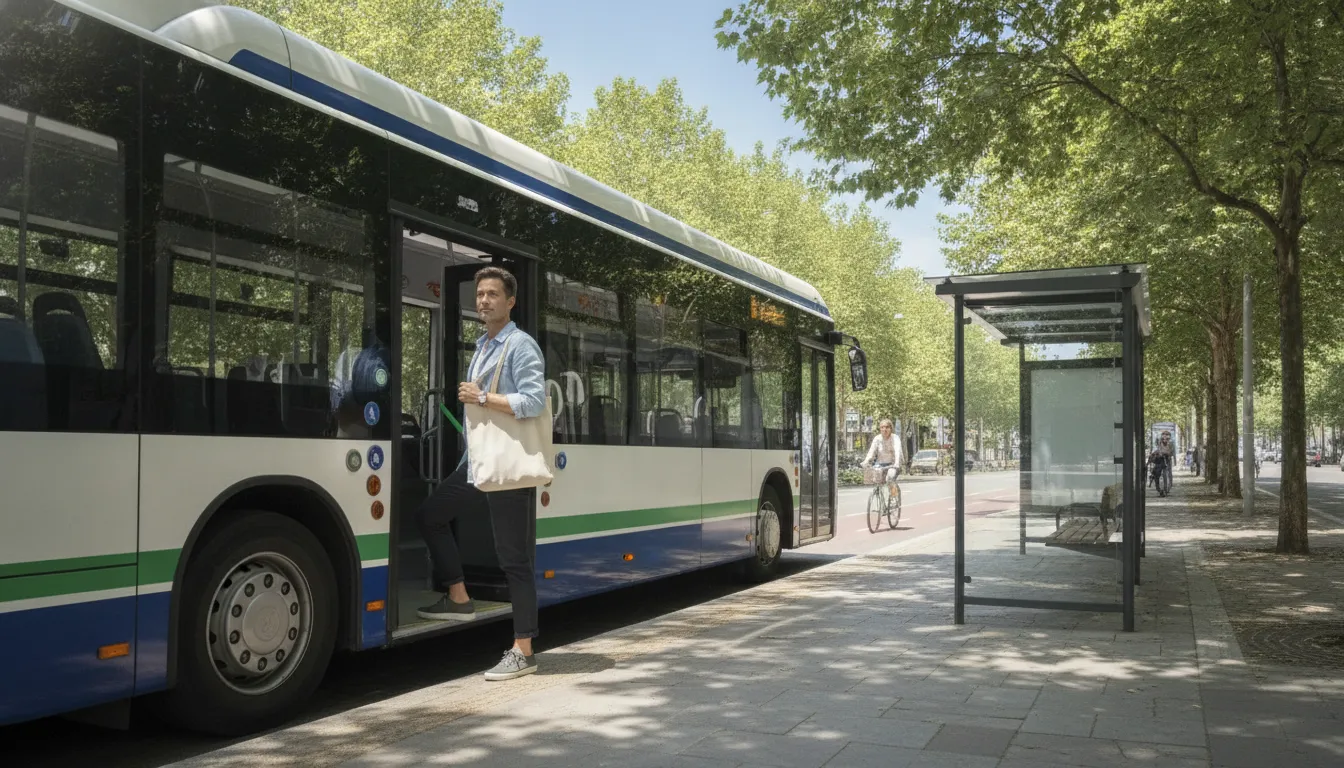
There is no climate solution that doesn’t pass, at some point, through the choices we make in the small things of everyday life. The commute to work, the trip to the grocery store, the drive to the kids’ school — each of these moments is an opportunity to make a decision that makes a difference.
Using public transit is one of the most accessible, practical, and immediate ways to reduce your carbon footprint, without giving up mobility. And as fleets become electrified and systems integrate, this positive impact will only continue to grow.
You don’t need to sell your car tomorrow. But you can start today by replacing one trip, trying a subway route, combining your bicycle with the bus. Every step counts — and together, these steps form the path to more breathable, fairer cities that are better prepared for the climate challenges ahead.
If you want to continue thinking about how to make your routine more sustainable, also check out How to Reduce Household Waste and Spend Less — another powerful starting point for those who want to act consciously without complicating life.
