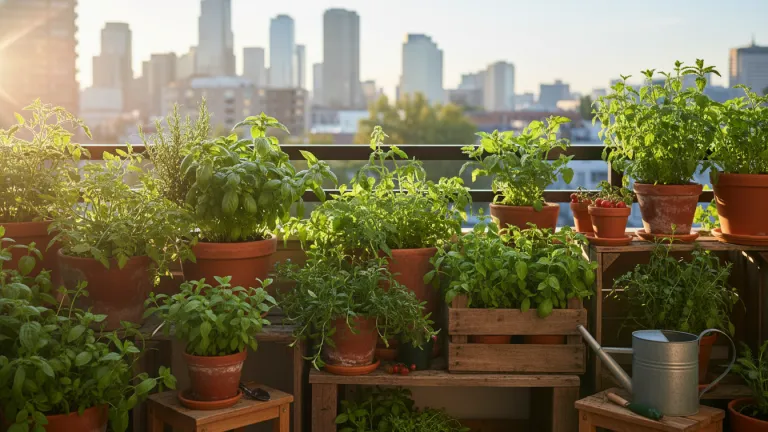
Living in an apartment is no excuse to stay away from nature — and more and more people are discovering this in practice. The idea of harvesting your own food, smelling fresh soil, and knowing exactly what goes on your plate has captivated urban dwellers of all ages. Best of all, you don’t need a backyard, a tractor, or significant investments to start.
An apartment garden is much more than an aesthetic or decorative trend. It represents a real change in habits: less packaging waste, reduced food miles — the so-called “food-kilometer” — and a more conscious connection with what we consume. In a context where cities grow and green spaces diminish, cultivating at home is also an act of resistance and care for the planet.
In this article, you’ll find everything you need to start your apartment garden from scratch: choosing the space, materials, which plants to grow, how to care for them, and how to avoid common mistakes. Whether on a sunny balcony or a modest window, there’s a solution for your space.
Why Having an Apartment Garden Makes a Difference
Before getting your hands dirty, it’s worth understanding why this matters beyond personal pleasure.
Food production and transportation are responsible for a significant portion of global greenhouse gas emissions. According to FAO (Food and Agriculture Organization) reports, food systems as a whole — including production, transportation, processing, and waste — account for about a third of global greenhouse gas emissions. When you grow at home, even just a handful of herbs, you’re cutting this cycle at the root.
Moreover, a home garden encourages conscious consumption: you start to value food more, waste less, and better understand natural cycles. There are also documented mental health benefits — contact with plants and the act of gardening reduce stress and promote well-being, especially relevant for those living in dense urban environments.
And don’t forget the impact on your carbon footprint: every small choice, added to others, has a real impact.
Choosing the Ideal Space for Your Garden
The first step is to look at what you have available with new eyes.
Sunlight: The Most Important Resource
Most vegetables and aromatic herbs need at least 4 to 6 hours of direct sunlight per day. Before buying anything, observe which window or balcony in your apartment receives the most sun throughout the day. In apartments facing north (which in the southern hemisphere receives more sun), the chances are better.
- Balconies and terraces: ideal space, with good ventilation and light.
- Windows with wide sills: excellent for smaller herb pots.
- Indoor spaces with artificial light: possible with specific LED plant lights (full spectrum), but requires more cost and planning.
If light is limited, focus on plants that tolerate partial shade, such as chives, cilantro, mint, and arugula. Avoid tomatoes, peppers, and basil in low-light areas — they require a lot of sun to produce well.
What You Need to Start: Material List
The good news is that you don’t need to spend much. Many materials can be reused or acquired at affordable prices.
Essential materials:
- Pots or containers with drainage holes (can be PET bottles, wooden boxes, drilled buckets, ice cream containers)
- Quality substrate — a mix of potting soil, worm humus, and perlite or coarse sand ensures good drainage and nutrients
- Trays or plates to collect excess water
- Seeds or seedlings (local markets, agricultural stores, or exchanges with neighbors are great sources)
- Small watering can or plastic bottle with holes in the cap
- Gardening gloves (optional, but recommended)
What to avoid:
- Pure garden soil taken from public flowerbeds — may contain pathogens, pesticides, and doesn’t have the ideal structure for pots
- Pots without holes — water accumulation rots the roots
- Excess synthetic chemical fertilizers — prefer organic compounds
Step-by-Step: How to Set Up Your Apartment Garden
- Define the space and assess available light. Spend two or three days observing where the most sun hits between 8 am and 5 pm. Note the number of hours of direct light.
- Choose plants suitable for your light level. Beginners should start with aromatic herbs — they are more resilient, grow quickly, and have immediate culinary use.
- Prepare the containers. Ensure all have drainage holes. Place a layer of pebbles or broken tiles at the bottom before the substrate to facilitate drainage.
- Prepare the substrate. A balanced mix is: 50% commercial vegetable substrate, 30% worm humus, and 20% perlite or coarse sand. This combination is well-drained, nutrient-rich, and lightweight.
- Plant the seeds or seedlings. For seeds, follow the packaging instructions regarding depth. For seedlings, make a hole slightly larger than the root ball, place the seedling, and firm the soil around it.
- Water moderately. The most common beginner mistake is overwatering. The general rule: insert your finger 2 cm into the soil — if it’s moist, no need to water; if dry, it’s time to water. In apartments, the soil dries faster in summer and slower in winter.
- Monitor and adjust. Observe the leaves: yellowing may indicate nutrient deficiency or excess water; thin, elongated leaves suggest lack of light. Adjust as necessary.
- Apply light fertilization every 30 days. Worm humus, bokashi, or liquid biofertilizer diluted in water are great organic and safe options for use in closed spaces.
Best Plants for an Apartment Garden
Not all plants adapt well to pots and urban environments. The right selection makes all the difference for beginner success.
Plant Light Level Difficulty Time to Harvest Chives Partial shade to full sun Easy 30–40 days Basil Full sun Easy 30–45 days Mint Partial shade to full sun Easy 30–40 days Arugula Partial shade Easy 25–35 days Lettuce Partial shade Easy 45–60 days Cherry Tomato Full sun Medium 60–90 days Bell Pepper Full sun Medium 90–120 days Cilantro Partial shade to full sun Medium 30–40 days Golden tip for beginners: start with chives and mint. They are almost impossible to kill, grow quickly, and can be used in the kitchen within weeks — essential to maintain motivation in the first months.
How to Water Consciously and Economically
Water is a precious resource, especially in large Brazilian cities, which face increasing supply challenges. In the garden, water waste is easier to avoid than it seems.
Efficient irrigation practices:
- Water early in the morning or late afternoon — prevents rapid evaporation caused by midday heat
- Use a saucer to reuse excess water that drains from pots — but empty it if it stands for more than a day to avoid mosquito breeding grounds
- Reuse vegetable cooking water (without salt) — rich in nutrients and great for watering
- Slow irrigation bottles (inverted PET bottle in the pot) work well to maintain moisture on hotter days without soaking
For more tips on how to save water daily, check out our guide Save Water at Home with These Practical Tips.
Common Mistakes and How to Avoid Them
Even those with some experience make mistakes. Knowing the most common errors saves time, money, and frustration.
- Overwatering: the main cause of plant death in pots. Prefer less frequent, deeper watering over daily superficial watering.
- Choosing pots that are too small: plants like tomatoes and peppers need pots with at least 10 to 15 liters of capacity to develop a good root system.
- Ignoring fertilization: the pot substrate depletes quickly. Without nutrient replenishment, plants stop growing or become sick.
- Planting everything at once: start with two or three species and expand as you gain confidence.
- Not observing plants regularly: small problems (pests, deficiencies) are easy to solve early on and difficult once they’ve advanced.
Conclusion: Your First Green Step Starts Today
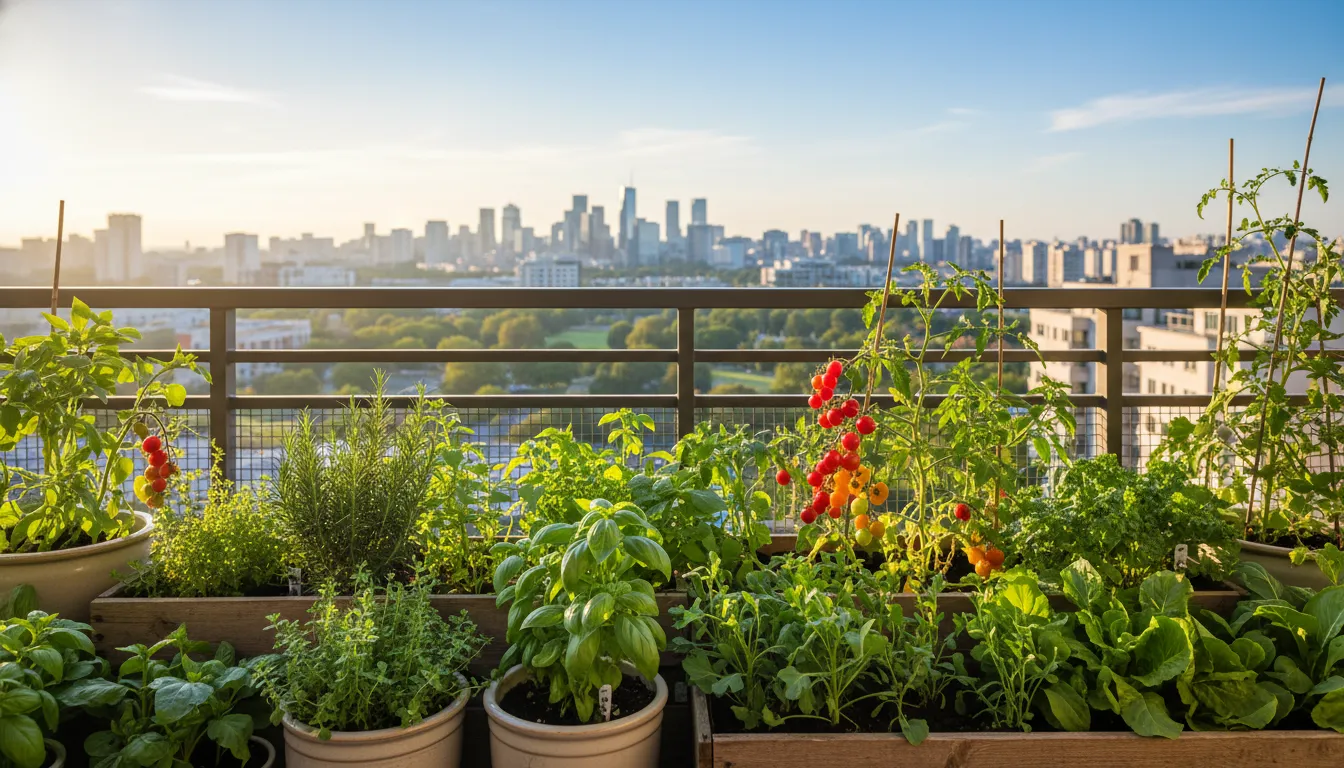
Setting up an apartment garden is one of the most concrete and satisfying actions you can take towards a more sustainable lifestyle. It doesn’t require perfection, much space, or significant resources — it requires, above all, attention and consistency.
Every pot of chives on the window, every bunch of arugula harvested at home, every seed that turns into a plant is a small victory that reconnects you to the origin of your food and the rhythm of nature. And when these actions multiply — in apartments, buildings, entire cities — the collective impact becomes genuinely significant.
Start small. Choose a species today. Observe, learn, make mistakes, and try again. The garden will grow with you — and the planet appreciates every leaf cultivated with care.
Back To Top - Choosing pots that are too small: plants like tomatoes and peppers need pots with at least 10 to 15 liters of capacity to develop a good root system.
- Use a saucer to reuse excess water that drains from pots — but empty it if it stands for more than a day to avoid mosquito breeding grounds
- Water early in the morning or late afternoon — prevents rapid evaporation caused by midday heat
- Apply light fertilization every 30 days. Worm humus, bokashi, or liquid biofertilizer diluted in water are great organic and safe options for use in closed spaces.
- Monitor and adjust. Observe the leaves: yellowing may indicate nutrient deficiency or excess water; thin, elongated leaves suggest lack of light. Adjust as necessary.
- Water moderately. The most common beginner mistake is overwatering. The general rule: insert your finger 2 cm into the soil — if it’s moist, no need to water; if dry, it’s time to water. In apartments, the soil dries faster in summer and slower in winter.
- Plant the seeds or seedlings. For seeds, follow the packaging instructions regarding depth. For seedlings, make a hole slightly larger than the root ball, place the seedling, and firm the soil around it.
- Prepare the substrate. A balanced mix is: 50% commercial vegetable substrate, 30% worm humus, and 20% perlite or coarse sand. This combination is well-drained, nutrient-rich, and lightweight.
- Prepare the containers. Ensure all have drainage holes. Place a layer of pebbles or broken tiles at the bottom before the substrate to facilitate drainage.
- Choose plants suitable for your light level. Beginners should start with aromatic herbs — they are more resilient, grow quickly, and have immediate culinary use.
- Define the space and assess available light. Spend two or three days observing where the most sun hits between 8 am and 5 pm. Note the number of hours of direct light.
- Windows with wide sills: excellent for smaller herb pots.
