
Water is one of the planet’s most precious resources — and also one of the most wasted within homes. While climate and sustainability debates dominate headlines worldwide, the real issue often lies in open taps, leaking toilets, and inefficient washing machines in the daily lives of Brazilian families. The good news is that small habit changes can make a huge difference, both for the environment and your water bill at the end of the month.
Brazil has one of the largest reserves of freshwater in the world, but this doesn’t mean abundance for everyone. Regions like the semi-arid northeast have faced structural scarcity for decades, and even major urban centers — such as São Paulo and Brasília — have experienced severe water crises. According to data from the National Sanitation Information System (SNIS), waste in distribution networks is still high in the country, and domestic consumption represents a significant portion of the total treated water used. In other words: what we do at home matters.
This article gathers practical, accessible, and evidence-based tips for you to save water daily without sacrificing comfort. You don’t need to do everything at once — choose where to start and gradually incorporate new habits. The results will show in the environment, your wallet, and your conscience.
Why Saving Water at Home Is Urgent in 2026
The water crisis is not a distant scenario. Reports from the Intergovernmental Panel on Climate Change (IPCC) warn that changes in the hydrological cycle — including more intense droughts and irregular rainfall — directly affect the availability of potable water in various regions globally. In Brazil, global warming intensifies phenomena like El Niño and compromises the recharge of aquifers and reservoirs.
Besides the climate scenario, there is an important infrastructure fact: part of the treated water leaving the stations never reaches home taps, lost in pipe leaks. This means every liter saved at home eases not only the environment but also an already overloaded supply system.
Saving water also has a direct impact on the carbon footprint, as water treatment and pumping consume electricity. Less water consumption means less energy spent — a double benefit for the planet.
How to Identify the Main Waste Points in Your Home
Before taking action, it’s essential to understand where waste occurs. Most domestic losses are concentrated in a few critical points.
Silent Leaks That Cost You
A leaking toilet flush can waste dozens of liters per day without you noticing. The same goes for dripping taps. The dye test is simple: drop a few drops of food coloring in the toilet tank and wait 15 minutes without flushing. If the color appears in the bowl, there’s a leak.
The Biggest Domestic Water Consumers
Generally, bathrooms (including showers and toilets) account for the largest part of residential water consumption. Next are laundry, kitchen, and house cleaning. Knowing this hierarchy helps prioritize where to act first.
Quick Diagnostic Checklist:
- Are there dripping taps at home?
- Does the toilet make continuous noise or show leaks?
- Does the water tank overflow frequently?
- Do you know your monthly consumption in cubic meters (m³) on the water bill?
Practical Tips to Save Water in the Bathroom
The bathroom is, in most homes, the place of highest water consumption. Small changes here have a significant impact.
Reduce Shower Time
Shorter showers are one of the most effective measures. Conventional showers consume considerable volumes of water per minute — reducing a few minutes in the daily shower already represents significant savings over the month. Use a timer on your phone to become aware of the time spent.
Replace or Adapt the Toilet
Older toilets use larger volumes of water per flush. Models with a dual flush system allow choosing between two different volumes as needed. If replacing the toilet is not feasible at the moment, a simple alternative is to place a PET bottle filled with sand or water inside the tank to reduce the volume used per flush.
Turn Off the Tap While Brushing Your Teeth
It seems obvious, but it’s still a habit to be cultivated in many homes. Keeping the tap open while brushing wastes water without any benefit.
Other Bathroom Actions:
- Install aerators (flow reducers) on taps — they are cheap and easy to fit
- Prefer showers over bathtubs when possible
- Fix any identified leaks immediately
Save Water in the Kitchen and Dishwashing
The kitchen offers several unnoticed saving opportunities in the routine.
Wash Dishes More Efficiently
- Scrape food residues before washing, avoiding unnecessary pre-rinsing.
- If washing by hand, fill the sink with water instead of leaving the tap open throughout the process.
- If using a dishwasher, run it only with a full load and prefer low-consumption programs.
- Defrost food in the fridge or at room temperature, not under running water.
Reuse Water from Food Preparation
The water used to wash vegetables or cook unseasoned food can be reused to water plants. It’s a simple habit that eliminates waste.
How to Save Water When Washing Clothes
The washing machine is one of the highest water-consuming appliances in the house. Using it strategically makes a difference.
- Wait to accumulate enough clothes to run the machine always with a full load.
- Choose the appropriate program for the type of clothes — lightly soiled clothes don’t need long cycles.
- Prefer front-loading machines, which generally consume less water than top-loading ones.
- Reuse rinse water for cleaning floors, toilets, or outdoor areas.
Water Reuse and Rainwater Harvesting at Home
Reusing already used water or harvesting rainwater are practices gaining ground in Brazilian households, and rightly so.
How to Set Up a Simple Rainwater Harvesting System
Even without high investments, it’s possible to create a basic system:
- Install a gutter on the roof edge, if not already present.
- Direct the gutter to a water tank or closed barrel (covered to prevent mosquito breeding).
- Install a fine mesh at the entrance to filter leaves and debris.
- Use this water to wash sidewalks, water gardens, clean the car, or supply the toilet.
Important: rainwater collected on open surfaces is not suitable for human consumption without proper treatment.
Greywater Reuse
Greywater is that from sinks, showers, and washing machines — distinct from black water from toilets. With simple filtration systems, it can be reused for non-potable purposes within the home. There are accessible commercial kits for this purpose, and installation can be done by a plumber.
Outdoor Area: Garden, Sidewalk, and Car Washing
Many liters of water are wasted outside the house with practices that can be easily replaced.
Smart Garden Irrigation
- Water plants early in the morning or late in the afternoon, when evaporation is lower.
- Use hoses with triggers or drip systems, delivering water directly to the roots with less waste.
- Prefer native or climate-adapted plants — they generally require less irrigation.
- Cover the soil with straw or tree bark (mulching) to retain moisture longer.
Sidewalks and Car Washing
- Sweep sidewalks with a broom instead of using a hose.
- Wash the car with a bucket and damp cloth. Washing a car with an open hose consumes much more water than necessary for an equally good result.
Conclusion: Every Drop Counts — And You Can Start Today
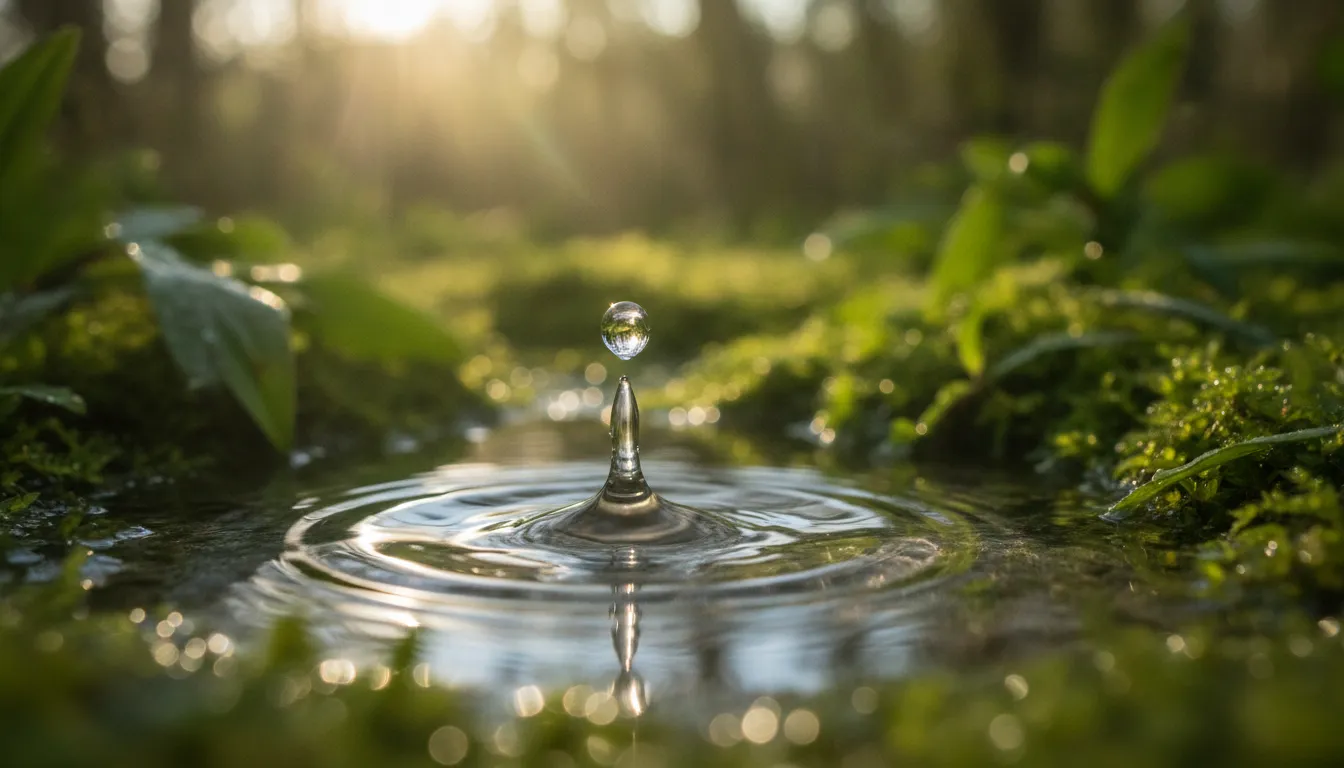
Saving water doesn’t require sacrifice or major renovations. As you saw throughout this article, most actions are simple, cheap, and can be implemented immediately. The biggest step is awareness: understanding that the resource is finite and that our daily choices have a real impact on its availability for future generations.
Start by identifying leaks at home, then incorporate one habit at a time — reduce shower time, turn off the tap while brushing your teeth, use the washing machine with a full load. Gradually, these actions become automatic and the impact accumulates.
If you want to further expand your environmental contribution, explore how other daily habits affect the planet, as discussed in our article on Carbon Footprint: What It Is and How to Reduce Yours. Sustainability is made of connected choices, and each one matters.
The planet needs water — and you have the power to help preserve it, one habit at a time.
- Water plants early in the morning or late in the afternoon, when evaporation is lower.
- Choose the appropriate program for the type of clothes — lightly soiled clothes don’t need long cycles.
- Wait to accumulate enough clothes to run the machine always with a full load.
