What is Water Reuse and Why It Matters Now
Imagine using two glasses of treated and purified drinking water just to flush the toilet. This is exactly what happens in most Brazilian homes every day — repeated dozens of times a week. In a country where a significant portion of the population still faces water insecurity and where extreme weather events have made droughts more frequent and severe, this habit is increasingly unsustainable.
Water reuse emerges as a practical and intelligent response to this scenario. Essentially, it involves using water that has already served a domestic or industrial purpose — such as bathing, laundry, or collected rainwater — for other purposes that do not require potable water. It’s that simple. And the benefits go far beyond the water bill at the end of the month.
This article explains what water reuse is, the types recognized in Brazil, how you can implement it in your routine today, and the essential precautions for doing so safely. Because taking care of available water is undoubtedly one of the most concrete ways to help reduce water consumption in daily life.
Water Reuse: Definition and Legal Basis in Brazil
Water reuse is water that, after being used in some human activity, receives appropriate treatment for its new use — or is redirected directly to functions compatible with its current quality without needing additional treatment.
In Brazil, the subject is mainly regulated by CONAMA Resolution No. 430/2011, which establishes conditions for the discharge of effluents, and by ABNT technical standards, such as NBR 15.527, which deals with rainwater harvesting. In 2021, the Basic Sanitation Legal Framework (Law No. 14.026/2020) began requiring concessionaires to consider reuse as part of water management strategies, which boosted investments in the sector in subsequent years.
The National Water and Basic Sanitation Agency (ANA) classifies reuse into categories that include urban, agricultural, industrial, and environmental purposes. For the domestic context, the most relevant are:
- Greywater reuse: utilizing water from sinks, showers, bathtubs, and washing machines (excluding toilets).
- Rainwater harvesting: collecting, storing, and using precipitation for non-potable purposes.
- Condensation water reuse: utilizing water generated by air conditioning units.
Greywater, Rainwater, and Condensation: Understanding the Differences
Not all “used” water is the same, and understanding the differences is crucial for safe use.
Greywater: The Greatest Domestic Potential
Greywater represents the largest fraction of domestic sewage generated by a household. It contains soap, dirt residues, and sometimes small amounts of organic matter, but it does not have the pathogen load present in blackwater (originating from toilets). Therefore, with simple filtration and basic precautions, it can be redirected for:
- Toilet flushing
- Washing floors, sidewalks, and garages
- Garden and ornamental plant irrigation (with restrictions)
- Vehicle washing
Rainwater: Free and Underestimated
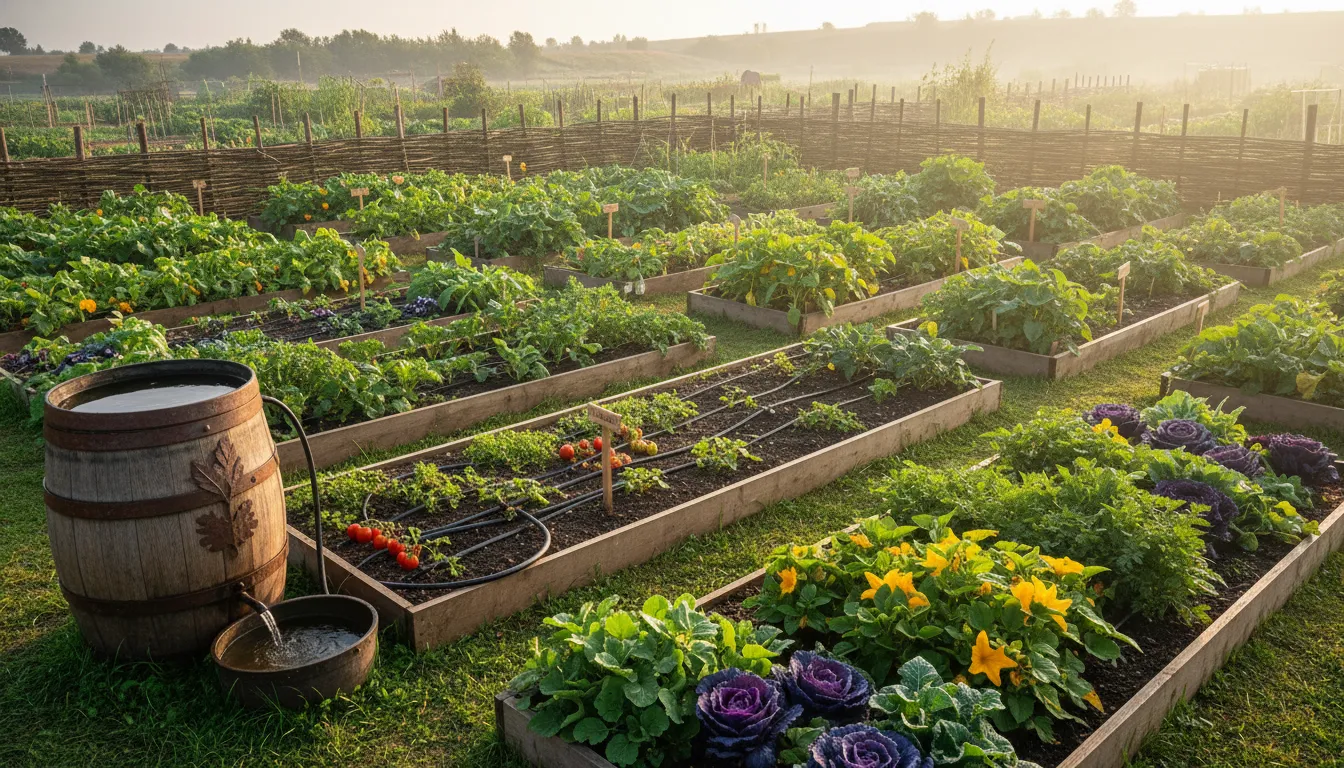
Rainwater, collected from roofs and directed to cisterns or reservoirs, is generally of good quality — especially after the first few minutes of precipitation, which wash away dust and pollutants from the surface. It can be used for the same purposes as greywater and even some additional ones, such as supplying drip irrigation systems in gardens.
Air Conditioner Condensation Water: Simple and Neglected
Air conditioning units produce distilled water as a byproduct of their operation. This water is extremely pure — so much so that it can be used in irons and humidifiers — and is also very suitable for watering plants. A single unit can generate between 1 and 3 liters per hour on hot and humid days, depending on capacity and environmental conditions.
How to Implement Water Reuse at Home: Step by Step
No major renovations are needed to start. There are solutions for different budgets and housing profiles.
To Start Today (Without Investment or Minimal Investment)
- Collect air conditioner water: place a bucket or jug under the unit’s drain and use this water to water plants or wash the floor.
- Reuse water from shower heating: while waiting for the water to heat up, collect it in a bucket. It is perfectly clean water, ideal for watering plants or manual flushing.
- Utilize the final rinse water from the washing machine: many machines allow pausing the cycle or connecting a drain hose to a reservoir. Use this water to wash floors.
- Install a kitchen sink water collector: when washing fruits and vegetables, collect the water in a basin and use it to water the garden or your home herb garden.
For Those Who Want to Go Further: More Structured Systems
- Install a rainwater cistern: ready-made polyethylene models are available in construction stores from a few hundred reais. Connect the roof downspout to a simple filter and the reservoir.
- Implement a greywater reuse system: there are residential kits that filter shower or washing machine water and automatically redirect it to the toilet flush tanks. The cost and complexity of installation vary greatly — consult a qualified plumber.
- Consider a homemade sand and activated carbon filter: for greywater from showers with low soap content, a simple filter already removes turbidity and odors before reuse in flushing and irrigation.
Essential Safety and Hygiene Precautions
Domestic reuse is safe when done responsibly. Some rules are non-negotiable:
- Never use greywater or rainwater for drinking, cooking, or personal hygiene without appropriate treatment and laboratory analysis.
- Clearly identify reuse reservoirs and pipes — use colors or labels to avoid confusion with the potable water system.
- Avoid reusing greywater with high concentrations of detergents or chemicals in gardens where food will be consumed.
- Clean and sanitize reservoirs regularly to prevent sludge buildup, mosquito proliferation (especially Aedes aegypti), and odors.
- Do not store greywater for more than 24 hours without treatment; it degrades quickly and can become a sanitary risk.
How Much Can You Save? A Realistic Perspective
Although numbers vary greatly depending on family size, type of residence, and installed system, the potential gains from domestic reuse are significant. Studies conducted by Brazilian universities, such as the University of São Paulo (USP) and the Federal University of Ceará (UFC), have documented reductions in potable water consumption between 20% and 40% in homes with properly implemented greywater or rainwater collection systems.
Think of it this way: if toilet flushes account for about 30% of domestic water consumption — according to data from the sanitation sector itself — and you can supply them entirely with greywater or rainwater, you already eliminate that portion of your bill. Add to that garden irrigation and floor washing, and the accumulated impact over the year is considerable.
Besides financial savings, the environmental benefit is real: less demand on already pressured water sources, less energy spent on the treatment and distribution of potable water, and fewer effluents discharged into the sewage network.
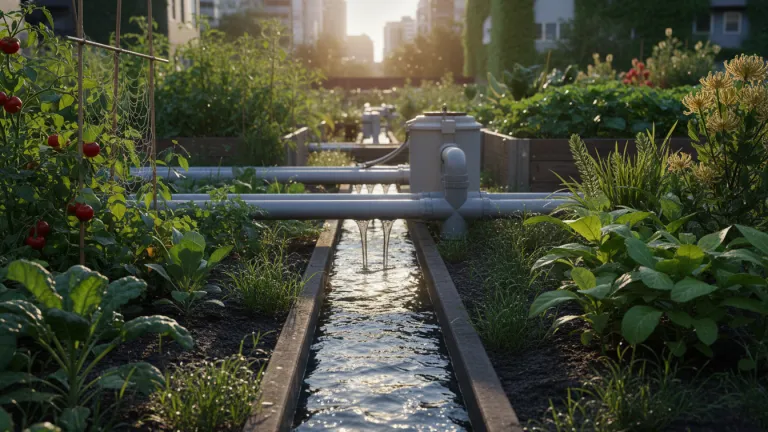
Water Reuse in Urban Gardens: What Works
For those who cultivate plants at home, reuse is especially valuable. Some practical guidelines:
- Rainwater and air conditioner condensation water are ideal for any type of plant, including vegetables and culinary herbs.
- Water from rinsing fruits and vegetables can be used directly in irrigation, as it contains no chemical agents.
- Greywater from the shower (with biodegradable soaps and in low concentration) can be used on ornamental plants and lawns, but with caution on vegetables — prefer to apply it to the soil, away from leaves and fruits.
- Avoid using water with conventional detergents repeatedly in the same bed, as sodium accumulation can harm the soil over time.
Conclusion: Small Actions, Big Collective Impact
Water reuse is not a futuristic technology nor a sacrifice of comfort. It is, in most cases, an intelligent reorganization of the water flows that already pass through your home every day. Starting with a bucket under the air conditioner or collecting cold shower water is already a real and concrete first step.
As water challenges persist in various regions of Brazil — whether due to irregular rainfall, pressure on aquifers, or urban growth — every liter of preserved potable water is valuable. And the best part: the practices described here are within reach of most people, whether living in an apartment or house, in a big or small city.
How about choosing one of the actions from this list and putting it into practice this week? Transformation begins with small gestures, repeated by many hands.
