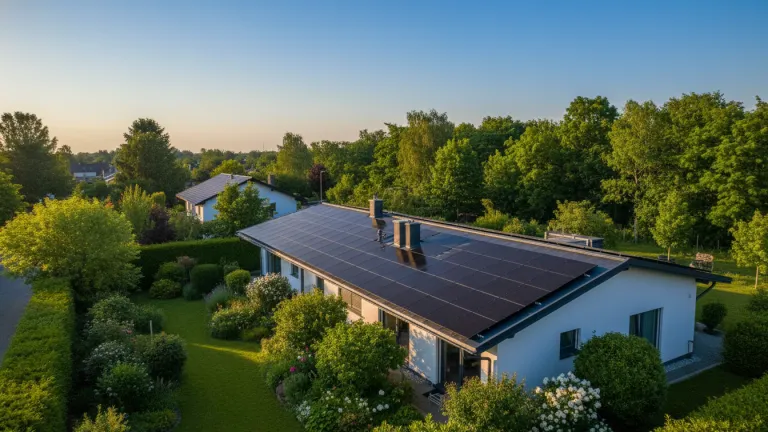
Imagine waking up in the morning, turning on the shower, making coffee, working on the computer all day — and at the end of the month discovering that your electricity bill is zero, or even has a credit. This is not science fiction nor a privilege of a few. It is the reality for hundreds of thousands of Brazilian families who have already adopted residential solar energy and are reaping the benefits of this decision every day.
Brazil has one of the largest solar potentials in the world. Even the less sunny regions of the country receive solar radiation significantly higher than the European average — and there, solar energy is already widely established. With the costs of photovoltaic systems consistently falling over the last decade and a more mature regulatory framework, installing solar panels at home has ceased to be an exotic option to become an increasingly accessible and smart investment.
If you’ve ever wondered how all this works in practice — from the panel on the roof to the credit on the bill — this guide is for you. We will demystify the technology, explain the installation process step by step, discuss real costs, and show why 2026 might be the best time to take this step.
How Photovoltaic Solar Energy Really Works
The photovoltaic effect: the science behind solar panels
It all starts with a physical phenomenon called the photovoltaic effect, discovered by Edmond Becquerel in 1839. When sunlight (composed of particles called photons) hits the silicon cells inside a panel, it releases electrons, generating a direct current (DC).
The problem is that most household appliances operate on alternating current (AC). This is where the solar inverter comes in, the brain of the system: it converts the direct current generated by the panels into alternating current usable by your home. There is also the microinverter, installed individually on each panel, which improves performance on roofs with partial shading.
The basic components of a residential photovoltaic system are:
- Solar panels (modules) — capture the sun’s energy
- Inverter or microinverter — converts DC to AC
- Mounting structure — supports the panels on the roof
- Electrical panel and protections — system safety
- Bidirectional meter — records energy generated and consumed (installed by the distributor)
The energy compensation system in Brazil
In Brazil, the most common modality for residences is the on-grid system (connected to the power grid), regulated by ANEEL (National Electric Energy Agency). Under the current compensation mechanism, the energy you generate but do not consume immediately is injected into the distributor’s grid, generating energy credits that can be used to offset your bill in subsequent months.
The Law No. 14,300/2022 established the legal framework for distributed microgeneration and minigeneration in Brazil, ensuring more stable rules for those investing in the sector. It is important to know that since January 2023, new systems have started to pay the so-called TUSD-fio B (distribution network usage tariff) on compensated energy — a change that slightly reduced the financial return but did not eliminate the attractiveness of the investment.
How Much Does It Cost to Install Solar Energy at Home
Reference values and factors influencing the price
The cost of a residential photovoltaic system in Brazil varies according to the family’s monthly consumption, the region, the type of roof, and the equipment chosen. In general, for a residence with an average consumption of 300 to 400 kWh/month, a system of 3 to 4 kWp (kilowatts-peak) is usually sufficient.
The prices of photovoltaic systems have dropped significantly over the years. Always consult updated quotes with accredited installers, as values vary according to the local market and available equipment. As an initial reference, it is common to find residential systems with a payback (return on investment) between 4 and 7 years, depending on your current consumption and the electricity tariff practiced by your distributor.
Factors influencing the total cost:
- System power (kWp) required for your consumption
- Quality and brand of panels and inverters
- Installation complexity (type of roof, slope, shading)
- Region of Brazil (labor and logistics costs)
- Need or not for internal electrical adaptation
Step by Step: How to Install Solar Energy in Your Home
From the first quote to the connection to the power grid
The process may seem bureaucratic at first glance, but it is quite straightforward when you know what to expect. Here’s how it works in practice:
- Analyze your energy consumption — Gather the last 12 electricity bills and calculate your average monthly consumption in kWh. This number is the basis for sizing the system.
- Research and hire an accredited company — Look for installers registered with the CREA (Regional Council of Engineering and Agronomy) and check reviews from other customers. Request at least three quotes.
- Evaluate the technical project — The company will conduct a technical visit to analyze the roof (orientation, slope, shading, and structural capacity) and prepare the electrical project.
- Request approval from the distributor — The installer submits the project to your energy distributor (such as Enel, CEMIG, CPFL, COELBA, etc.). The approval time varies, but the legislation sets limits for the distributor’s response.
- Perform the physical installation — With the project approved, the team installs the panels, the inverter, and does all the electrical work. A typical residential installation takes 1 to 3 days.
- Request inspection and bidirectional meter — After installation, the distributor conducts an inspection and installs the bidirectional meter, which records both the energy consumed and injected into the grid.
- Turn on the system and monitor — With everything approved, the system goes into operation. Most modern inverters have a monitoring app that shows in real-time how much you are generating and saving.
How Much You Will Really Save
Calculating the financial return of the photovoltaic system
The savings depend on three main variables: how much you generate, how much you consume during the day (taking advantage of the energy directly), and the energy tariff of your distributor. The more expensive your tariff, the greater the savings.
A valuable tip: use high-power appliances during the day — washing machine, dishwasher, iron — to maximize direct consumption of solar energy, which is more advantageous than injecting into the grid and redeeming as credit later.
In addition to saving on the electricity bill, consider other financial benefits:
- Property appreciation — real estate sector studies indicate that properties with solar systems tend to be valued in the market
- Protection against tariff increases — by generating your own energy, you are less exposed to increases in electricity tariffs
- Financing possibility — banks like Banco do Brasil, Caixa Econômica Federal, and BNDES offer specific credit lines for solar energy with differentiated rates
Maintenance: What You Need to Do (Or Not)
Solar energy requires little maintenance — but not zero
One of the great advantages of photovoltaic systems is the very low maintenance. The panels have no moving parts and are designed to last over 25 years. But some basic care makes a difference:
- Panel cleaning — In regions with little rain or a lot of dust (such as the Midwest and Northeast), periodic cleaning is recommended. In many cities, rain already does this job. Cleaning should be done with water and a soft cloth, preferably early in the morning or late in the afternoon, never with the panel heated.
- Monitoring via app — Monitor generation weekly through the inverter’s app. Sudden drops in production may indicate dirt, new shading, or some technical problem.
- Periodic electrical review — A review by a qualified professional is recommended every 2 to 3 years to check connections and the state of components.
- Attention to the inverter — It is the component with the shortest lifespan: around 10 to 15 years. Planning its replacement is part of the total system cost over its useful life.
Solar Energy and the Real Environmental Impact
Why each panel on the roof makes a difference for the planet
In addition to financial savings, solar energy represents a concrete contribution to reducing greenhouse gas emissions. Photovoltaic generation does not emit CO₂ during operation — and although panel manufacturing consumes energy and resources, the energy payback time (the period needed for the panel to generate as much energy as was used to manufacture it) is generally less than two years, while the panel lasts over 25 years.
For Brazil, which still has a significant part of its electricity matrix dependent on gas and coal-fired thermoelectric plants — especially in periods of low hydraulic power — each kilowatt-hour generated in a solar way has a real positive impact. Reducing pressure on the electrical system during peak hours contributes to grid stability and decreases the need to activate more polluting sources.
Energy transition is one of the pillars to tackle climate change, as documented in reports by the IPCC (Intergovernmental Panel on Climate Change). And you can be part of this transition from your own roof. To understand more about how our individual choices connect to larger systems, it is worth reading about reforestation and ecosystem recovery — another essential front of sustainability.
Practical List: What to Do Before Hiring the Installation
Checklist to make an informed and safe decision
- [ ] Gather the last 12 energy bills and calculate your average monthly consumption
- [ ] Check the orientation and condition of your roof (broken tiles should be repaired first)
- [ ] Identify possible sources of shading (trees, water tanks, neighboring buildings)
- [ ] Research at least three installation companies registered with CREA
- [ ] Request detailed projects and compare not only the price but the quality of the equipment
- [ ] Check the warranty of the panels (usually 25 years of performance) and the inverter
- [ ] Consult the financing lines available at your bank
- [ ] Read the contract carefully, especially clauses on deadlines, warranty, and responsibility for approval with the distributor
Conclusion: Your Home’s Roof Can Be a Clean Energy Power Plant
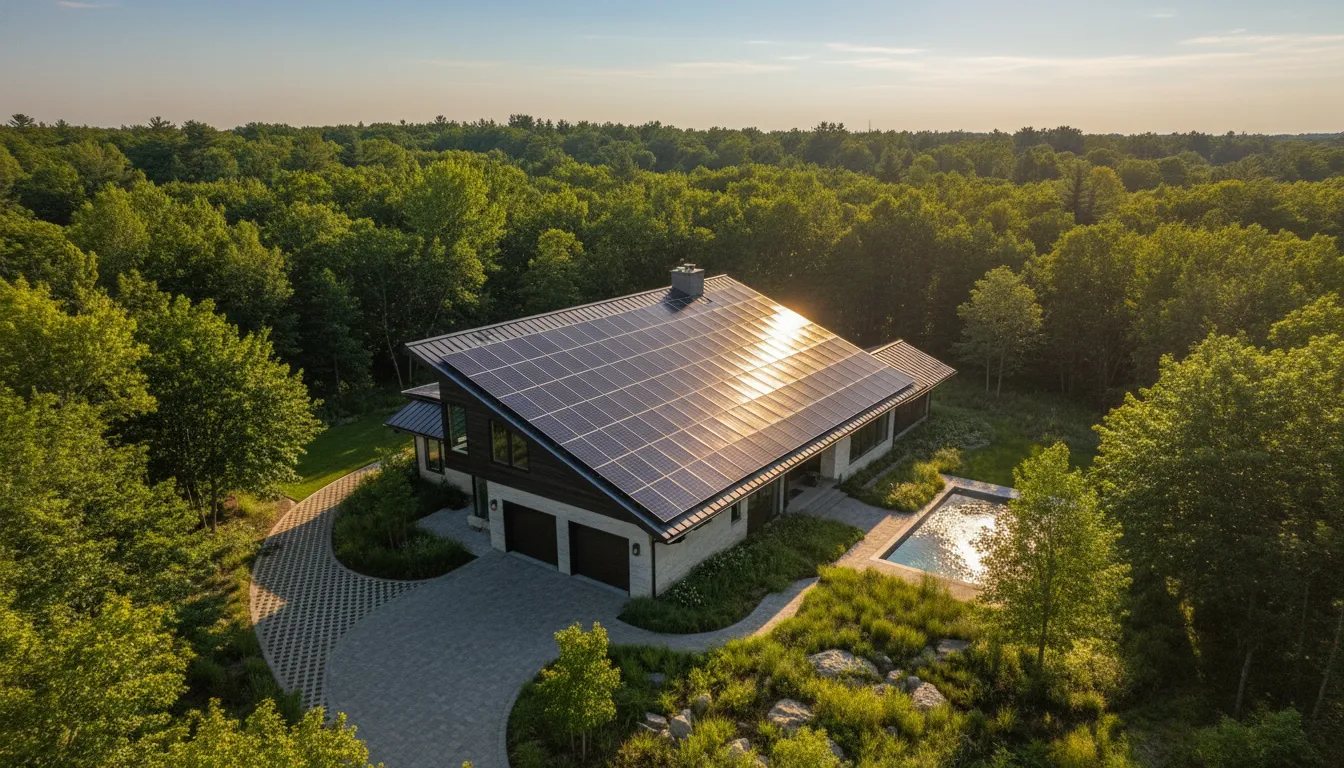
Residential solar energy has shifted from being a trend to becoming an accessible reality for a growing portion of the Brazilian population. With mature technology, established regulation, and a country privileged in solar radiation, conditions have never been more favorable to take this step.
You don’t need to be an electrical engineering expert or have a perfect roof. You need quality information, reliable suppliers, and the willingness to ask the right questions. Each installed panel is a smaller bill every month, less dependency on tariff fluctuations, and a real contribution to a cleaner energy system.
Start today: pull out your latest electricity bills, research installers in your area, and request a no-obligation quote. The sun rises every day over your roof — the question is whether you will take advantage of it or not.
- Monitoring via app — Monitor generation weekly through the inverter’s app. Sudden drops in production may indicate dirt, new shading, or some technical problem.
- Protection against tariff increases — by generating your own energy, you are less exposed to increases in electricity tariffs
- Property appreciation — real estate sector studies indicate that properties with solar systems tend to be valued in the market
- Turn on the system and monitor — With everything approved, the system goes into operation. Most modern inverters have a monitoring app that shows in real-time how much you are generating and saving.
- Request inspection and bidirectional meter — After installation, the distributor conducts an inspection and installs the bidirectional meter, which records both the energy consumed and injected into the grid.
- Perform the physical installation — With the project approved, the team installs the panels, the inverter, and does all the electrical work. A typical residential installation takes 1 to 3 days.
- Request approval from the distributor — The installer submits the project to your energy distributor (such as Enel, CEMIG, CPFL, COELBA, etc.). The approval time varies, but the legislation sets limits for the distributor’s response.
- Evaluate the technical project — The company will conduct a technical visit to analyze the roof (orientation, slope, shading, and structural capacity) and prepare the electrical project.
- Research and hire an accredited company — Look for installers registered with the CREA (Regional Council of Engineering and Agronomy) and check reviews from other customers. Request at least three quotes.
- Analyze your energy consumption — Gather the last 12 electricity bills and calculate your average monthly consumption in kWh. This number is the basis for sizing the system.
- Inverter or microinverter — converts DC to AC
