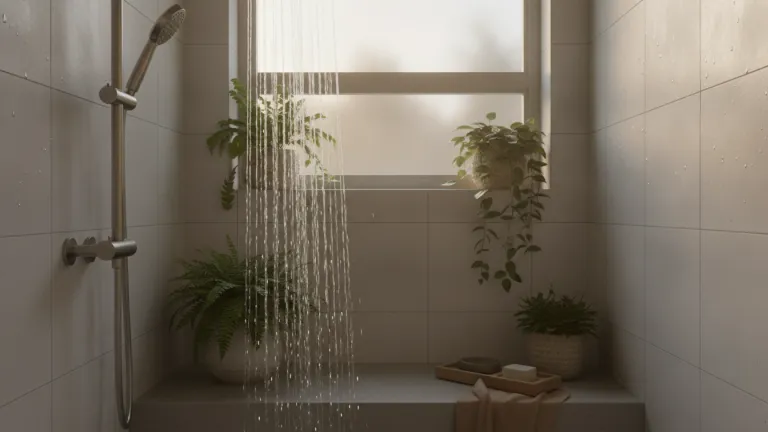
Why the Shower Is the Starting Point for Change
Water is life. This phrase may sound like a cliché, but it carries a real weight that grows each year. On a planet where freshwater availability is already pressured by climate change, population growth, and everyday waste, every drop saved at home matters — and the bathroom is, for most families, one of the biggest consumption points.
The daily shower is one of the most basic rituals of personal hygiene, and no one here is going to suggest you stop showering. On the contrary: the idea is to show that it’s entirely possible to maintain comfort, cleanliness, and even the pleasure of a good shower while using water more intelligently. Small habit changes, when adopted by many people, generate a significant collective impact on reservoirs, rivers, and water bills.
If you’re looking for concrete ways to live more sustainably, this article is a great start. Just as we explored in Sustainability in Daily Life: Small Habits that Matter, the most lasting transformations usually begin with exactly the gestures we repeat every day.
Water Consumption in the Shower: Understanding the Problem
To change a habit, it helps to understand what’s at stake. Showering is generally one of the household activities that consumes the most water. According to data from the National Water and Sanitation Agency (ANA), domestic water use represents a significant portion of total consumption, and within the home, the bathroom — considering showers, toilets, and sinks — is responsible for most of that volume.
A standard showerhead can release between 8 and 15 liters of water per minute, depending on the model and water pressure. A 15-minute shower, therefore, can easily consume more than 100 liters of water. Multiplied by two daily showers in a family of four, we’re talking about hundreds of liters every day — from just this single habit.
The climate context reinforces the urgency. Countries worldwide have great water diversity, but many regions already face serious pressure on their water sources. Voluntary reduction of residential consumption doesn’t solve everything alone, but it’s an essential part of a culture that values and preserves this resource.
How Much Time Do You Really Need in the Shower?
This is perhaps the most direct — and most effective — question you can ask yourself. Shower time is the single factor with the greatest impact on water consumption. Reducing your shower from 15 to 5 minutes can mean savings of more than 70 liters per shower.
The challenge is that the shower often serves as a moment of decompression, and that’s valid. The problem is when extended time becomes an unconscious routine, not a deliberate choice.
How to Reduce Shower Time Sustainably
- Use a timer or app. Set a timer on your phone or use a waterproof clock. Watching time pass creates real awareness of how much you’re using.
- Create a shower playlist. Choose songs that total between 5 and 7 minutes. When the music ends, the shower ends. It works surprisingly well.
- Set a fixed routine. Order: wet your body → apply shampoo → rinse hair → soap your body → rinse. With the sequence defined, you stop “standing still” under the water.
- Turn off the shower while applying soap and shampoo. This single gesture can save several liters per shower.
- Challenge yourself gradually. If you normally take 20-minute showers, don’t try to go to 5 overnight. Reduce 2 minutes per week until you reach a comfortable and efficient time.
Equipment That Helps Save Water in the Shower
Habits are fundamental, but technology can be a powerful ally. Some simple investments in the bathroom result in significant long-term savings.
Low-Flow Showerheads and Accessories
- Flow reducer (shower aerator): A small, inexpensive device that fits on the showerhead and reduces the amount of water released per minute without significantly compromising the sensation of pressure. It’s one of the best cost-benefit exchanges for water savings.
- Water-efficient showerhead: Models certified by energy efficiency programs or with water efficiency labels are designed to consume less water while maintaining good performance. Check the label before buying.
- Water consumption meter: Some models connect to the shower and show in real-time how many liters have been used. Real-time number awareness is a powerful motivator.
Is It Worth Replacing Your Showerhead?
If your showerhead is old and high-flow, the answer is almost always yes. The savings over time — both on the water bill and, in the case of electric showers, on the energy bill — tend to exceed the replacement cost within a few months.
Practical Habits to Save Water During Your Shower
Besides controlling time and improving equipment, there are simple behaviors that make a real difference in daily life.
List of Actionable Habits
- Turn off the water while applying shampoo, conditioner, and soap. Running water while you scrub serves no purpose.
- Wait for the right temperature before getting in. Instead of letting hot water run while you undress, get in at the beginning and adjust the temperature while you’re still preparing to wet your hair.
- Reuse the initial cold water. Place a bucket under the shower while the water heats up. This water can be used to clean the bathroom, water plants, or flush manually.
- Avoid unnecessarily hot showers. Hotter water tends to prolong shower time due to the comfort it provides. A pleasant but not excessive temperature helps maintain focus.
- Wash your hair less frequently if possible. For many hair types, washing every other day (instead of daily) is sufficient — and eliminates an entire shower or at least reduces its time.
- Use quick-rinse products. Leave-in or no-rinse conditioners eliminate the prolonged hair rinse step, which tends to be one of the biggest “time consumers” in the shower.
How to Involve the Whole Family in Water Conservation
Changing your own habits is an excellent start, but the impact multiplies when the entire family joins in. And the secret here isn’t to impose rules, but to create a household culture of water care.
Strategies for Different Profiles
| Profile | Suggested Strategy |
|---|---|
| Young children | Turn it into a game: whoever finishes the shower during the song gets special praise |
| Teenagers | Show the water bill value before and after; involve them in the family goal |
| Busy adults | Focus on practicality: quick shower = more time for what matters |
| Elderly | Emphasize comfort and safety; bathroom adaptations can help with efficiency |
Another powerful idea is to create monthly consumption goals and track the water bill together. When the family sees the number dropping, motivation to continue increases naturally.
Water Conservation and Its Real Impact
It’s legitimate to ask: does my shorter shower really make a difference in the world? The honest answer is: individually, the direct impact is small. Collectively, it’s significant — and culturally, it’s transformative.
When millions of people adopt conscious consumption habits, this pressures the market to offer more efficient products, signals to public managers that society values water, and contributes to preserving the water systems that supply entire cities. Environmental agencies point out that efficient water use is one of the central strategies to ensure urban supply given the climate variations projected for the coming decades.
Additionally, saving water at home has an immediate and tangible benefit: the water bill drops. Depending on your family’s current consumption, savings can be considerable over a year — money that can be redirected to other priorities.
Practical sustainability isn’t about sacrifice. It’s about using what we need, with intelligence and respect. If you want to explore more ways to make your routine more sustainable beyond the bathroom, it’s worth reading about Zero Waste in Practice: What It Is and How to Start — another accessible starting point full of concrete actions.
Start Today: One Step at a Time

You don’t need to renovate your bathroom, buy all new equipment, and time every second of your shower tomorrow morning. The most effective change is the one that lasts — and it starts with a single adjustment.
Choose one habit from this list and incorporate it into your routine this week. It could be turning off the shower while applying shampoo, it could be the 6-minute playlist, it could be placing the bucket to capture cold water. One real gesture is worth more than ten unrealized intentions.
Water is a shared resource. Every shower is a small decision about the type of relationship we want to have with the planet — and with the people who depend on the same water sources as we do. Taking care of this resource is, in the end, taking care of ourselves.
Which habit will you try first? Tell us in the comments.
