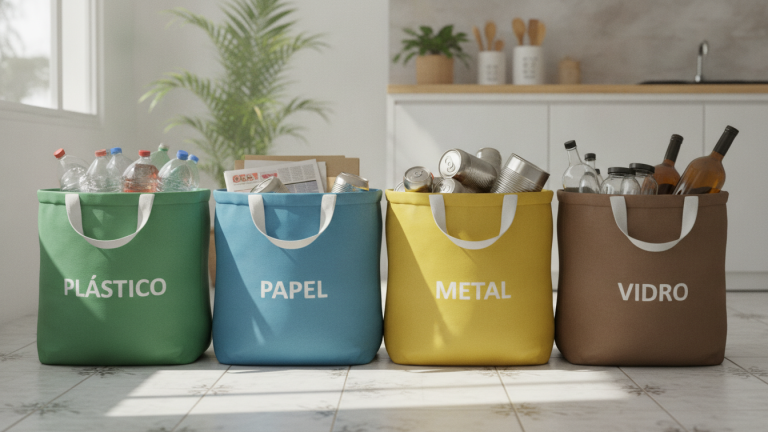
You get home after a hectic week, open the refrigerator, toss a yogurt container in the trash and move on. It seems like an unimportant gesture. But according to data from Abrelpe (Brazilian Association of Public Cleaning and Solid Waste Companies), Brazil generates more than 80 million tons of solid waste per year, and a significant portion of this material could be recycled but isn’t. The main reason isn’t lack of willingness: it’s lack of information on how to actually separate waste.
The good news is that separating recyclable waste correctly doesn’t require much space, high investment, or radical lifestyle changes. With a few simple adjustments in how you discard packaging, paper and glass, you can ensure that material arrives clean and useful to recycling cooperatives instead of ending up in a landfill. By the end of this text, you’ll know exactly what you can recycle, how to prepare each material, and which mistakes to avoid to prevent compromising your neighborhood’s collection.
What Brazilian law says about your responsibility
Since 2010, Brazil has had Law No. 12,305, known as the National Solid Waste Policy (PNRS). It establishes that waste separation is a shared responsibility: government, companies and citizens have defined roles. This means you’re not alone in this chain, but you also have a part to play.
The law provides for municipalities to create selective collection systems and manufacturers to be responsible for the disposal of certain packaging. In practice, most Brazilian cities still have limited selective collection systems. According to Abrelpe, only a portion of Brazilian municipalities offers regular selective collection, and even where it exists, much of the collected material arrives contaminated and must be discarded.
This reinforces a central point: separating waste at home with quality makes all the difference. A pasta box full of grease contaminates an entire dumpster of recyclable cardboard.
What is recyclable and what isn’t
Before setting up your separate waste bins, you need to understand what goes into each category. The confusion at this point is responsible for much of the contamination at cooperatives.
Materials that can be recycled
- Paper and cardboard: cereal boxes, corrugated cardboard, newspaper, magazines, notebook sheets, paper bags
- Plastic: PET bottles for water and soft drinks, cleaning product containers, margarine tubs, bottle caps, plastic bags (collect and take to specific points)
- Glass: bottles, preserves jars, perfume and cosmetic bottles (no mirrors, tempered glass or light bulbs)
- Metal: aluminum cans (beer, soft drinks), steel cans (tomato paste, corn), metal caps, clean aluminum foil
What looks recyclable but isn’t
- Used toilet paper and paper towels
- Juice boxes (Tetra Pak) with liquid residue
- Dish sponges and steel wool
- Diapers and sanitary napkins
- Metallized snack packaging and sauce sachets
- Mirror glass, porcelain and dishware
- Photographs and carbon paper
About juice boxes: they are recyclable, but only when clean and opened. Rinse, open and let dry before putting in selective collection.
How to set up waste separation in your home
You don’t need to buy a set of five colored trash cans. In most Brazilian apartments and houses, two containers are enough: one for dry waste (recyclables) and one for organic waste (food scraps, dirty paper and rejects).
Materials needed:
- Two buckets, cardboard boxes or canvas bags (one for each category)
- Common trash bags or reusable bags
Time to organize: between 15 and 30 minutes to define locations and communicate to your family
Approximate cost: zero, if you reuse packaging you already have at home
Step by step:
- Choose a fixed location for each container: kitchen (organic) and near the sink or balcony (dry).
- Place a label or written note on each so everyone at home knows what goes where.
- Before throwing any packaging in the dry waste, quickly go through the preparation routine (explained in the next section).
- When the dry waste is full, check the day and time of selective collection in your neighborhood (usually available on the city hall website or municipal services app).
- If your street doesn’t have selective collection, research cooperatives or voluntary drop-off points nearby. The MMA (Ministry of the Environment) website and some city halls offer maps of collection points.
If you live in an apartment, check if the condominium already has separate trash cans in the lobby. In São Paulo, for example, municipal law requires condominiums to provide space for selective collection. In other states, the rule varies.
The preparation that makes the difference: clean before recycling
This is the step most people skip, and it compromises tons of recyclable material per month in Brazil. You don’t need to wash each container like it’s for a party, but you do need to remove food scraps and liquid residue.
How to prepare each type of material:
- Plastics and glass: rinse quickly with a stream of water. No soap needed.
- Cardboard: remove adhesive tape when possible and fold to take up less space. If wet with grease (like pizza boxes), only the clean part can go for recycling.
- Aluminum cans: crush to save space; no need to wash if there’s no visible residue.
- Juice boxes: open the top, rinse with water, let dry upside down.
- Aluminum foil: ball up and save until you have a reasonable amount; only recycle if clean.
A common mistake is leaving a cheese spread jar lid inside the jar unwashed. The plastic lid arrives contaminated, the glass jar arrives contaminated, and the result is both go to the landfill.
Common mistakes that undo the effort of separating waste
Separating waste is a relatively easy habit to adopt, but some recurring mistakes prevent the material from actually being recycled.
- Mixing wet or oil-stained paper with clean cardboard
- Leaving plastic caps and labels inside bottles without cleaning
- Throwing batteries, rechargeable batteries and electronics in common selective collection (these materials have specific disposal points, usually in supermarkets, electronics stores and pharmacies)
- Putting bags full of mixed waste in selective collection thinking workers will sort it (they don’t have equipment or time for that)
- Discarding expired medicines in household waste (participating pharmacies in the Conscious Disposal program accept this type of material)
If you want to go one step further in reducing plastic in your daily life, there are alternatives to single-use plastic that are worth the switch and already fit well in Brazilian routines, from grocery shopping to lunch boxes at work.
What happens to waste after selective collection
Understanding the material’s journey helps maintain motivation. When your dry waste arrives clean at the cooperative, workers called collectors do manual sorting, separating each type of material. Brazil has more than 400,000 collectors working in this chain, according to the MNCR (National Movement of Recycling Material Collectors). These are people whose income depends directly on the quality of what is delivered.
After sorting, the material is pressed, baled and sold to industries. Aluminum becomes new cans, PET becomes fibers for clothing and packaging, cardboard becomes boxes again. Glass is one of the most efficient materials in this cycle: it can be recycled indefinitely without losing quality, according to UNEP (United Nations Environment Programme) data.
Recycling aluminum, for example, uses about 95% less energy than producing aluminum from scratch from bauxite. This has a direct impact on the country’s energy consumption, which already faces pressures in electricity generation. Talking about energy consumption is also talking about your electricity bill: every consumption choice has a systemic effect.
Frequently asked questions about separating recyclable waste
Can I recycle supermarket plastic bags?
Yes, but plastic bags should not be placed loose in selective collection because they clog cooperative machines. The correct way is to gather them inside a larger bag and take them to specific collection points, which exist in many supermarkets and pharmacies in Brazilian cities.
Does pizza box go for recycling?
It depends. The part of the box that came in contact with grease and cheese cannot be recycled because it contaminates the cardboard. If the top of the box is clean, you can remove that part and recycle only it.
What if my street doesn’t have selective collection?
You can look for recycling cooperatives nearby and take the material there. Another option is municipal Ecopoints, available in several Brazilian cities, where you can dispose of recyclables, electronics and even old furniture. The city hall in your municipality usually publishes the addresses on the official website.
Can bread paper and butter packaging be recycled?
Usually not. These materials have layers of grease or wax that prevent conventional recycling. Bread paper goes to organic or common waste, and butter packaging, if it’s mixed plastic with residue, too. If it’s very clean, the plastic can go for recycling.
Start today with a small gesture
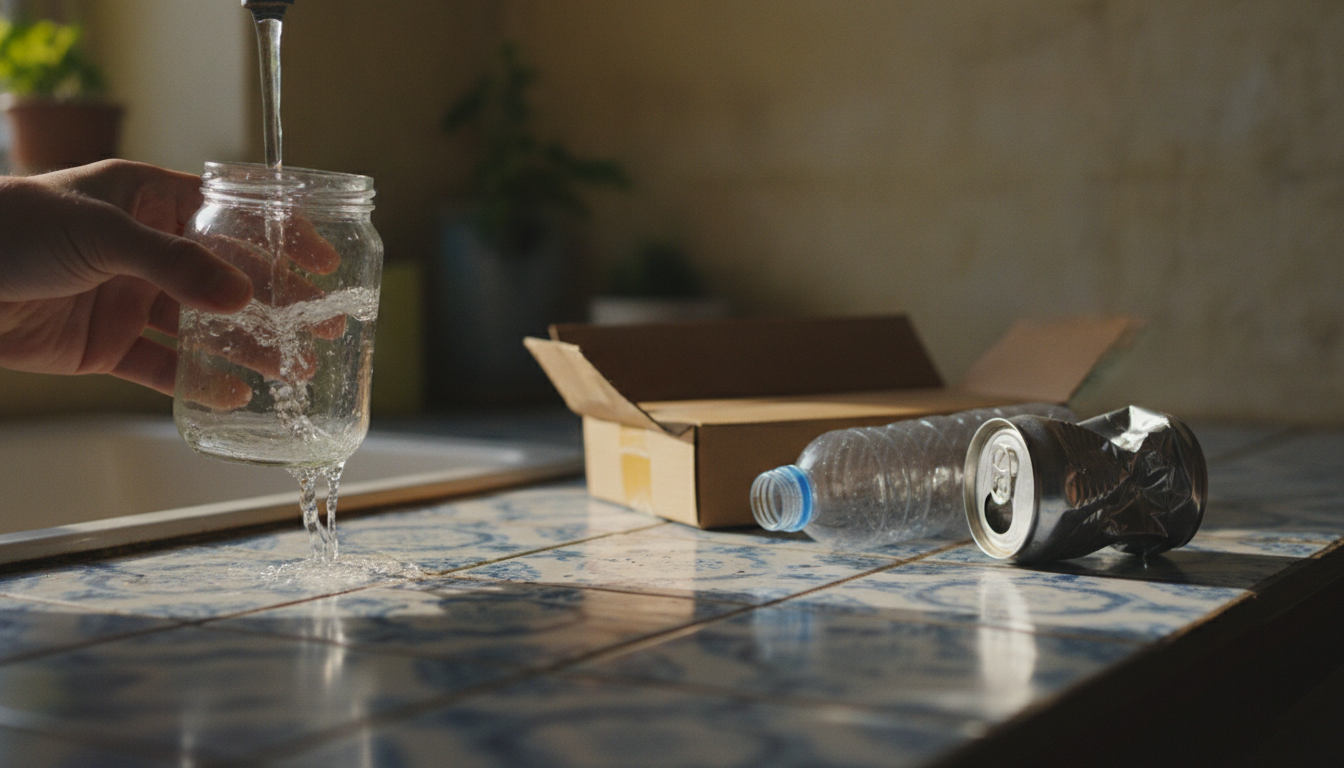
You don’t need to remodel your kitchen or buy a complete set of trash cans to get started. Grab two cardboard boxes you already have at home, write “dry” and “organic” on each one and place them side by side. That alone changes the fate of a significant portion of the waste you produce every week.
As the habit sets in, questions decrease and the routine becomes natural. And if you want to amplify the impact of your choices at home even further, looking at other consumption habits, like what you buy and how you discard it, opens up new possibilities. What’s important is to start with one concrete point, today, with what you have.
