Imagine turning on your tap and finding microplastics in the water. It sounds like science fiction, but research published in international scientific journals has already detected plastic particles in drinking water sources around the world, including Brazil. Single-use plastic — the kind you use for a few minutes and discard forever — is at the heart of this problem. And the good news is that you can be part of the solution right now, without needing to completely change your lifestyle.
Brazil is one of the largest generators of plastic waste in Latin America. According to data from the Panorama of Solid Waste in Brazil, published by Abrelpe, the country generates tens of millions of tons of solid waste per year, and a significant portion of this total is composed of plastics — much of it disposable. Straws, bags, food packaging, disposable cups: these items add up to seconds of use and decades of persistence in the environment.
Reducing single-use plastic doesn’t require heroism or perfection. It requires awareness, planning, and the willingness to create new habits. In this article, you’ll find practical, accessible guidance applicable to everyday Brazilian life — from the supermarket to the kitchen, from work to leisure. Shall we begin?
Why Single-Use Plastic Is Such a Serious Problem
Conventional plastic doesn’t biodegrade the way we imagine. It fragments into smaller and smaller pieces, called microplastics, which can take hundreds of years to completely disappear from the environment. These fragments reach the oceans, the soil, the food chain — and, as recent research shows, our own bodies.
The United Nations Environment Programme (UNEP) has systematically documented the impact of plastics on marine and terrestrial ecosystems. Sea turtles, seabirds, and fish are directly affected by plastic ingestion or entanglement in improperly discarded waste. In Brazil, beaches from the Northeast to the South regularly receive plastic waste carried by ocean currents.
Beyond the environmental impact, there’s an economic aspect: the cost of cleaning up plastic-contaminated environments falls on all of society — municipalities, fishing communities, riverside populations. Reducing consumption at the source is, therefore, a decision that benefits not only the planet but also the collective wallet.
The Disposable Items That Weigh Most Heavily in Household Waste
Before taking action, it’s useful to know where to focus your efforts. Some disposable items appear much more frequently in household waste than others. Identifying them is the first step to replacing them intelligently.
The most common everyday villains:
- Plastic bags from supermarkets and markets
- Processed food packaging (small bags, plastic films)
- Disposable cups and plates
- Plastic straws
- PET bottles for water and soft drinks
- Personal hygiene packaging (shampoo, conditioner, liquid soap)
- Disposable sanitary pads and feminine hygiene items
- Yogurt and margarine containers
- Coffee capsules
By observing your own trash for a week, you can map out which of these items dominate your disposal. This simple — and revealing — exercise is the most honest starting point for real change.
How to Start: A Step-by-Step Guide to Reducing Disposable Plastic
Changing habits is a gradual process. Trying to eliminate everything at once usually generates frustration. The most effective approach is progressive substitution, one item at a time.
- Diagnose your trash. For one week, separate the disposable plastics you’ve generated. See which ones appear most frequently.
- Choose one item to replace first. Start with the simplest or the one that appears most frequently. Plastic bags and disposable bottles are usually good starting points.
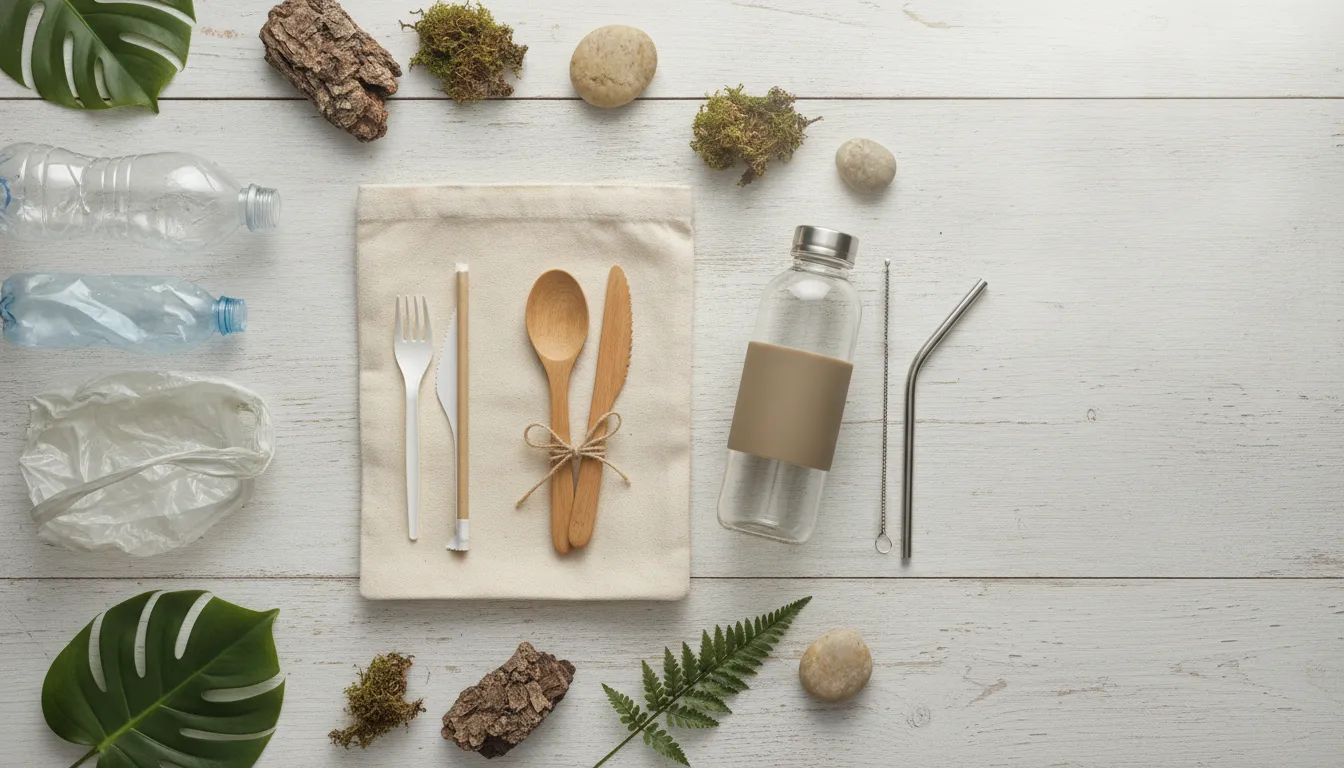
- Acquire substitutes gradually. You don’t need to buy everything at once. A reusable bottle, a tote bag, a stainless steel or bamboo straw. Buy them as you need to replace items.
- Create reminders and routines. Leave the reusable bag in your purse or backpack. Place the water bottle on your work desk. The physical environment helps maintain the habit.
- Move on to the next item. When the previous substitution is already incorporated into your routine, choose the next item to work on.
- Involve the people around you. Share the process with family, colleagues, and friends. Collective changes are more sustainable than individual ones.
- Celebrate progress, not perfection. Using a plastic straw occasionally doesn’t undo the progress you’ve built. What matters is the direction, not absolute perfection.
Practical and Accessible Substitutions for Daily Life
The good news is that for most single-use plastics, accessible alternatives already exist, many of them produced in Brazil or easily found at markets, physical stores, and e-commerce platforms.
| Disposable item | Reusable alternative | Note |
|---|---|---|
| Plastic bag | Cotton or jute tote bag | Lasts years with basic care |
| PET bottle | Stainless steel, glass, or aluminum bottle | Maintains temperature and is durable |
| Plastic straw | Stainless steel, bamboo, or glass straw | Kits with cleaning brushes available |
| Disposable cup | Reusable cup or squeeze bottle | Take it to work and outings |
| Plastic wrap (PVC) | Beeswax wrap | Can be made at home |
| Shampoo and conditioner | Solid bar versions | Less packaging, more durability |
| Disposable coffee filter | Cloth filter or moka pot | Eliminates paper and plastic |
| Disposable sanitary pad | Cloth pad or menstrual cup | Significant waste reduction |
It’s worth remembering: reusable doesn’t necessarily mean more expensive in the long run. A stainless steel bottle, for example, can replace hundreds of PET bottles over its useful life. The initial investment pays for itself quickly.
In the Kitchen: Where Disposable Plastic Has the Most Room to Go
The kitchen is generally the area of the home where the most disposable plastic is generated. But it’s also where substitutions make the biggest difference in the volume of waste produced.
Practical strategies for the kitchen:
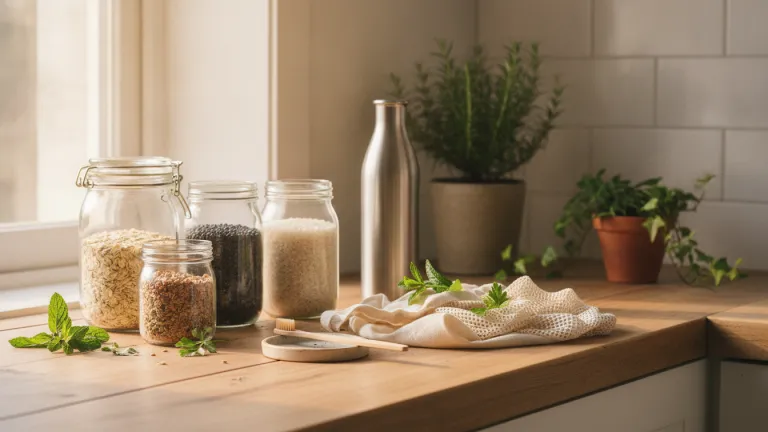
- Buy in bulk whenever possible. Open-air markets, neighborhood stores, and bulk shops allow you to buy rice, beans, nuts, flours, and spices without plastic packaging. Bring your own containers or cloth bags.
- Prefer products in glass or paper packaging. When bulk buying isn’t feasible, choose recyclable packaging made from materials with better environmental outcomes.
- Use glass jars to store food. Reused preserve jars are free and highly efficient.
- Replace plastic wrap with silicone lids or inverted plates. They work to cover bowls and pots in the refrigerator.
- Make your own beeswax wrap. With a square of cotton fabric and beeswax, you can create an effective substitute for plastic wrap — and you can find tutorials in Brazilian zero waste communities.
Connecting these kitchen practices to other sustainable habits, such as reducing household waste in general, greatly amplifies the results.
At Work, on the Street, and During Leisure Time
A good portion of the single-use plastic we generate happens outside the home — in the breakfast bought at the bakery, in the bottled water at the office, in the snack at the park. In these contexts, planning is your greatest ally.
Tips for reducing plastic outside the home:
- Always bring your reusable water bottle. Many establishments, shopping centers, and public spaces already offer free refill stations.
- Keep a set of reusable cutlery and a straw in your bag or backpack for meals away from home.
- Prefer establishments that use compostable packaging or allow the use of your own containers — this practice is growing in Brazilian cities.
- At events and parties, propose the use of reusable dishes. At family gatherings, for example, it’s simple to organize the use of real cups and plates.
- At the beach, in the park, or on trails, adopt the “leave no trace” principle: bring bags to collect your own waste and, if possible, any you find along the way.
These actions are part of a larger set of changes that anyone can adopt. To explore more of this universe, the article Your Daily Life Can Protect the Environment offers complementary and equally practical perspectives.
The Role of the Conscious Consumer and Pressure on Brands
Reducing plastic in daily life is not just an individual choice — it’s also an act of communication with the market. When consumers prefer products with less packaging or demand brand positioning on social media, they influence corporate decisions.
Some collective actions that make a difference:
- Prefer brands with public commitments to reducing plastic packaging. Many companies already publish sustainability goals — research and value those that keep their promises.
- Use the power of reviews and comments. E-commerce platforms, social media, and delivery apps allow you to praise or criticize packaging practices.
- Support local initiatives. Recycling cooperatives, organic markets, bulk stores, and circular economy projects in your city deserve your preference and your money.
- Stay informed about legislation. Brazil has advanced with the National Solid Waste Policy (Law 12.305/2010) and with municipal regulations on plastic bags. Knowing the law helps demand its enforcement.
To deepen the relationship between consumption and sustainability, it’s worth reading the Conscious Buying Guide, which offers a broad view on how to spend better without giving up quality of life.
Every Choice Counts: Start Today, Progress at Your Own Pace
Reducing single-use plastic in daily life is a journey — not a finish line. There’s no perfect consumer, and that’s not what the planet needs. What truly makes a difference is the sum of millions of people making slightly better decisions, more frequently, over time.
You don’t need to buy a complete zero waste kit tomorrow. You don’t need to give up any essential comfort. What you can do is look at your trash this week with curiosity — and choose one item to start replacing. Then another. And then one more.
Plastic took decades to become omnipresent in our daily lives. Reducing it is also a process. But every reusable bottle filled, every cloth bag taken to the market, every disposable cup refused is a real gesture, with real impact — in your neighborhood, in your river, in your ocean.
The planet doesn’t need perfection. It needs persistence. And you’ve already taken the first step by getting this far.
