Do you know what happens to the water after it goes down your sink?
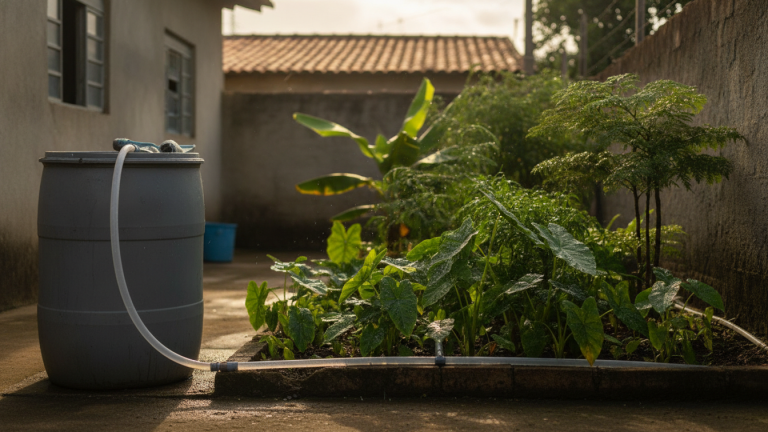
Think about the last time you washed dishes, took a shower, or ran a load of laundry. All that water drained away and disappeared into the city’s sewage system without a trace. Now imagine that a good portion of it could circulate back within your own home, watering plants, filling toilet tanks, or cleaning the patio before heading to treatment. This isn’t science fiction or expensive technology: it’s the reuse of gray water, a practice that’s growing rapidly in Brazil.
But there’s also blackwater, which is a completely different story and should never be reused at home without specialized treatment. Confusing the two is the most common mistake for beginners researching this topic, and it can pose serious health risks. By the end of this article, you’ll know exactly what each one is, what you can safely reuse, how to set up a simple system without renovating your bathroom, and what precautions you can’t ignore.
Brazil faces growing pressure on water resources. According to IBGE, a significant portion of Brazilian municipalities already register some degree of water stress, and in metropolitan regions water bills keep rising. Reusing water that’s already flowed through your tap is one of the most direct ways to alleviate this problem, without relying on technology beyond the reach of apartment dwellers or residents of ordinary homes.
What is gray water and what is blackwater
The distinction seems technical, but it’s simple in practice.
Gray water is any water that has been used in domestic activities that don’t involve feces or urine. It comes from showers, bathroom sinks, washing machines, and kitchen sinks. It contains soap, skin residue, hair strands, and in the case of kitchen sinks, grease and food scraps. It’s not clean, but it’s also not the heaviest sewage.
Blackwater is sewage from the toilet. It contains pathogenic agents, such as bacteria and viruses, in concentrations high enough to cause serious illness if it comes into contact with people, animals, or food. The treatment it requires is complex, controlled, and usually handled by sanitation utilities like Sabesp, Copasa, or Cagece. At home, you cannot do this safely.
There is also an intermediate category, sometimes called dark gray water, which is from the kitchen sink. It carries grease, organic matter, and depending on what was washed, higher bacterial contamination. Some reuse systems discard this flow as a precaution, treating it along with blackwater.
Why gray water can be reused and blackwater cannot
The difference is not just odor. It’s microbiological load.
Gray water from a shower, for example, has a much lower concentration of microorganisms than toilet sewage. This doesn’t mean it’s potable or safe for any use, but it does mean it can undergo simple treatment, such as filtration and disinfection with chlorine or ultraviolet light, and reach a level adequate for uses that don’t involve ingestion or prolonged direct skin contact.
Blackwater, on the other hand, carries viruses like hepatitis A and bacteria like E. coli in quantities that require multi-stage treatment processes. Even in alternative sanitation systems, such as well-built septic tanks, it must undergo anaerobic decomposition, anaerobic filtration, and then controlled soil application. This is beyond the reality of an apartment in downtown São Paulo or a house in Recife’s suburbs.
Brazilian legislation reflects this distinction. NBR 13.969 from ABNT, which addresses supplementary units for wastewater treatment, classifies effluents and establishes quality standards for different reuse purposes. For unrestricted irrigation use or any human contact, criteria are stricter. For toilet flushing and garden irrigation without contact with edible parts, standards are more accessible.
What treated gray water can be used for
Not all uses are equal. Before setting up any system, it’s important to know where recycled water can and cannot go.
Permitted uses with treated gray water:
- Toilet flushing (this use alone can represent a significant reduction in household water consumption)
- Irrigation of ornamental gardens, pots, and lawns (avoiding contact with edible vegetables)
- Floor, sidewalk, and garage washing
- Car washing
- Cleaning tools and garden equipment
Uses that should be avoided:
- Irrigation of vegetable gardens or any plant whose fruits, leaves, or roots will be consumed
- Washing dishes or kitchen utensils
- Human or animal consumption, even after home treatment
- Indoor air humidification
- Bathing or personal hygiene
The practical benefit is real. Toilet flushing accounts for a large share of household water consumption. Supplying it with treated gray water can represent meaningful savings on your monthly bill, depending on the number of residents.
How to set up a basic gray water reuse system at home
You don’t need to hire an engineer or do major construction to get started. There’s a spectrum of solutions, from the simplest to the most elaborate.
Minimal solution: the bucket in the shower
- Place a 10- to 15-liter bucket in the shower while waiting for the water to warm up.
- Use that water, which is still relatively clean, to fill the toilet tank or water ornamental plants.
- Don’t mix with soap or shampoo water if watering plants; use only the initial cold water.
Cost: zero. Implementation time: immediate.
System with simple storage tank
Materials needed:
- Small water tank (200 to 500 liters), preferably closed and opaque to prevent algae growth
- Low-power submersible pump (found in construction supply stores at affordable prices)
- Screen filter or sand filter for pre-treatment
- Chlorine tablets for maintenance (following manufacturer dosages)
- Hose or piping for distribution
Step-by-step:
- Identify where the gray water you want to capture comes from: typically the shower drain or washing machine outlet.
- Divert this flow to the storage tank using auxiliary piping. In many cases, this requires a plumber’s help for a few hours.
- Install a filter before the tank entrance to catch hair, lint, and larger solids.
- Add chlorine at the correct dosage for disinfection. Consult a professional or follow NBR 13.969 instructions.
- Use the pump to distribute stored water to the toilet or garden hose.
- Clean the filter weekly and sanitize the tank every three months.
Estimated cost: between R$ 800 and R$ 2,500, depending on system size and installation complexity. Payback varies with local water rates and family consumption.
Common mistakes that can put health at risk
Enthusiasm without care can turn a sustainable project into a domestic public health problem. Some mistakes appear frequently in those who improvise.
- Not identifying the system visually: the recycled gray water piping must be clearly differentiated from the potable water network. Use different colors or visible labels to prevent accidental cross-connections.
- Storing gray water for more than 24 hours without treatment: bacterial multiplication is rapid. Without chlorine or other disinfectant, water that seemed relatively clean becomes a culture medium in a hot summer day.
- Using kitchen sink gray water without more robust treatment: grease and organic matter require additional filtration. If you can’t treat it adequately, leave this flow out of the system.
- Watering vegetables: no matter how clean gray water seems, it should not contact food. Bacteria like E. coli may be present even in concentrations that produce no odor or color difference.
- Ignoring maintenance: clogged filters create accumulation points for organic material, promoting microorganism growth. Regular maintenance is not optional.
If you’re thinking about expanding waste-reduction practices at home, this article about the best practices to reduce household waste shows how water reuse fits into a broader routine of conscious consumption.
What Brazilian legislation says about domestic reuse
Water reuse in Brazil does not have a single federal law specific to domestic use, but is supported by a set of standards and public policies.
The National Water Resources Policy (Law 9.433/1997) recognizes water as a public asset of economic value and encourages rational use. The Basic Sanitation Law (Law 11.445/2007, updated by the Sanitation Legal Framework in 2020) opens space for alternative water management solutions in buildings. ABNT NBR 13.969 and ABNT NBR 15.527 (rainwater reuse) are the most commonly used technical references in practice.
In some municipalities, like São Paulo, there are requirements in new buildings for installation of reuse systems or rainwater collection, especially in commercial buildings and large condominiums. Checking local legislation before installing a system is always recommended, especially if you live in a condominium where internal rules also apply.
Frequently asked questions about gray water and domestic reuse
Can I use washing machine water to water plants?
It depends on the soap or detergent you use. Products with biodegradable surfactants and without excess chlorine generally don’t harm ornamental plants in sporadic use. Soaps with boron, commonly used in some cleaning products, can be toxic to soil and certain plants. Read the label and if in doubt, use this water only to wash sidewalks.
Does gray water smell bad?
If stored for more than 24 hours without treatment, yes. Decomposition of organic matter present in soap, grease, and skin residue produces sulfurous gases. With proper filtration and chlorination and quick use, odor is not a problem.
I live in an apartment. Can I take advantage of gray water?
In apartments, adaptation is more limited because plumbing is usually shared and any changes require condominium approval. The most viable solution is the shower bucket method to capture initial cold water, which can be used directly in the toilet or pots. For more elaborate systems, consulting the condo manager and checking internal bylaws is necessary.
How long does a reuse system take to pay for itself?
This varies greatly with system size, number of residents, and local water rates. In cities with higher rates, like São Paulo and Rio de Janeiro, well-designed systems usually pay for themselves within a few years. The shower bucket, having no cost, starts generating savings in the first month.
Start with the bucket and see the difference in your next bill
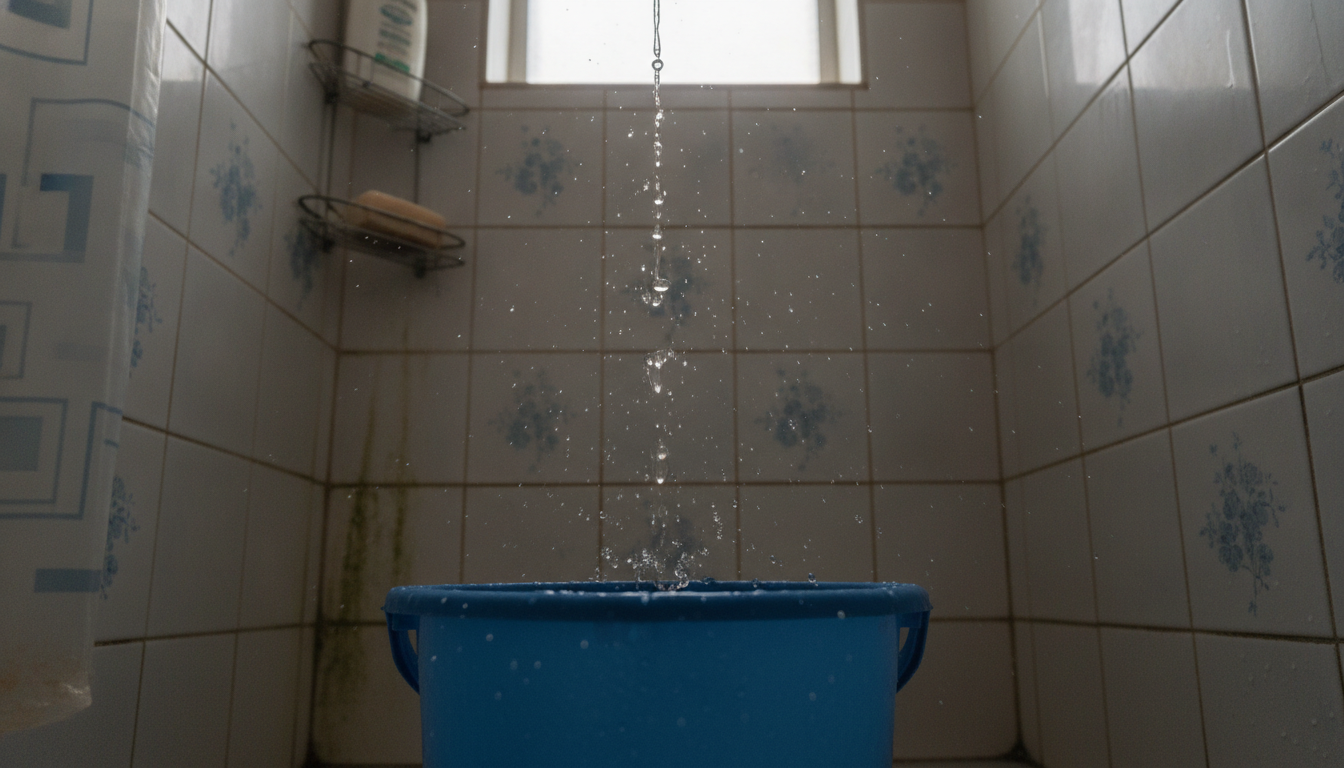
You don’t need to renovate your home to get started. Put a 15-liter bucket in the shower today, capture the cold water before it enters, and use it to flush the toilet. Repeat this for a month and notice the difference in your bill. If it makes sense for your routine, the next step can be a larger system.
Reusing gray water is one of the household actions with the most direct and measurable impact. It requires no sacrifice, doesn’t change hygiene habits, and puts you in control of a resource that was simply being wasted. And when each home does its part, the collective effect on watersheds and reservoirs is real.
