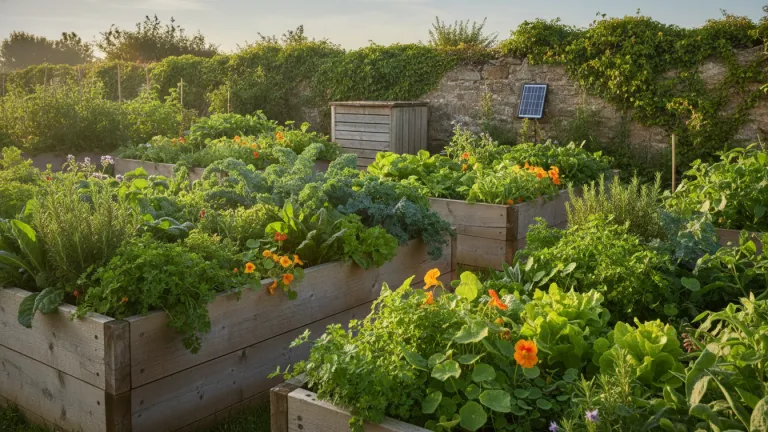
You wake up, turn on the shower, make coffee, take out the trash, and head to work. It seems like an ordinary routine, but each of these actions has a real impact on the planet. The good news is that small changes in this same routine also have a real impact — and, combined with millions of other people doing the same, they can mean a lot. Sustainability isn’t a concept reserved for experts or those living in eco-villages: it starts in your kitchen, your bathroom, and your shopping list.
The environmental debate is often dominated by big numbers and complex scenarios — global emissions, climate targets, international agreements. All of this matters, of course. But there’s a risk in this approach: the feeling that the problem is too big for an ordinary person to make a difference. This sense of powerlessness is, itself, an obstacle to change. The reality is that individual behaviors, when adopted at scale, shape markets, pressure companies, and influence public policies.
This article won’t ask you to abandon everything and live off the grid. It will show you concrete, accessible, and evidence-based habits you can start practicing today — some without spending a penny. Because taking care of the planet is also taking care of yourself, your health, your wallet, and the place where your children will grow up.
Why Individual Habits Still Matter in 2026
A common criticism of the individual sustainability discourse is that it diverts attention from corporate and governmental responsibilities. This criticism has merit — and should not be ignored. Large companies and governments need to lead the ecological transition. But this truth doesn’t negate the other: consumer choices create demand, and demand shapes supply.
Global warming and climate change are phenomena already documented with robust evidence. The IPCC (Intergovernmental Panel on Climate Change) made clear in its reports that limiting warming to 1.5°C requires deep changes in all sectors of society — including consumption patterns. This means that individual action is not sufficient alone, but it is a necessary part of the whole.
Additionally, there’s a powerful social effect: when people around you change habits, it influences others. Research in environmental behavior shows that social norms — what people perceive as “normal” in their circle — are one of the biggest motivators of change. You can be that reference for someone.
Conscious Consumption: Buying Less and Better
The greatest environmental impact of a product, in most categories, is in its production — not its disposal. This means the most sustainable decision is almost always not buying what isn’t necessary.
Practical tips for conscious consumption
- Wait 48 hours before impulse purchases. Often the urge passes — and the product ends up in a closet collecting dust.
- Choose durability over price. A quality product that lasts five years generally has a smaller environmental footprint than two cheap products lasting two years each.
- Buy second-hand whenever possible. The used goods market has grown significantly in recent years, with accessible platforms for clothing, electronics, and furniture.
- Choose products with less packaging. Unnecessary packaging, especially single-use plastic, is a problem solvable at the source — that source being the supermarket shelf.
- Repair before discarding. Tailors, cobblers, and electronics technicians exist, are accessible, and help extend the lifespan of your belongings.
The textile industry, for example, is recognized by organizations such as the United Nations Environment Programme (UNEP) as one of the most polluting in the world, with high water consumption and waste generation. Reducing the frequency of clothing purchases is one of the individual gestures with the greatest potential impact in this sector.
Sustainable Eating: Your Plate Has Power
The global food system is responsible for a significant share of greenhouse gas emissions, in addition to pressuring forests, soils, and water resources. Embrapa and international bodies like the FAO (Food and Agriculture Organization of the United Nations) extensively document this impact.
The good news: changing your diet is one of the individual gestures with the greatest potential to reduce environmental impact — and it can be done gradually.
How to make your diet more sustainable
- Reduce (not necessarily eliminate) red meat consumption. Cattle ranching, especially on pastures converted from native areas, has a high carbon footprint and land use. It doesn’t have to be all or nothing: less meat already makes a difference.
- Value foods from your region and in season. Local and seasonal products travel shorter distances, require less refrigeration, and are usually fresher.
- Reduce food waste. Plan your shopping, store food properly, and use leftovers creatively. Food waste is a serious environmental problem — wasted food also represents all the water, energy, and land used to produce it.
- Prefer vegetables, grains, and greens as the base of your diet. You don’t need to be vegan to have a diet with lower environmental impact.
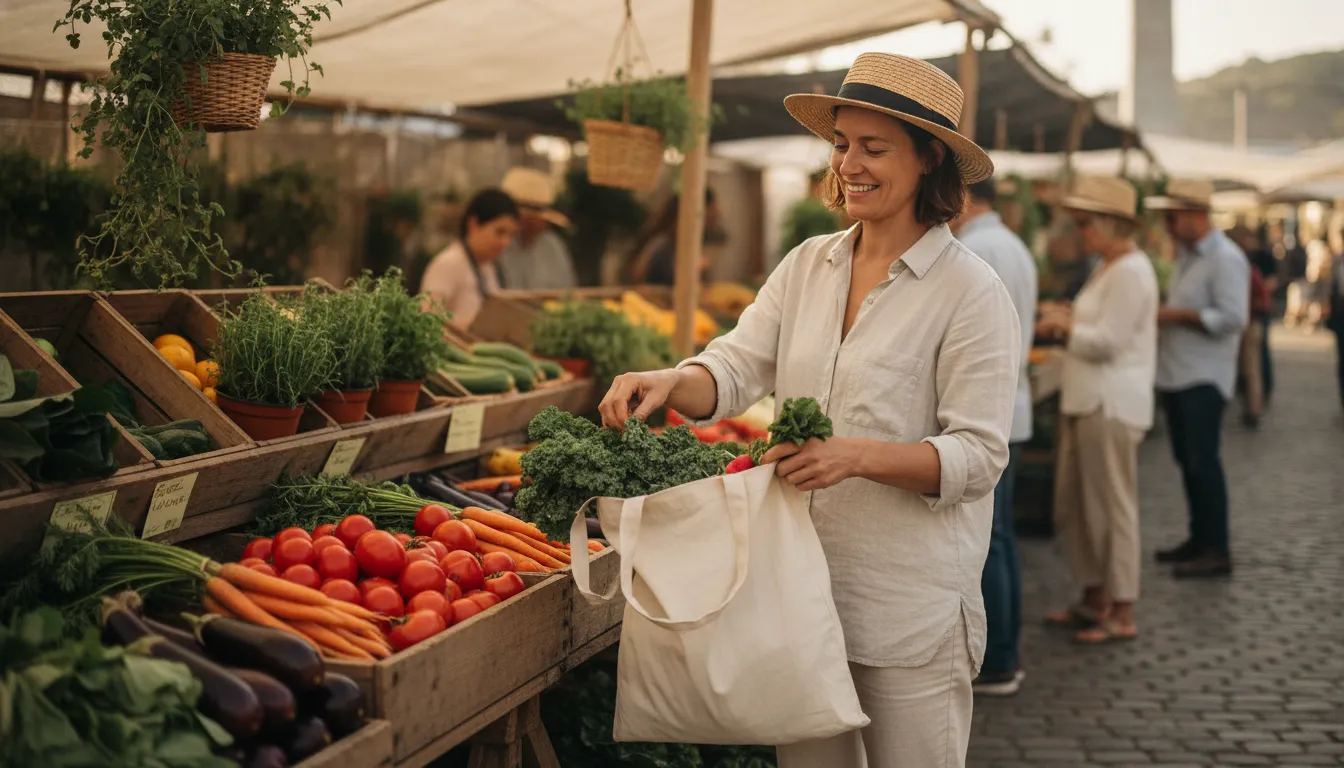
- Buy from farmers’ markets and local producers when possible. Besides supporting family farming, you reduce the chain of intermediaries and packaging.
Water and Energy: Two Resources That Deserve Daily Attention
Daily water conservation
Brazil is a country rich in water resources, but this abundance is not uniform — and extreme weather events have affected water availability in various regions. Saving water is a shared responsibility.
- Turn off the tap while brushing your teeth and while soaping dishes.
- Prefer showers over baths, and timers help shorten shower time.
- Regularly check for leaks in faucets and toilets — a small leak can waste significant volumes of water over a month.
- If you have a garden or vegetable patch, water early in the morning or at dusk to reduce evaporation.
- Consider rainwater harvesting for uses such as irrigation and outdoor cleaning.
Energy efficiency at home
Brazil’s electrical grid has significant participation from renewable sources, especially hydroelectric and, increasingly, solar and wind. Even so, saving energy remains important — it reduces costs, decreases pressure on the system, and, depending on the source, still reduces emissions.
- Replace incandescent bulbs with LEDs, which consume much less energy for the same lighting.
- Unplug appliances when not in use — “standby mode” still consumes energy.
- Use the washing machine with a full load and prefer cold water cycles when possible.
- Keep the refrigerator well-sealed and in a ventilated location — it’s one of the biggest energy consumers in the home.
- Consider installing solar panels: costs have dropped significantly in recent years and the financial return has become more attractive. See our analysis on whether home solar panels are worth it in 2026.
Mobility: How You Get Around Matters
The transportation sector is one of the main sources of greenhouse gas emissions in Brazil and worldwide. Cars powered by fossil fuels have significant impact — but the transition to cleaner alternatives also involves habits, not just technology.
| Transportation option | Relative impact | When to prefer |
|---|---|---|
| Walking or cycling | Minimal | Short distances, safe routes |
| Public transportation | Low per passenger | Urban routes |
| Carpooling | Moderate | When a car is necessary |
| Individual car (flex/electric) | Variable | When there’s no alternative |
| Domestic flights | High | Minimize whenever possible |
Some practical sustainable mobility changes:
- Combine appointments to reduce trips. Planning the week to concentrate outings is simple and effective.
- Try working remotely one extra day per week, if your job allows.
- For short trips between cities, prefer bus or train over plane — the difference in emissions can be considerable.
- If you need a car, consider regular maintenance — properly inflated tires and clean filters improve fuel efficiency.
Waste: Less Trash, Better Destination
Urban solid waste management is a serious challenge in Brazil. Much of what is collected still goes to landfills or, in many municipalities, to inadequate locations. The logic of the “5 Rs” (Rethink, Refuse, Reduce, Reuse, Recycle) places recycling as the last option, not the main solution — because it also consumes energy and resources.
Step by step to generate less waste
- Refuse what you don’t need. Extra bags, straws, unnecessary packaging — refuse at the source.
- Bring your own container. Reusable bags, cups, and utensils eliminate much of single-use plastics.
- Properly separate recyclables. Clean paper, plastic, metal, and glass have a much higher chance of being recycled. Dirty material usually goes to the landfill.
- Compost. Organic waste (peels, coffee grounds, food scraps) can become fertilizer. There are solutions for apartments too, like compact worm bins.
- Properly dispose of electronic waste. Batteries, cell phones, and electronic equipment have specific collection points — check with your city hall or the manufacturer.
- Know your city’s selective collection points. Many city governments make this information available online.
Green at Home: Plants, Gardens, and Connection with Nature
Having vegetation at home goes beyond aesthetics. Plants contribute to indoor air quality, help regulate temperature, and promote proven well-being. At the urban scale, green areas are fundamental for ecosystem functioning and for cities’ resilience to extreme weather events.
- Set up a small herb garden in pots or planters. Herbs like basil, chives, and parsley grow well in apartments with good light.
- Prefer native plants from your region. They are adapted to the local climate, require less water, and support pollinators like bees and butterflies.
- Participate in community planting initiatives. Many city governments and civil society organizations promote urban tree-planting actions.
- If you have outdoor space, consider creating a small garden that attracts local fauna — it’s a concrete way to contribute to urban biodiversity.
Conclusion: Every Choice Counts — and Starts Now
Everyday sustainability doesn’t require perfection. It requires awareness and intention. Every choice you make — what you buy, what you eat, how you get around, what you discard — has real consequences, even if invisible to the naked eye. And when these choices multiply by millions of people, they become a transformative force.
Start with what seems easiest. Swap a plastic bag for a reusable one. Reduce one long shower per week. Try a meatless meal. Separate recyclable waste. Don’t try to change everything at once — build habits that last.
The planet doesn’t need a handful of people living flawlessly. It needs many people living a little better. And that person can be you — starting today.
