
Have you ever stopped to think that every choice you make throughout the day — what you put on your plate, how you dispose of a piece of paper, how long you spend in the shower — has a real impact on the planet? It may sound like an exaggeration, but the sum of billions of small individual decisions is one of the factors shaping the current state of the environment. And the good news is that this same logic works in reverse: when we change our habits, the positive effects also accumulate.
We live in a time when scientific evidence about climate change is stronger than ever. The IPCC (Intergovernmental Panel on Climate Change) continues to point out that greenhouse gas emissions need to fall significantly and urgently to limit global warming to 1.5°C above pre-industrial levels — a goal that requires action at all scales, from public policy to individual behavior. But far from being cause for discouragement, this is an invitation to action.
This article is not about guilt. It’s about possibility. We’ll show you, in a practical and straightforward way, how your daily routine can — and already does — protect the environment when you make more conscious choices. Small adjustments in food, water consumption, energy, waste, and transportation can transform your routine into a daily act of caring for the planet.
Sustainable Eating: The Plate You Choose Matters
Food is one of the areas where individual environmental impact is most significant. Food production accounts for a relevant share of global greenhouse gas emissions, according to data from the FAO (Food and Agriculture Organization of the United Nations). Within this scenario, livestock farming — especially cattle — is responsible for a significant portion of these emissions, in addition to demanding large expanses of land and considerable volumes of water.
This doesn’t mean you need to become vegan tomorrow. It means that reducing red meat consumption a few times a week already makes a difference. Increasing the presence of legumes such as beans, lentils, and chickpeas in your diet is a nutritious, economical, and environmentally lighter alternative. And best of all: these substitutions fit perfectly with Brazilian cuisine.
Practical Tips for Lower-Impact Eating
- Prefer local and seasonal products — they travel shorter distances to your plate, generating fewer transport emissions.
- Reduce waste: planning your weekly shopping prevents food from spoiling in the refrigerator. Brazil still wastes alarming amounts of food throughout the entire production chain.
- Start a home compost bin for organic waste — besides reducing trash, you produce natural fertilizer. See how to set up yours at Composteira Caseira Barata: Como Montar a Sua.
- Choose smaller packages or bulk when possible, reducing discarded plastic.
Water: A Precious Resource That Comes From Your Faucet
Brazil has one of the largest freshwater reserves in the world, but this doesn’t mean guaranteed abundance forever. Extreme weather events, deforestation, and pollution threaten water availability and quality in various regions of the country. Some areas already face severe water crises, and the trend, according to climate projections, is for this scenario to intensify in certain regions.
At the household level, water consumption habits make a real difference. Showering is one of the biggest culprits of residential consumption. Reducing shower time by just a few minutes can save dozens of liters per day — and that number, multiplied by a family or an entire building, becomes significant.
How to Reduce Daily Water Consumption
- Time your shower and set a progressive goal to reduce time.
- Turn off the faucet while brushing your teeth or soaping dishes.
- Reuse rinse water from laundry to clean floors or water plants.
- Regularly check for leaks in faucets and toilets — a constant drip can waste hundreds of liters per month without you noticing.
- If you have a garden, prefer watering early in the morning or at dusk when evaporation is lower.
For more specific habits on this topic, check out Reduza o Consumo de Água no Banho com Esses Hábitos.
Energy at Home: Small Adjustments, Big Impact
The Brazilian electricity sector has a relevant characteristic: the energy matrix is predominantly renewable, with emphasis on hydroelectricity and, increasingly, solar and wind energy. According to data from ANEEL and the National Electric System Operator (ONS), the share of renewable sources in the country’s electricity generation is one of the highest among major world economies. Still, saving energy is important — both from an environmental and financial standpoint.
Equipment in standby mode (that red LED on the television, the charger plugged in with nothing connected) consumes energy continuously. This invisible consumption, called “phantom energy”, represents waste that can be eliminated with simple habits.
Actions That Reduce Energy Consumption
- Unplug appliances when not in use.
- Replace incandescent bulbs with LED, which consume much less energy and have a much longer lifespan.
- Use the washing machine with a full load and prefer the most efficient spin mode.
- Open the refrigerator with intention — each opening releases cold air and requires more energy for cooling.
- Take advantage of natural light during the day before turning on any lights.
- Consider, in the medium term, installing solar panels — Brazil has one of the highest solar irradiation rates in the world, and installation costs have been falling consistently in recent years.
Waste and Consumption: Less Is More
Brazil faces serious challenges in solid waste management. Landfills with limited capacity, dumps still operating in many municipalities, and the growing volume of discarded plastic are real problems. Recycling is part of the solution, but not the only one — and perhaps not even the most important.
The waste hierarchy, adopted by experts and agencies such as the Ministry of Environment, places reducing consumption as the top priority, followed by reuse, and only then recycling. In other words: the best waste is that which is never generated.
Practical Hierarchy for Reducing Waste
| Principle | What it means in practice |
|---|---|
| Refuse | Don’t accept what you don’t need (bags, freebies, extra packaging) |
| Reduce | Buy less and with more intention |
| Reuse | Give new life to objects before discarding |
| Recycle | Separate correctly for selective collection |
| Compost | Send organic waste for composting |
Additionally, be mindful of the proper disposal of electronics, batteries, and cells — these items contain toxic substances and should be taken to specific collection points, available at many supermarkets, electronics stores, and municipal collection stations.
Transportation: How You Get Around Also Counts
The transportation sector is one of the largest contributors to greenhouse gas emissions globally, and Brazil is no exception. The intensive use of fossil fuel-powered vehicles directly contributes to air pollution in cities and to global warming.
Alternatives exist — and are often healthier and more economical:
- Prefer walking or cycling for short trips. Besides not emitting pollutants, it’s good for your health.
- Use public transportation whenever possible — a full bus transports dozens of people with much less emission per capita than individual cars.
- When you need to use a car, consider carpooling with coworkers or neighbors.
- If you’re thinking about changing vehicles, electric and hybrid cars already have a growing supply in the Brazilian market and can be a more sustainable option in the long term, especially combined with the country’s renewable electricity matrix.
- Avoid short domestic flights when the train or bus route is feasible — aviation has a much higher carbon footprint per kilometer than ground transportation.
Nature and Biodiversity: Protection Starts Close to Home
Protecting the environment is not just about emissions and waste. Biodiversity — the variety of living species that inhabit the planet — is also at stake. The IUCN (International Union for Conservation of Nature) continuously monitors the conservation status of thousands of species, and the data shows increasing pressure on natural ecosystems.
But what can you do, even living in a big city?
- Plant native trees or shrubs in your backyard, balcony, or common area — they attract pollinators and contribute to the local microclimate.
- Avoid chemical insecticides and herbicides in home gardens — there are natural and less aggressive alternatives.
- Support and buy from producers who practice family farming and agroecology — these practices preserve soil and biodiversity.
- Don’t buy wild animals and report wildlife trafficking to Ibama or the green line (0800 61 8080).
- Participate in or financially support NGOs and environmental conservation initiatives in your region.
Conclusion: You’re Already Part of the Solution
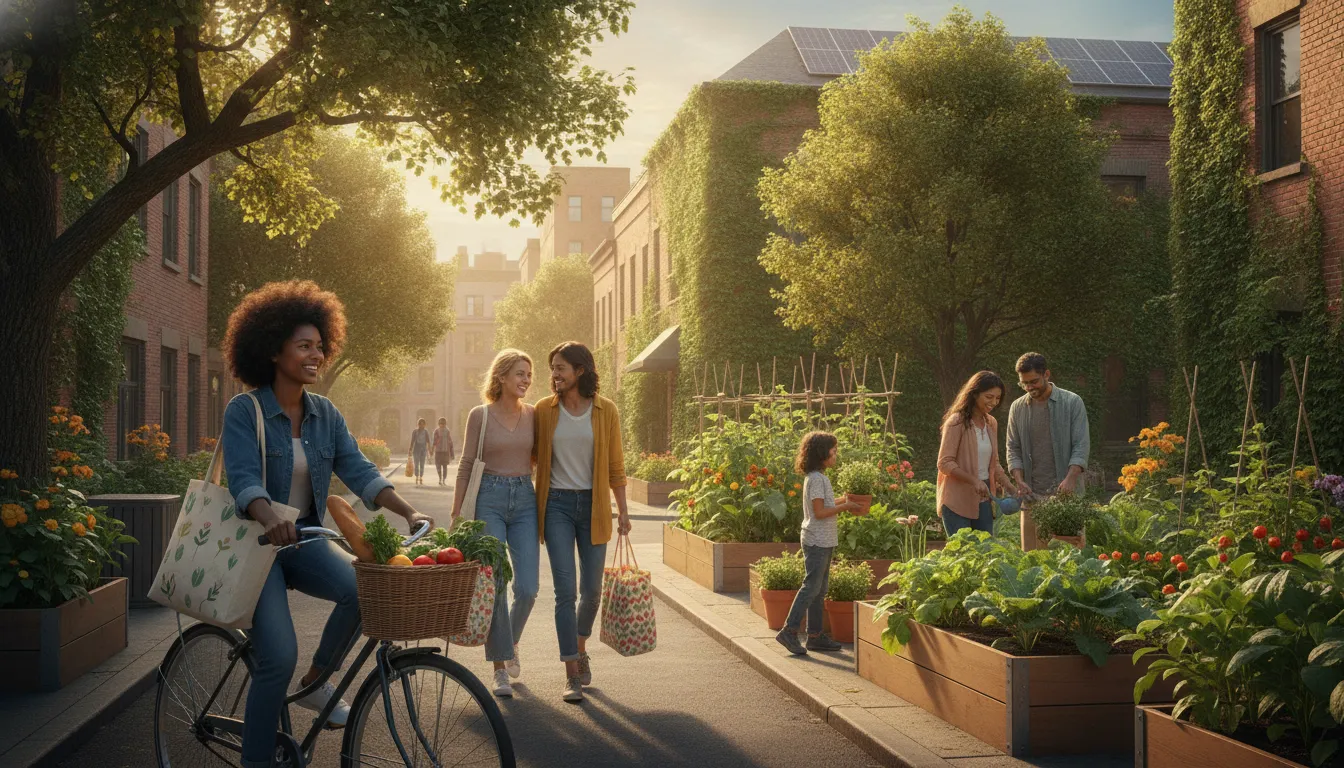
Changing the world seems like an impossible task when we think about it on a large scale. But when we look at daily life — the choice at the supermarket, the time in the shower, the light we turn off when leaving a room — we realize that transformation is already happening, one decision at a time.
Environmental perfection doesn’t exist. No one needs to get everything right, every day. What matters is the direction: moving forward gradually, incorporating new habits at your own pace, and whenever possible, inspiring the people around you. Individual change has more power when it becomes conversation, when it becomes example, when it becomes community.
If you want to continue on this journey, explore more about Pequenas Atitudes que Fazem Diferença para o Meio Ambiente and discover that protecting the planet can indeed be part of your daily routine — and a part that brings real satisfaction.
Start today. One habit at a time. The planet thanks you.
