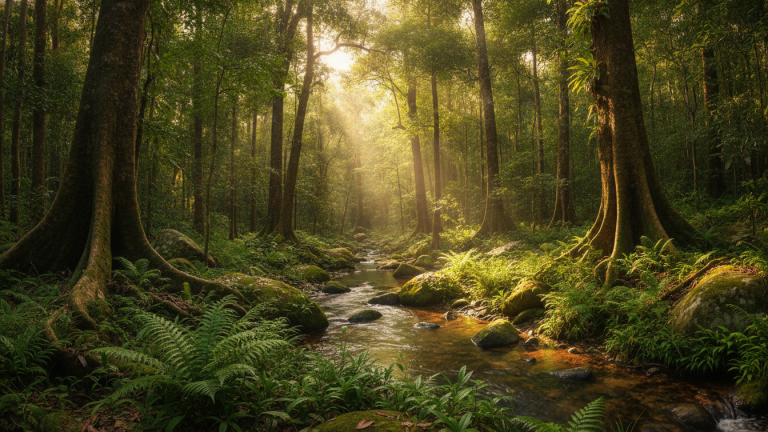
Imagine a typical morning: you wake up, turn on the tap, shower, and make coffee. In that twenty-minute span, you’ve already interacted with at least three different ecosystems without realizing it. The water from your tap passed through a watershed; the coffee came from a plant cultivated in living soil, full of fungi and bacteria; and the air you breathed when you opened the window was filtered by trees in your yard or on the street. Daily life is constantly entangled in natural systems.
The problem is that the word “ecosystem” still sounds distant to many people, like something reserved for wildlife documentaries or high school biology classes. But truly understanding what an ecosystem is changes how you see your daily choices, from what you buy at the market to how you dispose of trash. By the end of this text, you’ll be able to identify the ecosystems in your daily routine and understand why protecting them is also protecting your own quality of life.
What is an ecosystem, without overcomplicating it
An ecosystem is the set formed by all living beings in an area, plus the physical environment in which they live, plus the relationships that exist between them. Think of it this way: a lagoon in the interior of Minas Gerais is an ecosystem. It has fish, algae, insects, frogs, and bacteria (the living beings), it has water, sunlight, temperature, sediment, and dissolved oxygen (the physical environment), and it has a web of interactions that keeps everything functioning—who eats whom, who decomposes what, who pollinates what.
This web is not fragile by nature; it is resilient. But it has limits. When one element is removed or overloaded, the others feel it. The extinction of a native bee species, for example, can compromise the fruit production of an entire plant species, which can affect the food of birds, which control insects, which in turn affect crops. The domino effect is real and documented.
In Brazil, the National Institute for Space Research (Inpe) continuously monitors these effects, especially regarding deforestation and changes in the Amazon’s hydrological cycle. Data shows that the loss of forest cover alters rainfall patterns in distant regions, including the Southeast of the country, where most of Brazil’s population lives.
The ingredients that make an ecosystem function
Every ecosystem has four basic components working together. Understanding each one helps you see why any imbalance has consequences.
Producers are organisms that generate energy, mainly plants, algae, and cyanobacteria. They capture sunlight and transform it into organic matter through photosynthesis. Without them, there is no foundation for anything else.
Consumers are animals that feed on producers or other animals. A cow grazing in the Pantanal is a first-order consumer; the jaguar that hunts the cow is a second-order consumer. Each link in this chain transfers energy, although some is lost at each stage, which explains why there are far more plants than herbivores, and far more herbivores than carnivores.
Decomposers are the invisible heroes: fungi, bacteria, and some invertebrates that break down dead matter and return nutrients to the soil. Without them, the planet would be a pile of corpses and dead leaves. It’s this process that makes soil fertile and makes home composting work.
Abiotic factors are the non-living elements: water, light, temperature, soil pH, winds, salinity. They determine which species can survive in each place and define the “accent” of each ecosystem.
The main Brazilian ecosystems and what they do for your life
Brazil is home to a variety of biomes that, according to data from the Ministry of Environment and Climate Change (MMA), cover continental extensions. Each biome is a set of ecosystems with similar climate, vegetation, and fauna characteristics.
- Amazon: the world’s largest tropical forest, regulates the rainfall cycle in South America and stores enormous amounts of carbon in plant biomass. According to Inpe, accumulated deforestation over recent decades has altered regional climate patterns.
- Cerrado: considered by the International Union for the Conservation of Nature (IUCN) a biodiversity hotspot, it harbors most of the headwaters of major Brazilian rivers, including those that feed the Pantanal and the São Francisco basin.
- Atlantic Forest: reduced to a small fraction of its original coverage, according to the MMA, it still protects the springs that supply cities like São Paulo and Rio de Janeiro.
- Pantanal: the world’s largest floodplain, it filters water, controls flooding, and sustains one of the world’s richest fauna.
- Caatinga: the only exclusively Brazilian biome, adapted to semiaridity, it provides essential water storage and soil fixation services for millions of people in the Northeast.
These ecosystems provide what scientists call ecosystem services: climate regulation, water purification, pest control, pollination, soil formation. These services don’t have a line in the public budget, but without them the bill would be unpayable.
How human actions affect ecosystems, and how that comes back to you
Ecosystems don’t exist separate from cities. When an urban stream is channeled and covered with concrete, the city loses its natural capacity to absorb rain, increasing the risk of flooding. When agricultural soils lose decomposers due to excessive pesticide use, fertility declines and production costs rise, reaching your grocery bill.
Deforestation is the primary driver of degradation in Brazil, according to historical Inpe data. It fragments habitats, eliminates species, reduces atmospheric humidity, and releases carbon stored in vegetation, contributing to climate change that the IPCC documents in its reports.
Pollution also acts silently. Plastics in rivers disrupt aquatic food chains; excess fertilizers cause uncontrolled algae proliferation (eutrophication), which suffocates other life forms and compromises water quality. According to the National Water Agency (ANA), much of the water bodies monitored in Brazil show some degree of compromise due to diffuse pollution, mainly from agricultural and urban sources.
The good news is that ecosystems recover when pressure decreases. Areas of Atlantic Forest that were abandoned decades ago show documented natural regeneration, proving that protecting is good, but stopping degradation is already a start.
What you can do to protect ecosystems in daily life
Protecting ecosystems doesn’t require living in the forest. It requires daily choices that, added together, have real weight. Here are concrete and practical actions:
- Consume less beef or choose meat with traceability. Extensive cattle ranching is one of the main causes of deforestation in Brazil, according to MapBiomas data.
- Reduce food waste. When food goes to trash, all the land, water, and energy used to produce it is also wasted, along with the ecosystem that sustained that production.
- Compost organic waste. You return nutrients to the soil instead of overloading landfills. The National Solid Waste Policy (Law 12.305/2010) encourages this practice, and many municipalities already offer community composting programs.
- Separate recyclable trash correctly. Recycled materials reduce pressure on natural resources. If you still have doubts about how to do this, the article How to separate recyclable trash at home the right way explains the step-by-step in simple terms.
- Prefer products from companies with verified environmental practices. Be alert to generic seals and claims that can be misleading; learn how to spot greenwashing on the label before adding something to your cart.
- Plant native species in your balcony pot, yard, or participate in reforestation events in your city. Native plants feed local pollinators and strengthen the web of the urban ecosystem.
- Save water. Each liter saved is less pressure on rivers and aquifers that sustain entire ecosystems.
- Support conservation units. Visiting national and state parks generates local income and political justification to keep these areas protected.
Common mistakes when thinking about ecosystems
Some misconceptions get in the way of practical action. It’s worth dismantling them.
“Ecosystems are countryside stuff; there’s nothing like that in the city”
Cities have urban ecosystems. Gardens, parks, channeled rivers, even soil under asphalt shelter organisms and ecological relationships. Birds, pollinating insects, fungi in garden soil, and microorganisms in streams are part of ecosystems that provide real services for city dwellers, such as temperature reduction, air filtering, and disease vector control.
“An ecosystem needs to be huge to matter”
A ten-square-meter garden with native plants can sustain dozens of bee species, butterflies, and other insects. Small scale has value, especially when multiplied across many gardens, balconies, and yards throughout a city.
“If a species disappears, nature adapts”
Nature does adapt, but on timescales far longer than a human generation. Losing a pollinating species can compromise the reproduction of dozens of plants in just a few years, with cascading effects throughout the web. The IUCN maintains a red list of threatened species precisely to signal where these risks are most urgent.
Frequently asked questions about ecosystems
What’s the difference between an ecosystem and a biome?
A biome is a broader category, defined by the climate and dominant vegetation of a large region. An ecosystem is the functional unit within that biome, including living beings, the physical environment, and interactions between them. A biome like the Cerrado contains hundreds of distinct ecosystems: veredas, rocky fields, gallery forests, among others.
Do cities completely destroy the ecosystems where they’re built?
They modify profoundly, but rarely completely destroy them. Studies in urban ecology show that cities with parks, tree coverage, and preserved water bodies maintain surprising biological diversity. The challenge is to plan urban growth in a way that preserves and connects these fragments.
Why is bee death so often cited when talking about ecosystems?
Bees are fundamental pollinators: they transfer pollen between plants, enabling the reproduction of a very significant portion of plant species, including agricultural crops. According to Embrapa, much of food production in Brazil depends, to some degree, on pollination by insects. Losing native bee populations directly impacts food security.
Can I help restore an ecosystem while living in an apartment?
Yes. Composting, conscious consumption choices, voting for environmental policies, contributing to conservation organizations, and even a pot of native plants on your balcony are real ways to participate. Individual scale matters when it’s added to millions of people doing the same.
Start today with one small, concrete choice
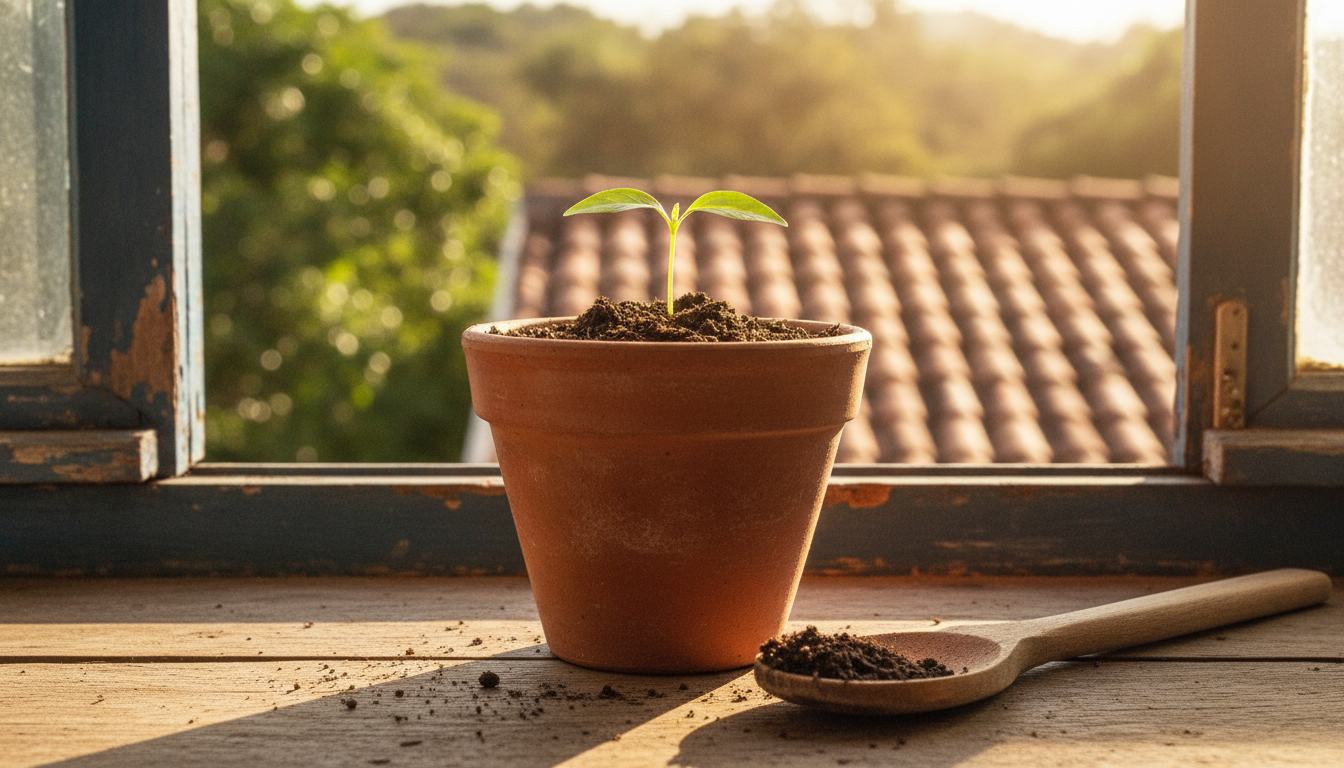
Ecosystems seem too big to fit into the routine of someone living in a two-bedroom apartment in Belo Horizonte or a peripheral neighborhood in Recife. But every consumption choice, every correct disposal, every native plant in a flowerbed is a thread that strengthens or weakens this web.
You don’t need to change everything at once. Choose one action from the list above, the one that fits best in your routine right now, and start this week. Over time, the connections will become clearer, and caring for the ecosystem will stop seeming like a sacrifice and simply become part of how you live.
