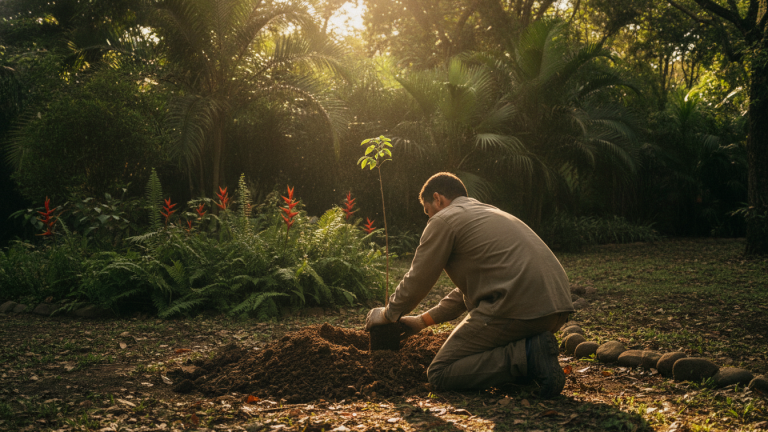
You’ve planted a seedling, watered it carefully for weeks, and watched it wither before a month was up? It happens more often than it seems, and it’s rarely due to lack of dedication. The problem, most of the time, lies in the first steps: choosing the wrong species for the wrong location, digging a hole that’s too small, or watering at the least appropriate time. Small details that make all the difference between a tree that grows strong and one that becomes nothing more than a sad memory in the garden.
Brazil is one of the countries with the greatest diversity of tree species in the world, according to IUCN data. Yet a considerable portion of popular plantings use exotic or unsuitable species for the local climate, which reduces survival chances and still harms regional biodiversity. Planning before planting isn’t bureaucracy: it’s what ensures your effort turns into real shade.
By the end of this guide, you’ll know how to choose the right species, prepare the soil, plant at the ideal time, and care for the seedling during the most critical weeks. All in a practical way, without needing to be an agronomist.
Why so many seedlings die shortly after planting
A seedling’s survival depends on a set of conditions that must be aligned from the start. According to Embrapa, water stress and inadequate soil preparation are the main culprits behind seedling death in domestic and community plantings. In other words: lack of water at the right time or soil too compacted for roots to breathe.
There’s another factor that few people consider: transplant shock. When a seedling leaves the nursery, it enters a period of adaptation where it becomes more vulnerable to pests, excessive heat, and competition with weeds. This period lasts, on average, four to eight weeks. It’s precisely in this window that most losses happen.
Understanding this process isn’t to scare you, but so you know where to focus your energy. With the right actions during this initial interval, the survival rate increases significantly.
How to choose the right species for your space
This is the most important decision in the entire process. Plant a large tree under electrical wiring and within a few years it will be pruned aggressively or removed by the utility company. Plant a species that requires lots of water in sandy northeastern soil without irrigation, and the result is already predictable.
Some simple questions help filter your options:
- How much space do you have? Large trees need at least five meters of distance from walls, sidewalks, and electrical networks.
- What’s the climate in your city? Brazil has very different climates: what grows well in Belém may not adapt in Porto Alegre.
- Do you want shade, fruit, or flowers? Each goal requires different species.
- Is there electrical wiring nearby? In that case, prefer small or medium-sized species.
For sidewalks and urban areas, many municipalities have tree-planting guides recommending species for each region. It’s worth consulting the city hall or local Environmental Department before buying the seedling. Embrapa also provides recommendations by biome.
Whenever possible, prefer native species from your biome. They’re already adapted to the climate, attract local pollinators, and require less long-term care. In the Cerrado, ipê-amarelo and pequi are good options. In the Atlantic Forest, quaresmeira and cambuci work well in smaller spaces.
Materials and preparation before putting the seedling in the ground
Having everything on hand before you start prevents interruptions at the most delicate moment of planting. Here’s what you’ll need:
- Healthy seedling (purchased from a credible nursery or municipal free distribution program)
- Hoe or cutting shovel
- Topsoil or organic substrate
- Organic compost or well-rotted manure
- Watering can or hose
- Wooden or bamboo stake (for taller seedlings)
- Wire or soft tie tape
- Mulch: straw, dry leaves, or tree bark
Estimated preparation and planting time: one to two hours, depending on soil.
Approximate cost: seedlings can cost between R$ 10 and R$ 50 at nurseries, but many cities and NGOs distribute them free. The rest of the materials cost less than R$ 30 if you don’t have them at home.
Step-by-step correct planting
- Choose the day and time. Plant preferably at the beginning of the rainy season, when soil is more moist and temperatures are milder. Avoid planting during the peak of dry summer. Late afternoon is the best time to reduce heat stress shortly after planting.
- Dig the hole to the right size. The most common mistake is making the hole too small. It should be at least twice the size of the seedling’s root ball in both width and depth. For a seedling in a two-liter bag, for example, dig a hole of at least 40 x 40 cm.
- Improve the soil in the hole. Mix the removed soil with organic compost or well-rotted manure in a ratio of two-thirds soil to one-third compost. This improves drainage and nutrient availability from the start.
- Remove the seedling from the container carefully. Hold it by the root ball, never by the stem. If it comes in a plastic bag, cut it with scissors to avoid breaking roots. If roots are spiraling at the bottom, loosen them gently before placing in the hole.
- Position the seedling at the correct height. The collar of the seedling (the part where the stem meets the roots) should be level with the soil, never buried. Burying the collar is one of the most common causes of slow death.
- Close the hole and compact lightly. Fill with the soil and compost mixture. Compact with your hands to eliminate air pockets, but don’t press too hard.
- Make a basin around the seedling. Create a small circle of raised soil around the seedling, about ten centimeters high and 30 to 40 cm in radius. This retains water exactly where roots need it.
- Water immediately and generously. The first watering should be generous. Wet until water starts to accumulate in the basin. This ensures the soil around the root ball is completely moist.
- Apply mulch. Place a layer of five to ten centimeters of straw, dry leaves, or tree bark around the seedling, without touching the stem. This material keeps moisture in, regulates soil temperature, and reduces weed growth.
- Install a stake if necessary. For seedlings taller than 50 cm, fix a bamboo stake or wooden stake beside it and tie the stem loosely with tape or cloth strip. The tie should be firm enough to provide support but loose enough not to injure.
The most common mistakes and how to avoid them
Even with good intentions, some habits sabotage planting without you noticing. Watch out for these points:
- Watering too much at first. Excess water drowns roots and favors fungi. Water once a day for the first two weeks, then reduce to alternate days. During regular rainy seasons, daily watering may not even be necessary.
- Forgetting the mulch. Without it, the sun dries the soil quickly and weeds compete with the seedling for nutrients and water.
- Pruning too early. Avoid any pruning for the first six months. The seedling needs all its leaves to produce energy and establish itself.
- Using chemical fertilizer early on. Excess synthetic fertilizers burn young roots. Wait at least three months before using any product of this type.
- Ignoring stress signals. Yellow leaves shortly after planting may indicate excess water. Wilted leaves with dry soil indicate lack of irrigation. Observe and adjust.
How long until the tree is established
The good news is that after surviving the first eight weeks, the seedling is on a much safer path. What we call complete establishment (when the tree no longer depends on constant watering) generally occurs between six months and two years, depending on the species and local climate.
Fast-growing trees like pau-brasil and leucena may show visible growth in just a few weeks. Dense-wood species like ipê grow more slowly, but compensate with durability and resistance. The important thing is not to be deceived by initial growth: a seedling that stretches quickly without well-established roots is more vulnerable to winds and droughts.
Caring for the soil around the tree in the first years also makes a difference. Maintaining mulch and avoiding compacting the soil with excessive foot and vehicle traffic around the trunk protects roots that are still spreading.
Taking good care of a plant requires attention to detail, something that also applies to other sustainable practices in daily life. If you’re concerned about the environmental impact of everyday choices, you may also be interested in the article How to remove plastic from lunch boxes without complications, which provides practical solutions to reduce disposables in children’s daily lives.
Frequently asked questions about planting trees at home
Can I plant any tree on the sidewalk in front of my house?
No. The sidewalk is public area, and tree planting in these spaces is regulated by each municipality’s city hall. In many cities, you need to request permission and follow an approved species guide. Consult the Environmental Department or your city’s website before taking action.
What if I live in an apartment? Can I contribute in some way?
Yes. Many municipalities have seedling adoption programs where you finance or care for a tree planted in public area. Another option is to participate in planting events organized by NGOs and urban collectives. Embrapa also supports restoration initiatives in various regions of the country.
What’s the best month to plant in Brazil?
It depends on the region. In the Southeast and Central-West, the beginning of the rainy season (October and November) is ideal. In the semiarid Northeast, the rainy period varies by sub-region. In the South, avoid months of intense frost. The general principle is to plant when soil has natural moisture and temperatures aren’t at extremes.
Is a nursery seedling better than one taken from the wild?
Generally, yes. Nursery seedlings have gone through a controlled process of germination and initial growth, which reduces disease risk and increases adaptation chances. Removing seedlings from protected areas may also be illegal under Law 9.605/1998, which regulates environmental crimes in Brazil.
Start with one tree, today
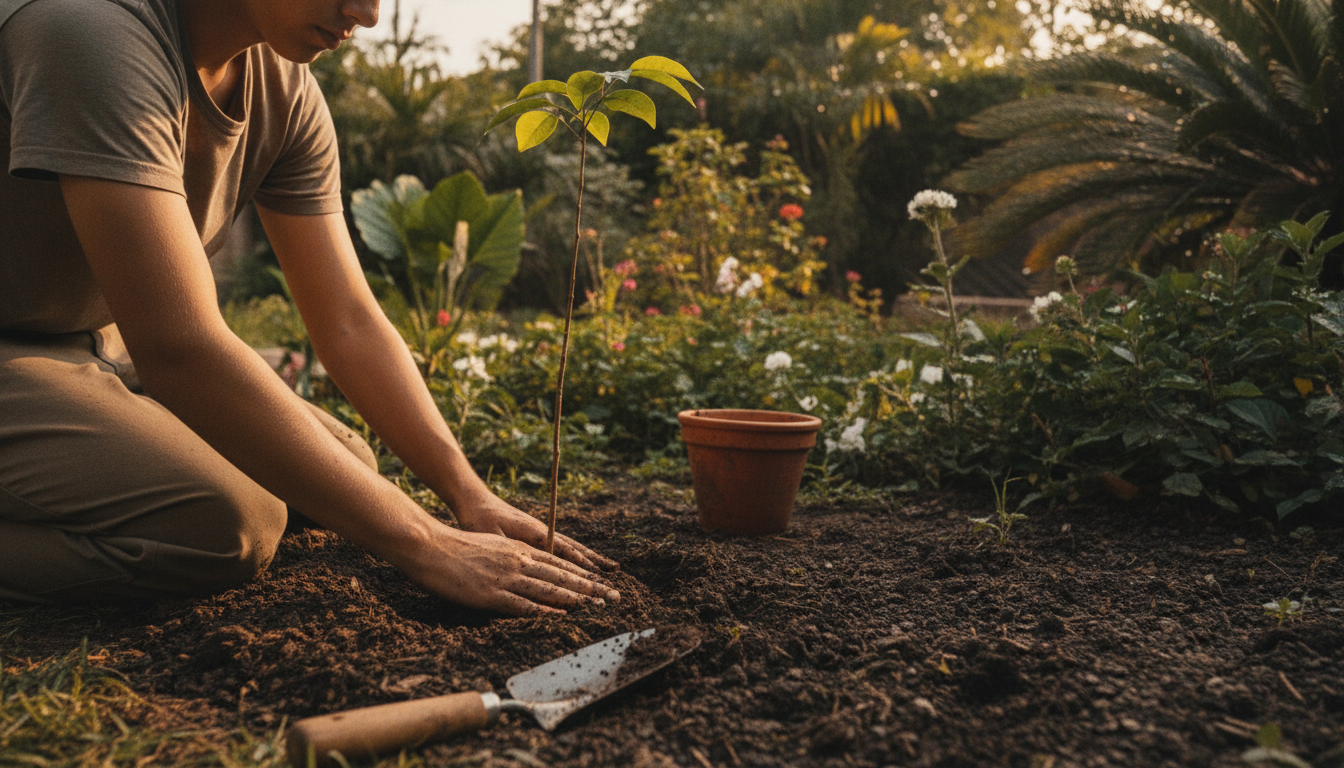
You don’t need to reforest Brazil on your own. One tree planted the right way in the right place is already a concrete contribution to air quality, neighborhood temperature, and local biodiversity. Choose a native species, prepare the soil as you learned here, and put the seedling in the ground this month. The result, in the form of shade, fruit, or flowers, will appear sooner than you imagine.
