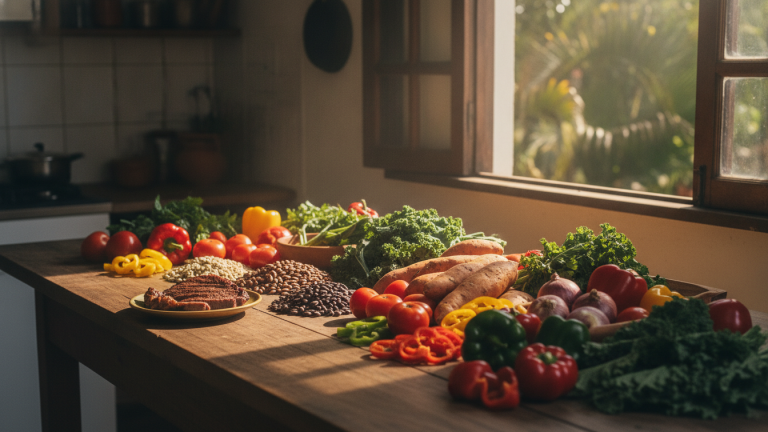
Why reducing meat is already one of the most powerful choices you can make
Have you ever stopped to calculate how many times a week you put meat on your plate? For many Brazilians, the answer is: almost always. Brazil is one of the world’s largest consumers and producers of beef, and this tradition is so deeply rooted in culture that thinking about changing it seems impossible. But no one is asking you to give up Sunday family barbecue. The proposal here is different: take small steps that fit your routine, your budget, and your taste.
Livestock farming is responsible for a significant portion of global greenhouse gas emissions. According to the IPCC, the food and land use sector accounts for about 22% of global emissions, and livestock production for consumption, especially beef cattle, is the largest part of that total. In Brazil, INPE and MapBiomas associate much of the deforestation of the Amazon and Cerrado to pasture expansion. In other words, what goes on your plate has a real impact on the environment you breathe.
The good news is that you don’t need to become vegan tomorrow to make a difference. Throughout this article, you’ll find practical and gradual strategies to reduce meat consumption, save money at the market, vary your menu and, without alarmism, contribute to a more balanced planet.
What science says about meat consumption and the environment
Beef cattle produce methane during digestion, a gas with warming potential far greater than carbon dioxide in the short term, according to IPCC data. In addition, feed production and water use in animal farming require resources on a much larger scale than the production of plant-based proteins.
Embrapa, a national reference in agricultural research, works with systems that try to make Brazilian livestock farming more efficient, such as crop-livestock-forest integration. These efforts are relevant, but UNEP (United Nations Environment Programme) experts point out that reducing meat consumption by people remains one of the individual actions with the greatest available climate impact.
In Brazil, per capita beef consumption is still high compared to the global average. This is not judgment, it’s context. And context helps explain why small changes, multiplied by millions of people, have real weight in the country’s emissions.
How gradual reduction works in practice
The approach that works best for most people is not immediate elimination, but progressive substitution. Dietary behavior research cited by the UN indicates that gradual changes have higher long-term adherence rates than radical cuts.
In practice, this means starting with one or two days a week without red meat. The “Meatless Monday” movement, which has existed for years and has versions in several countries, is based on exactly this principle: a small change, repeated, creates a new habit. You don’t need to join any movement. Just choose a different meal.
Another strategy is to reduce the portion of meat on your plate, compensating with legumes, eggs, dairy products, or plant-based proteins. Beans, lentils, chickpeas, and peas are cheap, nutritious options very present in Brazilian cuisine. Bean and rice, by the way, already form a combination of amino acids that complement each other, offering a fairly complete protein profile.
Step by step to start this week
You don’t need to reorganize your entire life at once. Here’s a simple and progressive path:
- Evaluate your current week: note mentally (or on paper) how many meals this week have red meat. This gives clarity without guilt.
- Choose a pause day: set a fixed day to not consume red meat. Sunday morning, Monday lunch, any time that works for you.
- Replace with what you already know: beans, scrambled eggs, tuna, chicken, or cheese are simple entry points before exploring less familiar plant-based proteins.
- Try one new recipe per month: chickpea burger, lentil stew, mushroom stroganoff. One recipe per month already expands your repertoire considerably in a year.
- Reduce the portion, not just the frequency: if you eat meat five times a week, reducing the portion by half in some meals already represents a real drop in consumption.
- Compare spending at the market: plant-based proteins usually cost less than quality beef. Beans, lentils, and chickpeas have a cost per serving well below sirloin or tenderloin.
- Give your palate time: it adapts. What seems bland in the first week usually gains flavor over time with the right seasonings.
Time to start: a few minutes of planning before shopping. Additional cost: zero, in most cases.
Proteins that substitute well and cost less
One of the biggest resistances to reducing meat is the fear of going hungry or not getting enough protein. This concern is understandable, but the variety available in Brazil solves the problem well.
- Beans and lentils: sources of protein and fiber, versatile and cheap at the market or supermarket
- Chickpeas: go far and work in salads, soups, burgers, and pastes like hummus
- Eggs: high biological value protein, quick to prepare and accessible
- Tofu and tempeh: soy derivatives, found in larger markets and health food stores, with texture that absorbs seasonings well
- Mushrooms: not a complete protein, but have texture and flavor that substitute well for meat in many dishes
- Quinoa: grain with a complete protein profile, more expensive, but can be used in small amounts as a complement
You don’t need to use all of them. Choose two or three you already know and start with them. If you want to go further in sustainable eating, it also makes sense to think about how you transport your purchases and organize your consumption, just as it makes sense to reflect on other daily habits, such as reusing packaging at home, which is easier than it seems.
Common mistakes people make when trying to reduce and end up quitting
Many people try to reduce meat consumption and back out not because the idea is bad, but because they made changes that were too difficult right away.
The most frequent mistake is making a radical change without having substitutes prepared. If Monday lunch has no meat but also has nothing tasty in its place, the tendency is to give up. Plan ahead: have cooked beans in the fridge, eggs available, a container of seasoned chickpeas.
Another mistake is thinking that every meat-free meal needs to be elaborate. An omelet with vegetables, rice with beans and salad, or a lentil soup are simple, quick, and nutritious meals. Sophistication can come later, when the habit is already formed.
Finally, avoid comparing your pace with others’. Anyone who reduced to once a week is doing more than someone who hasn’t reduced at all. Every step counts.
How much this represents in real environmental impact
Accurately estimating the individual impact of dietary changes is complex, because it depends on how, where, and by what method the food was produced. But the UNEP and IPCC are clear: diets with less red meat and more plant-based proteins are among the individual actions with the greatest potential for reducing emissions.
In Brazil, where beef livestock is associated with pressures on biomes like the Amazon and Cerrado, as documented by INPE, dietary choice has an extra layer of relevance. When fewer people buy meat, signaling to the market exists, even if diffusely.
Combining this change with other sustainable choices potentiates the effect. Just as sustainable transportation reduces your carbon footprint concretely, food is another real lever that is in your hands.
Frequently asked questions about reducing meat consumption
Do I need to stop eating meat completely to make a difference?
No. Any reduction has an impact, especially when it comes to red meat, which has a greater environmental footprint than chicken or fish. Eating red meat less frequently already represents real change without requiring complete abandonment.
How do I ensure enough protein without red meat?
By combining varied sources: legumes, eggs, dairy, chicken, and fish already cover the needs of most people well. If you have doubts about your specific diet, a nutritionist can guide you based on your profile.
Does reducing meat become more expensive?
Generally, no. Beans, lentils, eggs, and chickpeas have a cost per serving well below beef. The savings can be used to invest in other fresh foods like fruits, vegetables, and greens, which also make up a more balanced diet.
What about barbecue? Do I need to give it up?
You don’t need to. The goal is to reduce frequency and quantity in your daily life, not eliminate moments of celebration. A monthly barbecue is part of Brazilian culture and has far less weight than daily red meat consumption.
Start with a different meal today
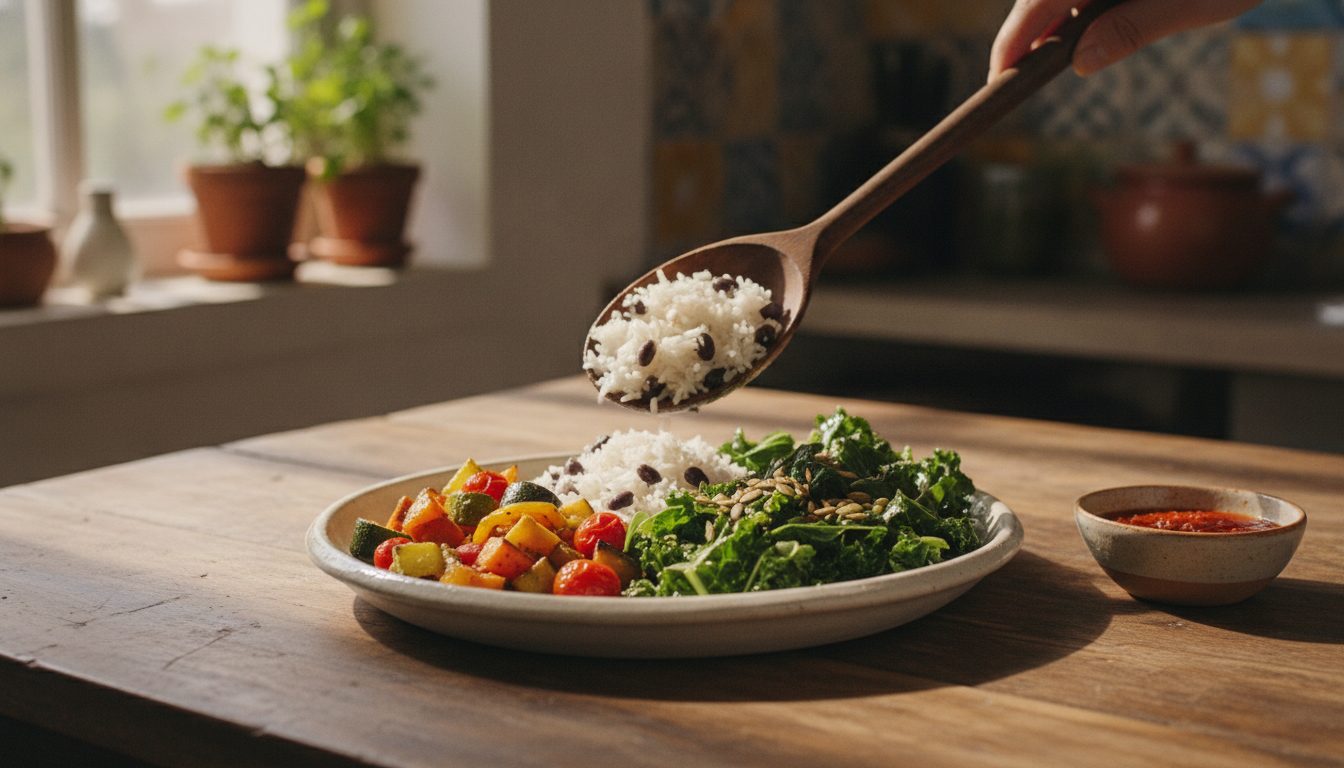
If you’ve made it this far, you already have everything you need to take the first step. Choose one meal this week, just one, and replace the meat with something you already like: eggs, beans, chicken, or any other option that makes sense for you.
It doesn’t need to be perfect. It needs to be real. And what is real can grow.
