Have you ever stopped to count how many packages you throw away in a week? Yogurt containers, sauce jars, cardboard boxes, plastic bottles, aluminum cans. The list grows quickly. According to data from Abrelpe (Brazilian Association of Public Cleaning and Solid Waste Companies), Brazil generates over 80 million tons of urban solid waste per year, and a considerable portion of this volume comes directly from home kitchens and pantries.
The good news is that many of these packages have a second useful life within your own home, without needing craft skills, without spending money, and without taking time. Reusing is not the same as recycling: you don’t even need to take anything to a collection point. It’s just a matter of looking at what you’re about to throw away with different eyes.
After reading this article, you’ll know which everyday packages have the greatest reuse potential, how to clean them properly, what they can be used for in practice, and what mistakes to avoid to prevent health problems instead of solving environmental ones.
What Brazilian law says about packaging and why it matters to you
The Law 12.305/2010, known as the National Solid Waste Policy (PNRS), establishes a clear order of priority: first reduce, then reuse, then recycle, then treat, and finally dispose. Reusing ranks second in this hierarchy, above recycling.
This is not a bureaucratic detail. Recycling still consumes energy, water, and transportation. Reusing a package within your home, on the other hand, has virtually zero impact on the waste collection and treatment system. You relieve public waste infrastructure and reduce demand for new packaging at the same time.
For those who live in a city with functioning selective collection, reusing before discarding for recycling is the smartest sequence. And for those without selective collection nearby, which are still many Brazilian municipalities according to Abrelpe surveys, reuse becomes even more relevant: it’s the way to give more cycles of use to something that would otherwise go to regular trash.
Which packages have the most potential at home
Not every package deserves the same effort. Some are too fragile, others absorb odors, still others mix materials that are difficult to clean. But a large group of them is quite versatile.
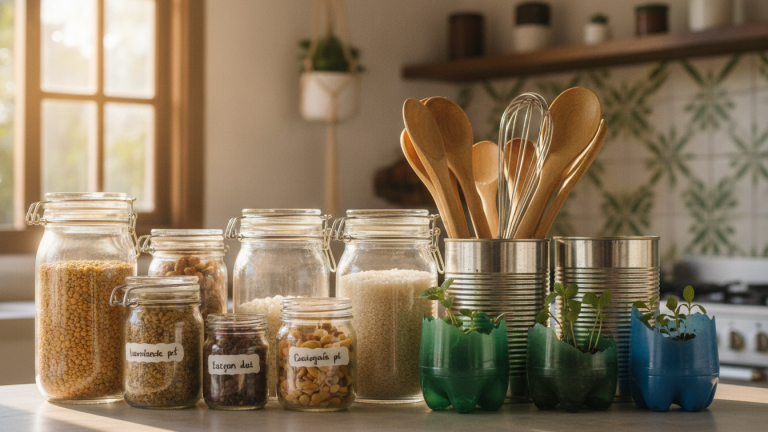
Glass is the champion. Jars of palm hearts, olives, jam, tomato sauce, and preserves in general are hermetic, washable, don’t absorb odor, and can handle freezer, refrigerator, and microwave (without the metal lid). A 500 ml jar of tomato sauce can replace a new plastic container for years.
Rigid plastic containers with recycling symbol 5 (polypropylene, or PP) are safe for food. Yogurt, cheese spread, margarine, and cream cheese containers fall into this category. Check the number on the bottom of the container: the 5 inside the triangle indicates that the material is stable and doesn’t easily release harmful substances. Plastics 3 and 6 are the most problematic and should go to recycling, not for storing food.
Cardboard boxes have extra life as drawer organizers, supports for cables and chargers, dividers in larger boxes, or even as a base for a window garden. Shoe boxes, for example, are ideal for storing documents or separating items on shelves.
Aluminum and steel cans (from tuna, tomato paste, corn, peas) function as pencil holders, small pots for herbs on the window, and desktop organizers. Aluminum especially doesn’t rust and lasts a very long time.
PET bottles from soda and water are perhaps the most well-known, but the use goes far beyond children’s crafts. They serve for storing dry grains, making homemade watering cans, organizing the refrigerator, or creating small vertical gardens on apartment balconies.
How to sanitize packages before reusing
This is the most important and most overlooked step. Reusing a poorly washed container can contaminate food or create a breeding ground for mold and bacteria. The good news: the process is simple.
- Empty completely the container as soon as you finish the product.
- Rinse with warm water immediately to prevent residue from drying and sticking.
- Wash with sponge and neutral detergent, covering the edges and lid well.
- For glass with strong odors (such as sardine or pickle jars), soak for 30 minutes in a solution of water and baking soda (one tablespoon per liter).
- Dry completely before closing or storing. Internal moisture is the main cause of mold in reused containers.
- If you’ll be storing food, prefer washing with hot water or running through the dishwasher when available.
Estimated time for complete sanitization: 5 to 10 minutes. Cost: zero extra if you already have detergent and baking soda at home.
Practical uses organized by room
Reusing becomes easier when you think room by room. Here’s a practical list:
Kitchen:
- Preserve jars for storing grains, flour, sugar, coffee, and loose teas
- Yogurt containers for freezing broths, homemade sauces, and food leftovers
- Washed cans as utensil holders on the counter
- PET bottles cut in half as plastic bag holders inside the cabinet
Bathroom:
- Plastic pots from cream or yogurt for storing cotton swabs, hair ties, and accessories
- Small glass jars (from mayonnaise or mustard) for organizing jewelry or buttons
Office and living room:
- Cardboard boxes as drawer organizers or dead files
- Cans as pen holders, scissors, and rulers
- Cereal boxes lined internally as magazine holders
Balcony and garden:
- PET bottles cut as small pots for seedlings and herbs
- Steel cans for small plants (with a hole in the bottom for drainage)
- Cardboard boxes as an improvised composting base for dry leaves
Common mistakes you’ll want to avoid
Reusing seems intuitive, but some slip-ups can turn a good intention into a problem.
Storing food in inadequate packaging. Plastics classified as 1 (PET) are safe for a single beverage use, but were not designed for storing hot food or for repeated use with foods. Use them to organize objects, not to store food.
Mixing uses without intermediate cleaning. A can that held paint or cleaning product should not be reused for edible plants, even after washing. The risk of residual contamination is real.
Accumulating without a defined function. Storing a package “because it might be useful one day” without a clear use in mind generates unnecessary clutter. A good practice: define the use before washing and storing. If you can’t think of a use in less than a minute of reflection, send it to recycling.
Ignoring signs of deterioration. Plastic scratched on the inside, cracked glass, or rusty cans should be discarded. Deep scratches in plastic create crevices where bacteria accumulate more easily.
The real gain for your wallet and routine
Reusing packages generates a modest but consistent savings. Quality glass and plastic containers cost between R$ 15 and R$ 50 each in home goods stores, in 2026. A family that regularly reuses the containers it already has stops buying several of these items per year.
Kitchen organization also improves concretely. Grains in hermetic glass jars last longer and are protected from moisture and pests, something especially relevant in the warmer and more humid regions of Brazil, like the North and Northeast. You spend less on products that spoil before use and deal with less food waste.
For those who want to go beyond packaging and rethink consumption more broadly, including energy choices at home, it’s worth understanding how the types of renewable energy that exist today also affect your electricity bill and the environmental impact of your home. Sustainability at home is a set of small decisions that reinforce each other.
Frequently asked questions about package reuse
Is it safe to store food in margarine or cheese spread containers?
Margarine and cheese spread containers are usually made of polypropylene (PP, code 5), which is considered safe for food contact. Wash well before use and avoid putting very hot foods in them, as heat can soften the plastic and alter its structure over time.
Can preserve jars go in the microwave?
The glass itself can, but the metal lid should never go in the microwave. Remove the lid, cover with a plate or paper towel, and heat normally. Prefer glass jars without paint or internal decoration for use with heat.
Can I use reused containers for work lunch boxes?
Yes, as long as the container is suitable (clean glass or plastic PP in good condition) and you sanitize it regularly. Glass jars with screw caps are especially practical because they seal well and don’t leak in your bag.
How long does a reused container last before it needs to be discarded?
It depends on the material and frequency of use. Glass lasts indefinitely if it doesn’t break. Plastics should be replaced when they show deep scratches, intense discoloration, or persistent odor even after washing. A quick inspection every three or four months is enough to maintain safety.
Start today, with what you already have in your kitchen
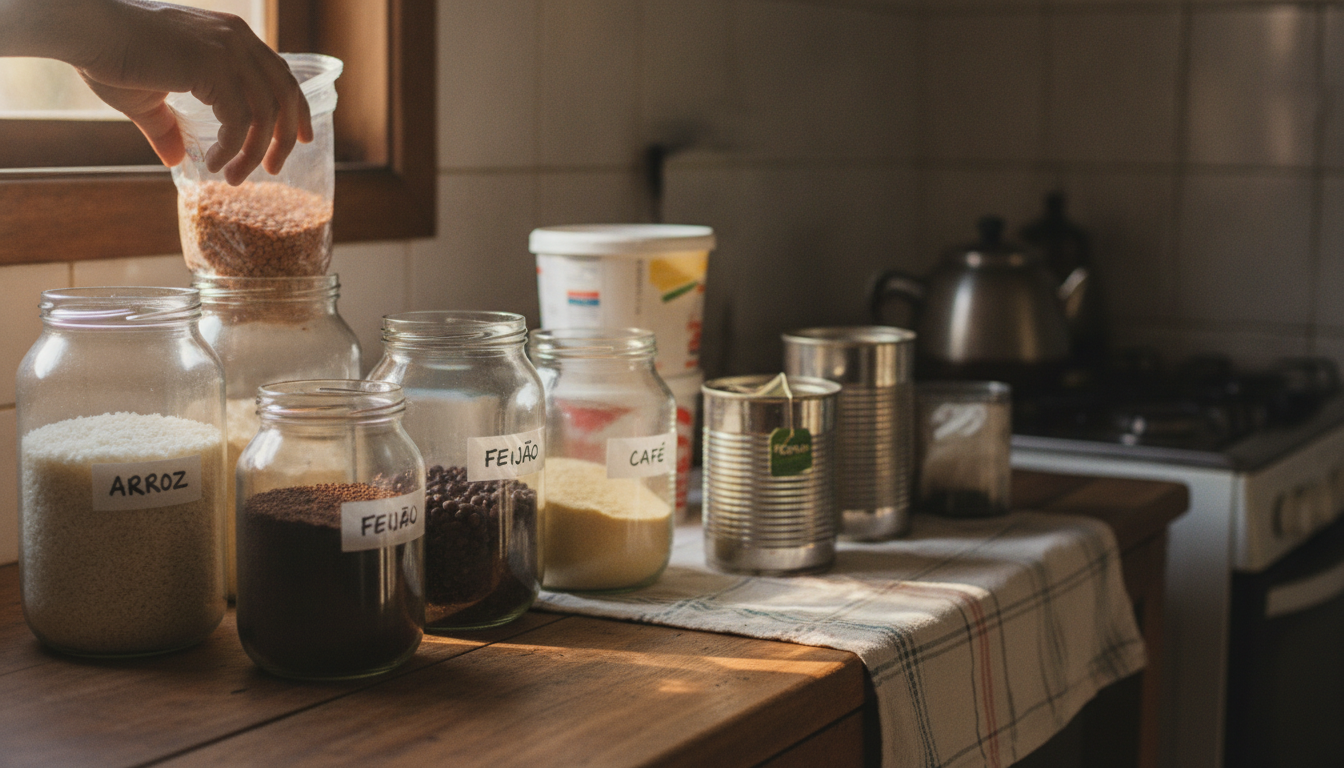
You don’t need to buy anything, search for long tutorials, or reorganize your entire home. Take the next glass jar you’re about to throw away, wash it well, dry it, and fill it with grains or spices. This gesture, repeated regularly, is already true reuse.
The change in habit starts small and naturally takes space over time. Eventually, you begin to look at packages before throwing them away, which subtly changes your relationship with consumption as a whole. And that, without guilt and without heroic effort, is exactly the kind of action the planet needs to multiply.
