Why the bag you choose matters more than it seems
Have you ever stood in the supermarket line unsure whether to grab a plastic bag or use the cloth bag buried at the bottom of your backpack? This hesitation is more common than you might think, and the answer isn’t as simple as the “go green” industry makes it seem. Choosing the right reusable bag depends on how you use it, how often you wash it, where you live, and what you typically carry.
Brazil consumes an enormous amount of disposable plastic bags. According to data from Abrelpe (Brazilian Association of Public Cleaning and Special Waste Companies), the country generates millions of tons of urban solid waste per year, and single-use plastics account for a significant portion of that volume. Since Law 12,305/2010, the National Solid Waste Policy (PNRS), came into effect, municipalities and states have advanced in restricting disposable plastics, but plastic bags still circulate in neighborhood markets, farmers markets, and bakeries in everyday life.
By the time you finish reading this article, you’ll know which type of reusable bag makes the most sense for your routine, how to care for it so it lasts years, and which pitfalls to avoid when buying.
The problem with disposable plastic in Brazil
The conventional plastic bag, that thin polyethylene one, takes around 400 years to decompose in the environment, according to information from the United Nations Environment Programme (UNEP). In Brazil, a considerable portion of plastic waste doesn’t even reach selective collection: it ends up in vacant lots, streams, and eventually rivers that flow into the sea.
Ibama and the Ministry of the Environment have pointed to single-use plastic as one of the main vectors of water pollution in the country. Cities with urban rivers, like São Paulo, Recife, and Belém, feel this concretely: floods partially worsened by clogged storm drains with disposable bags.
Switching from a disposable to a reusable bag reduces this chain of impact. But there’s a detail many people ignore: the reusable bag also has an environmental cost of manufacturing. That’s why the key point is the number of uses, not just the material.
What types of reusable bags are available
In the Brazilian market in 2026, you’ll find basically four main options. Each has real advantages and limitations.
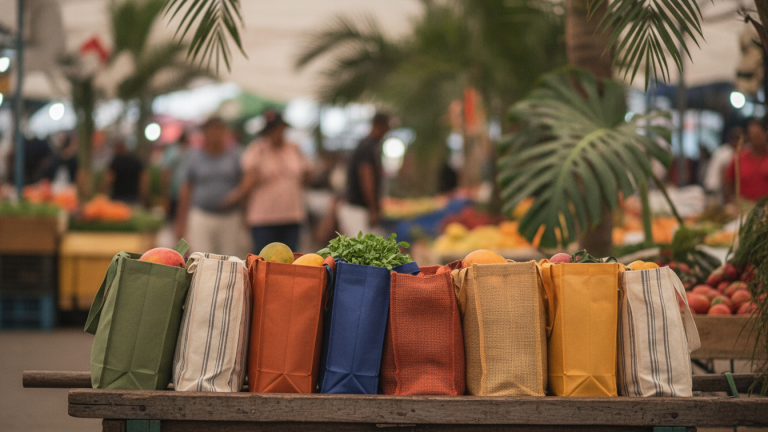
Raw cotton bag (ecobag) It’s the most popular in farmers markets and sustainable stores. Lightweight, washable, and resistant. The point of attention is that conventional cotton requires a lot of water to be cultivated. According to UNEP, cotton production is one of the most water-intensive in global agriculture. To offset the manufacturing impact, experts recommend that cotton ecobags be used at least dozens of times before “breaking even” with disposable plastic in environmental terms. If you wash it frequently and use it for years, the balance becomes positive.
Organic cotton bag Same structure as a conventional ecobag, but with less cultivation impact, no pesticides, and relatively lower water consumption. It usually costs a bit more. Worth it for those who want to take one more step and are willing to invest.
Non-woven polypropylene bag (TNT) That colorful bag, usually with handles, that supermarkets sell at the entrance. It’s lightweight, cheap, and waterproof enough for wet fruits. The disadvantage is that TNT is not biodegradable and, when it wears out, has no easy recycling in Brazil. It lasts less than cotton and loses resistance after many washes.
Canvas or jute bag More robust, ideal for heavy shopping. Jute is a natural and biodegradable fiber with good environmental performance. Waxed canvas lasts years and handles weight. These are options for those who go to the farmers market weekly and carry a lot at once.
Nylon or recycled polyester bag Compact, lightweight, and water-resistant. Some fit in your pocket. Recycled polyester comes from reused PET bottles, which is a positive point. A good choice for those who travel a lot by public transportation and don’t want to carry extra weight.
How to choose the right bag for each situation
There’s no perfect bag for everyone. The ideal choice depends on your lifestyle.
- Farmers market or produce stand: prefer canvas, jute, or large cotton ecobag. They support weight, ventilate well for fruits and vegetables, and you can machine wash them.
- Weekly supermarket: one or two medium-sized TNT or cotton bags are enough. If you buy a lot, three bags are sufficient for most family shopping.
- App shopping with local pickup: a compact nylon bag that fits in your purse or backpack is convenient to avoid forgetting at home.
- Bakery and quick market: a small ecobag folded in your coat or backpack pocket solves the situation without planning.
- Beach and pool: nylon or waxed canvas bag that withstands moisture and sand.
The most common mistake is buying several bags at once, on impulse, and ending up not using any of them regularly. It’s better to start with two or three and develop the habit of keeping them in strategic points: in your backpack, in your car, hanging on your home door.
How many times you need to use to make up for it
This is the question that generates the most confusion. The logic is simple: every reusable bag requires energy, water, and raw materials to be manufactured. It only “pays off” environmentally when used enough to dilute that initial impact.
| Bag type | Estimated minimum uses to compensate* | Average durability with regular use |
|---|---|---|
| Conventional cotton | 50 to 150 uses | 3 to 7 years |
| Organic cotton | 20 to 50 uses | 3 to 7 years |
| TNT (polypropylene) | 11 to 20 uses | 1 to 3 years |
| Nylon/recycled polyester | 10 to 20 uses | 4 to 8 years |
| Jute | 30 to 60 uses | 2 to 5 years |
*Qualitative estimates based on UNEP references on material life cycle analysis; values vary depending on production method and washing frequency.
The practical message: any reusable bag you actually use frequently is better than a disposable plastic bag. The problem only appears when you buy ten ecobags and use each one twice a year.
How to care for your bag so it lasts years
Care is what transforms an ordinary bag into an item that lasts for years. Some practical guidelines:
- Wash regularly. Bags that carry food accumulate bacteria, especially when used for meat or fish. A weekly wash, or whenever there’s visible residue, is enough.
- Use a delicate cycle in the machine for cotton ecobags. Cold water preserves fabric longer.
- Dry in the shade. Direct sun degrades fibers faster, especially in the Brazilian climate.
- Store folded, not crumpled. This prevents creases and wear on folds.
- Repair before discarding. A small seam tear can be fixed with needle and thread in five minutes, extending lifespan by months.
- At end of life: cotton and jute ecobags can be composted or turned into cleaning cloths. TNT and nylon bags should go to plastic collection points when available in your municipality.
If you also grow a small garden at home, you can use the scraps of natural fabric as soil cover or even combine them with composting practices, such as using worm compost to make your garden more productive, which greatly improves nutrient uptake in pots or beds.
Common mistakes when buying and using
Many people start with good intentions and stumble on the same points. See what to avoid:
- Buying by appearance. That beautiful printed ecobag could be made of thin cotton that tears on the second heavy purchase. Prefer reinforced stitching and double handles.
- Systematically forgetting at home. The habit doesn’t form on its own. Keep a folded bag inside the purse you use every day. No exceptions.
- Using the same bag for raw meat and fruits. This is a real risk of cross-contamination. Have at least two bags and separate their use.
- Thinking TNT is the same as fabric. TNT looks like fabric, but it’s pressed plastic. It’s not biodegradable and doesn’t have good recycling in Brazil today.
- Buying excessively. As mentioned, ten bags used twice each is worse than two bags used three hundred times.
When choosing food at the market, combining durable bags with a preference for seasonal foods, which cost less and have a lower transportation footprint, is a combination that makes a real difference in your budget and environmental impact.
Frequently asked questions about reusable bags
Does a reusable bag actually save money?
Yes, over time. In 2026, charging for plastic bags in Brazilian supermarkets is already common practice in several states, influenced by PNRS and municipal legislation. With a cotton ecobag costing between R$ 15 and R$ 30 that lasts for years, you stop paying R$ 0.10 to R$ 0.50 per disposable bag on each shopping trip.
Can I machine wash a TNT bag?
You can, but be careful. Use cold water and delicate cycle. TNT tends to come undone at the seams faster than cotton when exposed to intense washing cycles. Machine drying is out of the question: always use a clothesline.
Which bag is best for carrying heavy items, like water bottles?
Waxed canvas and jute are most recommended for weight. Check if the handles are sewn on the outside of the bag’s base and not just at the top of the fabric, as this stitching detail makes a big difference in resistance when the bag is full.
Is there any regulation in Brazil about reusable bags?
The PNRS (Law 12,305/2010) establishes shared responsibility and waste reduction principles, which encouraged states and municipalities to create their own laws restricting disposable plastics. There’s no single federal regulation that specifies reusable bag requirements, but Inmetro has ordinances that define minimum requirements for bags marketed as “degradable” or “reusable” to prevent greenwashing in the sector.
Start today, with what you already have
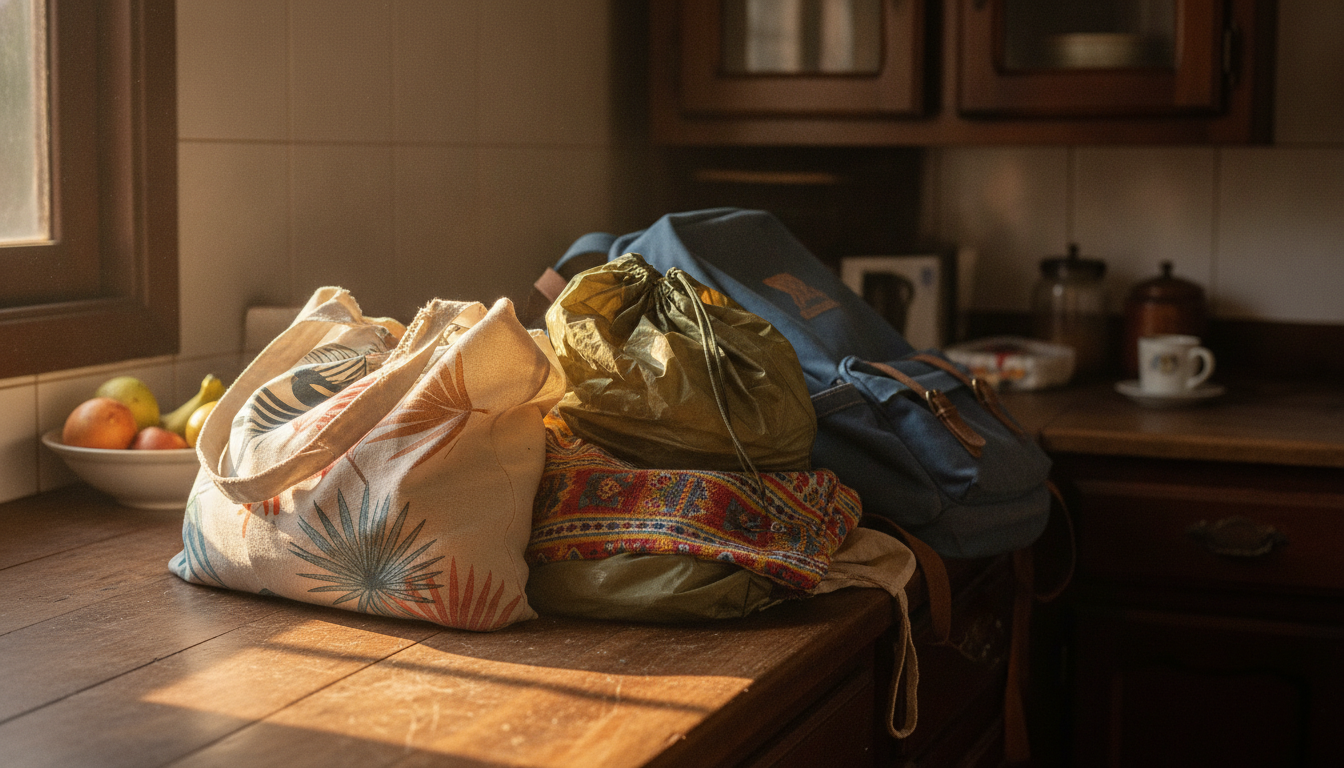
If you have a cloth bag sitting in some drawer at home, you already have everything you need to start now. Fold it and put it inside the purse you use daily. This simple gesture, done today, is what changes the habit over the next few months.
The ideal reusable bag isn’t the most expensive or the most beautiful: it’s the one you actually use frequently, for a long time. Choose one that makes sense for your routine, care for it, and let it work for you.
