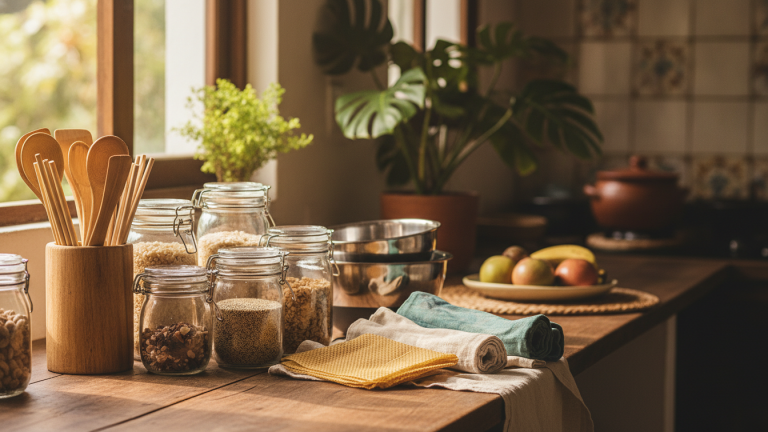
Open your kitchen utensil drawer right now. How many plastic items can you count in thirty seconds? Containers, spoons, spatulas, plastic wrap, zip bags, trays, disposable cups stored “for later use”. The average Brazilian kitchen accumulates plastic in ways we rarely notice because the material has been normalized over decades. According to data from the United Nations Environment Programme (UNEP), the world produces more than 400 million tons of plastic per year, and a significant portion of that volume passes through the home kitchen.
The good news is that replacing plastic in the kitchen doesn’t require renovations, major investments, or any special lifestyle. It basically requires choosing differently the next time an item needs to be replaced. By the end of this article, you’ll know which alternatives really work in everyday Brazilian use, how much they cost, where to find them, and how to make the transition without waste.
It’s not about throwing everything away at once. That would be the opposite of sustainable. The idea is to substitute gradually, as each piece of plastic reaches the end of its useful life, replacing it with something more durable, safe, and with lower impact.
Why the kitchen deserves special attention in plastic reduction
The kitchen concentrates two problems at the same time: single-use plastic (bags, wraps, disposables) and frequently-used plastic that degrades in contact with heat and fat (containers, utensils, cutting boards). When heated or scratched, plastic can release compounds like bisphenol A (BPA) and phthalates, substances associated with hormonal changes according to studies reviewed by the European Food Safety Authority. In other words, the substitution has direct health benefits for your family, not just for the planet.
The National Solid Waste Policy, Law 12,305/2010, establishes shared responsibility for the product life cycle and encourages waste reduction. In practice, kitchen plastics often don’t reach selective collection because they’re stained with grease or are mixed types that cooperatives can’t process. Much of it goes straight to the landfill.
Starting with the kitchen makes sense because of how frequently it’s used. It’s the room where we generate the most daily household waste. A change in habits there affects hundreds of decisions per year.
Containers and storage: glass and stainless steel as definitive substitutes
Glass is the most obvious and most efficient substitute for plastic containers. It doesn’t absorb odors, doesn’t stain, doesn’t release substances into food, goes in the microwave (without the metal lid), and lasts decades if well cared for. Reused canning jars already solve much of the storage need at no additional cost. Just wash well and store.
For those who prefer to invest in something more standardized, sets of glass containers with bamboo or silicone lids are available in home goods stores and natural product fairs in major cities. A set with four containers of varying sizes costs, on average, between R$ 60 and R$ 120, depending on the region and retail outlet.
Stainless steel is another excellent option, especially for families with small children, because it doesn’t break. Lunch boxes, airtight containers, and steel bowls have very long useful lives and are common in natural product markets or specialized stores. For food transport, steel works better than glass because of weight and resistance.
Tips for the container transition
- Before buying anything new, gather the glass jars you already have at home (olives, palm hearts, jam, sauce)
- Label them with masking tape and permanent marker with what goes inside each one
- Replace scratched or stained plastic containers first; these are the ones that raise the most health concerns
- For the freezer, glass works well as long as you leave space for liquid expansion
Food wrapping: alternatives to plastic wrap and aluminum foil
Plastic wrap is one of the hardest items to recycle in the kitchen, and rarely leaves the home except in regular trash. There are three practical substitutions that really work:
Beeswax wrap: cotton cloths impregnated with beeswax, tree resin, and jojoba oil. They work to cover bowls, wrap cheeses, breads, and fruits. The warmth of your hands softens the wax and allows you to mold it around the food. They don’t work for raw meat or very hot foods. They last about a year with regular use and can be composted at the end of their life. Brazilian brands already produce this item, and the average price is between R$ 30 and R$ 60 for a kit with three sizes.
Reusable silicone lids: function like “hats” that stretch over bowls, pans, and even fruit halves. They’re washable, durable, and practical. A set with six different sizes costs between R$ 40 and R$ 80.
Damp cotton cloths: for wrapping leafy vegetables like lettuce and parsley, a slightly damp kitchen cloth has the same effect as plastic and maintains moisture. It’s free and you probably already have it at home.
Aluminum foil, on the other hand, has possible recycling but it’s inefficient in Brazil. According to the Brazilian Association of Public Cleaning and Special Waste Companies (Abrelpe), selective collection still reaches only a minority of Brazilian municipalities with sufficient quality to process materials like this. Reducing use is more effective than relying on recycling.
Kitchen utensils: what to replace and why
Plastic spatulas, spoons, and tongs degrade over time and release microparticles into food when used with heat. The substitution here is simple and alternative materials are easily found in any market or kitchenware store.
- Bamboo: bamboo spoons, spatulas, and cutting boards are cheap, resistant, and have naturally antimicrobial properties. A bamboo spoon costs less than R$ 10 at the farmers market or in popular stores
- Certified wood: solid wood boards and utensils last much longer than their plastic equivalents if well cared for with mineral or coconut oil periodically
- Stainless steel: tongs, skimmers, and graters are durable and easy to sanitize
- Food-grade silicone: for spatulas and oven forms, food-grade silicone is a safe and flexible option; check if the product has food certification before buying
The plastic cutting board deserves special attention. When scratched by knives, it releases microplastics directly into food. Research published in Environmental Science & Technology estimated that plastic cutting boards can release millions of microparticles per year of use. Switching to bamboo or wood is one of the substitutions with the most direct return for health.
Plastic bags: solutions for shopping, freezing, and trash
Disposable plastic bags have clear substitutes for each function they perform in the kitchen.
For shopping at farmers markets or supermarkets: bags made of raw cotton or reusable TNT are widely available. Smaller cloth bags, called “produce ecobags”, work for loose fruits and vegetables and avoid the thin bags that supermarkets offer in the produce and meat sections.
For the freezer: glass or steel containers with hermetic lids replace zip bags. For vegetables you want to freeze in individual portions (like lime cubes or chopped herbs), silicone ice cube trays work perfectly.
For organic trash: ideally, don’t use a bag at all, washing the bucket frequently. Those who have space can consider a small composter, which eliminates the need to discard organic waste. If you’re interested in growing herbs at home along with composting, it’s worth checking out how to set up a herb garden at home: how to start from scratch.
How to transition without waste: step by step
The biggest trap of the sustainable transition is throwing away items that still work to “start fresh” with new products. That generates more waste, not less.
- Take an inventory: list the plastic items in your kitchen and separate those in good condition from those already worn, scratched, or broken
- Start with the worn ones: replace first what would already need to be replaced anyway
- Set one item per month: instead of buying everything at once, include one sustainable alternative per month in the household budget
- Research before buying: neighborhood kitchenware stores, natural product fairs, collective buying groups, and organic markets usually have better prices than fancy decoration stores
- Accept donations and exchanges: neighborhood groups and swap apps frequently have glass containers, utensils, and ecobags available for free
- Dispose of old plastic responsibly: check if there’s a recycling cooperative near you that accepts the materials you’re discarding
Cost and durability comparison
| Item | Plastic version | Alternative version | Alternative cost | Estimated durability |
|---|---|---|---|---|
| Airtight container (500 ml) | R$ 8 to R$ 15 | Glass with lid | R$ 15 to R$ 25 | 10 years or more |
| Kitchen spoon | R$ 5 to R$ 10 | Bamboo | R$ 8 to R$ 15 | 3 to 5 years |
| Food wrap | R$ 10 (roll) | Beeswax wrap kit | R$ 30 to R$ 60 | 12 months |
| Cutting board | R$ 15 to R$ 40 | Bamboo or wood | R$ 25 to R$ 60 | 5 to 10 years |
| Shopping bag | R$ 1 to R$ 3 | Raw cotton | R$ 10 to R$ 20 | 5 years or more |
Common mistakes and how to avoid them
Buying without real necessity: greenwashing has reached kitchen utensils. There are many products sold as “sustainable” that have high environmental manufacturing costs and little durability. Prioritize simple materials with a reputation for durability.
Ignoring what you already have at home: every Brazilian kitchen drawer has grandma’s wooden spoons, reused glass jars, and kitchen cloths that substitute for products you’d pay to buy. The best sustainable product is the one you already own.
Waiting for the “perfect kit”: there’s no perfect transition. A mixed kitchen, with some plastic items still in use and others already replaced, is better than an all-plastic kitchen waiting for the ideal moment to change.
Not caring for substitutes: wood cutting boards that don’t receive oil crack and absorb bacteria. Glass containers break if poorly stored. Caring well for your substitutes is what ensures they last as long as they should and justify the investment.
Frequently asked questions about kitchen plastic alternatives
Does beeswax wrap work for storing meat?
No. Beeswax wrap should not be used with raw meat or very greasy and hot foods, as the wax can melt and sanitization is not sufficient to eliminate bacterial contamination. For meat, use airtight glass or steel containers.
Can I use glass containers in the freezer?
Yes, as long as you respect two conditions: always leave at least two centimeters of free space at the top of the container (liquid expands when frozen) and use containers without cracks or fissures. Prefer tempered glass when freezing.
Where can I find these products in Brazil if I live in a small city?
Free markets, natural product stores, and organic farmers’ markets usually have much of these items, even in smaller cities. Online sales platforms with small vendors are also an option. In many cases, reused glass jars and local wooden utensils are easier to find than their industrialized plastic equivalents.
Is silicone really safe for food?
Food-grade silicone is considered safe by regulatory agencies like Anvisa and the American FDA, as it doesn’t react with food or release known harmful substances at normal use temperatures. Always check if the product is indicated for food use; industrial silicones don’t have the same composition.
Start with a single cabinet today
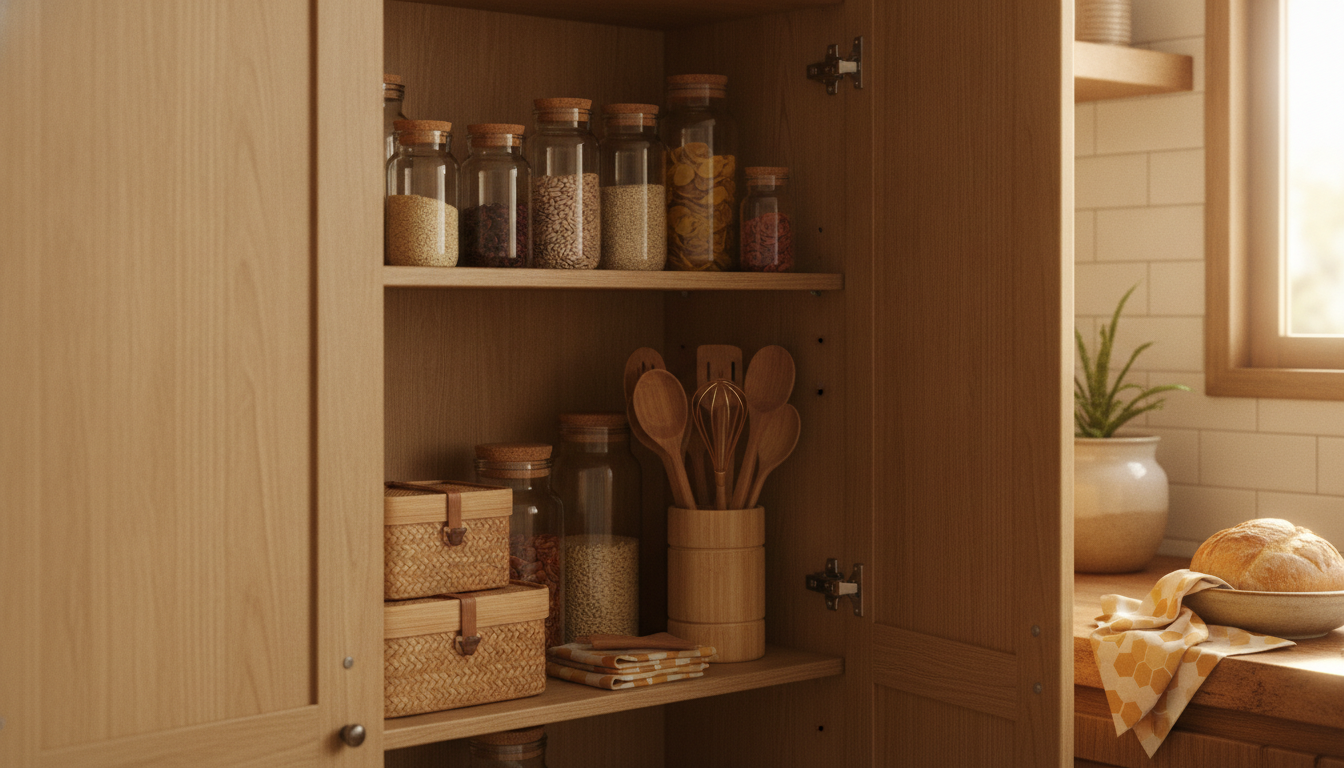
You don’t need to renovate the entire kitchen. Choose a single cabinet or drawer this week, look at what’s there, and identify the most worn plastic item. When it needs to be replaced, trade it for one of the alternatives on this list. That’s how real change happens: one concrete decision at a time, without guilt and without rush.
Each glass container that replaces a scratched plastic one is a practical victory for your health and for the amount of waste leaving your home. Small in size, real in effect.
