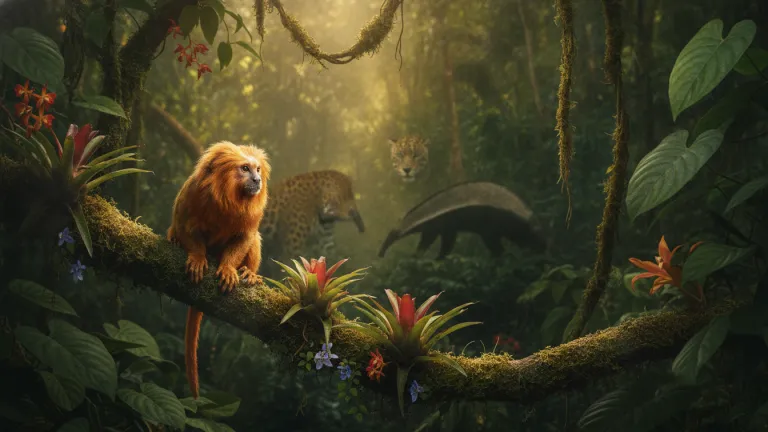
Brazil is home to one of the richest biodiversities on the planet. There are thousands of species of mammals, birds, reptiles, amphibians, and fish that exist nowhere else in the world. But this wealth is under increasing pressure: deforestation, habitat degradation, wildlife trafficking, and climate change are pushing hundreds of species to the brink of existence. Knowing which animals are endangered in Brazil in 2026 is the first step toward taking action.
The Red List from the Chico Mendes Institute for Biodiversity Conservation (ICMBio), updated according to the guidelines of the International Union for Conservation of Nature (IUCN), includes thousands of Brazilian species assessed for extinction risk. The numbers are concerning: Brazil ranks among the countries with the highest absolute number of endangered species in the world. And, contrary to what many believe, the problem isn’t limited to the Amazon — it extends throughout the Atlantic Forest, Cerrado, Pantanal, and Caatinga.
In this article, you’ll learn about some of the most emblematic animals at risk, understand the main threats, and discover concrete actions anyone can take to make a difference. Information is powerful, but only when accompanied by action.
Critically Endangered Animals in Brazil: The Most Urgent Cases
The IUCN’s “critically endangered” (CR) category represents the highest level of risk before extinction. In Brazil, several species find themselves in this extreme situation.
The Golden Lion Tamarin and the Fight for the Atlantic Forest
The golden lion tamarin (Leontopithecus rosalia) is one of the most well-known symbols of conservation in Brazil. Endemic to the Atlantic Forest of Rio de Janeiro state, this species was brought to the brink of extinction in the second half of the 20th century, with estimates pointing to fewer than 200 individuals in the wild at one point. Decades of work by organizations like the Golden Lion Tamarin Association (AMLD) have allowed for partial recovery of the wild population.
However, the golden lion tamarin still faces serious threats. The fragmentation of the Atlantic Forest — which has lost more than 85% of its original cover over the centuries — isolates animal groups and hinders healthy reproduction between populations. Global warming represents an additional risk: studies indicate that extreme climate events, such as heat waves and prolonged droughts, directly affect food availability in the forest.
The Maned Wolf and the Cerrado in Flames
The maned wolf (Chrysocyon brachyurus) is the largest canid in South America and an icon of the Cerrado. Although not classified as critically endangered in all recent assessments, it appears as vulnerable or threatened on various state and national lists, depending on the metrics used. What is not in debate is the pressure the species faces.
The Cerrado, the biome that shelters the maned wolf, has lost more than half of its native vegetation over recent decades to make way for agriculture and livestock. Recurrent fires, many of human origin, destroy entire territories. Additionally, the maned wolf is frequently hit by vehicles on highways that cross its natural habitat — wildlife roadkill is one of the main causes of mortality for the species.
The Giant Otter: Aquatic Giant at Risk
The giant otter (Pteronura brasiliensis) is the largest otter in the world and inhabits rivers and lakes of the Amazon basin and the Pantanal. Classified as endangered by the IUCN, this species suffered drastic population reduction mainly from predatory hunting for the fur trade in past decades. Today, the main threats include river pollution from mercury — especially from illegal mining — destruction of riparian forests, and human disturbance at their breeding dens.
Endangered Species in Brazilian Oceans and Rivers
Brazil’s aquatic biodiversity also faces intense pressures, often less visible to the general public.
The Amazon River Dolphin: Amazonian Symbol in Decline
The Amazon river dolphin (Inia geoffrensis) is probably the most charismatic animal of the Amazon. In 2018, the IUCN reclassified the species to the “endangered” category, a significant change from previous assessments. The causes include accidental fishing (bycatch), river degradation from dams and mining, and the deliberate use of the animal as bait for piracatinga fishing — an illegal practice still recorded in some regions.
The impact of illegal gold mining in the Amazon on rivers and their aquatic fauna is documented and growing. The mercury used in the process contaminates the food chain, affecting fish, dolphins, and human populations that depend on the rivers.
The West Indian Manatee and the Brazilian Coast
The West Indian manatee (Trichechus manatus) inhabits coastal and estuarine zones of northeastern Brazil. The species is considered vulnerable to endangered, depending on the subpopulation assessed. Among the main threats are collisions with vessels, entanglement in fishing nets, and degradation of mangroves and seagrass beds that serve as food sources. The reintroduction and monitoring project conducted by ICMBio has achieved positive results in some areas, but the species still needs active protection.
Endangered Brazilian Birds
Brazil ranks third in the world for number of bird species. It also harbors a significant number of endangered avian species.
The Spix’s Macaw: Extinct in the Wild, Alive in Captivity
The Spix’s macaw (Cyanopsitta spixii) became a worldwide symbol of the extinction crisis when it was declared extinct in the wild in the early 2000s. Reintroduction efforts, conducted in partnership with the Brazilian government and international breeders, have resulted in the return of some individuals to their original habitat in the Bahia hinterland in recent years. But the species is still listed as critically endangered, and the success of the reintroduction depends on maintaining and restoring the local Caatinga.
The Alagoas Curassow and the Invisible Caatinga
The Alagoas curassow (Pauxi mitu) is considered extinct in the wild, with survival only in captivity. It was originally found in forests of northeastern Brazil, but hunting and deforestation eliminated its wild populations. Reintroduction projects exist but face challenges related to habitat availability and quality.
Main Causes of Animal Extinction in Brazil
Understanding the causes is fundamental to acting effectively. The main threats to Brazilian fauna include:
- Deforestation and habitat loss: the conversion of forests and savannas for agricultural use is the number one cause of biodiversity loss in Brazil and worldwide, according to IPBES (Intergovernmental Science-Policy Platform on Biodiversity and Ecosystem Services).
- Illegal mining: contaminates rivers with mercury and destroys riparian vegetation on a large scale.
- Wildlife trafficking: Brazil is one of the main source countries for global wildlife trafficking. Wild birds, reptiles, and primates are among the most trafficked species.
- Wildlife roadkill: roads without wildlife crossing structures cause the death of millions of animals annually throughout the country.
- Climate change: global warming alters species distribution, reproductive cycles, and food availability, worsening existing pressures.
- River and ocean pollution: pesticides, untreated sewage, and mercury contaminate aquatic ecosystems.
- Invasive species: feral domestic cats, for example, represent a documented threat to birds and small mammals in various regions.
What You Can Do to Help Endangered Animals
Biodiversity conservation isn’t just the responsibility of governments and scientists. Each person has a real role to play. Here are practical and accessible actions:
- Never buy wild animals: demand fuels trafficking. If you find an animal being sold illegally, report it to ICMBio (0800 618 080) or the Environmental Police.
- Support conservation organizations: institutions like AMLD, the Jaguar Conservation Fund, SOS Mata Atlântica, and ICMBio do fundamental work. Small regular donations make a difference.
- Reduce consumption of products linked to deforestation: prefer foods with sustainable origin certifications and check if the products you consume have traceability.
- Don’t release domestic animals into the wild: feral cats and dogs have a direct impact on wildlife.
- Plant native trees: if you have a backyard, sidewalk, or access to a green area, planting species native to your region helps create ecological corridors.
- Consume information from reliable sources and share it: misinformation about wildlife leads to harmful behaviors. Share science-based content.
- Reduce your carbon footprint: climate change worsens all other threats to biodiversity. Small daily changes accumulate real impact — learn more at Live Sustainably Without Complicating Your Daily Life.
How to Track the Status of Endangered Species in Brazil
Staying informed is a form of engagement. See where to access reliable and updated data:
| Source | What it offers | Access |
|---|---|---|
| ICMBio | National List of Endangered Species | icmbio.gov.br |
| IUCN Red List | Global assessment by species | iucnredlist.org |
| IBAMA | Enforcement and reports | ibama.gov.br |
| WikiAves / eBird | Bird sighting records | wikiaves.com.br / ebird.org |
| SOS Mata Atlântica | Biome monitoring | sosma.org.br |
Conclusion: Brazil’s Biodiversity Depends on Each One of Us
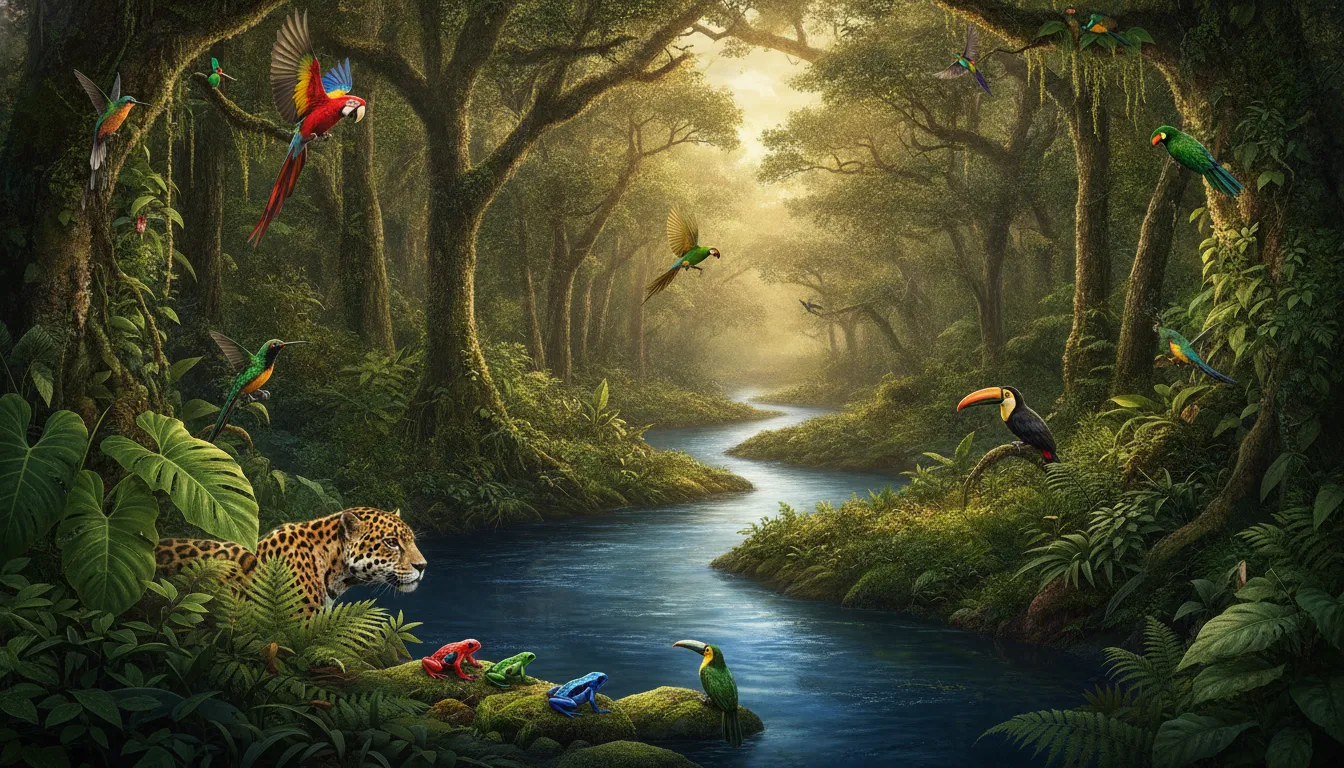
Brazil has a unique responsibility to the planet: it harbors between 15% and 20% of all known terrestrial biodiversity, according to estimates widely cited by researchers and international organizations. Losing these species is not just an ecological tragedy — it is also an irreversible loss of genetic resources, ecosystem services, and cultural heritage.
The good news is that conservation works when there is will and resources. The golden lion tamarin, maned wolf, and manatee are examples of species that have responded positively to protection efforts. This shows that extinction is not an inevitable fate — it is, in many cases, a collective choice we can still reverse.
You don’t need to be a scientist or live in the forest to be part of the solution. Every consumption decision, every environmental crime report, every conversation you have about the subject contributes to a culture of respect for wildlife. Start today, with what you have and where you are.
