Every time you choose a reusable bag at the supermarket, opt for public transportation, or turn off an unnecessary light, you’re making a decision that, multiplied by millions of people, transforms the world. It might seem like an exaggeration, but science confirms it: individual and collective consumption choices have a direct impact on greenhouse gas emissions, natural resource use, and ecosystem health. The challenge is to stop viewing sustainability as a sacrifice and start seeing it as a set of smart habits — for the planet and for your wallet.
Brazil occupies a unique position in this global equation. We hold the world’s greatest biodiversity, with the Amazon, Cerrado, Atlantic Forest, and Pantanal as irreplaceable natural treasures. At the same time, we are major generators of urban solid waste and face serious challenges with basic sanitation, deforestation, and emissions. According to the Brazilian Panel on Climate Change (PBMC), changing habits in the energy, transportation, and food sectors represents one of the most accessible ways to reduce our collective footprint — and these changes start at home.
The good news is that you don’t need to overhaul your life overnight. Everyday sustainability is built in layers: one habit at a time, one choice at a time. In this article, we’ve gathered the areas where your daily decisions have the most real impact and how to act practically, without giving up comfort or the pleasure of living well.
Home Energy Consumption: Small Actions, Big Impact
Electricity is one of the items with the greatest weight in household carbon footprint — even in Brazil, where the electrical grid is predominantly renewable (with hydroelectric power standing out). The problem is that energy waste always has an environmental cost, whether in generation, transmission, or the need for system expansion.
Efficient energy consumption habits
- Replace incandescent and fluorescent bulbs with LED. LED bulbs consume significantly less energy and last much longer than previous technologies, according to data from Brazil’s National Program for Electrical Energy Conservation (Procel).
- Turn off devices on standby. Televisions, chargers, and appliances in standby mode consume energy even without active use — this invisible consumption can represent a significant portion of your electricity bill.
- Use air conditioning moderately and efficiently. Keeping the filter clean, sealing window and door gaps, and setting the temperature to around 23°C are simple measures that reduce consumption.
- Take advantage of natural light. Rearranging furniture to maximize sunlight entry during the day can eliminate the need for artificial lighting for hours.
- Choose appliances with Procel A energy rating. When replacing refrigerators, washing machines, and other appliances, the energy efficiency label is a reliable guide.
Water: A Resource That Cannot Be Wasted
Brazil holds a significant portion of the world’s surface freshwater, but distribution is deeply unequal — and extreme weather events, such as droughts and prolonged dry spells, have increasingly affected Brazilian regions. Saving water is both an environmental responsibility and a way to prepare for a more uncertain future.
How to reduce daily water consumption
- Take shorter showers. Reducing shower time by a few minutes can generate significant savings of liters per month per person.
- Turn off the faucet while brushing teeth and shaving. With the faucet running, several liters per minute are wasted for no purpose.
- Fix leaks quickly. A simple dripping faucet can waste dozens of liters per day — and a leaking toilet, much more.
- Reuse vegetable cooking water to water plants. It still contains nutrients and is completely safe for this purpose.
- Install flow reducers on faucets and showerheads. These are inexpensive accessories found at hardware stores that reduce flow without compromising functionality.
- Wash your car with a bucket instead of a hose, or use waterless car wash services when possible.
Solid Waste: Less Trash, More Awareness
Brazil generates a significant amount of urban solid waste per year, and a considerable portion still ends up in landfills or improperly disposed of, according to data from the Solid Waste Overview in Brazil, published by the Brazilian Association of Public Cleaning and Special Waste Companies (Abrelpe). Changing this reality starts with what each of us discards — and how.
Practices to reduce household waste
- Adopt composting. Fruit scraps, vegetables, peels, and coffee grounds can become fertilizer instead of trash. There are compact composters for apartments that don’t generate bad odors when properly managed.
- Separate recyclable waste. Paper, plastic, glass, and metal should be washed and separated for selective collection. Check the collection days and locations in your municipality.
- Refuse the unnecessary. Before buying, ask yourself if you really need that product — and if the packaging can be avoided.
- Properly dispose of used cooking oil. It should not go down the drain or into regular trash. Learn what to do with used cooking oil to avoid pollution — collection points accept the product and it can be transformed into biodiesel.
- Avoid single-use plastics. Straws, disposable cups, plastic bags, and unnecessary packaging are the main culprits of plastic pollution in rivers and oceans.
Sustainable Eating: Your Plate Is Also Political
Food choices have an enormous environmental impact — and one that’s often underestimated. Food production accounts for a significant share of global greenhouse gas emissions, according to IPCC reports. This doesn’t mean you need to become vegan overnight, but rather that small changes in diet make a real difference.
How to make your diet more sustainable
- Reduce food waste. Plan your weekly meals, make a shopping list, and use leftovers creatively. In Brazil, a significant amount of produced food is lost or wasted along the supply chain — and part of this happens in homes themselves.
- Choose seasonal and locally-produced foods. Besides being fresher and more nutritious, these foods travel fewer kilometers to reach your plate, reducing transportation emissions.
- Reduce red meat consumption. Cattle ranching is one of the main sources of methane — a potent greenhouse gas — and responsible for a significant portion of deforestation in Brazil. Replacing some meals with plant-based proteins (beans, lentils, chickpeas) is one of the changes with the greatest individual impact.
- Buy in bulk when possible. This reduces the amount of plastic packaging and frequently lowers costs.
- Bring your own bag, lunch container, and water bottle when leaving home. These are simple habits that eliminate unnecessary waste in daily life.
Urban Mobility: How You Get Around Matters
The transportation sector is one of the largest emitters of greenhouse gases in Brazil and worldwide, with fossil fuel-powered vehicles being the main culprits. The good news is that alternatives have never been more accessible.
More sustainable transportation options
- Use public transportation whenever possible. Buses, subways, and trains transport many more people with much less emission per passenger than individual cars.
- Adopt active mobility. Walking and cycling for short trips saves fuel, reduces emissions, and is good for your health.
- Share rides. Carpooling apps and arrangements with coworkers reduce the number of vehicles on the road.
- Consider electric or hybrid vehicles on your next purchase. Charging infrastructure is growing rapidly in Brazil, and ANEEL regulates and monitors this progress.
- Reduce unnecessary car trips. Online meetings, grouped deliveries, and efficient route planning are powerful allies.
Cleaning and Household Products: Choices That Affect Rivers and Soils
Conventional cleaning products contain substances that, when disposed of through sewage, can contaminate water bodies and harm aquatic ecosystems. Additionally, the plastic packaging of these products generates considerable waste.
An increasingly popular alternative — and proven effective — are homemade eco-friendly cleaning products, made with ingredients like vinegar, baking soda, and lemon. They clean well, cost less, and don’t harm the environment.
Other practical tips:
- Choose products with environmental certification (such as the Ecological Label) when buying ready-made products.
- Choose refill packaging to reduce plastic consumption.
- Avoid aerosols whenever there’s an alternative — propellants contribute to air pollution.
How to Create Sustainable Habits That Last
Knowing what to do is half the journey. The other half is transforming good intentions into routine. Some strategies that work:
- Start with just one area. Don’t try to change everything at once. Choose one habit — like saving water or separating waste — and consolidate it before moving forward.
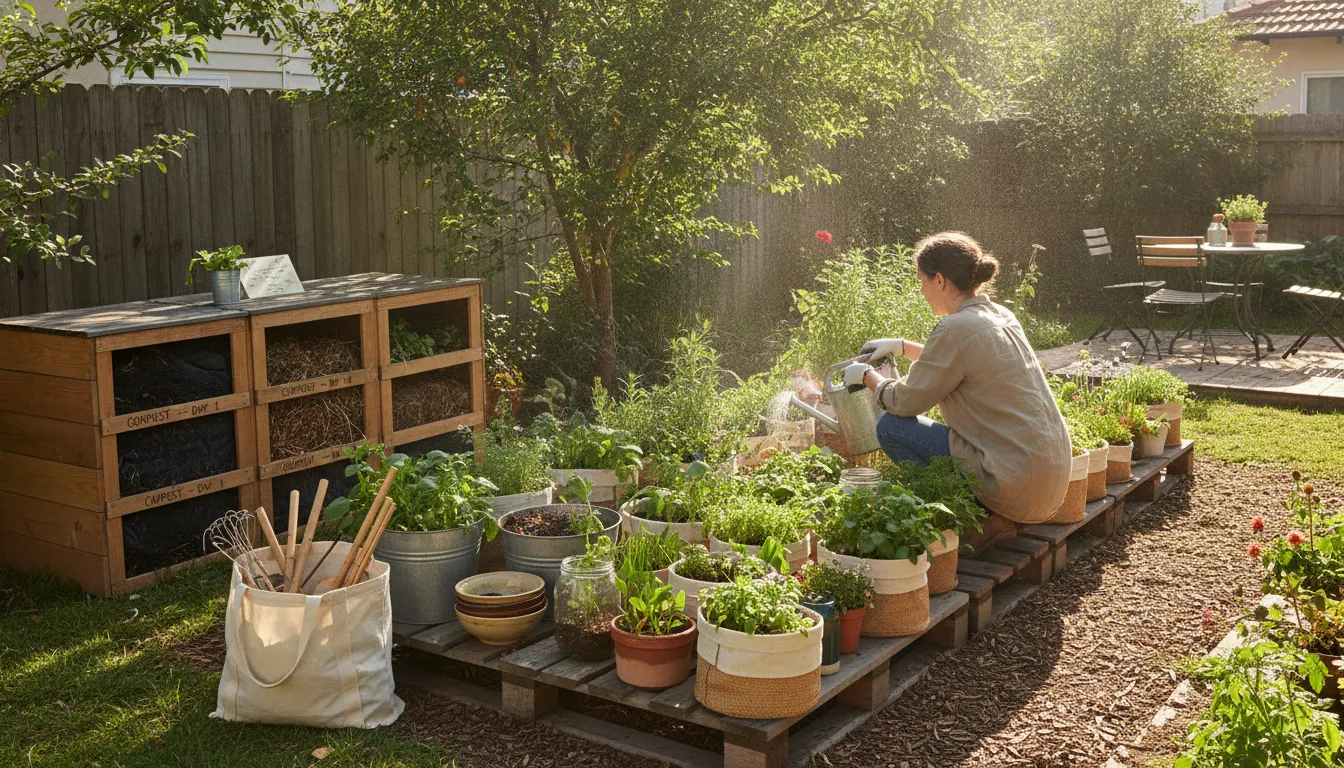
- Make the habit visible. Place the composter in an easily accessible location, leave the reusable bag near the door, keep the water bottle in your field of vision.
- Involve those who live with you. Household changes are more lasting when the whole family or living group participates.
- Celebrate your progress. Every lower electricity bill, every correct disposal, and every more conscious meal is a real victory — treat it as such.
- Connect with your community. Community composting groups, organic markets, mobility collectives, and exchange networks are ways to amplify individual impact.
Everyday sustainability isn’t about perfection — it’s about direction. Every small habit you adopt contributes to a larger system of change, and when these habits add up to millions of others, the impact is real and measurable. You don’t need to solve the climate crisis alone, but you also don’t need to sit back waiting for others to act first.
Start today, with what you have, where you are. Choose one habit from this list, put it into practice this week, and observe how it naturally integrates into your routine. The planet — and the generations that come after us — thank every conscious choice you make now.
