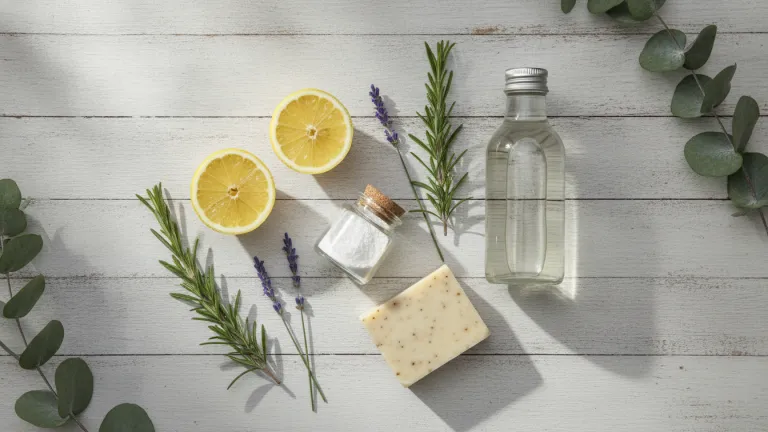
Every time you open the cabinet under the sink, you’re faced with a shelf full of plastic packaging, synthetic chemical formulas, and products that, after going down the drain, end up in rivers, lakes, and soil. Conventional cleaning products contain substances like phosphates, synthetic surfactants, and artificial fragrances that take a long time to break down in the environment — and in some cases, don’t break down completely. The good news is that there’s an accessible, economical, and proven effective alternative: making your own cleaning products at home.
The idea might seem complicated at first glance, but reality is quite different. With just a few natural ingredients — many of which are probably already in your kitchen — you can create products that clean, disinfect, and freshen just as well as industrial ones, without harming the planet or your wallet. This is one of those rare cases where making the right choice for the environment is also the cheapest and healthiest choice for you and your family.
In this article, you’ll find practical recipes, explanations of why each ingredient works, and tips for building your eco-friendly cleaning kit from scratch. No complications, no exotic ingredients, and no need to give up a clean home.
Why Conventional Products Are an Environmental Problem
Household cleaning products are among the main domestic sources of volatile organic compounds (VOCs) and substances that reach the water system after disposal. Synthetic surfactants found in conventional detergents and all-purpose cleaners can interfere with aquatic life by reducing the surface tension of river and lake water, affecting the ability of fish and amphibians to breathe.
Additionally, plastic packaging from these products represents a significant volume of solid waste. In many countries, inadequate waste disposal is still a significant challenge, and much of the discarded plastic doesn’t go through effective recycling. By making your products at home and reusing bottles, you remove this plastic from the disposal cycle.
There’s also the issue of household health. Ingredients like ammonia, high-concentration hypochlorite, and certain synthetic fragrances can irritate airways, cause allergic reactions, and be problematic for young children, elderly people, and pets. Natural substitutes, when used correctly, are much safer for your home’s indoor environment.
The Natural Ingredients That Make All the Difference
Before getting to the recipes, it’s worth understanding what each ingredient does. This will help you adapt the formulas according to your needs.
- Baking soda: a mild abrasive with deodorizing properties. It neutralizes odors through chemical reaction (it’s alkaline, and many odors have acidic origins). Great for scrubbing surfaces without scratching.
- White vinegar: diluted acetic acid (usually between 4% and 8% in commercial products). It dissolves alkaline residues like limescale and soap, and has antimicrobial action proven in laboratory studies — although it’s not registered as a clinical disinfectant.
- Coconut soap (or castile soap): a natural surfactant derived from vegetable oils. It emulsifies fats and dirt, serving as the base for many natural cleaning products.
- Grain alcohol or 70% isopropyl alcohol: effective in eliminating bacteria and viruses on surfaces. 70% alcohol (concentration by volume) is the widely recognized standard for antiseptic action.
- Essential oils: beyond the aroma, many have studied antimicrobial properties. Tea tree essential oil, for example, has proven action against bacteria and fungi in scientific studies. Lavender, lemon, and eucalyptus are other good options.
- 3% hydrogen peroxide: an effective oxidizing agent for gentle bleaching and surface disinfection. Much less aggressive to the environment than chlorine.
- Coarse salt: a natural abrasive for situations that need more scrubbing power.
Eco-Friendly Cleaning Product Recipes to Make at Home
Natural All-Purpose Cleaner for Everyday Surfaces
This is the product you’ll use most frequently — countertops, stovetops, sinks, and tables.
Ingredients:
- 250 ml of filtered or boiled and cooled water
- 250 ml of white vinegar
- 1 tablespoon of liquid coconut soap
- 20 drops of your preferred essential oil (lemon or tea tree work very well)
Directions:
- Mix the water and vinegar in a 500 ml spray bottle.
- Add the coconut soap slowly to avoid excessive foaming.
- Add the drops of essential oil.
- Close and shake gently to mix.
- Label the bottle with the name and preparation date.
Shelf life: up to 30 days stored in a cool place away from direct light.
> Warning: do not use this product on marble, granite, or limestone surfaces. The acid in vinegar can corrode these materials over time. In these cases, replace the vinegar with more water.
Bathroom Cleaner with Baking Soda and Vinegar
Ideal for toilets, tiles, and shower enclosures.
Ingredients:
- 1 cup of baking soda
- White vinegar as needed
- 10 drops of tea tree essential oil
Directions:
- Sprinkle baking soda over the surface to be cleaned.
- Spray white vinegar on top — it will react and foam (this reaction helps loosen residues).
- Wait 5 to 10 minutes.
- Scrub with a brush or sponge and rinse well.
- For toilets, add the tea tree drops to the water before scrubbing to enhance antimicrobial action.
Powerful Degreaser for Stovetops and Grills
For accumulated grease, you need something more alkaline.
Ingredients:
- 500 ml of warm water
- 2 tablespoons of baking soda
- 1 tablespoon of liquid coconut soap
- 10 drops of orange essential oil (the limonene in citrus oil dissolves grease)
Directions:
- Dissolve the baking soda in warm water.
- Add the coconut soap and stir gently.
- Add the essential oil.
- Apply directly on the grease, let it sit for 10 minutes, and scrub.
Natural Fabric Softener
Ingredients:
- 500 ml of white vinegar
- 20 drops of lavender essential oil
Directions:
- Mix both ingredients in a bottle with a cap.
- Use 50 to 100 ml in the fabric softener compartment of your washing machine.
Vinegar removes soap residue from fibers, leaving clothes softer and without a vinegar smell after drying. Lavender oil leaves a subtle fragrance.
Eco-Friendly Toilet Bowl Tablets
Ingredients:
- 1 cup of baking soda
- ¼ cup of citric acid (found in natural product stores and pharmacies)
- 1 teaspoon of powdered coconut soap
- 20 drops of eucalyptus essential oil
- Water in a spray bottle (just to moisten, not soak)
Directions:
- Mix the baking soda, citric acid, and powdered soap in a bowl.
- Add the essential oil and mix well.
- Spray water gradually, stirring constantly, until the mixture has the consistency of wet sand.
- Shape into small tablets using a silicone mold or spoon.
- Let dry for 24 to 48 hours in a ventilated area.
- Store in a sealed container and use one unit per week, placing it directly in the toilet water.
How to Build Your Eco-Friendly Cleaning Kit Without Spending Much
The transition doesn’t need to happen all at once. A gradual approach is more sustainable — both for your budget and your habits.
- Start by reusing packaging you already have at home. Spray bottles from old products, well washed, work perfectly.
- Buy base ingredients in bulk: baking soda, vinegar, and coconut soap cost much less per kilo or liter when purchased in larger packages.
- Make a list of the products you use most frequently and replace one per month until you complete your kit.
- Always label with name, date, and basic usage instructions, especially if there are children at home.
- Store essential oils in a cool, dark place — they oxidize with heat and light and lose effectiveness.
If you’re rethinking other everyday products, it’s also worth checking out the tips on Sustainable Bathroom Products Worth Switching To, where we cover swaps that go beyond cleaning.
The Real Impact of Making Your Own Products
It’s difficult to precisely quantify individual impact without making up numbers, but the logic is clear: every plastic container you don’t buy is one less bottle in the waste system. Every product without phosphates or synthetic surfactants is one less load on sewage treatment systems and water bodies. And every dollar saved can be redirected to other sustainable choices.
Beyond the direct environmental benefit, there’s an educational effect: when you understand what you’re putting in your home, you tend to make more conscious choices in other areas too. Eco-friendly cleaning is often a gateway to a lifestyle more attentive to daily environmental impact — and this shift in perspective is perhaps the greatest benefit of all.
This individual awareness also connects to the broader urban environment. As we discussed in the article Less Pollution in Cities Starts with You, household choices have a direct impact on air, water, and soil quality in cities.
Conclusion: A Clean Home, a Grateful Planet

Making your own cleaning products isn’t a sacrifice — it’s reclaiming autonomy. You know exactly what you’re using, you control the ingredients, you reduce plastic waste, and you still save money. The recipes presented here are a starting point; over time, you’ll find the combinations that work best for your routine and your home’s specific challenges.
Start with one recipe today — suggestion: the all-purpose cleaner, which is the simplest and the one you’ll use most frequently. Gather the ingredients, choose an empty bottle, and take the first step. When it works well (and it will), you’ll naturally want to try the other recipes.
Every conscious choice we make inside our homes reverberates beyond our walls. And best of all: it starts now, in your kitchen, with simple ingredients and the decision to do things differently.
