
Why Urban Pollution Is Still a Problem in 2026
Have you ever stopped at a traffic light and smelled that heavy exhaust fume? Or arrived home after a day in the city and noticed your shirt had an invisible layer of soot? Air pollution in cities isn’t just an annoyance — it directly affects the health, climate, and quality of life of millions of people. And although the problem may seem too big for one person to solve, the truth is that cities are made of individual choices that, when combined, form collective patterns.
According to the World Health Organization (WHO), almost the entire world population lives in areas where air quality doesn’t meet minimum recommended standards. In Brazil, cities like São Paulo, Manaus, and Cubatão have historically been among the most polluted in the country, with elevated levels of fine particulate matter (PM2.5) — particles so small they penetrate the lungs and enter the bloodstream. The impacts range from respiratory diseases to cardiovascular problems.
The good news is that this scenario can change — and you are part of that change. We’re not talking about radical sacrifices, but smart choices that fit into anyone’s routine, budget, and daily life. In this article, we’ll show how less pollution in cities truly starts with each one of us.
What Causes Urban Pollution: Understanding the Problem
Before taking action, it’s important to understand where city pollution comes from. The main sources are well known and documented:
- Motorized transportation: combustion vehicles are one of the largest sources of atmospheric pollutants in urban areas, emitting nitrogen dioxide (NO₂), carbon monoxide (CO), and particulate matter.
- Industries and fossil fuel burning: factories and thermal power plants contribute large volumes of pollutants, especially in industrialized metropolitan regions.
- Solid waste and garbage burning: irregular garbage burning is still a common practice in many Brazilian cities, releasing toxic substances like dioxins and furans.
- Construction: urban construction generates dust and particles that contribute to particulate matter in the air.
- Household use of chemical products: paints, solvents, aerosols, and cleaning products release volatile organic compounds (VOCs) inside and outside homes.
Understanding these sources helps identify where our individual choices have the most impact. And surprisingly, many of them are directly linked to our everyday consumption.
Sustainable Urban Mobility: Small Changes, Big Results
Transportation is probably the area where ordinary citizens have the most power to influence local pollution. Switching from cars to cleaner alternatives — even on some days of the week — already makes a real difference.
How to Reduce Your Traffic Footprint
- Prioritize public transportation whenever possible. A full bus removes dozens of individual cars from the road, proportionally reducing emissions per passenger.
- Try cycling for short trips. Many Brazilian cities have expanded their cycling infrastructure in recent years. Check your city’s bike lane map before ruling out this option.
- Adopt carpooling with coworkers. Splitting the commute in half already means half the emissions per person.
- If you can, consider electric or hybrid vehicles. The Brazilian electric vehicle market has grown significantly through 2026, with more affordable options and an expanding charging network.
- Work from home when possible. Days without commuting are days without transportation emissions.
- Avoid unnecessary engine “warming up” while parked — besides polluting, it’s inefficient.
You don’t need to abandon your car all at once. Replacing even two or three trips per week already contributes to cleaner air for everyone.
Conscious Consumption: The Pollution You Don’t See
Many people associate urban pollution only with visible smoke, but there’s an “invisible” pollution that starts inside the home: the one that comes from our consumption choices.
When we buy a product manufactured with highly polluting processes, we are part of that cycle — even without seeing the smoke. The textile sector, for example, is one of the largest industrial polluters in the world, with impacts that include gas emissions, intensive water use, and chemical waste disposal. Buying fewer clothes, opting for durable pieces, and preferring brands with more responsible practices already makes a difference.
Similarly, cleaning and hygiene products with aggressive chemical compounds contribute to indoor air pollution and, when discarded, contaminate water and soil. A good alternative is to switch to sustainable bathroom products worth the switch, such as solid soaps, shampoo bars, and products with biodegradable formulations.
Practical List of Consumption Swaps That Reduce Pollution
- Replace aerosols with pump or solid versions
- Choose cleaning products with recognized environmental certification
- Prefer local and seasonal foods, reducing transportation and cold chain emissions
- Repair before discarding: fixing appliances, clothes, and furniture avoids the production of new items
- Refuse unnecessary packaging and bring your reusable bag
- Buy in bulk when possible, reducing packaging waste
- Prefer products with fewer listed chemical ingredients
Solid Waste: The Garbage That Becomes Pollution
Urban waste and air pollution are more connected than it seems. When waste goes to inadequate landfills or is burned in the open, it releases methane (a quite potent greenhouse gas) and toxic particles. According to IPCC data, solid waste is a significant source of methane emissions globally.
Recycling and proper disposal reduce the amount of material going to landfills and decrease the need to produce new materials — which means less energy spent and fewer industrial emissions.
If you don’t separate waste at home yet, this is a good time to start. Check out the Practical Guide to Reducing Household Waste for an accessible, uncomplicated step-by-step guide.
How to Properly Dispose of Main Waste Types
| Waste Type | Proper Disposal |
|---|---|
| Batteries | Collection points at supermarkets and specialized stores |
| Used cooking oil | Collection points or municipal recycling programs |
| Old electronics | Manufacturers required by law to take back (reverse logistics) |
| Expired medications | Pharmacies participating in disposal programs |
| Recyclable packaging | Municipal selective collection or recycling cooperatives |
Energy at Home: Smart Consumption Reduces Emissions
Electricity generation still depends, in part, on non-renewable sources in many countries — including in Brazil during water shortage situations, when thermal power plants are activated. Reducing household energy consumption, therefore, has a direct impact on pollutant emissions.
Additionally, older air conditioners and refrigerators use refrigerant fluids that, when they leak, contribute to ozone layer degradation and the greenhouse effect.
Practical tips to save energy and reduce emissions:
- Replace incandescent bulbs with LEDs, which consume significantly less energy
- Unplug devices when not in use — standby consumption adds up over the month
- Use a fan before resorting to air conditioning on less hot days
- Perform regular air conditioning maintenance to prevent refrigerant leaks
- Prefer appliances with better energy ratings from energy labeling programs
- Take advantage of natural light during the day
Green Areas and Urban Trees: Your Role in a City That Breathes
Urban vegetation is one of the most efficient allies in improving air quality. Trees absorb CO₂, filter particles from the air, reduce local temperature, and also improve people’s well-being. Cities with more tree coverage tend to have less intense heat islands and cleaner air.
And here too there’s room for individual action:
- Plant at home, even in pots or balconies — aromatic herbs, flowers, and shrubs contribute to the local microclimate
- Participate in planting events organized by city halls, NGOs, and neighborhood groups
- Report illegal tree cutting to municipal environmental agencies
- Water the sidewalk trees in front of your house during dry periods
- Support urban greening policies in your neighborhood by attending public hearings or voting for candidates with clear environmental platforms
Collective Pressure: When Individual Action Becomes Social Transformation
Acting individually is essential, but the deepest change happens when these actions add up and create pressure for more ambitious public policies. Conscious consumers change markets. Engaged citizens change governments.
This may seem abstract, but in practice it’s very concrete:
- Choose companies that have real environmental commitments, not just green marketing
- Sign petitions and participate in public consultations about mobility projects, zoning, and green infrastructure
- Share accurate information about pollution and solutions — environmental misinformation delays necessary actions
- Talk to your neighbors about selective collection, carpooling, and other collective practices
- Demand from the companies where you work sustainable mobility policies for employees
Cultural change starts in everyday conversations. When more people understand the connection between their habits and the air quality they breathe, pressure for structural solutions naturally grows.
Conclusion: Clean Air Is Built Daily
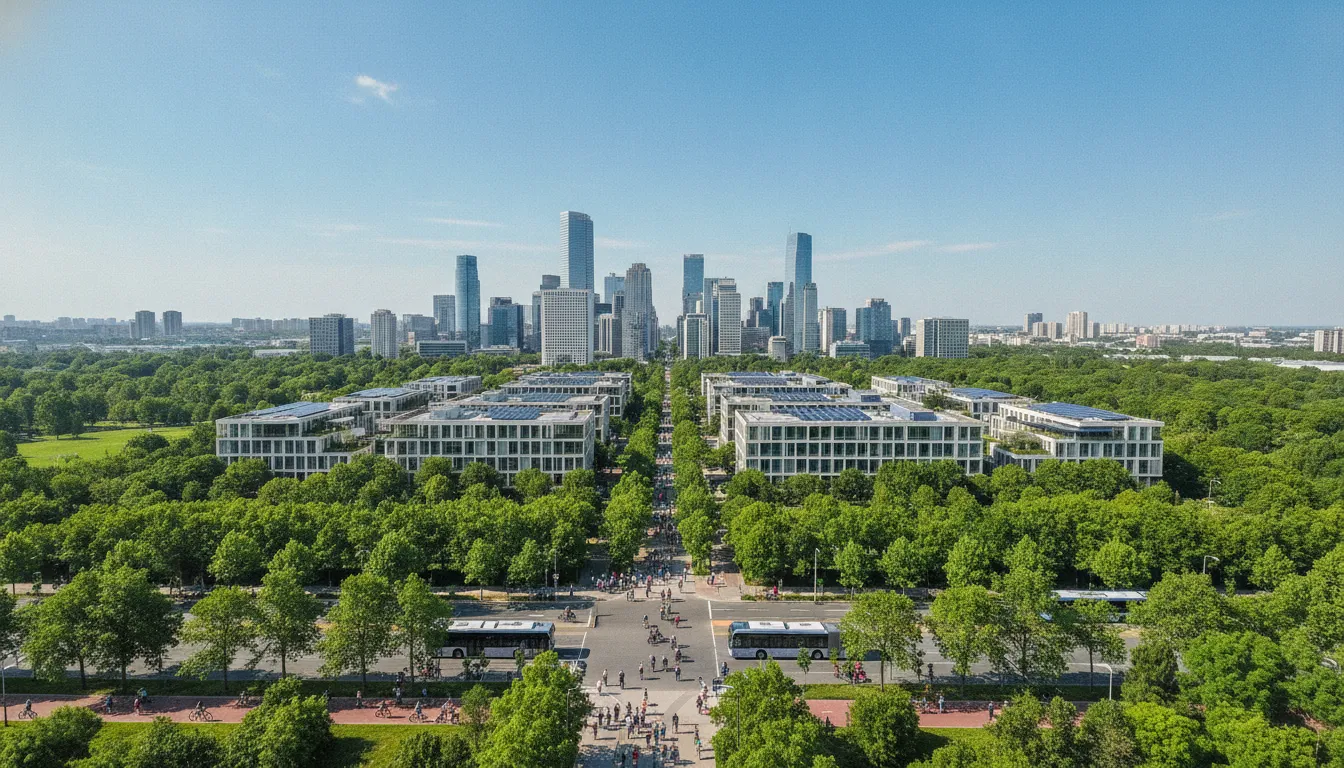
Urban pollution is a real problem with serious consequences for health and climate. But it’s not inevitable. Every bike commute, every more sustainable product chosen, every battery properly disposed of, and every tree planted is a brick in a cleaner, healthier city.
You don’t need to do everything at once. Choose one or two changes that fit your reality today and start there. One person’s impact may seem small — but entire cities are made of people making choices, every day.
The air you breathe tomorrow starts with the decisions we make today. And the good news is that we already have everything we need to get started. 🌿
