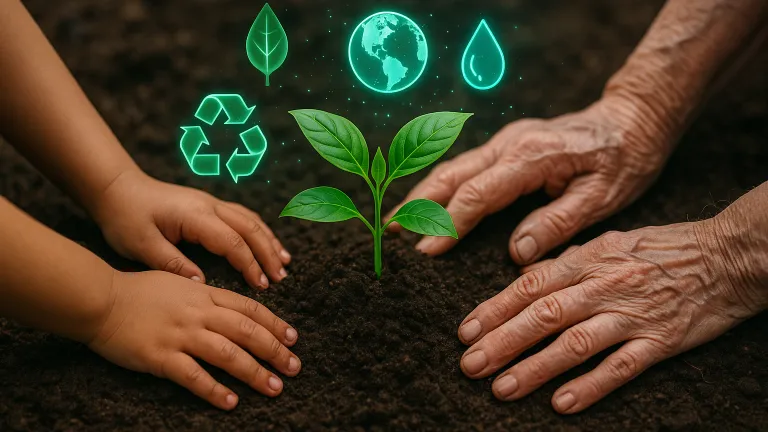
The environmental crisis we face today is not the result of a single catastrophic event, but rather the accumulation of small harmful actions repeated over decades. Likewise, the solution to reverse this scenario also lies in small actions — but this time, conscious and transformative ones. Environmental education emerges as a powerful tool capable of shaping behaviors, influencing public policies, and creating a generation of citizens committed to preserving the planet. This article explores how educational initiatives are transforming humanity’s relationship with the environment and why investing in this area is essential to ensure a sustainable future.
The Fundamental Role of Environmental Education in Contemporary Society
Environmental education goes far beyond simply teaching about recycling or pollution. It is a transformative process that seeks to develop critical awareness about environmental issues, promoting the values, skills, and attitudes necessary for building a more sustainable society. According to UNESCO, environmental education is essential for empowering people to make informed and responsible decisions regarding the environment.
When we talk about environmental education, we refer to a continuous process that should begin in childhood and extend throughout life. Children who grow up understanding the importance of nature and the impact of their actions tend to become more conscious and engaged adults. Studies show that students exposed to environmental education programs display greater ecological sensitivity and are more likely to adopt simple daily changes that benefit the planet.
Environmental education also plays a crucial role in training leaders and decision-makers. Professionals from various fields — from engineers and architects to economists and politicians — need to understand sustainability principles to integrate environmentally responsible practices into their areas of expertise. This creates a multiplier effect, where knowledge and action spread throughout society.
Transforming Mindsets: From Theory to Practice
One of the greatest challenges of environmental education is transforming theoretical knowledge into practical action. It is not enough for people to know about climate change or biodiversity loss; this knowledge must translate into concrete behaviors. This is where well-structured educational programs make a difference.
Initiatives that combine classroom learning with hands-on experiences have shown exceptional results. School gardens, for example, allow students to learn about sustainable agriculture, natural cycles, and healthy eating through direct experience. Composting projects teach about organic decomposition and waste reduction. These activities not only transmit knowledge but also create emotional connections with nature.
Field programs and visits to conservation areas are also extremely effective. When children and young people have the opportunity to observe functioning ecosystems, spot wild animals in their natural habitats, and understand the complexity of ecological webs, they develop a genuine appreciation for biodiversity. This emotional connection is often more powerful than any theoretical lesson.
Small everyday actions gain new meaning when people understand their amplified impact. Choosing products with less packaging, opting for sustainable transportation, reducing meat consumption, and saving energy become not just habits, but expressions of deeply rooted values.
Environmental Education in Schools: Shaping the Future Generation
Schools are privileged environments for environmental education, as they reach children and adolescents at crucial formative moments. Integrating environmental themes into the school curriculum in a cross-cutting manner — that is, connecting them to various subjects — enhances learning and demonstrates how sustainability permeates all aspects of life.
In mathematics, students can calculate the carbon footprint of different activities or analyze deforestation statistics. In science, they explore ecosystems, food chains, and biochemical processes. In history and geography, they study how ancient civilizations interacted with the environment and the consequences of unsustainable use of natural resources. In literature and the arts, they express their reflections on nature through various creative forms.
Countries that have implemented robust environmental education programs in schools have reaped impressive results. Finland, for example, has incorporated sustainability as one of the pillars of its renowned educational system. Finnish students regularly rank among the most environmentally conscious in the world, and the country frequently leads sustainability rankings.
In Brazil, the National Environmental Education Policy (Law 9.795/1999) establishes that environmental education must be present at all levels of education. Although implementation still faces challenges, there are numerous inspiring examples of schools that have completely transformed their culture through environmental projects, reducing waste, creating green spaces, and involving the entire school community in sustainable actions.
The Power of Communities and Local Initiatives
While formal education in schools is fundamental, community and local initiatives also play an essential role in environmental transformation. Non-governmental organizations, volunteer groups, and community leaders often fill gaps left by formal educational systems, reaching diverse audiences and promoting tangible changes.
Community environmental education programs frequently adopt participatory approaches, where community members themselves identify local environmental problems and develop collective solutions. This not only results in more relevant and effective actions but also strengthens the sense of belonging and shared responsibility.
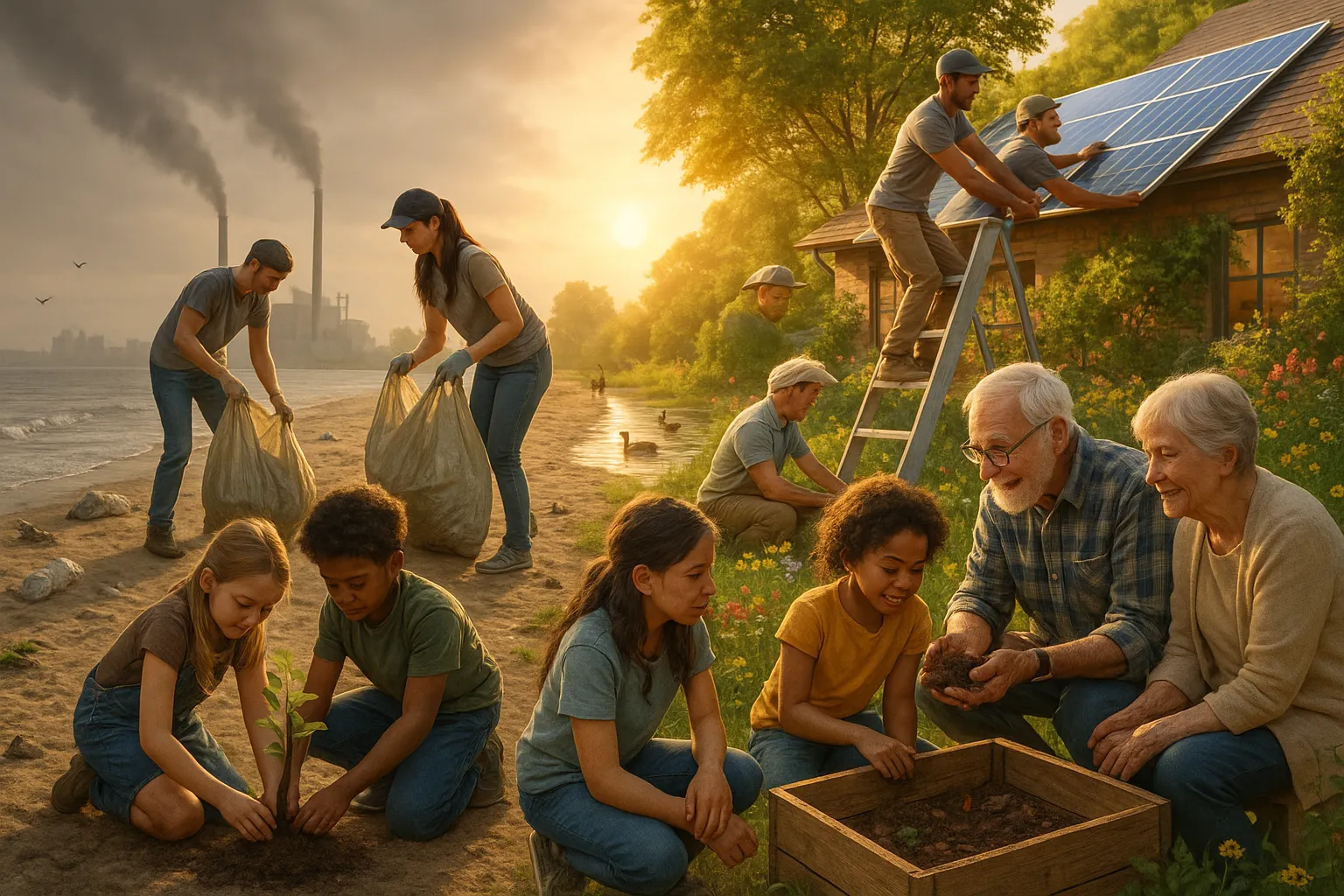
Beach, river, and urban park cleanup events are examples of activities that educate while generating immediate impact. Participants not only remove waste but learn about pollution, its effects on wildlife, and the importance of proper waste disposal. Many report that the experience of seeing the amount of accumulated waste is profoundly transformative.
Community gardens and urban agriculture projects also serve as vibrant educational spaces. In addition to producing fresh and healthy food, these projects teach about biodiversity, pollination, water conservation, and composting. They become meeting points where knowledge is shared between generations, strengthening social bonds and promoting food security.
Technology and Innovation at the Service of Environmental Education
The digital age has brought new possibilities for environmental education, expanding its reach and making learning more interactive and engaging. Mobile apps allow users to monitor their ecological footprint, identify plant and animal species, find nearby recycling points, and participate in environmental challenges.
Online platforms and social networks have democratized access to environmental information. High-quality documentaries about nature and sustainability are available for free, reaching millions of people. Digital influencers focused on sustainability share practical tips, inspiring followers to adopt more ecological lifestyles.
Virtual and augmented reality are creating immersive educational experiences. Students can “dive” into coral reefs, “walk” through tropical forests, or “observe” the effects of climate change on glaciers — all without leaving the classroom. These technologies are particularly valuable for people who do not have easy access to natural environments.
According to the World Wildlife Fund, combining traditional education with digital tools can significantly increase engagement and retention of environmental information, especially among young people who grew up in digital environments.
Challenges and Barriers in Implementing Environmental Education
Despite its transformative potential, environmental education faces several obstacles. Lack of financial resources is a significant barrier, especially in developing countries. Schools often lack adequate teaching materials, spaces for practical activities, or teachers trained in environmental topics.
Cultural and political resistance also presents a challenge. In some regions, environmental issues are politicized or seen as secondary to immediate economic concerns. Scientific denialism and misinformation further complicate educational efforts, creating confusion and skepticism.
The growing disconnection between people and nature, especially in urban environments, is another obstacle. Children who spend most of their time indoors, connected to electronic devices, have fewer opportunities to develop emotional connections with the natural world. This “nature deficit” can result in apathy toward environmental issues.
Additionally, environmental education is sometimes viewed as a “supplement” to the main curriculum, rather than being integrated in a cross-cutting manner. This limits its effectiveness and sends the mistaken message that environmental issues are peripheral, not central to education and human development.
Inspiring Stories of Transformation
Despite the
