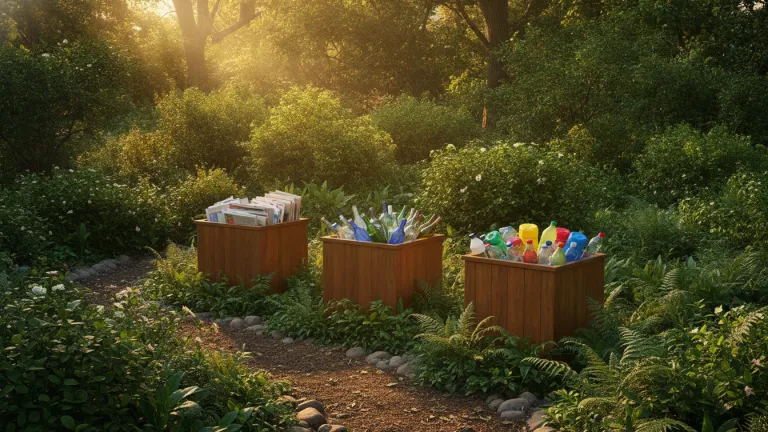
Every day, in every home, apartment, or office in Brazil, a silent decision takes place: where does this crumpled paper, this empty can, this plastic bottle go? Most of the time, everything goes into the same bag, mixed together, and heads straight to a sanitary landfill — or worse, to an open dump. This seemingly small choice has enormous consequences for the environment, the economy, and the health of communities living near these areas.
Brazil generates an impressive amount of solid waste. According to the Panorama of Solid Waste in Brazil, published by the Brazilian Association of Public Cleaning and Special Waste Companies (Abrelpe), the country produced more than 80 million tons of urban solid waste in 2023, the most recent year with consolidated data available. A significant portion of this total still ends up in inadequate locations. The recyclable potential wasted in this process represents not only an environmental loss but also a massive economic and social one.
The good news is that properly separating recyclable waste is one of the simplest, cheapest, and most effective actions anyone can adopt today. It doesn’t require expensive equipment or radical changes to your routine. It mainly requires information and willingness. In this article, you’ll understand why this matters, how to do it in practice, and how to consistently reduce waste in your daily life.
Why Separating Recyclable Waste Makes Such a Difference
When recyclable materials are sent mixed with regular trash, they lose value and often become impossible to recover. Cardboard soaked with food scraps, for example, can rarely be recycled. A can contaminated with oil can compromise an entire batch at some cooperatives. Proper separation at the source — meaning in your home — is the first and most critical step in the entire recycling chain.
Additionally, recycling saves natural resources in concrete ways. Producing aluminum from recycled cans, for instance, consumes much less energy than producing it from raw ore (bauxite). The Brazilian aluminum sector, one of the largest in the world, widely uses recycled material precisely because of this efficiency. The same logic applies to paper, glass, and various types of plastic: recycling always requires less energy and generates fewer greenhouse gas emissions than producing from scratch.
From a social perspective, Brazil’s recycling chain employs hundreds of thousands of waste pickers, organized or not in cooperatives. When you properly separate your waste, you’re directly contributing to the dignity and income of these families.
Understanding Waste Types: What Is Recyclable and What Isn’t
Before separating anything, it’s essential to know what can and cannot be recycled. Much confusion happens precisely at this point, and non-recyclable materials end up “contaminating” selective collection.
Materials generally accepted in selective collection
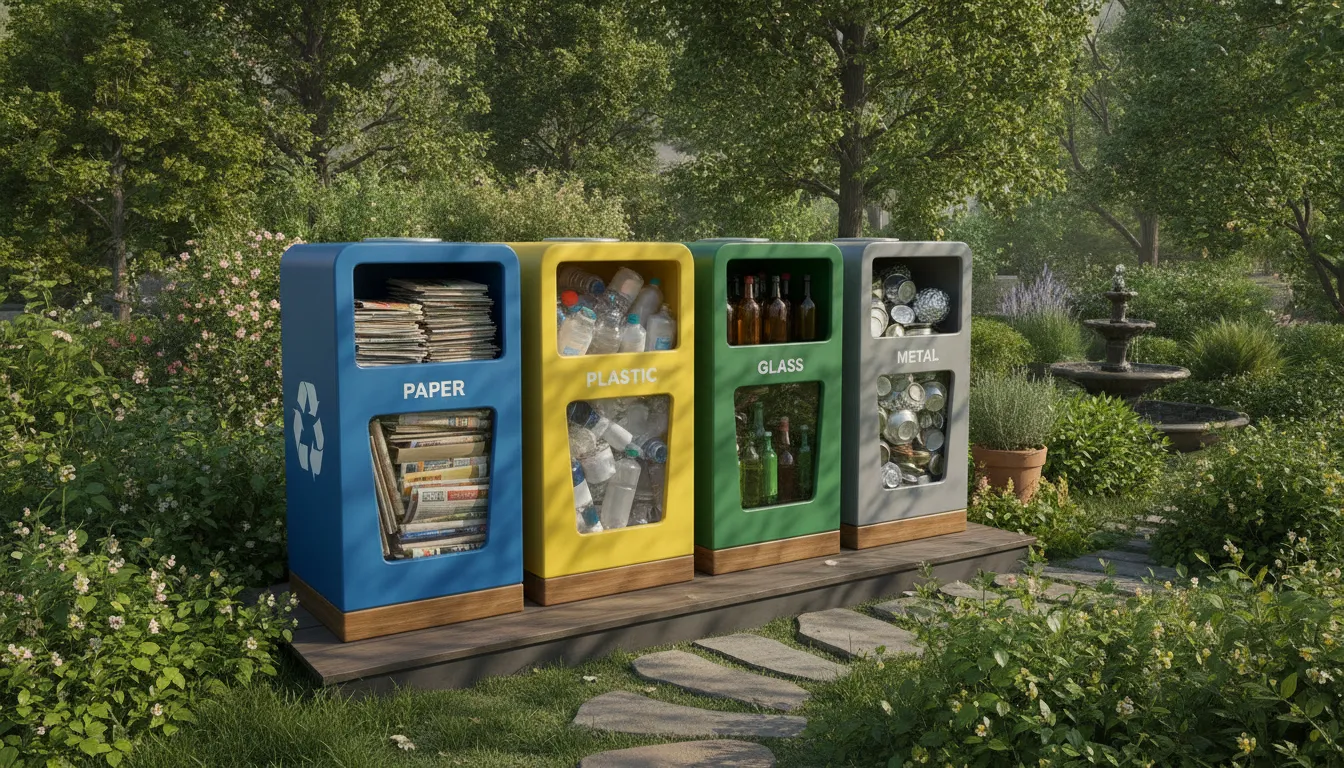
- Paper and cardboard: newspapers, magazines, boxes, notebook sheets, corrugated cardboard (clean and dry)
- Plastic: PET bottles, shampoo containers, yogurt cups, plastic bags (check for specific collection points for bags)
- Metal: aluminum cans, steel cans, metal lids, old pans (without plastic handles)
- Glass: bottles, preserve jars, flasks (without mixed metal lids)
Materials that should not go into selective collection
- Used toilet paper, napkins, and tissue paper
- Laminated, metallic, or waxed paper
- Sponges, disposable diapers, and sanitary pads
- Dirty disposable cups and plates
- Tempered glass (like windows and windshields), mirrors, and light bulbs (have specific disposal)
- Packaging with food residue that cannot be washed
Special attention to cooking oil: never pour used oil down the drain or in regular trash. This material has its own disposal method and can be transformed into biodiesel. Learn more at Descarte Correto do Óleo de Cozinha Usado.
How to Set Up a Waste Separation Routine at Home
The theory is simple, but practice requires some initial organization. Here’s a step-by-step guide to structure waste separation in your home in a way that works long-term.
- Define collection points inside your home. You don’t need a bin for each type of material, but you need at least two: one for organic waste (food scraps, peels, coffee grounds) and one for recyclables. If space allows, three containers make it even easier: organic, recyclable, and reject.
- Choose containers suitable for your space. In small apartments, stackable bins or bags hanging behind doors work well. In larger homes, a utility area with two or three labeled buckets solves the problem.
- Rinse packaging before disposing. You don’t need to wash with soap, but a quick rinse makes a difference to avoid odors and contamination. A soda bottle with liquid residue, for example, hinders the recycling process.
- Identify the days and locations of selective collection in your municipality. Many city halls provide this information on their official website or municipal apps. Waste picker cooperatives also usually have voluntary drop-off points.
- Educate household members. Children learn easily when separation is presented playfully. Adults respond better when they understand the reasons. A quick conversation can change the entire family’s behavior.
- Review and adjust over time. In the first few weeks, mistakes are normal. The idea is to create a habit, not achieve immediate perfection.
Reducing Waste Beyond Recycling: The Waste Hierarchy
Separation and recycling are important, but there’s a hierarchy of actions even more effective for reducing the environmental impact of waste. It’s internationally recognized and adopted by Brazil’s National Solid Waste Policy (Law No. 12,305/2010), still in effect and undergoing implementation:
| Priority | Action | Practical Example |
|---|---|---|
| 1st (best) | Don’t generate | Refuse unnecessary packaging |
| 2nd | Reduce | Buy in bulk, avoid disposables |
| 3rd | Reuse | Use glass jars as containers |
| 4th | Recycle | Separate and dispose properly |
| 5th | Compost | Transform organics into fertilizer |
| 6th (last) | Final disposal | Sanitary landfill |
In other words: recycling is great, but not generating waste in the first place is even better. Before buying something packaged, it’s worth asking: is there an unpackaged version? Can I bring my own container? Do I really need this item?
Composting: The Correct Destination for Organic Waste
A considerable portion of household waste consists of organic scraps — fruit peels, coffee grounds, vegetable remains. When these materials go to landfills, they decompose under anaerobic conditions and produce methane, a greenhouse gas with a global warming potential much higher than CO₂ in the short term, according to IPCC data.
Home composting transforms this “problem” into quality fertilizer for plants and gardens. There are different accessible formats:
- Home composters: buckets or plastic boxes with alternating layers of wet material (organic scraps) and dry material (leaves, shredded cardboard). They work well in apartments.
- Worm bins: use worms to speed up decomposition. Compact and almost odorless when properly maintained.
- Collective composting: many condominiums and communities have or are implementing collective points. It’s worth researching in your area.
Practical and Actionable Tips to Reduce Waste in Daily Life
Beyond separation, small behavioral changes significantly reduce the amount of waste generated. Here’s what you can start today:
- Bring reusable bags when shopping, including for fruits and vegetables
- Prefer glass or metal packaging, which have more efficient recycling rates than many plastics
- Buy in bulk when available — especially grains, flours, and dry seasonings
- Avoid disposable coffee capsules and opt for reusable filters or French presses
- Repair before discarding — clothes, electronics, and furniture often have a much longer useful life than disposal suggests
- Donate what you no longer use to thrift stores, swap groups, or social institutions
- Refuse freebies and samples you know you won’t use
- Plan food purchases to reduce food waste, which is one of the largest components of Brazilian household waste
The Role of Community and Public Policy in Waste Management
Individual change matters, but it’s much more powerful when embedded in a collective context. Demanding that condominiums have structured selective collection, that municipalities expand voluntary drop-off points, and that companies adopt recyclable packaging are acts of environmental citizenship.
In 2026, many Brazilian municipalities are still in the process of complying with the requirements of the National Solid Waste Policy, especially regarding the elimination of open dumps. Actively participating in these discussions — in neighborhood associations, social networks, public hearings — makes a real difference.
If you want to go further and understand the impact of your consumption choices on the climate, you can Compense Sua Pegada de Carbono com Ações Reais and discover other ways to act in an integrated manner.
Conclusion: Your Daily Action Has Real Weight
Separating recyclable waste is not a sacrifice. It’s a small reorganization of habits with concrete impact: less material in landfills, more natural resources preserved, more income for families who depend on recycling, and fewer emissions of planet-warming gases.
You don’t need to be perfect from day one. Start with the basics — two bins, rinsed packaging, learning the selective collection days on your street. Over time, incorporate composting, reduce packaging in your purchases, and involve the people around you.
The planet doesn’t need a few people acting flawlessly. It needs many people acting well, consistently. And you’ve already taken the first step by seeking this information. The next one is practical: today, when you finish reading, separate that can or bottle that was going into the regular trash. That’s how it begins.
