Reusable Straws: Which One Is Best for You?
That disposable plastic straw that has accompanied generations of people drinking juice boxes or soda at the corner store seems harmless — but it has an environmental cost disproportionate to its size. Lightweight, cheap, and mass-produced, the single-use plastic straw has become one of the most recognizable symbols of the disposable plastic problem worldwide. It takes hundreds of years to decompose, frequently escapes collection systems, and ends up in oceans, rivers, and even inside marine animals.
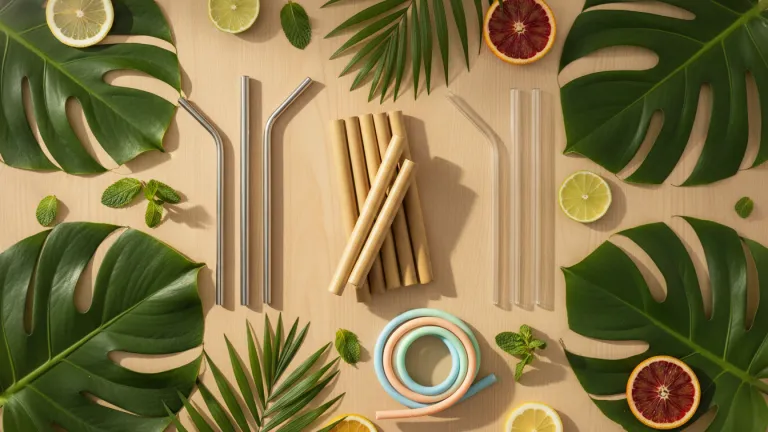
In Brazil, the discussion gained regulatory momentum over the years: municipalities like São Paulo and Rio de Janeiro established restrictions on disposable plastic back in the 2020s, and the movement spread. As a result, reusable straws moved from niche to mainstream, reaching supermarkets, home goods stores, and marketplaces at increasingly affordable prices. But the variety of materials — stainless steel, bamboo, glass, silicone, paper, and even titanium — can confuse anyone trying to make the right choice.
The good news is that there is no single correct answer: the best reusable straw is the one that fits your routine, your consumption habits, and your values. This guide will help you understand the practical differences between each type so you can make an informed decision — and actually use the straw you choose.
Why Switching from Disposable Straws Makes a Difference
Plastic straws are typically made from polystyrene or polypropylene — materials that aren’t accepted in most recycling programs due to their lightness and small size. In practice, this means almost every disposable plastic straw goes straight to landfills or into the environment.
Studies on beach and waterway debris consistently place straws among the most commonly found plastic items in cleanup efforts worldwide. Ocean Conservancy, which organizes the world’s largest annual beach cleanup, has recorded straws and plastic stirrers among the top ten most collected items for several consecutive years.
Switching to a reusable straw won’t solve the plastic crisis on its own — but it’s a concrete, simple, and accessible change. And when combined with other everyday actions, like those you’ll find in Preserve Forests with Simple Daily Actions, the collective impact becomes real.
Stainless Steel Straws: Durable and Flavor-Free
The stainless steel straw is probably the most popular choice among those transitioning from disposables. And there are good reasons for that.
Advantages:
- Extremely durable — a well-maintained stainless steel straw can last decades
- Doesn’t alter the taste of your drink (unlike some materials)
- Easy to clean with the brush that usually comes with the product
- Withstands high and low temperatures
- Available in various diameters (ideal for smoothies, pulpy juices, mate)
Disadvantages:
- Conducts temperature: can get hot with hot drinks and uncomfortable on the lips
- Not transparent, so you can’t see if it’s clean inside
- Can be dangerous in impact situations (not recommended for young children)
- Production involves mining and industrial processing with a carbon footprint
Stainless steel straws are an excellent choice for adults who frequently use straws at home, work, or cafés. If you drink juice, smoothies, or protein shakes every day, stainless steel will likely pay for itself — both environmentally and financially — within a few weeks of use.
Bamboo Straws: Natural and Biodegradable
Bamboo is one of the fastest-growing materials on the planet and doesn’t require pesticides for cultivation, making it a raw material with genuine environmental appeal.
Advantages:
- Biodegradable at end of life
- Rustic, natural look — aesthetically pleasing to many people
- Lightweight and sturdy
- Renewable and low-impact to cultivate
Disadvantages:
- Absorbs moisture, which can promote mold growth if not dried well after use
- Cleaning is more labor-intensive — needs to be brushed and completely dried
- Diameter isn’t always uniform since it’s a natural product
- Shorter lifespan than stainless steel if not properly maintained
Bamboo straws are a good option for those who value natural materials and have the discipline for proper maintenance. Avoid leaving it wet for long periods and dry it thoroughly before storing.
Glass Straws: Elegant and Transparent
For those who want to see the inside cleanliness and appreciate a more sophisticated aesthetic, borosilicate glass straws (the same type used in heat-resistant glass) are an interesting alternative.
Advantages:
- Completely transparent — you can see if it’s clean
- Doesn’t interfere with the taste or smell of your drink
- Thermally neutral for most beverages
- Beautiful appearance, popular in sustainable cafés and restaurants
Disadvantages:
- Fragile — can break if dropped or squeezed too hard
- Not recommended for use outside the home or in bags without protection
- Glass production has a significant energy cost
Glass straws are ideal for home use or in establishments where the risk of drops is lower. If you have a habit of drinking smoothies at home in the morning, this could be your favorite straw.
Silicone Straws: Flexible and Safe for Children
Food-grade silicone is soft, flexible, and poses no cutting or impact risks — making it particularly suitable for children.
Advantages:
- Flexible and soft on the lips
- Safe for young children
- Doesn’t conduct temperature
- Easy to fold and transport
Disadvantages:
- May absorb odors and flavors over time
- Internal cleaning can be challenging depending on the diameter
- Production involves synthetic silicon-derived compounds — not biodegradable
Silicone straws are the best choice for families with young children or for anyone who needs something flexible to carry in a bag.
Coated Paper Straws: The “Middle Ground” That Became Standard in Bars
Many bars and restaurants have migrated to paper straws as an immediate alternative to plastic. However, it’s important to distinguish between types:
- Simple paper straw (disposable): disintegrates in the drink, especially in cold liquids with ice. Solves part of the plastic problem but is still disposable.
- Reusable coated paper straw: less common, with limited performance.
For personal, everyday use, disposable paper straws aren’t the most sustainable solution — they’re still single-use. As a transitional item in establishments that haven’t yet adopted reusables, they have their purpose, but they don’t replace adopting durable straws.
How to Choose the Right Straw for You: Practical Guide
The ideal choice depends on your usage profile. Follow this step-by-step reasoning:
- Identify where you use straws most — at home, at work, in restaurants, on the go?
- Think about the type of drink — thin liquids (water, soda) need smaller diameters; thick juices and smoothies require larger diameters.
- Assess your willingness to clean — if you don’t have patience to brush and dry carefully, prefer stainless steel or glass (easier to clean).
- Consider who will use it — children? Silicone. Adults at home? Glass or stainless steel. In a bag or backpack? Collapsible stainless steel or silicone.
- Check if the product includes a cleaning brush — it’s essential for any reusable straw.
- Start with one type — don’t buy five different ones at once. Test one for a few weeks before deciding if you want variety.
Practical Tips for Using and Maintaining Your Reusable Straw
- Wash immediately after use or at least rinse to avoid dried residue
- Always store completely dry — especially bamboo and silicone
- Keep a small case to carry in your bag without contaminating other items
- If the straw has a persistent odor, soak it in a water and baking soda solution for 30 minutes before washing
- Replace the straw when it shows cracks, deformations, or odors that won’t go away — a damaged straw can harbor bacteria
- Keep a spare straw at work or in your bag so you’re never caught off guard
Quick Comparison: Which Straw to Choose?
| Material | Durability | Cleaning | Safety | Best For |
|---|---|---|---|---|
| Stainless Steel | Very high | Medium | Adults | Heavy daily use |
| Bamboo | Medium | Labor-intensive | Adults | Those who value natural materials |
| Glass | High (with care) | Easy | Home use | At home or restaurants |
| Silicone | High | Medium | Children and adults | Families, travel |
| Paper (disposable) | Low | — | General | Establishments (transitional) |
Every Straw Counts — Start Today
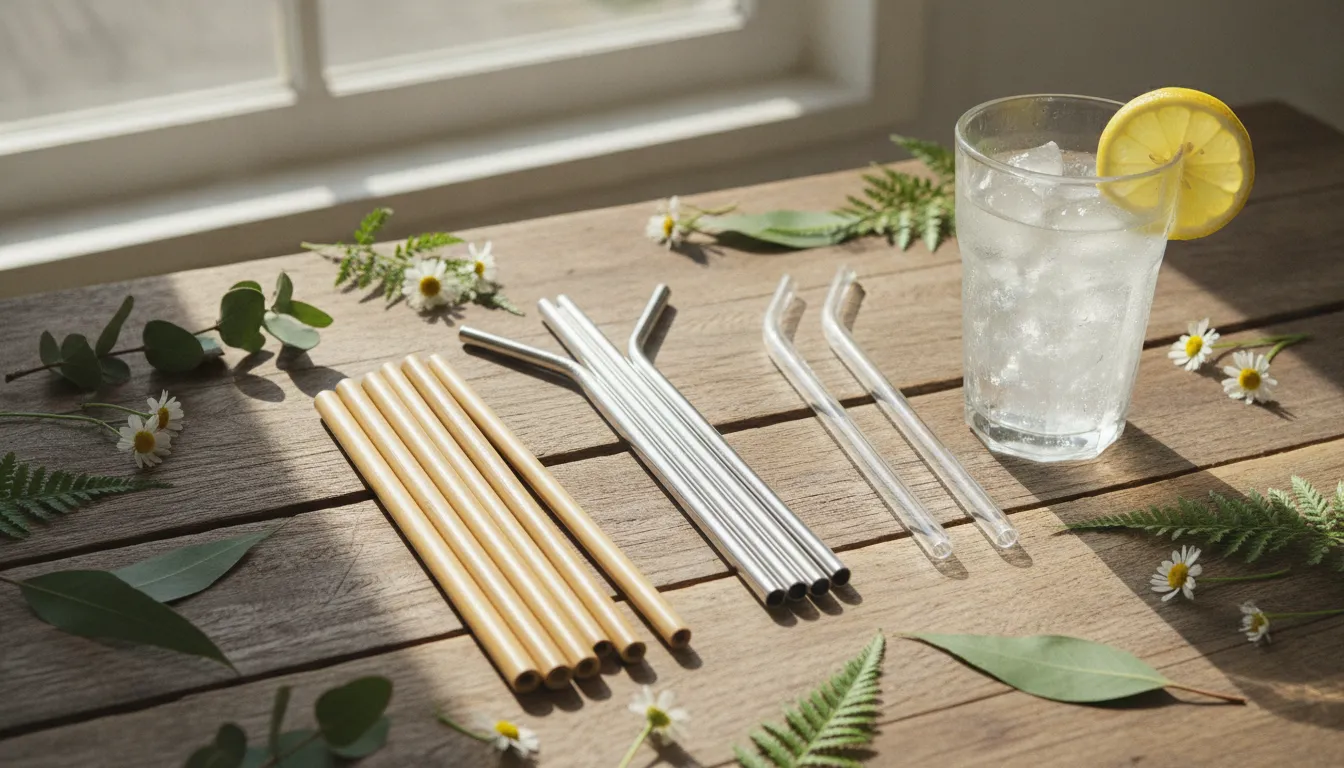
Replacing disposable straws is one of the simplest gestures you can incorporate into your sustainable routine. It doesn’t require major investments, doesn’t turn your life upside down, and is a daily demonstration that small choices have direction.
If you want to calculate your carbon footprint and understand where else you can reduce your impact, you’ll realize that the sum of habits like this — reusable straws, fewer disposable packages, conscious transportation — creates a consumption profile that’s genuinely lighter on the planet.
Choose the material that makes the most sense for your routine, start with a single straw, and watch how the habit naturally becomes established. The best reusable straw isn’t the most expensive or the most sophisticated: it’s the one you’ll actually use every day.
