How Long Does Solar Energy Take to Pay Off in Brazil?
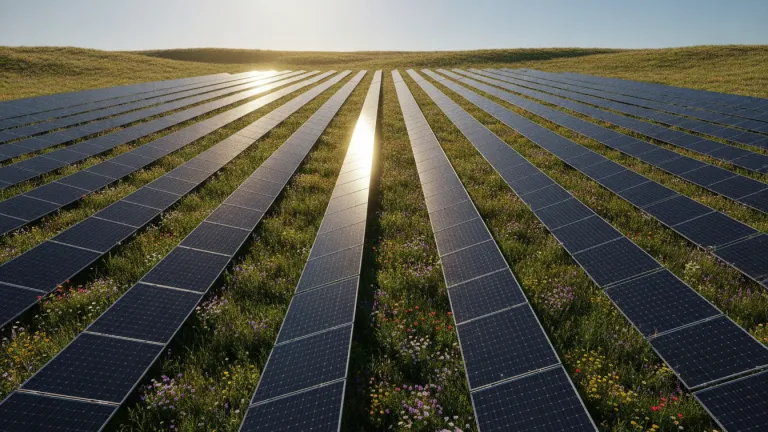
Have you ever wondered if installing solar panels on your roof is really worth it — or if it’s the kind of investment that takes decades to pay off? The doubt is legitimate, especially when your budget is tight and your electricity bill keeps rising. The good news is that Brazil holds an enviable position on the global solar map: even cities in the South receive more solar irradiation than most of Europe, and regions like the Northeast and Central-West are among the sunniest on the planet. This completely changes the financial equation in your favor.
In recent years, Brazil’s photovoltaic solar energy market has grown rapidly. According to ANEEL (National Electric Energy Agency), Brazil surpassed the 40 GW mark of installed capacity in distributed and centralized solar generation by the mid-2020s, consolidating the sector as one of the most dynamic in the national energy matrix. With the consistent drop in photovoltaic panel prices over the last decade and expanded access to financing, the investment payback time has decreased significantly.
So, how long does it take for solar energy to pay for itself in Brazil? The direct answer is: between 4 and 8 years, depending on a series of factors we’ll detail here. But what makes this number especially interesting is that photovoltaic systems have a guaranteed lifespan of 25 to 30 years. This means that, after the payback period, you produce energy practically for free for two decades. Let’s understand how this calculation works in practice.
What Influences the Solar Investment Payback Time
The timeframe for solar energy to “pay for itself” isn’t a fixed number — it varies according to some essential factors:
- Monthly energy consumption: The higher your electricity bill, the faster the system pays for itself, because the monthly savings are greater.
- Geographic location: Solar irradiation varies across Brazil. The Northeast has averages above 5.5 kWh/m² per day, while cities in the South may have averages of 4.0 to 4.5 kWh/m². More sun = more generation = faster return.
- Size of the installed system: Oversized systems relative to consumption take longer to pay off.
- Cost per kWh from your utility: With tariff flags and surcharges, the price of electricity in Brazil has been rising consistently, accelerating solar investment returns.
- Payment method: Financing with high interest rates can extend the payback period.
- Equipment quality: Higher efficiency panels and quality inverters generate more energy over time.
How Much Does a Residential Solar System Cost in 2026
The cost of a residential photovoltaic system in Brazil has varied considerably in recent years, influenced by exchange rates, import costs, and expansion of local production. In 2026, the market estimate for small and medium-sized residential systems ranges around the following values:
| System Size | Monthly Consumption Covered | Estimated Price Range (installed) |
|---|---|---|
| 2 to 3 kWp | Up to 300 kWh/month | R$ 12,000 to R$ 18,000 |
| 4 to 5 kWp | 300 to 500 kWh/month | R$ 18,000 to R$ 28,000 |
| 6 to 8 kWp | 500 to 800 kWh/month | R$ 28,000 to R$ 40,000 |
Estimated values based on market references. Actual quotes vary by region, equipment brand, and installation company.
It’s important to get at least three different quotes before closing a deal. Be wary of prices well below average: low-quality equipment compromises generation and system durability.
How to Calculate Solar Payback: Step by Step
You don’t need to be an engineer to estimate your return. Follow this basic reasoning:
- Check your current electricity bill. Note the average monthly amount you pay to the utility (already including taxes, fees, and tariff flags).
- Estimate monthly savings. A well-sized system can cover 80% to 95% of your consumption. If you pay R$ 500 per month and the system covers 90%, your monthly savings will be approximately R$ 450.
- Add up the annual savings. In the example above: R$ 450 × 12 months = R$ 5,400 per year.
- Divide the total investment by the annual savings. If the system cost R$ 24,000: R$ 24,000 ÷ R$ 5,400 = approximately 4.4 years of payback.
- Consider tariff adjustments. Historically, electricity tariffs in Brazil have annual adjustments above inflation. This means that, over time, your monthly savings increase in nominal value, accelerating the real return on investment.
- Remember energy credits (net metering). The Brazilian compensation system, regulated by ANEEL, allows excess energy generated to be injected into the grid and deducted from your future bills. This maximizes system utilization.
Law 14.300/2022 and What Changes for You
An important regulatory milestone was Law 14.300, from January 2022, which established the Legal Framework for Distributed Micro and Mini Generation in Brazil. For those who haven’t yet installed a system, it’s essential to understand what this law establishes:
- Systems installed before January 2023 were covered under the old rules, with no charge on energy injected into the grid.
- For new systems installed from 2023 onwards, a gradual charge on grid usage (the so-called TUSD — Distribution System Usage Tariff) came into effect, increasing progressively until 2030.
- Even with this charge, investing in solar energy remains financially advantageous in the vast majority of cases, especially for those who consume a lot of energy.
If you haven’t installed your system yet, take this new tariff structure into account when calculating payback with your installer or online simulator.
Benefits Beyond the Electricity Bill: The Environmental Value of Solar Energy
The financial return is the most immediate argument, but the benefits of solar energy go beyond your wallet. Residential photovoltaic generation:
- Reduces CO₂ emissions: Each kWh generated from solar sources avoids burning fossil fuels in thermoelectric plants, which are activated during periods of water scarcity.
- Contributes to energy matrix diversification: Brazil has a relatively clean matrix thanks to hydroelectricity, but extreme weather events — such as prolonged droughts — highlight the importance of diversifying sources.
- Increases property value: Real estate market studies indicate that homes with installed solar systems have increased sale prices, although percentages vary by region and property type.
- Reduces household carbon footprint: Understanding and reducing the environmental impact of your home choices is an important step — learn more about this in our article on ecological footprint: what it is and why it matters.
Solar Financing: Main Available Options
The initial cost is the main obstacle for many families. But there are accessible paths to make the investment viable:
- Credit Lines from Banco do Brasil and Caixa Econômica Federal: Both institutions offer specific lines for residential solar energy, with terms up to 96 months and rates that historically remain below conventional personal credit. Check current conditions directly with the banks, as rates vary.
- In-house financing from solar integrators: Many installation companies have partnered with fintechs and banks to offer credit at the time of contracting.
- Solar energy consortiums: A growing modality in the market, suitable for those who aren’t in a hurry to install.
- Luz em Casa Program (and state initiatives): For low-income families, there are government programs in different states that subsidize or facilitate access to solar energy — it’s worth researching available initiatives in your region through your local utility or city hall.
Practical tip: when financing, make sure the monthly payment is lower than the savings generated on the electricity bill. This way, the system starts generating net savings from the first month.
Practical Checklist: What to Do Before Contracting Your Solar System
Before signing any contract, follow this checklist:
- [ ] Gather your last 12 energy bills to calculate your actual average consumption.
- [ ] Check the condition of your roof: installation requires the structure to be in good condition. Roofs needing renovation should be addressed first.
- [ ] Confirm roof orientation: north-facing roofs receive more sun in Brazil and are ideal.
- [ ] Get at least three quotes from different companies and compare not only price, but equipment warranty and after-sales support.
- [ ] Verify if the integrating company has certification or registration with ABSOLAR (Brazilian Association of Photovoltaic Solar Energy).
- [ ] Understand the grid connection contract: the installer should guide you through the approval process with your local utility.
- [ ] Simulate payback with and without financing to decide the best payment method.
- [ ] Ask about remote monitoring: modern systems allow you to track generation in real-time via smartphone.
Conclusion: The Numbers Add Up — and It Makes Sense Now
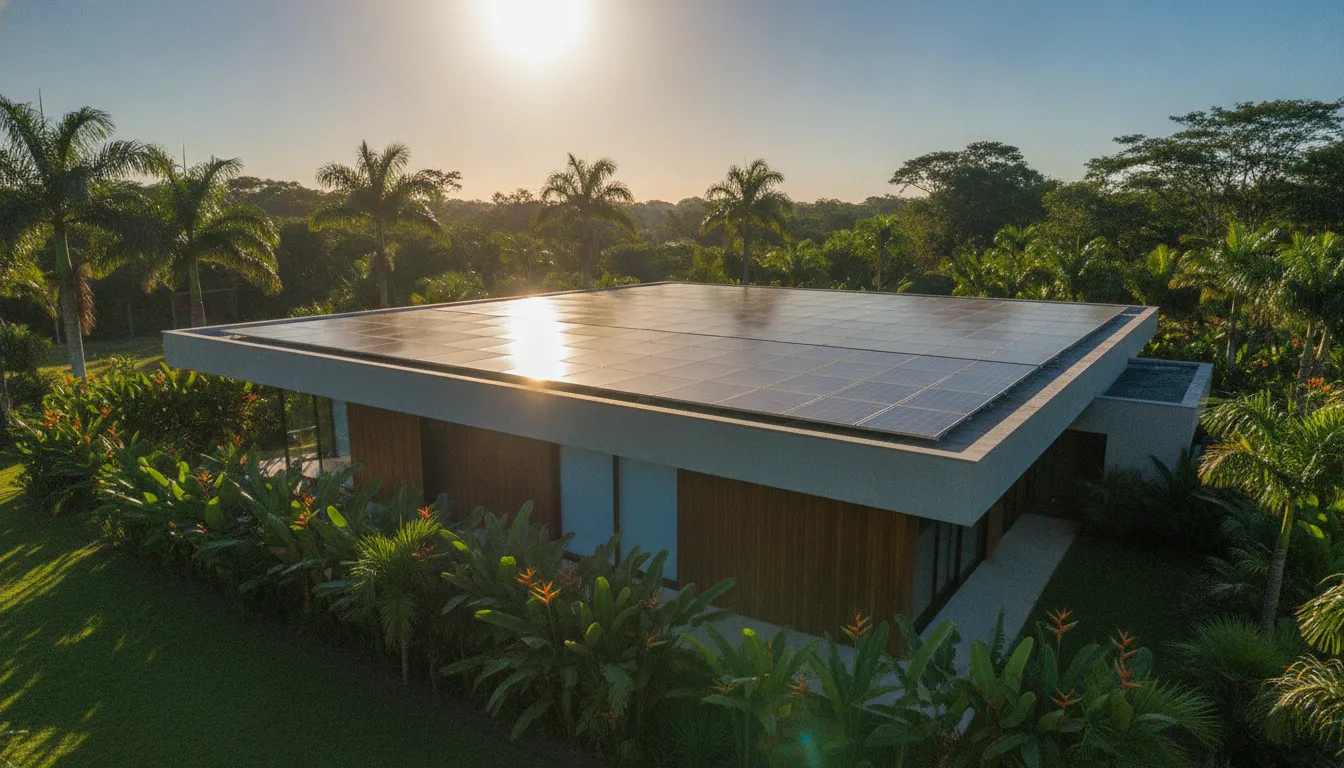
Residential solar energy in Brazil is, today, one of the investments with the best cost-benefit ratio available to the average consumer. With an average payback of 4 to 8 years and a lifespan of 25 to 30 years, the system practically pays for itself and still delivers decades of energy with near-zero marginal cost.
Furthermore, being part of the energy transition isn’t just a smart financial decision — it’s a concrete way to act for the planet you inhabit. Building a sustainable home goes far beyond changing light bulbs: solar energy is one of the most transformative changes you can make at home.
The first step is simple: grab your last energy bills, use an online simulator (utilities and companies in the sector offer free tools), and request quotes. With the information in hand, the decision becomes much easier than it seems. The sun is already doing its part — now it’s your turn.
