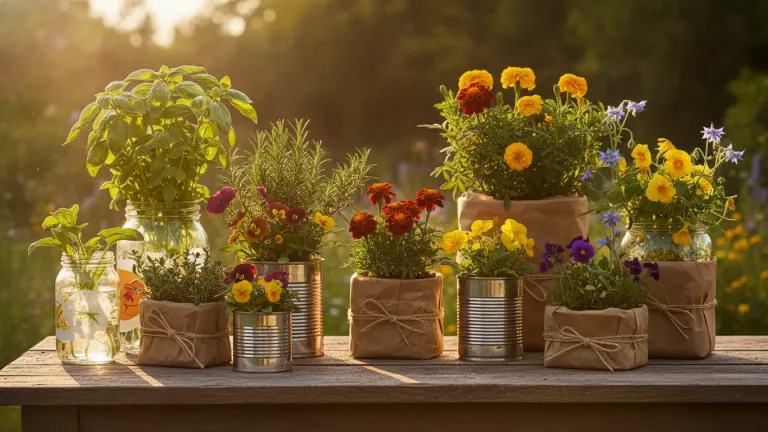
Why Reusing Packaging Has Become a Global Trend
Have you ever stopped to count how many packages you discard each week? Glass jars, cans, plastic bottles, cardboard boxes, margarine tubs, shampoo bottles — the list is long and, for most families, surprisingly extensive. The problem of excessive packaging waste is not new, but awareness of it has never been more urgent than now.
Brazil generates a huge amount of urban solid waste, and packaging represents a significant portion of this volume. According to the Solid Waste Panorama in Brazil, published by the Brazilian Association of Public Cleaning and Special Waste Companies (Abrelpe), the country generated over 80 million tons of urban solid waste in 2023 — and a considerable part of this total originates from single-use packaging discarded improperly. Much of this material could have a second, third, or even fourth life.
The good news is that, especially since 2024, a creative wave has taken over social media, craft fairs, and even kitchens: the creative reuse of packaging. It’s not just about storing things in old jars — it’s about conscious design, domestic economy, and environmental action all at once. In this article, you’ll discover how to transform what you would throw away into something useful, beautiful, and sustainable.
Why Reusing Packaging Makes a Real Difference
Before diving into practical ideas, it’s worth understanding the concrete impact of this choice. The waste management hierarchy, adopted by the National Solid Waste Policy (Law No. 12.305/2010), places reuse just below non-generation — even before recycling. This means that reusing is, from an environmental standpoint, more efficient than separating material for selective collection.
When packaging is recycled, there is still consumption of energy, water, and transportation in the industrial process. When it is reused directly by you, none of these resources are demanded. The product simply continues to fulfill a function — different, but equally valid.
Additionally, reusing packaging contributes to:
- Reducing the volume of waste sent to landfills
- Lower demand for new products (and consequently, less raw material extraction)
- Real domestic savings, as many items bought at the supermarket or organization stores can be replaced by packaging you already have at home
- Stimulating creativity and a sense of autonomy over consumption
Glass Packaging: The Most Versatile Material in Your Kitchen
Glass is one of the most noble materials for reuse. It is safe for food, easy to sanitize, does not absorb odors, and has a durability that can exceed decades. Olive jars, palm jars, jam jars, peanut butter jars, sauce jars, and even vitamin jars are perfect candidates for a long second life.
How to Reuse Glass Jars Practically and Safely
- Thoroughly clean the jar: wash with hot water, detergent, and a brush. To remove stronger odors (such as pickles), soak the jar in a solution of water and baking soda for a few hours.
- Easily remove labels: soak the jar in warm water with a few drops of cooking oil. The label will come off more easily without leaving glue residue.
- Check integrity: discard any jar with cracks, chips, or damaged lids — these are not safe for storing food.
- Define the new function before storing: small jars become spice holders, clip holders, seed holders, or mini vases. Medium jars are great for storing beans, rice, pasta, bulk tea, or bulk personal hygiene products. Large jars can become terrariums, kitchen utensil holders, or lamps.
Bonus tip: small glass juice or hot sauce bottles look lovely as small vases with wildflowers or as oil dispensers on the dinner table.
Plastic Packaging: How to Choose Which Ones Are Worth Reusing
Plastic requires more attention. Not all plastic is safe for reuse with food, especially when exposed to heat. The starting point is to look at the resin identification number that appears in the recycling triangle at the bottom of the packaging:
| Code | Type of Plastic | Safe to Reuse with Food? |
|---|---|---|
| 1 (PET) | Soda bottles, water bottles | Single use — avoid reusing for food |
| 2 (HDPE) | Butter tubs, jugs | Generally safe, check for signs of wear |
| 5 (PP) | Yogurt pots, margarine tubs, takeout containers | Safe to reuse, including in the microwave if indicated |
| 6 (PS) | Disposable cups and cutlery | Do not reuse — releases substances when in contact with heat |
| 7 (Others) | Plastic mix | Avoid for food |
For non-food uses, practically any plastic packaging can have a new life: as a plant pot, drawer organizer, tool holder, cachepot, pencil holder, or even a base for craft projects.
How to Transform PET Bottles into Functional Pots
- Cut the bottle in half with scissors or a utility knife (for children, always with adult supervision).
- Make small holes in the bottom with a heated nail for drainage.
- Sand the cut edges to avoid cuts.
- Paint with plastic paint (optional) or cover with string, fabric, or dried leaves.
- Add substrate and plant herbs, succulents, or vegetable seedlings.
PET bottles also work very well as water catchers for root watering: just pierce the cap with a pin and bury the bottle upside down near the plant roots. The water is released slowly, reducing waste — a principle similar to what we explained in our guide Reusing Water: Practical Guide to Home Reuse.
Cans and Boxes: Creative Organization for Any Environment
Tomato paste cans, tuna cans, powdered milk cans, cookie tins, and oil cans have sturdy walls and versatile shapes that make them excellent organizers. The same goes for cardboard boxes from cereal, shoes, or hygiene products.
Practical and Actionable Ideas with Cans and Boxes
- Kitchen utensil holder: larger cans, lined with contact paper or decorated with spray paint, store spoons, spatulas, and whisks with charm.
- Office and home office organization: medium cans become pen holders, clip holders, post-it holders.
- Hanging garden: cans attached to wood with screws form a functional vertical garden for apartments.
- Reinforced cardboard boxes: lined with paper or fabric, serve as drawers inside shelves or as personalized gift boxes.
- Toys for children: cans (with treated edges) and boxes are great for constructions, stacking games, and supervised sensory activities.
To reinforce cardboard boxes, apply a layer of white glue diluted in water (1:1 ratio) with a brush. After drying, the cardboard becomes significantly more resistant to moisture and frequent handling.
Tetra Pak and Sachets: What to Do with the Difficult Ones
Some packaging is challenging because they combine different materials — this is the case with Tetra Pak cartons (made of cardboard, aluminum, and plastic) and metalized sachets. For these, creative reuse is even more relevant, as recycling, although possible, depends on specific infrastructure that is not yet available in all municipalities.
Milk or juice cartons, for example, can be:
- Converted into seed or seedling containers for gardening
- Used as molds for handmade soap
- Stacked and glued to form modular shelves or organizers
- Lined internally with plastic to serve as temporary mini-aquariums in educational activities with children
Metalized sachets of coffee, tea, or sauce, when cleaned and cut, can be folded into functional origami, used as handmade thermal insulators, or sewn into bags and wallets — a practice that has gained followers in the Brazilian and international upcycling movement.
How to Create a Reuse System at Home
Consistent reuse requires a minimum of organization. Without a system, packaging accumulates and becomes clutter — which ends up demotivating any sustainable intention.
Step-by-Step Guide to Setting Up Your Home Reuse System
- Define a sorting space: a box or shelf where clean packaging is separated by material (glass, plastic, can, cardboard).
- Set a stock limit: determine how many packages of each type you will keep. When the limit is reached, the rest goes to selective collection.
- Have a project list: a notebook, note app on your phone, or corkboard with ideas of what you want to do with each type of packaging prevents them from sitting idle without a purpose.
- Set aside monthly time to create: even if it’s just an hour a month, transform packaging into useful objects. Involve children or friends — it becomes an activity, not a chore.
- Share the excess: packaging you won’t use can be donated to schools, craft workshops, community gardening groups, or social projects in your city.
Conclusion: Your Creativity Is a Form of Climate Action
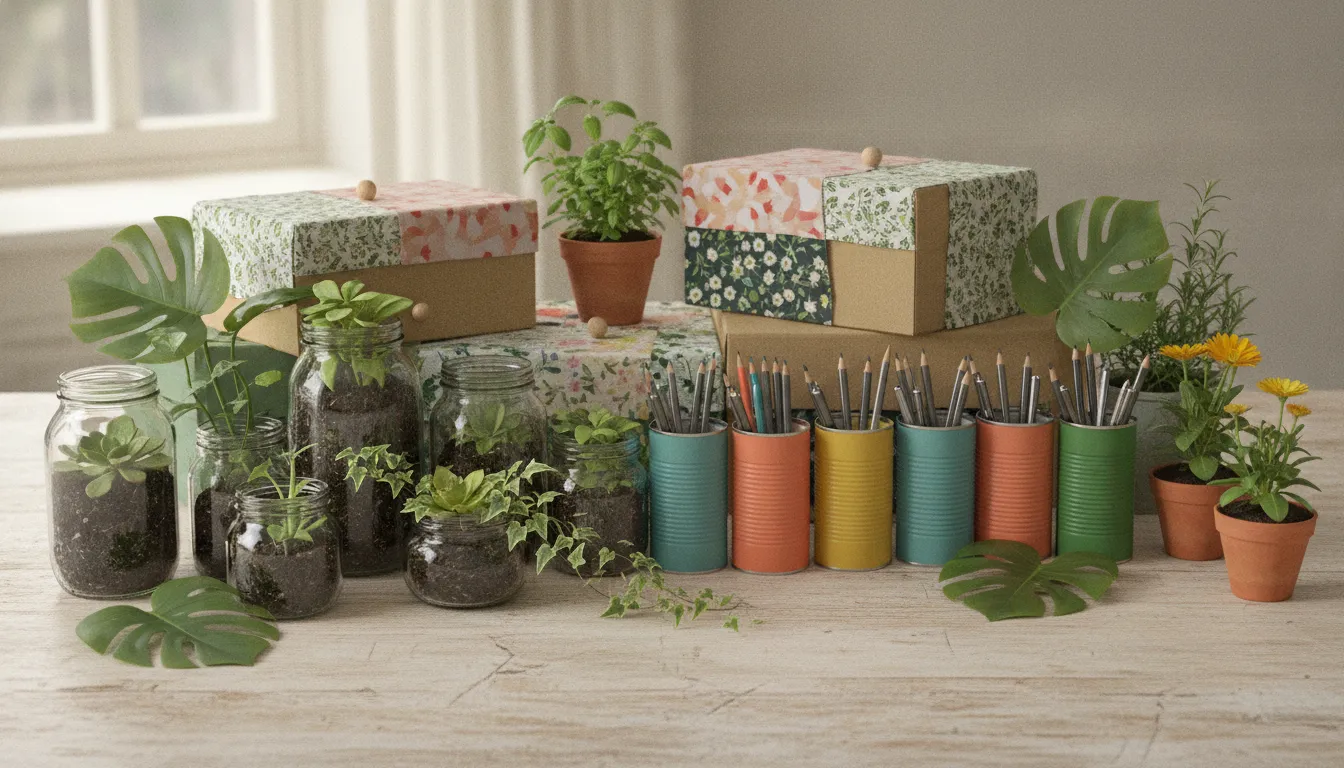
Reusing packaging may seem like a small gesture in the face of large-scale environmental challenges. But it is precisely in the sum of conscious individual actions that cultural and systemic changes gain strength. Each glass jar that becomes a spice holder, each PET bottle that turns into a pot, and each cardboard box that organizes a drawer represents an object that was not produced from scratch, waste that did not go to the landfill, and a concrete step towards smarter consumption.
In 2026, with climate and environmental pressures increasingly present in daily life, domestic creativity has also become a political and ecological act. You don’t need to do everything at once. Start with what you already have in your kitchen today: that palm jar taking up space, that empty oil bottle, that tea box that’s too pretty to throw away.
Give these packages a second chance — and who knows, you might discover that sustainability can be much more beautiful and fun than it seems.
