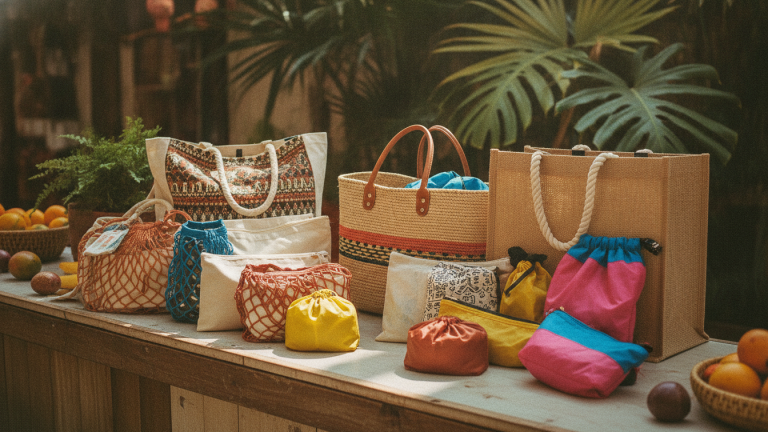
Why the shopping bag you use at the market matters more than it seems
Have you ever stopped to count how many plastic bags enter your home per week? A survey by the Brazilian Association of Public Cleaning and Special Waste Companies (Abrelpe) shows that Brazil generates millions of tons of solid waste annually, and disposable plastic bags make up a significant portion of that volume. Many of them go straight to landfills, or worse, into rivers and sewers.
The good news is that switching from plastic bags to reusable options is one of the simplest, cheapest, and most practical changes you can make. It doesn’t require home renovations, service subscriptions, or technical knowledge. At most, it requires building a new habit.
By the end of this article, you’ll know which type of reusable bag works best for your lifestyle, how to truly compare them (durability, cost, hygiene, environmental impact), which mistakes to avoid when using them, and how to turn this choice into a simple, effortless routine.
The real problem with disposable bags in Brazil
The National Solid Waste Policy, known as PNRS (Law 12.305/2010), establishes shared responsibilities for waste generated in the country. Despite this, smaller municipalities still have limited selective collection infrastructure, and much of the discarded plastic never reaches any recycling facility.
The plastic in common bags is typically low-density polyethylene (LDPE), which is technically recyclable, but in practice is rarely collected and processed in Brazil because it arrives dirty or mixed with other materials. According to Abrelpe data, most solid waste in the country still goes to landfills, despite regulatory advances over the past decade.
In Brazil’s urban environment, plastic bags clog storm drains during heavy rains, causing flooding in cities like São Paulo, Recife, and Belém. The problem isn’t just environmental; it has real financial costs for municipalities and, indirectly, for taxpayers.
Switching bags doesn’t solve everything on its own, but it removes you from the machinery that keeps this cycle running.
Comparing types of reusable bags
Before buying any bag, it’s worth understanding what each material offers. Each option has strengths and limitations, and the best choice depends on your daily use.
Raw cotton or cotton canvas bags
The most popular in Brazil, sold at farmers’ markets, bookstores, and supermarkets. They hold significant weight, are machine-washable, and last years if well cared for. One thing to note: studies from the Environmental Ministry in European countries indicate that cotton bags need to be used dozens of times over to offset the impact of cotton production, which consumes a lot of water. This doesn’t mean they’re bad; it means you need to really use them frequently.
Non-woven polypropylene bags (the “eco-bag” from supermarkets)
The model with a fabric-like appearance, lightweight, that every supermarket sells for less than five reais. It lasts reasonably well if you don’t machine-wash it or leave it in the sun for extended periods. The problem: it’s made of plastic, although reusable. When it wears out, it’s not accepted at most selective collection points in Brazil because the material is difficult to process when mixed with other plastics.
Jute or sisal bags
They have good resistance and are made from natural fiber, which facilitates decomposition at the end of their useful life. More common at organic markets and specialty stores. They may cost a bit more, but last many years.
Nylon or recycled polyester bags
These foldable bags, which fit in your pocket, are practical for those who forget to bring a bag. Some are made from recycled PET bottles, which adds environmental value. They’re hand-washable, dry quickly, and weigh almost nothing.
| Type | Estimated durability | Washable? | Average price (2026) | Decomposition |
|---|---|---|---|---|
| Raw cotton / canvas | 3 to 7 years | Yes (machine) | R$ 15 to R$ 40 | Natural (biodegradable) |
| Non-woven polypropylene | 1 to 3 years | Not recommended | R$ 3 to R$ 10 | Slow (plastic) |
| Jute or sisal | 4 to 8 years | By hand | R$ 20 to R$ 50 | Natural (biodegradable) |
| Nylon / recycled polyester | 3 to 6 years | By hand | R$ 20 to R$ 45 | Slow (plastic) |
Which bag makes the most sense for your daily life
The honest answer is: it depends on how you shop.
If you go to the supermarket weekly and carry heavy loads, the cotton or canvas bag is your best friend. It withstands milk cartons, heavy fruits, and bottles without tearing. Keep a few hanging near your front door or in your car; that way you’ll never leave without them.
If you make quick purchases during the week, on your way to work or at a bakery, the foldable nylon or recycled polyester bag does the job. It fits in your pants pocket or bag, weighs almost nothing, and is always available when you need it.
If you shop at farmers’ markets, the jute bag works well because it’s resistant, looks good in that setting, and handles the real weight of bulk purchases.
And if you live in an apartment and already creatively reuse fruit peels and other organic waste, as we showed in this article on how to use fruit peels when living in an apartment, combining good bags with other waste-reduction practices makes a real difference in the amount of garbage your household generates per month.
How to build the habit of using reusable bags for good
The biggest enemy of reusable bags isn’t the price or quality. It’s forgetting them. The bag stays at home while you’re at the supermarket checkout, with no alternative.
Here’s a step-by-step guide to make this a routine:
- Buy at least three bags of models you’ll actually use. One isn’t enough, because it will be dirty or wet exactly when you need it.
- Keep a foldable bag in your purse, backpack, or car glove compartment permanently. Never remove it.
- Hang larger bags on the door handle or a visible hook at your exit. You pass by there before you leave.
- As soon as you get home, empty and put the bags back immediately, before storing your purchases. This prevents them from being left inside the fridge or cart.
- Wash regularly. Dirty bags accumulate bacteria, especially if they carry raw meat, fish, or vegetables. Cotton goes in the machine; nylon and jute, hand-wash with soap and water.
- Involve others in your household. If everyone knows where the bags are and why they’re there, the habit solidifies faster.
Common mistakes that make reusable bags lose their appeal
Using reusable bags seems simple, but some mistakes reduce product lifespan or create new problems.
- Storing a damp bag closed inside another bag or drawer: this creates mold, especially in humid climates like Manaus, Salvador, and Florianópolis.
- Using the same bag for raw meat and fruit without washing between uses: the health risk is real. Use different bags or always wash after carrying proteins.
- Buying too many bags on impulse: accumulating ten bags you never use doesn’t help at all. Better to have three you use every week.
- Discarding the polypropylene bag in regular trash when it wears out: find out if your municipality has a flexible plastics collection point. Some major supermarket chains maintain specific collection bins for this.
- Thinking cotton bags are automatically the most sustainable: as mentioned, they require frequent use to offset production impact. If you use them dozens of times over several years, the balance is positive.
Frequently asked questions about reusable bags
Does cotton bag production have high environmental impact?
Yes, conventional cotton farming consumes a lot of water and may use pesticides. This doesn’t mean it’s worse than plastic in the long run; it means you need to use it many times to offset that. A cotton bag used frequently for three years or more has a positive environmental balance compared to accumulating disposable plastic bags.
Can I use a reusable bag to carry meat at the supermarket?
Yes, as long as you wash the bag right after. The recommendation is to separate bags by purchase type: one for meat and dairy, another for fruits and vegetables. This is good hygiene practice regardless of bag type.
Is there legislation in Brazil that requires reusable bag use?
The PNRS (Law 12.305/2010) encourages waste reduction and holds manufacturers and distributors accountable, but doesn’t mandate consumer use of reusable bags. Some Brazilian states and municipalities have their own laws restricting or charging for disposable plastic bags in retail, as happened in São Paulo and Rio de Janeiro.
Where to buy quality reusable bags in Brazil?
Farmers’ markets, organic stores, craft shops, and e-commerce platforms have good options. Prefer buying from local producers when possible; besides supporting the regional economy, you can better assess material quality before taking it home.
A small step you can take today
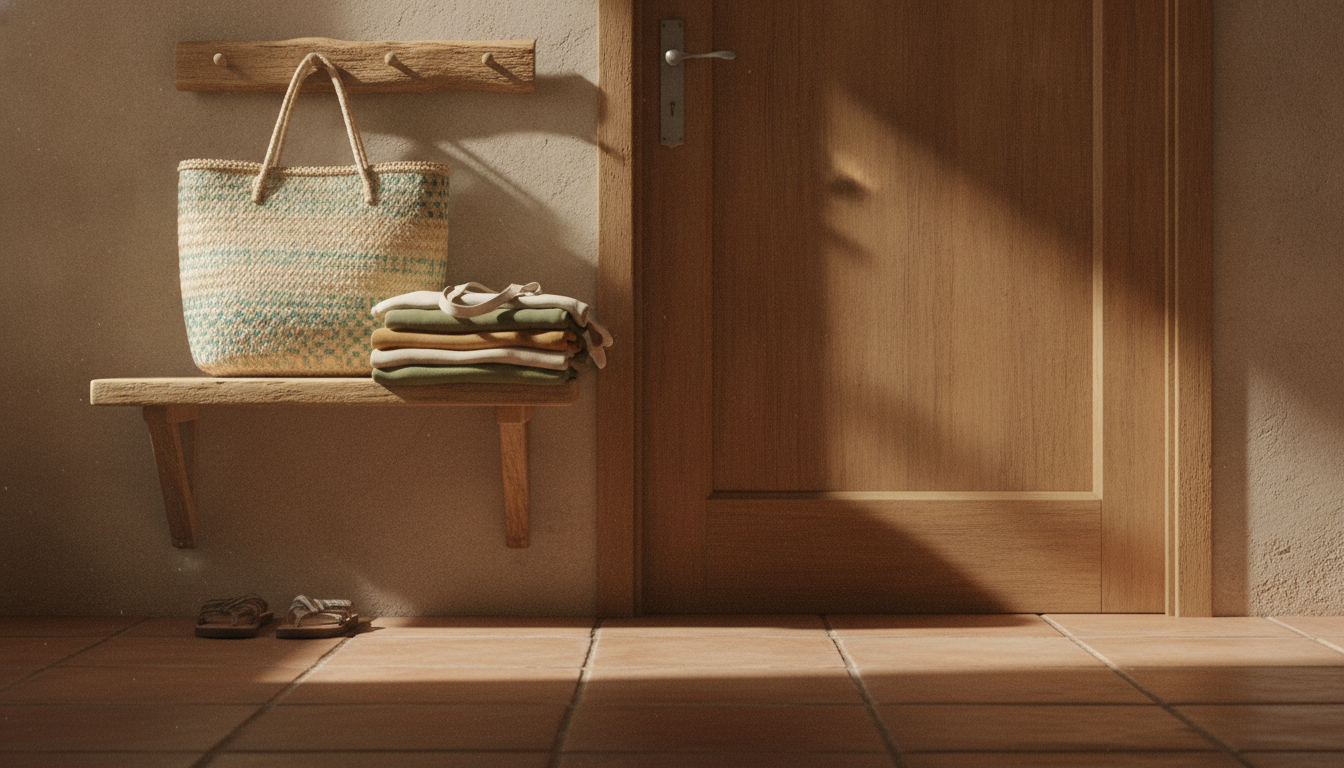
Choosing the right bag doesn’t have to be difficult. Look at your routine: if you’re out every day and might forget, start with a foldable nylon bag that lives in your purse. If you do big weekly shopping, investing in two or three cotton bags will solve things for years.
The point is to start somewhere. One reusable bag used every week prevents dozens of plastic bags per year. Multiplied across your whole family, the number grows. And if you want to take one step beyond bags, exploring other ways to reduce household garbage, it’s worth learning about other simple sustainability practices for apartment or small-space living, like how to use fruit peels when living in an apartment, which shows that small kitchen changes also tip the scale on what goes to the trash.
Start with one bag. Then it becomes habit. Then it becomes part of who you are.
