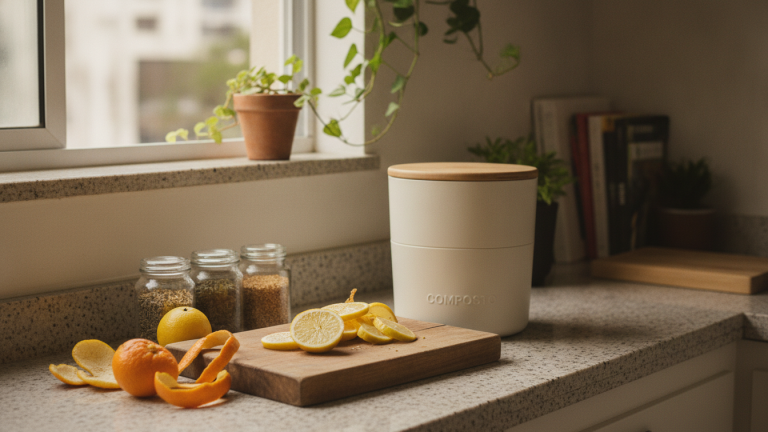
That peel you throw away is worth more than it seems
You peel an orange, eat it, and toss the peel in the trash. You do the same with bananas, passion fruit, mango, and pineapple. By the end of the week, fruit peels alone represent a surprising amount of material that the garbage collector hauls away—material that still had much to offer. According to Abrelpe data, Brazil generates over 80 million tons of solid waste annually, with organic waste representing the largest share. Much of it goes straight to landfills, where it decomposes and produces methane, a greenhouse gas with high global warming potential.
But what about those living in apartments? Without a backyard, without a worm bin in the garden, without space for a 200-liter composter, it seems like options run out. Not quite. Living on the tenth floor doesn’t mean you have to waste everything. There are practical, simple, and inexpensive uses for fruit peels that fit perfectly into the routine of an apartment dweller in São Paulo, Fortaleza, or Porto Alegre.
By the end of this text, you’ll know exactly what to do with orange, banana, lemon, passion fruit, and other common fruit peels in your daily life—without needing a backyard, expensive equipment, or bad kitchen smells.
Why fruit peels are discarded unnecessarily
The habit of throwing away peels comes, in part, from how we’ve learned to consume. The fruit is the “product,” the peel is “trash.” But this logic ignores the fact that the peel concentrates much of the fruit’s nutrients, essential oils, and active compounds.
Orange peel, for example, contains natural oils used in the food and cleaning industries. Banana peel contains compounds that Embrapa researchers have studied for various applications, from animal feed to water treatment processes. The problem isn’t the peel itself: it’s the lack of information about what to do with it within four walls.
Another factor is fear of odor and flies. This concern is legitimate, but it has a simple solution: proper storage. With a sealed container in the refrigerator or freezer, you can store peels for several days without any odor and without attracting insects.
Household uses you can start today, at no cost
Before thinking about composting, it’s worth using the peels directly. Many of them have immediate utility around the house without any special processing.
Orange, lemon, and tangerine peels:
- Boil peels in water for ten minutes and use the liquid to clean kitchen surfaces. Citrus oils have natural degreasing action.
- Leave dried peels inside cabinets to deter insects, especially moths.
- Place fresh peels near entryways to discourage ants, which dislike citrus scent.
Banana peels:
- Use the inner part of the peel to polish apartment plant leaves, such as Swiss cheese plants and ornamental okra. It leaves leaves with a natural shine and removes dust.
- Rub the peel on the inside of leather shoes for quick polish without chemical products.
- Put in a blender with water to make a liquid fertilizer rich in potassium for your apartment plants.
Passion fruit peels:
- The white part of the peel (albedo) can be cooked and used in recipes like sweets and jams. This isn’t zero waste: it’s gastronomy.
- Dried and ground, it becomes flour with fiber that can be added to yogurt, smoothies, or pancakes.
Pineapple peel:
- Boiling peels with water and cinnamon makes a flavorful tea (or hot juice), quite common in northern and northeastern Brazil.
- The boiled liquid can also be used to cook grains, adding a slight natural sweetness.
If you want to go further and understand other uses you may not have considered, the article Fruit peels in apartments have more uses than they seem provides an even more detailed list with variations by fruit type.
How to compost in an apartment using fruit peels
Apartment composting is simpler than it appears and doesn’t require much space. The most suitable method for those living in small spaces is the compact home composter, which can be assembled with common buckets or purchased ready-made at garden stores for affordable prices.
Materials needed:
- Two buckets with lids (between 15 and 20 liters each)
- Sawdust, paper scraps, or dried leaves (dry material, called “carbon”)
- Peels and organic waste (wet material, called “nitrogen”)
- An old wooden spoon or spatula for mixing
Basic step-by-step:
- Make small holes in the lid and sides of one bucket to allow ventilation.
- Place a layer of sawdust or shredded paper at the bottom (about 5 cm).
- Add fruit peels cut into smaller pieces (accelerates the process).
- Cover with another layer of dry material in the same proportion.
- Repeat the process each time you add new peels.
- Mix the contents every two or three days with the spatula.
- In four to eight weeks, the material at the bottom will have turned into dark, odor-free compost, ready to use on plants.
The second bucket is for when the first one fills: you start using the second while the first one “matures.” This system fits under the sink, in the utility area, or on a balcony.
Estimated setup time: 30 minutes. Cost: between R$30 and R$80, depending on whether you use buckets you already have or buy a ready-made composter.
Common mistakes that cause smell and flies (and how to avoid them)
The biggest fear for those considering apartment composting is bad odor. It happens, but almost always due to a specific, correctable mistake.
The most frequent mistake is adding too much wet material without compensating with dry material. The ideal proportion is approximately one part organic matter to one part dry material. If the mixture becomes waterlogged and produces strong odor, add more sawdust or shredded paper and mix well.
Another mistake is putting items that shouldn’t go in a small home composter: meat, dairy, oils, and animal feces. These materials attract insects and produce intense odor in enclosed spaces. Fruit and vegetable peels, coffee grounds, and tea sachets work very well.
Very sugary fruits, like watermelon and mango, should be added in small quantities at a time. In excess, they ferment quickly and can attract flies. Cutting peels into small pieces before adding largely solves this.
What to do with finished compost in your apartment
You may not have a garden, but you probably have plants. Pots on the balcony, ferns in the living room, herbs on the kitchen windowsill. Homemade compost is high-quality fertilizer without the chemical components of industrial fertilizers.
Mix one part compost with three parts soil when repotting or fertilizing your pots. Plants respond well: they grow with more vigor and need less watering because compost improves soil moisture retention.
If you produce more compost than you can use, several practical alternatives work well in Brazilian cities. Many condominiums already have collective composters in the lobby or common areas, especially after the growth of municipal programs encouraged by Law 12,305/2010 (National Solid Waste Policy), which establishes shared responsibility for the waste lifecycle. Organic markets and community gardens also often accept compost from residents.
Peels in food: complete use that your grandmother already knew
Before any composting technique, there’s an even more direct way to avoid waste: eat it. Complete use of food is an ancient practice in Brazil, especially in northern and northeastern regions, where recipes using stems, peels, and seeds are part of local gastronomic culture.
Embrapa has published material on complete use of food that documents the nutritional value of parts normally discarded. Passion fruit peel, rich in soluble fiber called pectin, aids satiety. Mango peel can be used in chutneys and preserves. Papaya seeds are edible and have a slightly spicy flavor.
Incorporating this perspective in the kitchen doesn’t require elaborate recipes. It starts with a simple question before throwing something away: can this be eaten, used, or repurposed in another way?
Frequently asked questions about fruit peels in apartments
Won’t the apartment composter attract cockroaches and mosquitoes?
If maintained correctly, no. The secret lies in the proportion between wet and dry material and keeping the lid always closed. Well-aerated composters with balanced mixtures don’t produce the damp, anaerobic environment that attracts pests.
Can I store peels in the freezer before composting?
Yes, and it’s a great strategy for those who don’t want to add peels every day. Freezing also breaks down the cell structure of peels, accelerating decomposition when they’re finally added to the composter.
Do organic and conventional fruit peels make a difference in composting?
For composting itself, there’s no significant difference in the final result. Concern about pesticide residues on peels is more relevant when consumption is direct (eating the peel). In compost, residues degrade during the process.
What if my condominium doesn’t allow a composter in the apartment?
Check the bylaws first. Small, sealed composters don’t produce odor or attract animals when used correctly, so many condominiums have no real restriction. If there’s a prohibition, you can choose to take your peels to a community composter at a market or nearby community garden.
Start with a banana peel today
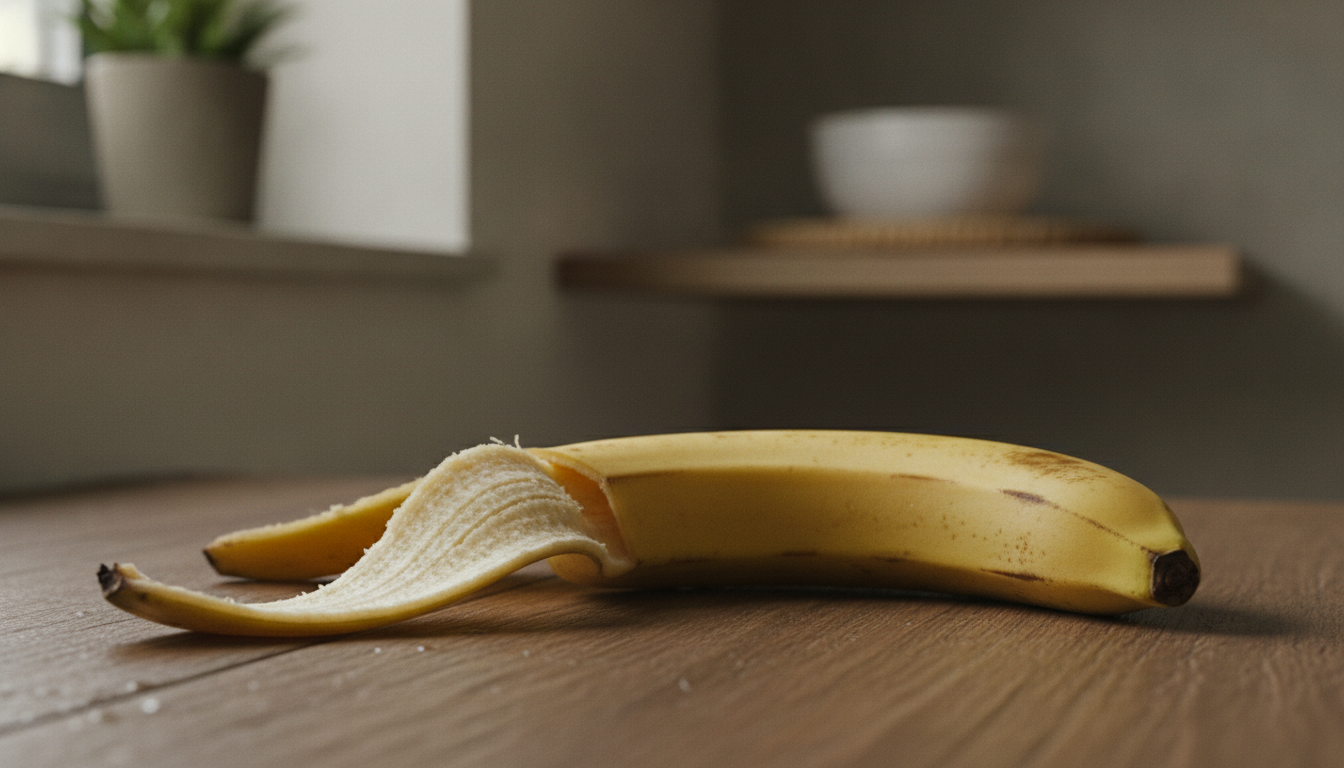
You don’t need to set up a composter tomorrow or change everything at once. Start small: the next time you peel a banana, use the peel to polish a plant’s leaves or make a quick liquid fertilizer in the blender. This small gesture already breaks the automatic cycle of thoughtlessly throwing things away.
From there, every peel that stays home instead of going to the landfill is a real contribution. No drama, no sacrifice, no backyard required.
