Your electricity bill keeps getting more expensive. Is it worth installing solar panels now?
If you opened your energy bill this month and got a shock, know that you’re not alone. Electricity rates in Brazil continue on an upward trajectory that has accelerated in recent years, driven by power sector charges, tariff flags, and the growing cost of maintaining distribution infrastructure. In 2026, many Brazilian families pay bills that consume a significant portion of the household budget, and residential solar photovoltaic energy remains one of the most concrete answers to change this scenario.
The good news is that the moment to install a residential solar system has never been more favorable in terms of cost-benefit. The price of photovoltaic panels has fallen significantly over the past decade, financing has become more accessible, and Brazil’s regulatory framework, consolidated with Law 14,300 of 2022, has guaranteed clearer rules for those who generate their own energy. Throughout this article, you’ll understand how solar energy works in 2026, how much it costs to install, what financial return to expect, and how to take your first steps safely, whether you’re a homeowner or apartment resident.
Why 2026 is a good time to start with solar energy
Brazil has one of the world’s electrical grids with the highest participation of renewable sources, but that doesn’t mean electricity is cheap. According to ANEEL data, the average residential electricity rate in the country exceeded R$ 0.90 per kilowatt-hour in many distributors, depending on the region and the current tariff flag. This value makes the payback time for a solar system increasingly shorter.
Distributed generation, which is the model where you install panels on your house and inject the surplus into the electrical grid, has grown rapidly in Brazil. ANEEL registered, by mid-2025, more than 3 million distributed generation connections in the country, and this number continues to rise in 2026. This means there is a mature market, with experienced installers and widely available products, which reduces risks for anyone wanting to start now.
Law 14,300/2022 also deserves attention. It established the rules for the Electrical Energy Compensation System and guaranteed, for a well-defined transition period, that consumers who inject energy into the grid receive credits to offset their bill. The sooner you install, the longer you benefit from the more favorable conditions of this system.
How solar energy generation works in practice
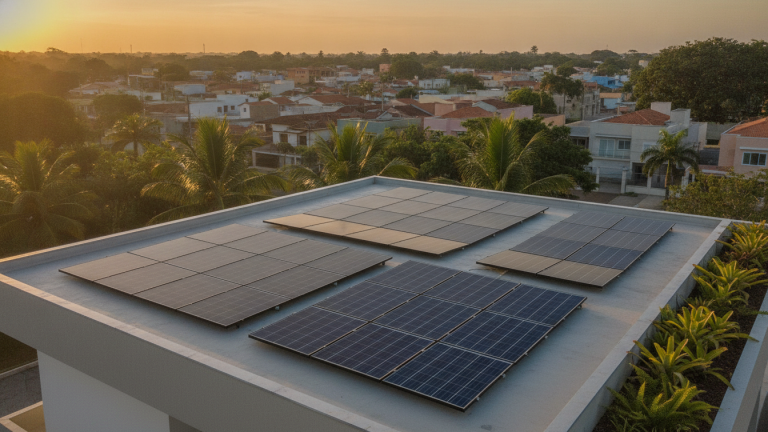
The photovoltaic system transforms sunlight into electricity. Panels installed on the roof capture solar radiation and convert it into direct current. A device called an inverter transforms this current into alternating current, which is the type of energy your appliances use. All of this happens silently and without moving parts.
When the panels produce more energy than you consume at that moment, the surplus goes to the electrical grid and becomes a credit on your bill, which can be used in months of lower generation, such as winter or rainy periods. When the panels produce less, you consume normally from the grid. The vast majority of residential systems installed in Brazil do not use batteries, which reduces installation costs, although this scenario is changing as the price of storage systems falls.
Generation varies by region. The Northeast and Midwest have solar irradiation levels among the highest in the world, according to INPE data. But even cities in the South of Brazil, with more clouds, have sufficient generation to make the system viable. What changes is the size of the system needed to meet the same consumption.
How much does it cost to install and what is the financial return
The cost of a residential solar system varies depending on the installation size, equipment quality, and the company contracted. For a house with monthly consumption of around 300 to 400 kilowatt-hours, the investment usually ranges from R$ 15,000 to R$ 25,000, considering installation, inverter, and certified quality panels. Larger systems for higher consumption can exceed R$ 40,000.
The investment payback time, called payback, stayed in the range of 4 to 7 years in most cases evaluated by the industry, depending on the local tariff value, monthly consumption, and the region’s irradiation. After the investment is paid back, the panels continue generating electricity for 20 to 25 years, with gradual efficiency loss over time, as indicated by manufacturers in product certificates.
Financing helps those who don’t have the amount available at once. Specific credit lines for solar energy are available at public and private banks, and in many cases the monthly installment is less than the savings generated on your electricity bill from the first month. This means that, even when financed, the system can generate immediate net gains.
| Monthly consumption profile | Estimated system size | Approximate installation cost | Estimated payback |
|---|---|---|---|
| Up to 200 kWh | 1.5 to 2 kWp | R$ 10,000 to R$ 15,000 | 5 to 7 years |
| 300 to 400 kWh | 3 to 4 kWp | R$ 18,000 to R$ 28,000 | 4 to 6 years |
| 500 to 700 kWh | 5 to 6 kWp | R$ 28,000 to R$ 40,000 | 4 to 5 years |
Reference values for 2026. Consult local quotes for your region and distributor.
Step-by-step guide to installing solar energy in your home
Many people put off the decision because they don’t know where to start. The process is simpler than it seems.
- Gather your electricity bills from the last 12 months. This helps calculate your average monthly consumption and size the correct system. There’s no point in installing too many or too few panels.
- Request at least three quotes from installation companies. Look for companies with professionals certified by CRESESB or approved by your local distributor. Ask for references and check if the company includes the electrical design and ANEEL connection request.
- Compare quotes beyond price. Evaluate the panel warranty (typically 25 years of performance), inverter warranty (usually 5 to 10 years), and what is included in after-sales service.
- Check your roof conditions. The roof needs to be in good condition, without leaks, and with appropriate orientation and slope. Roofs facing north are most recommended in Brazil. A good installer will evaluate this on-site.
- Sign the contract and monitor the installation. The timeframe between hiring and physical installation usually varies from a few weeks to a few months, depending on the company and your region.
- Wait for distributor approval. After installation, the company will submit the connection request to the local distributor, which needs to approve and install a bidirectional meter. This process can take a few weeks, per ANEEL rules.
- Monitor your generation. Most modern inverters have apps that show in real time how much your home is generating and consuming. Keep track to identify any issues early.
What about apartment dwellers: are there alternatives?
Installing panels on an apartment building’s roof depends on condominium approval and a technical analysis of the roof. In condominiums with well-oriented common areas, it’s possible to create a collective system that benefits all units. This shared self-consumption model is provided for in Brazilian legislation and is growing.
For those who cannot install on their own property, another real alternative is remote solar power plants, also called solar energy by subscription. You contract a share of generation from a solar plant installed elsewhere and receive the energy credits directly on your bill. There’s no need to have a roof, do work, or bear the full cost of a system. The model is regulated by ANEEL and is available through various distributors in the country.
Finding creative ways to reduce the impact of your daily consumption also makes a difference. Just as fruit peels in the apartment have more uses than they seem, small daily adjustments help reduce waste while solar system isn’t an immediate option.
Common mistakes when installing solar energy and how to avoid them
- Hiring based on the lowest price without checking equipment quality. Uncertified panels or inverters of questionable origin can perform much worse than promised and without real warranty.
- Not calculating consumption correctly. Sizing a system smaller than necessary means you’ll still pay a significant bill. Sizing too large means spending more than you need.
- Ignoring roof condition. Installing panels on a roof that will need repairs in two years will generate extra cost to remove and reinstall the system.
- Not reading the contract carefully. Check what happens if a panel develops a defect outside the manufacturer’s warranty period. Who handles service, the installer or the manufacturer?
- Expecting the system to pay for itself without monitoring. An inverter failure can go unnoticed for weeks if you don’t track generation data.
Frequently asked questions about residential solar energy
Does the system work on cloudy or rainy days?
Yes, photovoltaic panels generate electricity even on cloudy days, just in smaller amounts than on sunny days. Generation decreases, but doesn’t go to zero. This is why the system is sized taking into account climate variation throughout the year in your region.
Do I need a battery to have solar energy?
The vast majority of residential systems in Brazil don’t use batteries and operate connected to the electrical grid. If power fails in the street, the system shuts down for safety, even if there’s sun. Systems with batteries exist and allow autonomy during power outages, but significantly increase project costs. The choice depends on your priorities.
Does solar energy increase property value?
Real estate market studies indicate yes, although the percentage varies by region and buyer profile. An installed, functioning system with proper documentation tends to be seen as a differentiator, especially in regions where electricity rates are higher.
How do I know if the installer is trustworthy?
Check if the company is registered with CREA or CFT, if professionals have recognized technical certification, and if the company has proven experience with your region’s distributor. Ask for references from previous customers and, if possible, visit a completed installation.
Start small: one action for today
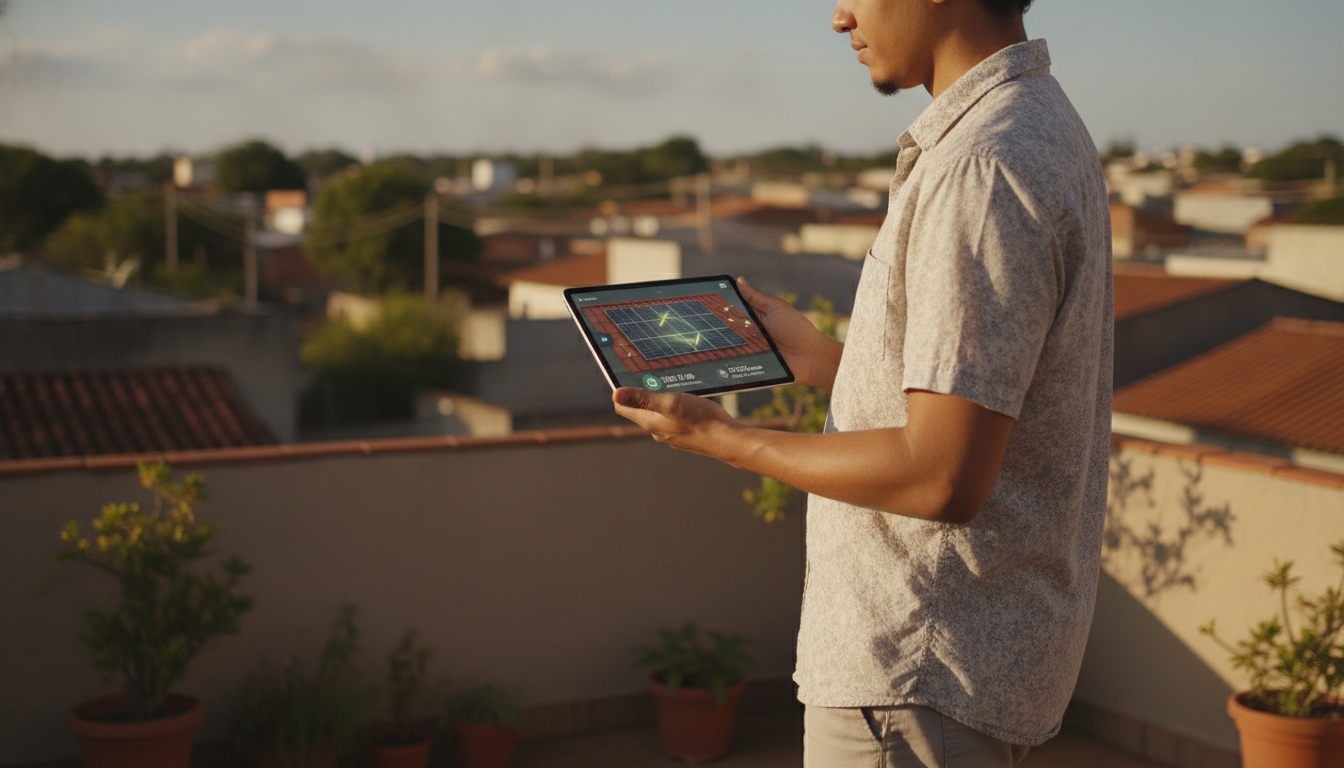
If you’re not yet ready to install a complete solar system, the first step can be simple: grab your last three electricity bills and calculate your average monthly consumption. With that number in hand, you can already request quotes and understand what system size would make sense for your home.
Every step you take toward more conscious consumption counts. If you want to go further while evaluating solar energy, it’s worth exploring other ways to reduce your home’s impact on the planet, such as using a bicycle daily to reduce costs and emissions or reviewing water and energy consumption habits in your apartment. Change starts with one decision at a time.
