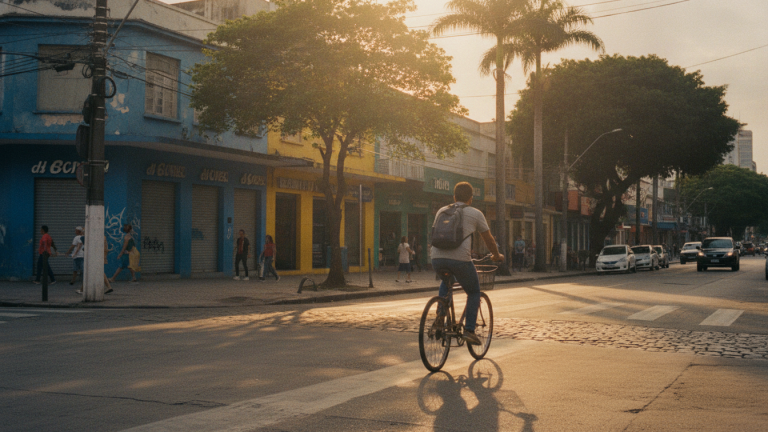
Imagine you spend, on average, R$ 400 per month on fuel for short trips around the city. Now consider that a significant portion of these commutes are less than ten kilometers, according to IBGE data on urban mobility in Brazil. A bicycle covers that distance at almost zero cost, without emitting a gram of CO2, and keeps you in better physical shape. By the end of this article, you’ll know exactly how to incorporate biking into your daily routine, how much you can save, and what to do to get started even if you live in a city with limited bike infrastructure.
It’s not just about money. Transportation is one of the largest contributors to greenhouse gas emissions in Brazil. According to the Greenhouse Gas Emissions and Removals Estimates System (SEEG), the energy sector, which includes transportation, represents one of the main sources of national emissions. Within this context, light vehicles powered by fossil fuels have significant weight in city life.
The good news is that change doesn’t require a radical lifestyle overhaul. Replacing your car or motorcycle with a bicycle for two or three trips per week already generates real impact, both on your wallet and the environment.
Why urban transportation weighs so heavily on emissions
Brazil has a huge vehicle fleet and a historical dependence on individual transportation. When a car burns gasoline or ethanol, it releases carbon dioxide (CO2), nitrogen oxide, and particulate matter into the atmosphere. The IPCC points out that transportation accounts for about 16% of global greenhouse gas emissions, with road vehicles being the largest portion within that total.
In Brazilian cities, this problem translates into prolonged traffic jams, poor air quality, and wasted time stuck in traffic. São Paulo, for example, frequently appears in rankings of cities with the longest average time spent in traffic. This idle time in congestion not only wastes fuel but also increases emissions per kilometer traveled, since the engine is running without moving forward.
The bicycle emits nothing during use. Even during production, it comes nowhere near the environmental impact of an automobile, which consumes enormous amounts of energy and raw materials to be manufactured. Switching some car trips for bike trips is one of the individual actions with the most direct and measurable environmental return.
How much you can save using a bicycle
Let’s look at concrete numbers. The average price of gasoline in Brazil in 2025 was above R$ 6 per liter in much of the country, according to the National Agency of Petroleum, Natural Gas and Biofuels (ANP). A popular car averages 10 to 12 kilometers per liter in city use. This means that every ten kilometers traveled in the city costs between R$ 0.50 and R$ 0.60 in fuel alone, not counting insurance, maintenance, vehicle registration tax, and parking.
A bicycle has much lower annual maintenance costs. A complete overhaul on a simple bike, changing the tube, brakes, and lubricating the chain, costs around R$ 80 to R$ 150 at community workshops, depending on the city. Someone cycling between five and ten kilometers per day, five days per week, can save significant amounts each month on fuel alone, not counting parking.
| Item | Car (city use) | Bicycle |
|---|---|---|
| Monthly fuel (100 km/week) | R$ 240 to R$ 300 | R$ 0 |
| Estimated monthly maintenance | R$ 200 to R$ 400 | R$ 10 to R$ 15 |
| Parking (business days) | R$ 100 to R$ 300 | R$ 0 |
| Vehicle registration and insurance (monthly portion) | R$ 150 to R$ 400 | R$ 0 |
Values vary greatly by city, vehicle model, and usage profile, but the difference is clear even in the most conservative estimate.
How to start cycling daily: step by step
You don’t need to buy a R$ 3,000 bike or have a bike path at your door to get started. The simplest path is this:
- Map your short routes. Write down which regular commutes you make that are less than ten kilometers. Kids’ school, supermarket, pharmacy, work, neighborhood market. These are ideal candidates for replacement.
- Choose a bike suited to your use. For flat cities, a regular seven-speed bike works fine. For cities with hills, consider an electric bike (e-bike) or one with more gears. Used bikes in good condition cost from R$ 300 to R$ 500 and are a good entry point.
- Get basic safety items. Helmet (required by traffic law), front and rear lights, bell, and lock. Initial investment ranges from R$ 150 to R$ 300 for a quality basic kit.
- Test the route on the weekend first. Do the commute without rushing, observe the condition of the streets, identify difficult sections, and see how long it really takes.
- Start with two days per week. Don’t try to replace the car completely at once. Two weekly trips already generate savings and build the habit without pressure.
- Solve the shower issue if you’re going to work. If the office doesn’t have changing facilities, talk to management or bring a bag with toiletries. Many people arrive at work without sweat by adjusting their pedaling pace.
- Check bike-sharing systems. Cities like São Paulo, Rio de Janeiro, Curitiba, Fortaleza, and Belo Horizonte have app-based rental systems. For those who don’t want to buy or don’t have storage space, this is a real alternative.
Common mistakes by beginners (and how to avoid them)
The biggest mistake is thinking you need to be in shape to start. The bicycle is the transportation, not the gym. You’ll condition yourself over time simply by going back and forth.
- Don’t ignore traffic signs. A cyclist is a vehicle with rights and responsibilities on the road.
- Don’t pedal without lights at night. This is a frequent cause of serious accidents.
- Don’t store your bike in an unsafe place without a robust lock. Cheap lock failures are common. A quality lock costs more but protects your investment.
- Don’t neglect tire pressure. Flat tires increase effort and wear out the tube faster.
- Don’t underestimate Brazil’s sun. Use sunscreen and wear light clothes; the heat is real and can discourage those unprepared.
A practical tip: if you live in an apartment with no space, check if your building has a bike storage area or if you can create one. The Urban Mobility Law (Law 12.587/2012) encourages integration between transport modes, and many city councils have required bike storage in new buildings.
The connection between cycling and other sustainable habits
People who start moving by bicycle often review other consumption habits. It’s not a coincidence. When you leave your car and start experiencing the city at the slower pace of a bike, small changes emerge naturally: you stop at the neighborhood market instead of going to a distant supermarket, buy less on impulse because you don’t have a trunk, and consume more of what’s nearby.
This set of changes has environmental impact beyond avoided traffic emissions. Reducing car use also indirectly decreases consumption of industrialized products with high transportation costs. Just as saving water at home starts with small daily habits, sustainable mobility is also built on simple daily choices, not grand gestures.
Health also counts in this equation. The World Health Organization recommends at least 150 minutes of moderate physical activity per week for adults. Someone who cycles 30 minutes per day, five days a week, already meets this goal without separating extra time for the gym.
The Brazilian cities landscape in 2026
Bike infrastructure in Brazil has grown in recent years, but it remains unequal. São Paulo has more than 700 kilometers of bike paths and lanes, according to data from the Traffic Engineering Company (CET-SP). Curitiba and Fortaleza have also expanded their networks. But many medium and small cities still offer little to cyclists.
Even so, cycling on roads without bike lanes is legal and possible with extra attention. The Brazilian Traffic Code allows cyclists to use the right lane of roads when there are no bike paths. Lower speed and visibility are the main allies.
Municipal cycling incentive programs, such as subsidies for purchasing electric bikes and integration with public transportation, have advanced in some capitals. It’s worth researching what exists in your city before investing.
Frequently asked questions about using a bicycle daily
Do I need a license to cycle on the street?
No. In Brazil, the bicycle is classified as a non-motorized vehicle and doesn’t require a license. The cyclist must follow traffic rules, including signaling and respecting pedestrian preference on sidewalks.
Is an electric bike worth it for someone living in a city with many hills?
Yes, especially for those with physical limitations or longer routes with inclines. The cost of charging the battery is very low compared to fuel. The main disadvantage is the purchase price, which starts around R$ 2,500 for basic models.
How do I store a bicycle in a small apartment?
Wall hooks are the most common solution and cost between R$ 30 and R$ 80. Folding bikes are also an option for those with very limited space, although the cost is higher. Building bike storage areas are the most practical solution for those who can negotiate with the condominium manager.
Isn’t cycling in Brazil’s heat impractical?
It depends on the time and pace. Short routes early in the morning or late afternoon are much more pleasant. Light clothing, sunscreen, and a water bottle make a difference. Over time, your body adapts and what seemed impractical becomes routine.
Start with one route this week
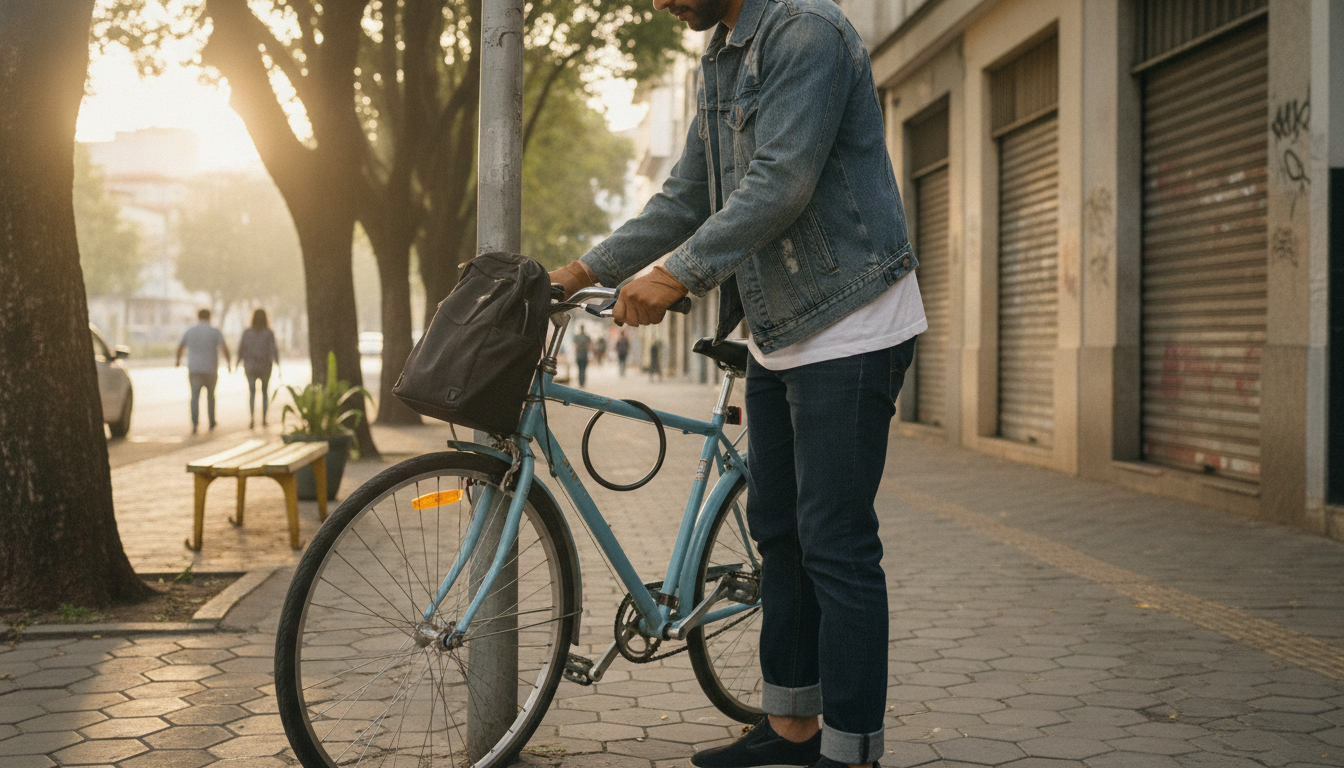
Choose a single commute you make regularly and do it by bicycle in the coming days. Just one. Calculate how much it would cost in gas or transportation, note how long it took, and notice how it went. This simple exercise usually changes the perception of those who thought cycling in the city was something from another reality.
The bike won’t solve all urban mobility problems on its own, but it solves your commute today with lower cost, zero emissions, and real benefit to your health. It’s one of the few cases where the most sustainable choice is also the cheapest.
