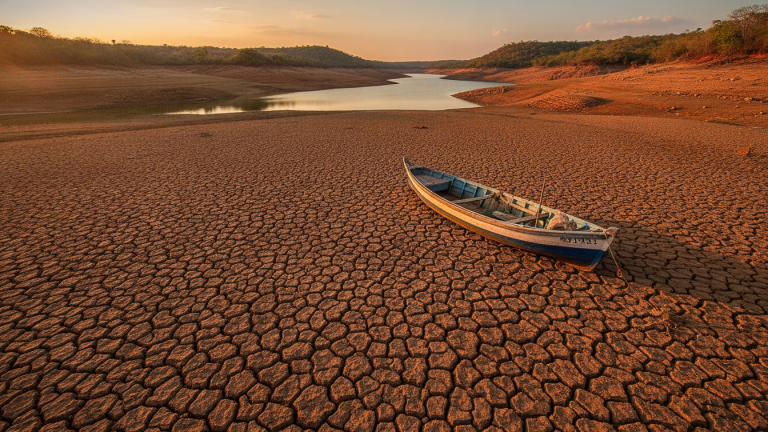
Why Brazil Still Lacks Water Despite Being the World’s Richest in Freshwater
Imagine waking up in the morning, turning on the tap, and nothing comes out. For many Brazilians, that’s not a scene from a horror movie — it was reality in cities like São Paulo, Fortaleza, and Recife at different times in recent years. And in 2026, the situation remains a genuine concern, even though Brazil stores about 12% of all surface freshwater on the planet, according to UN data.
It seems contradictory, and it is. The country that’s home to the Amazon River, the Pantanal, and the Guarani Aquifer still faces dry taps, water rationing, and expensive water bills for those living in metropolitan regions. Brazilian water scarcity is not, in most cases, a problem of total water quantity — it’s a problem of distribution, management, and consumption.
In this text, you’ll understand why this happens, what the government and companies have done (and failed to do), and what you can start doing today in your daily life to use less water, save on your bill, and help the collective system work better.
Unequal Water Distribution in Brazil
Brazil has plenty of water, but it’s not where most people live. The North Region concentrates a huge portion of the country’s water resources, especially through the Amazon basin, but accounts for a small fraction of the national population. Meanwhile, the Northeast — which is home to tens of millions of people — has historically dealt with irregular rainfall, long periods of drought, and reservoirs operating below 20% capacity.
The Brazilian Semi-Arid region is one of the most densely populated semi-arid regions in the world. According to IBGE data, more than 27 million people live in this area, which covers parts of nine states. When rainfall fails for two or three consecutive years — which INPE classifies as a recurring event in this region — the impact is immediate: there’s no water to drink, to irrigate crops, or to raise livestock.
The Southeast, in turn, has a dense population and more developed infrastructure, but also showed its fragility. The water crisis that hit the Cantareira System, which supplies part of Greater São Paulo, exposed something experts had already warned about: rapid urban growth without proportional planning of water supply is a recipe for chaos.
What Causes Water Scarcity: Beyond Just Lack of Rain
Blaming only drought is oversimplifying. Water scarcity has at least four causes that feed into each other.
Deforestation and loss of springs top the list. Forests function like sponges: they absorb rain, regulate the water cycle, and ensure that rivers don’t dry up during dry seasons. When an area is deforested, this cycle breaks. INPE records continuous loss of native vegetation in the Cerrado — a biome responsible for supplying eight of Brazil’s twelve main river basins — and in the Amazon, which influences rainfall patterns in much of the country through so-called “flying rivers.”
Distribution waste is the second major culprit. According to data from the National Agency for Water and Basic Sanitation (ANA), the average loss rate in water distribution networks in Brazil exceeds 40% in many systems. In other words, of every 10 liters that leave the treatment plant, more than 4 leak before reaching any tap.
Poor sanitation worsens the situation. Contaminated water returns to the environment without adequate treatment in many regions, further reducing the volume of usable water. According to IBGE, a significant portion of Brazilian households still lack access to adequate sewage treatment — a problem that affects both public health and the quality of water sources.
Climate change intensifies all of this. The IPCC, in its most recent reports, points out that Brazil is among the countries expected to face more frequent extreme weather events: prolonged droughts in the Northeast and Central-West, and concentrated and destructive rainfall in the South and Southeast. This isn’t a distant forecast — INPE data shows that extreme events are already more frequent than they were 30 years ago.
The Role of Domestic Consumption: Where You Fit Into This Story
It’s easy to point the finger at agribusiness or industry — and yes, those sectors account for the majority of water consumption in Brazil. But domestic consumption also matters, especially in cities, where pressure on supply systems is most intense.
The average Brazilian consumes, according to ANA data, about 150 liters of water per person per day in urban areas. The UN recommends a minimum of 50 liters daily for a dignified life, but there’s no universal ceiling: the point is that there’s real room for reduction without loss of comfort.
Where does that water go? A good portion literally goes down the drain — long showers, taps left unnecessarily open, excessive toilet flushing, and gardens watered during the hottest times of day. The gain from changing these habits is twofold: you help the collective system and pay less on your bill.
What Already Exists in Terms of Policy and Legislation
Brazil has relevant legislation to protect water resources. Law 9,433 of 1997, called the Water Law, created the National System for Water Resources Management and established that water is a public good, with use conditioned by collective interest. In practice, it created watershed committees and instruments such as water use permits and charges for water use.
ANA plays a central role in oversight and planning, but faces implementation challenges ranging from lack of technical resources to pressure from economic sectors that depend on intensive water use.
Programs like Cisternas, managed by different governments over the years, have helped millions of families in the Semi-Arid region store rainwater for basic consumption. It’s not a definitive solution, but it changes actual lives. The problem is that coverage still doesn’t reach everyone who needs it.
What You Can Do Now: Practical Actions With Real Returns
Changing habits doesn’t mean giving up comfort. It means using what you already have more wisely. See a list of concrete actions, organized from simplest to those requiring a small initial investment:
- Turn off the tap while brushing your teeth or washing dishes. It seems basic, but can save more than 10 liters each time.
- Reduce your shower time by 2 minutes. A common electric shower uses about 6 liters per minute — 2 fewer minutes equals significant monthly savings.
- Reuse the cold water that comes out before the shower warms up to water plants or clean the floor.
- Check for leaks in taps and toilet bowls. A leaking toilet can waste hundreds of liters a day without you noticing.
- Install flow reducers on taps — they cost just a few reais at any hardware store and reduce consumption without affecting water pressure sensation.
- Always run the washing machine with a full load.
- If you have a garden or vegetable patch, water it early in the morning or late afternoon to avoid evaporation.
- Consider collecting rainwater with a simple tank for non-potable uses, like washing sidewalks or watering plants.
For those living in apartments who want to go further in household sustainability, understanding how resource consumption connects is important — and this also applies to energy. If you’re already thinking about solar panels, for example, it’s worth checking the payback of solar energy: how long it takes in Brazil to understand if it makes sense for your situation.
Frequently Asked Questions About Water Scarcity in Brazil
Will Brazil Run Out of Water in the Future?
Brazil won’t “run out of water” in an absolute sense, but could face increasingly severe crises if deforestation continues, distribution losses aren’t corrected, and consumption isn’t better managed. The greater risk lies in specific regions, like the Semi-Arid area and cities with rapid growth without proportional infrastructure.
Why Does My City Have Water Rationing Even After Heavy Rains?
Heavy rain doesn’t resolve the scarcity problem immediately. Reservoirs take time to fill, and much of the rainfall runs off to the sea without being captured, especially in cities with little green space and lots of asphalt. The supply system has capacity limitations that don’t disappear overnight.
Does Saving Water at Home Make a Real Difference if Industry Consumes Much More?
It does, but in different ways. At the individual level, savings reduce your bill and ease the local distribution system. At the collective level, societal pressure for changes in industrial and agricultural consumption begins with awareness that water is a finite resource — and this awareness is built also through domestic habits.
What’s the Difference Between Water Scarcity and Drought?
Drought is a natural climate phenomenon of reduced rainfall in a given region and period. Water scarcity is when demand for water exceeds available supply — and this can happen even in regions without drought, if consumption is too high or management is poor. Brazil suffers from both problems, sometimes together.
A Small Step Starting Today
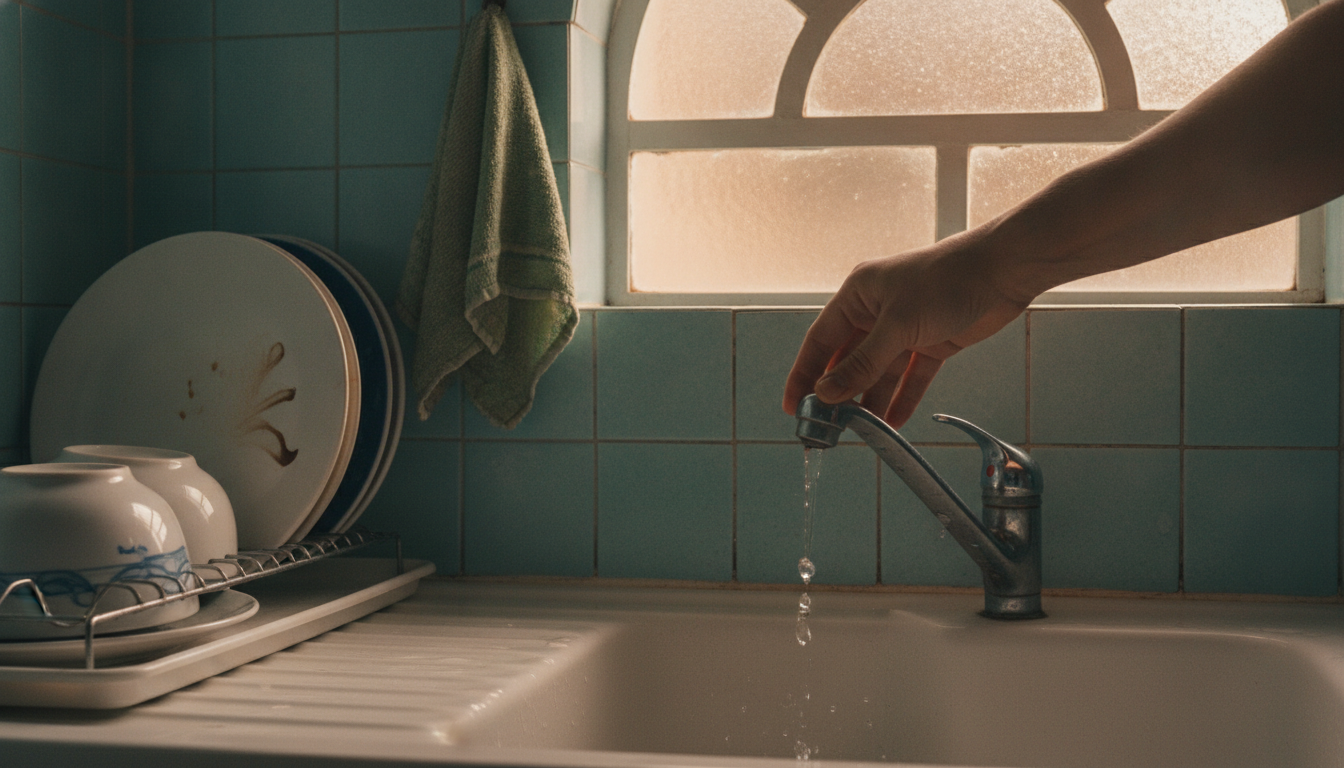
Water scarcity in Brazil is a real problem, but it’s not irreversible. It has identified causes, known solutions, and space for each person to contribute concretely.
Start with the simplest: today, before bed, check if any tap in your house is dripping. A constant drip can waste dozens of liters a day. Replacing a seal or tightening a connection takes less than 10 minutes and costs almost nothing. If every family in Brazil did this, the collective impact would be huge.
Small actions combined have real weight. And you’ve already taken the first step just by reading this far.
