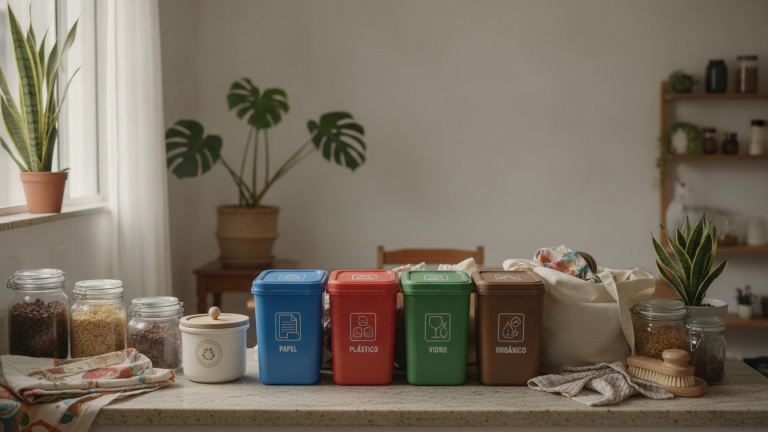
The waste you produce at home has a practical solution
Have you ever stopped to count how many bags of garbage you put on the curb per week? For most Brazilian families, the answer is between two and four bags. According to data from Abrelpe (Brazilian Association of Public Cleaning and Solid Waste Companies), Brazil generates more than 80 million tons of solid waste per year, and most of it comes from residences. It’s a lot of material that could have another destination, but ends up in landfills or, worse, in streets and rivers.
The good news is that reducing household waste doesn’t require apartment renovations, high investment, or giving up comfort. It mainly requires paying attention to what you discard and understanding why that ended up in your trash bin. With gradual and practical changes, you can significantly reduce the volume of waste your home produces, save money, and make life easier for those who work with collection and recycling.
By the end of reading this article, you’ll know exactly where to start, which habits have the most impact, and how to set up a waste reduction routine that really works in Brazilian daily life.
Why so much waste arrives at your home before you realize it
The household waste problem starts before purchase. Double packaging, short-lived products, disposable items that seem convenient: it all enters your home almost without you noticing. The IBGE points out that Brazilian family spending on food represents a significant portion of the budget, and a considerable part of what is purchased goes to the trash before being consumed.
Food waste is one of the biggest culprits. The FAO (Food and Agriculture Organization of the United Nations) estimates that about one-third of everything produced in the world for human consumption is lost or wasted along the chain. In Brazil, this translates to tons of food thrown away every day, along with the packaging it came with.
Understanding this flow is the first step. When you realize that waste is, to a large extent, a consequence of purchasing and storage decisions, it becomes easier to act at the root of the problem, rather than just trying to manage disposal.
How to map your household waste in one week
Before changing any habit, it’s worth doing a simple exercise: observe what you discard for seven days. You don’t need to make an elaborate spreadsheet. Just mentally separate (or on a sheet of paper) what goes to the trash and which category it fits into.
The most common types of waste in Brazilian households
- Organic waste: fruit peels, food scraps, coffee grounds, fruit pulp
- Plastic packaging: sachets, containers, small bottles, supermarket bags
- Paper and cardboard: delivery boxes, newspapers, flyers, food packaging
- Glass: jars, bottles, condiment bottles
- Metals: aluminum cans, bottle caps, steel packaging
- Rejects: anything that really has no more use or possible recycling
In most homes, organic waste represents the largest share of trash. Then come the packaging, which could go to selective collection, but often ends up mixed with food scraps, which makes recycling impossible.
Reducing at the source: the most efficient step of all
The hierarchy of the National Solid Waste Policy (Law 12.305/2010) is clear: before recycling, you must reduce and reuse. This means that the most efficient strategy is not to better separate what you already discard, but to bring less disposable material into your home.
Changes when shopping
- Bring eco-bags made of cloth every time you go to the market or fair. Reusable bags eliminate dozens of plastic bags per month.
- Prefer larger packaging when the product has a long shelf life. One large container of yogurt generates less packaging than four individual containers.
- Buy in bulk when possible. Open-air markets and some supermarket chains already offer grains, nuts, and even cleaning products without packaging.
- Avoid products with double or decorative packaging. That pretty little box with a bag inside is, in practice, double the trash.
- Plan your meals for the week before shopping. This prevents you from buying what you won’t use and reduces food waste.
For those who want to go further in the kitchen, it’s worth exploring plastic alternatives in the kitchen that really work, replacing plastic wrap with silicone lids, glass containers, and beeswax wraps.
Composting: turning organic waste into fertilizer inside your apartment
Home composting is probably the change with the greatest impact on a household’s waste volume. Since organic waste makes up most of residential waste, turning it into compost means taking a huge weight off your trash bin and gaining free fertilizer for plants.
How to set up a compact compost bin
What you’ll need:
- A plastic box with a lid (can be those organizer boxes sold in stores for R$1.99 to about R$20 to 40)
- California earthworms (sold at nurseries and even on e-commerce platforms)
- Dry material: leaves, shredded cardboard, sawdust
- Initial setup time: about 30 minutes
Step by step:
- Drill holes in the lid and upper sides of the box to ensure ventilation.
- Place a layer of dry material at the bottom (shredded cardboard works well).
- Add the earthworms and cover with a bit more dry material.
- Start depositing organic scraps in thin layers: fruit peels, vegetables, coffee grounds, tea bags without staples.
- With each addition of organic waste, cover with dry material in the same proportion.
- In about 60 to 90 days, the compost will be ready to use on your plants.
What does not go in the compost: meat, bones, dairy, fat, and any material with excess salt. These items attract pests and create bad smells.
For apartments without a balcony, a small compost bin on the sink or under the sink works well. The smell, when properly managed, is neutral, similar to wet soil.
Selective collection: what goes and what doesn’t
Separating recyclable waste is a habit that many people already have, but the efficiency of separation is often low due to lack of information. Packaging with food residue, for example, compromises the recycling process and can cause all the material to be discarded as waste.
Practical rules for the separation to work:
- Rinse packaging lightly before putting it in selective collection. No need for soap, just a rinse to remove food scraps.
- Crush the PET bottles to save space.
- Wet or greasy cardboard (like pizza boxes) is not recyclable through the standard system.
- Metallized packaging (like snacks and cookies) are usually not accepted by standard selective collection.
If you don’t know where the nearest recycling drop-off point is or how collection works in your neighborhood, a good tip is to look for a recycling cooperative near you, which often accepts materials that the municipal truck doesn’t collect.
Common mistakes that make separation useless (and how to avoid them)
Many people make the effort to separate trash but make small slip-ups that undo the work. Knowing these mistakes helps avoid frustration.
- Mixing food scraps with recyclables is the most frequent mistake. A bag of pasta with stuck tomato sauce contaminates everything around it.
- Thinking that everything plastic is recyclable is another misconception. Flexible and multi-layer packaging have difficult or non-existent recycling in most Brazilian cities.
- Throwing batteries, batteries, and electronics in regular trash is illegal under Law 12.305/2010 and releases toxic substances into the soil. These items have specific collection points at supermarkets, pharmacies, and electronics stores.
- Throwing expired medicines down the toilet or in regular trash contaminates water and soil. Pharmacies are required to receive expired medications through the Conscious Disposal program, regulated by Anvisa.
Frequently asked questions about household waste reduction
Is it possible to compost in an apartment without smell?
Yes, when the proportion between dry material and organic matter is correct, the compost bin doesn’t produce bad smells. The secret is to never leave organic matter exposed, always covering it with sawdust, shredded cardboard, or dry leaves. If smell arises, it’s a sign that there’s a lack of dry material or that something that shouldn’t be there got in.
What to do with used cooking oil?
Cooking oil can’t go down the drain or in regular trash. Many supermarkets, gas stations, and schools have collection points. The collected oil is turned into biodiesel and soap. Store it in a closed PET bottle and take it to the nearest collection point.
How to convince your family or apartment mates to separate trash?
Instead of imposing rules, make the logistics easy. Place a specific bucket or bag for recyclables in a visible and accessible place in the kitchen. When separation is easy to do, participation increases naturally. Explaining the destination of the material (which goes to cooperatives and generates income for families) also tends to engage more than abstract environmental arguments.
Which change has the most immediate impact on trash volume?
Reducing food waste is the action with the greatest return. Planning your week’s meals, storing food correctly in the refrigerator, and using stems, peels, and leftovers in recipes significantly reduces the amount of organic waste in your trash. And it also represents real savings on your grocery bill.
Start today with a small gesture
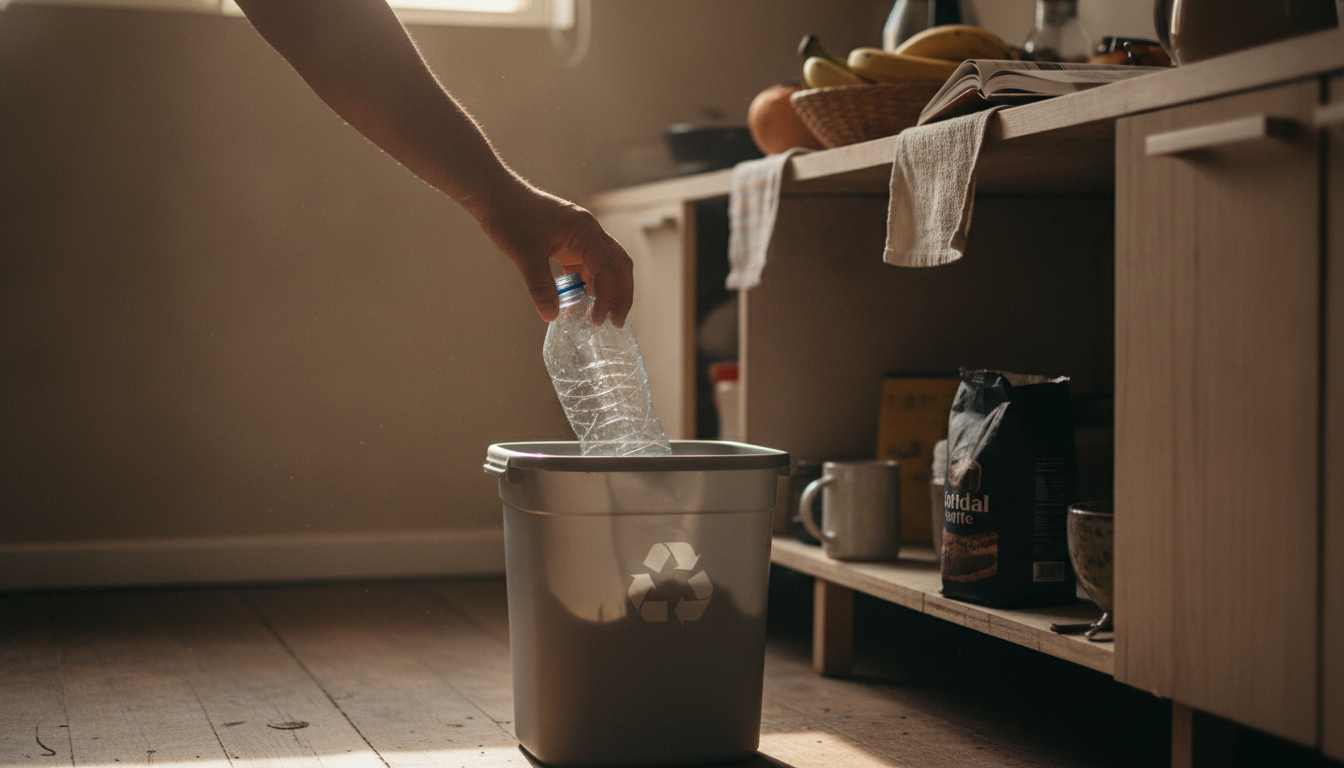
You don’t need to transform the entire house at once. Choose one change this week: it could be bringing the eco-bag to your next grocery trip, setting aside a PET bottle to store used oil, or researching the collection day for selective waste in your neighborhood. Every step counts and, over time, the habits add up and the result shows in a smaller trash bin, in your grocery bill, and in the environment around you.
The waste you stop generating is waste that will never need to be collected, transported, or landfilled. That’s the real gain, and it starts with your next purchasing decision.
