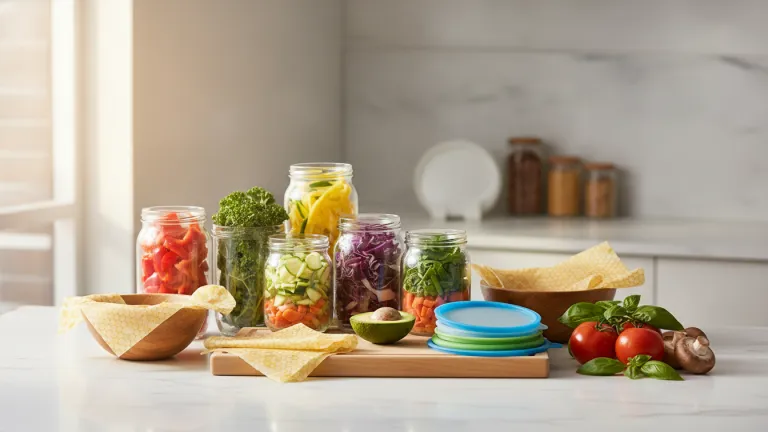
Why Plastic Wrap Deserves Retirement in Your Kitchen
That roll of clear plastic wrap has probably lived in your utensil drawer for years. It shows up to cover bowls of leftovers, wrap fruit halves, protect dough before baking. It’s so ubiquitous that we rarely question its presence — but maybe it’s time to change that.
Household plastic wrap, also called cling film or PVC film, is made from petroleum-derived polymers and, in most cases, cannot be recycled through conventional collection programs. It ends up in regular trash, goes to landfills, or worse, escapes into the environment. The United Nations Environment Programme (UNEP) estimates that only about 9% of all plastic ever produced worldwide has actually been recycled — and thin films are among the materials with the lowest recovery rate within that already small fraction.
The good news is that in 2026, substitutes for plastic wrap have never been more accessible, functional, and easy to find. In this article, you’ll discover the best alternatives, learn how to use them daily, and find that switching from plastic wrap can be one of the simplest and most satisfying changes you’ll make in your kitchen.
Why Plastic Wrap Is a Real Environmental Problem
To understand the impact, it’s worth knowing the material in more depth. The most common household plastic wrap is made from low-density polyethylene (LDPE) or polyvinyl chloride (PVC). PVC, in particular, contains additives like phthalates and bisphenol A (BPA), substances that concern both environmentalists and health researchers for their potential to migrate into food, especially when heated.
From an environmental standpoint, the problem is structural:
- Not accepted in most curbside recycling programs, because it contaminates sorting equipment at recycling facilities.
- Takes hundreds of years to decompose in landfills.
- Fragments into microplastics when exposed to sun and rain, contaminating soil and waterways.
- Has a useful life of only a few minutes or hours in most uses — it’s disposable by nature.
This imbalance between the brevity of use and the permanence of disposal is the heart of the problem. Fortunately, the alternatives we’ll present solve exactly this equation.
Alternatives to Plastic Wrap: A Comparative Overview
Before diving into each option, here’s an overview to guide your choice:
| Alternative | Best Use | Durability | Initial Cost | Washable & Reusable? |
|---|---|---|---|---|
| Silicone lid | Bowls and containers | Several years | Medium | Yes |
| Beeswax wrap | Fruits, cheeses, wrapping | 1 to 2 years | Medium | Yes (cold water) |
| Stretch silicone lid | Pots and various bowls | Several years | Medium | Yes |
| Glass container with lid | Liquid and solid leftovers | Decades | Medium-high | Yes |
| Damp cotton cloth | Dough, leafy vegetables | Ongoing (washable) | Low | Yes |
| Plate or board as lid | Short-term fridge storage | Indefinite | Zero (already own) | Yes |
Silicone Lids: The Most Direct Substitute for Plastic Wrap
If you’re looking for the most immediate and friction-free transition, reusable silicone lids are the perfect entry point. They come in two main formats:
Flat silicone lids (“film” type)
They work like plastic wrap on bowls and containers: just stretch over the opening of the container. They’re flexible, adhere well to most rims, and withstand temperatures from freezer to microwave — always check the product packaging, as the range varies by manufacturer.
Stretch silicone lids
These are lids with elastic edges that adjust to different diameters. A kit with six or seven sizes solves practically any situation in a home kitchen.
How to care for silicone lids:
- Wash with water and mild soap after each use.
- Let dry completely before storing.
- Avoid metal scrubbers or abrasives, which can scratch and reduce adhesion.
- Store stacked or hanging to prevent deformation.
A good silicone lid, with basic care, easily lasts five to ten years — replacing thousands of pieces of plastic wrap over its lifespan.
Beeswax Wraps: Charm and Functionality
The beeswax wrap arrived on the market a few years ago and won over fans for its aesthetics, practicality, and being completely compostable at the end of its useful life.
It’s made of cotton fabric infused with a mixture that usually includes beeswax, pine resin, and jojoba or coconut oil. The warmth of your hands slightly softens the wax, allowing the cloth to wrap cut fruits, cheeses, breads, and even serve as makeshift lids for small bowls.
What beeswax wraps do well:
- Wrap avocado halves, lemons, cucumbers, and fruits in general
- Cover small and medium bowls
- Store cheeses (breathes better than plastic, which is ideal for most cheeses)
- Wrap sandwiches and snacks
What beeswax wraps don’t do:
- Not recommended for raw meat or very greasy foods
- Cannot go in the microwave or hot water
- Does not replace airtight packaging for liquids
To wash it, use cold water and mild soap, scrubbing with your hands. Hot water melts the wax. Well cared for, it lasts one to two years; after that, it can be composted or used as a fire starter.
How to Make Beeswax Wraps at Home: Step by Step
You can make your own beeswax wraps with accessible materials. It’s a fun and economical project.
What you’ll need:
- Cotton fabric (preferably organic or repurposed from old clothes), cut into squares of approximately 10 x 10 inches or 12 x 12 inches
- Beeswax in flakes or grated (found in natural product and beekeeping stores)
- Parchment paper
- Clothes iron
- Firm, flat surface
Step by step:
- Pre-wash the fabric to remove manufacturing residues. Dry and iron to smooth.
- Place a sheet of parchment paper on the work surface.
- Position the fabric square on the parchment paper.
- Distribute the grated beeswax evenly over the entire fabric surface.
- Cover with another sheet of parchment paper on top.
- Run the hot iron (medium temperature) over the top sheet in circular motions. The wax will melt and infuse the fabric.
- Remove the top parchment paper while still warm, carefully.
- Hold the cloth by the corners and wave it lightly in the air for a few seconds to dry and harden.
- Done! Store hanging or folded.
Glass Containers and the “I Already Have It at Home” Logic
Not every solution needs to be purchased. One of the most effective replacements for plastic wrap is simply switching to glass containers with lids for storing leftovers and prepared foods.
Glass is inert (doesn’t leach substances into food), is 100% recyclable without quality loss, and lasts decades if well treated. Canning jars, reused jam jars, dishes with lids — all of this may already be in your home waiting to be used.
Additionally, there’s a tip many people forget: a simple plate placed over a bowl in the refrigerator effectively replaces plastic wrap. For most leftovers that stay only overnight, this solution is perfect, free, and immediate.
Practicing conscious consumption in the kitchen starts exactly like this — looking at what you already have before buying something new.
Practical Checklist: How to Make the Transition Stress-Free
The transition doesn’t need to happen all at once. A gradual approach works better and is maintained long-term:
- Week 1: Stop buying new plastic wrap. Use what you have until it runs out, guilt-free.
- Week 2: Start using plates and boards as lids for leftovers in the refrigerator.
- Week 3: Identify the three most frequent uses you gave plastic wrap and choose a substitute for each.
- Month 2: Get a basic set of silicone lids (start with three or four sizes).
- Month 3: Try beeswax wraps — buy one to test or make it at home.
- Month 4 onwards: Consolidate the routine. Evaluate what worked, adjust what’s needed.
This phased approach reduces resistance and initial expense, making the change sustainable in the most literal sense of the word.
Benefits Beyond the Environment
Replacing plastic wrap brings advantages that go beyond environmental concerns:
- Financial savings: quality plastic wrap rolls cost between $5 and $15 and last only a few weeks in heavy-use households. A silicone lid or beeswax wrap lasts years.
- Practicality: silicone lids are much easier to use than plastic wrap, which frustratingly sticks to itself.
- Health: eliminates the risk of plasticizer migration into food, especially in heating situations.
- Aesthetics: colorful beeswax wraps and glass containers make the refrigerator much more beautiful and organized.
These kitchen changes are part of a set of everyday choices that, combined, have real impact — just as reducing your carbon footprint in transportation begins with small, concrete daily decisions.
Conclusion: A Cleaner Drawer, A Healthier Planet
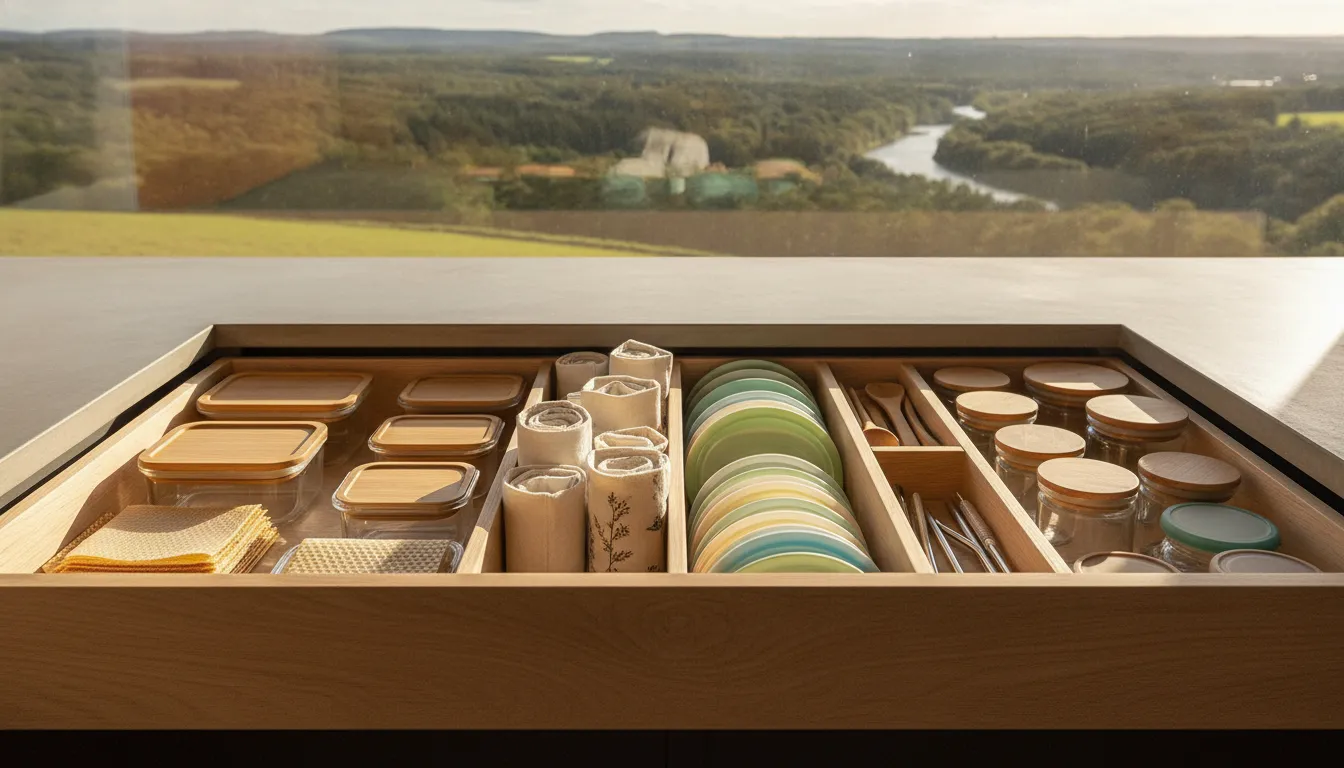
Plastic wrap is one of those habits we maintain out of inertia, not necessity. When we look closely, we realize that the alternatives are better in almost every aspect: more durable, more economical, safer for health, and of course, much less impactful on the environment.
You don’t need to do everything at once or be perfect. Start with a plate over a bowl, with a reused glass jar, with a set of silicone lids. Every roll of plastic wrap you don’t buy is a small, real victory.
Your action today: open your utensil drawer, look at that roll of plastic wrap, and decide which substitute you’ll try first. The kitchen is one of the most powerful places to start change — because you pass through it every day.
