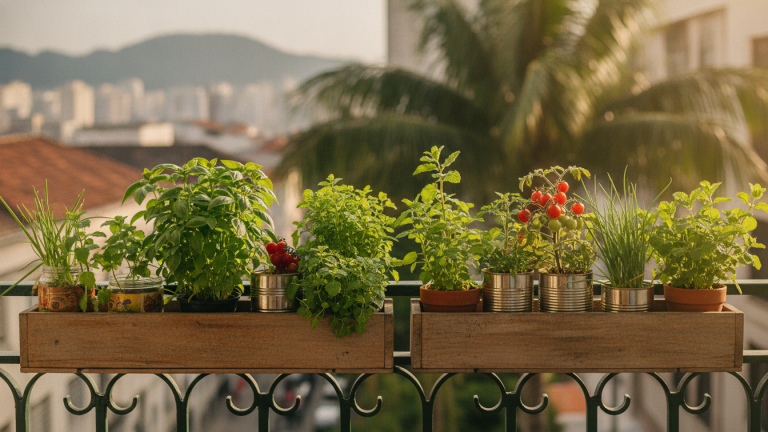
Why growing herbs at home has become a priority for apartment dwellers
You’ve arrived Friday night ready to cook a great meal only to discover that the basil has wilted, the cilantro is gone, and the chives you bought three days ago are already yellowing? This scene repeats in millions of Brazilian homes every week. Buying fresh herbs at the market or supermarket seems convenient until you calculate how much you throw away every month.
The good news is that growing a garden inside an apartment, without a backyard, without garden soil, and without prior experience, is completely viable. Any balcony, sunny window, or kitchen corner can transform into a source of fresh food. By the end of this article, you’ll know exactly what to plant, how to set up your garden on a budget, and which mistakes to avoid to prevent seedlings from dying in the first weeks.
There’s a practical bonus to all this: producing part of your own food reduces discarded packaging, decreases unnecessary trips to the market, and even improves air quality inside the apartment. Small in scale, large in daily impact.
What you can actually grow inside an apartment
Many people imagine that an apartment garden means two pots of basil dying on the windowsill. But the range of plants adapted to indoor environments is much larger than it seems.
For beginners, aromatic herbs are the best allies: basil, chives, cilantro, parsley, mint, thyme, and rosemary grow well in small pots and require little care. They have short cycles, are useful in everyday cooking, and tolerate container cultivation well.
Those who want to advance can include leafy greens like lettuce, arugula, and spinach, which adapt well to shaded balconies or windows with filtered light. Peppers, Welsh onions, and even cherry tomatoes are viable options for balconies with at least four hours of direct sun per day. Roots like carrots and radishes can also be grown in deep pots, but require a bit more attention.
Why an apartment garden makes sense in the Brazilian context
Brazil is a country of climate contrasts, but most cities have mild temperatures year-round, which favors home cultivation. According to IBGE data, more than 60% of Brazilians live in urban areas, and the share living in apartments grows every year, especially in large cities like São Paulo, Rio de Janeiro, Belo Horizonte, and Recife.
At the same time, food waste in Brazil is significant. Embrapa estimates that large volumes of fruits, vegetables, and greens are lost throughout the supply chain and in household consumption. Part of this waste starts precisely with fresh herbs bought in excess that aren’t used in time.
Growing at home also connects to broader sustainable practices: by reducing purchases of plastic-packaged products, you contribute to reducing solid waste generation, one of the major challenges in urban management regulated in Brazil by Law 12.305/2010, known as the National Solid Waste Policy. And if you want to better understand how to reduce household waste with simple changes, there are concrete paths that complement a home garden well.
How to set up your apartment garden step by step
You don’t need much to get started. The list of materials is simple and the initial investment is low.
Materials needed:
- Pots or containers with drainage holes (can be milk cartons, cut PET bottles, or clay pots)
- Quality substrate (mix of garden soil with humus or organic compost)
- Seeds or seedlings (purchased from agricultural stores, markets, or garden shops)
- Tray or saucer to support the pot and prevent leaking
- Small watering can or bottle with holes
Estimated time to set up: 1 to 2 hours the first time. Approximate cost to start: between R$ 30 and R$ 80, depending on the number of pots and whether you reuse household packaging.
Step-by-step guide to start your garden:
- Choose the location with the most natural light in your apartment. Windows facing north or west usually get more sun in Brazil.
- Select two to four plants to start with. Basil, chives, and lettuce are the easiest options for beginners.
- Prepare the pots: place a layer of small stones or Styrofoam pieces at the bottom to improve drainage, then fill with substrate.
- Plant the seedlings or sow directly. If using seeds, cover lightly with soil and press gently.
- Water moderately right after planting. The substrate should be moist, not waterlogged.
- Place the pots in the chosen location and observe for two or three days how the plant reacts to the light.
- Establish a watering routine: most herbs need water once a day on hot days and every two days on cool days.
The most common mistakes when starting a home garden
The biggest enemy of apartment plants isn’t the lack of a backyard, it’s overwatering. Watering too much is the main cause of death in potted seedlings because the roots become waterlogged, rot, and the plant wilts even with frequent watering.
Another common mistake is choosing pots without drainage holes. Decorative pots without water outlets accumulate liquid at the base and create the same problem. If the pot you have at home doesn’t have a hole, use it only as a decorative holder and place a pot with drainage inside it.
Lack of light is the second major culprit. Plants placed in dark hallways or spaces with weak artificial light don’t survive long. Before buying any seedling, observe how many hours of direct sun or intense light the chosen location receives daily.
List of best practices to keep your garden healthy:
- Water whenever the substrate is dry two centimeters deep (test with your finger)
- Remove yellowed or dried leaves regularly
- Harvest herbs frequently to encourage new leaf growth
- Avoid placing pots directly on cold ceramic flooring in winter
- Liquid organic fertilizer once a month keeps the substrate nutritious longer
How substrate and composting enhance your garden
Poor substrate lacking nutrients limits plant growth even with good light and proper watering. The most economical and sustainable solution is to use organic compost made at home from kitchen scraps.
You can set up a small compost bin or vermicompost system in a service bathroom or on a balcony. The produced humus is the best fertilizer for home gardens, free and made from what you would throw away. If you’re unsure which system to choose, the article about composting or vermicomposting explains the differences in a practical way for apartment dwellers.
Mixing one part humus to every three parts commercial substrate already makes a noticeable difference in seedling development. Well-nourished plants grow faster, have darker leaves, and more intense flavor.
How long does it take to see the first results
The expectation of having a productive garden in weeks is real, not a promise. Chives and parsley planted as seedlings can be partially harvested in two to three weeks. Lettuce and arugula seeded directly in the pot are usually ready for the first harvest between 30 and 45 days.
Basil and mint, when planted as purchased seedlings, can be harvested as early as the first week if the plant is healthy. The rule is never to harvest more than one-third of the plant at once, leaving enough leaves and branches for it to recover and grow again.
Peppers and cherry tomatoes take longer, usually between 60 and 90 days from sowing to first fruit. For those with patience and a sunny balcony, the result is worth it.
Frequently asked questions about apartment gardens
Can I use garden soil in my garden pots?
Common garden soil is not recommended for pots because it compacts easily, damages drainage, and can bring fungi and pests. The ideal is to use substrate specific to pots or make a mixture of commercial substrate with humus or organic compost.
My apartment gets little sun. Which plants survive in this environment?
Mint, parsley, and chives tolerate environments with indirect light or partial shade. Arugula also adapts well to spaces without direct sun. Avoid tomatoes, peppers, and basil in environments with less than three hours of light per day.
Do I need to use chemical fertilizer for the garden to grow well?
No. Organic fertilizer, such as worm humus or homemade compost, supplies the nutritional needs of most home garden plants. If you don’t produce compost at home yet, liquid organic fertilizer sold in agricultural stores is an accessible and safe alternative.
How do I prevent insects and pests on indoor pots?
Inspect leaves weekly. Aphids and mealybugs, the most common pests in home gardens, can be removed with a water spray or a solution of diluted neutral soap and water. Avoid using chemical insecticides on plants you’ll consume.
Start today with what you have at home
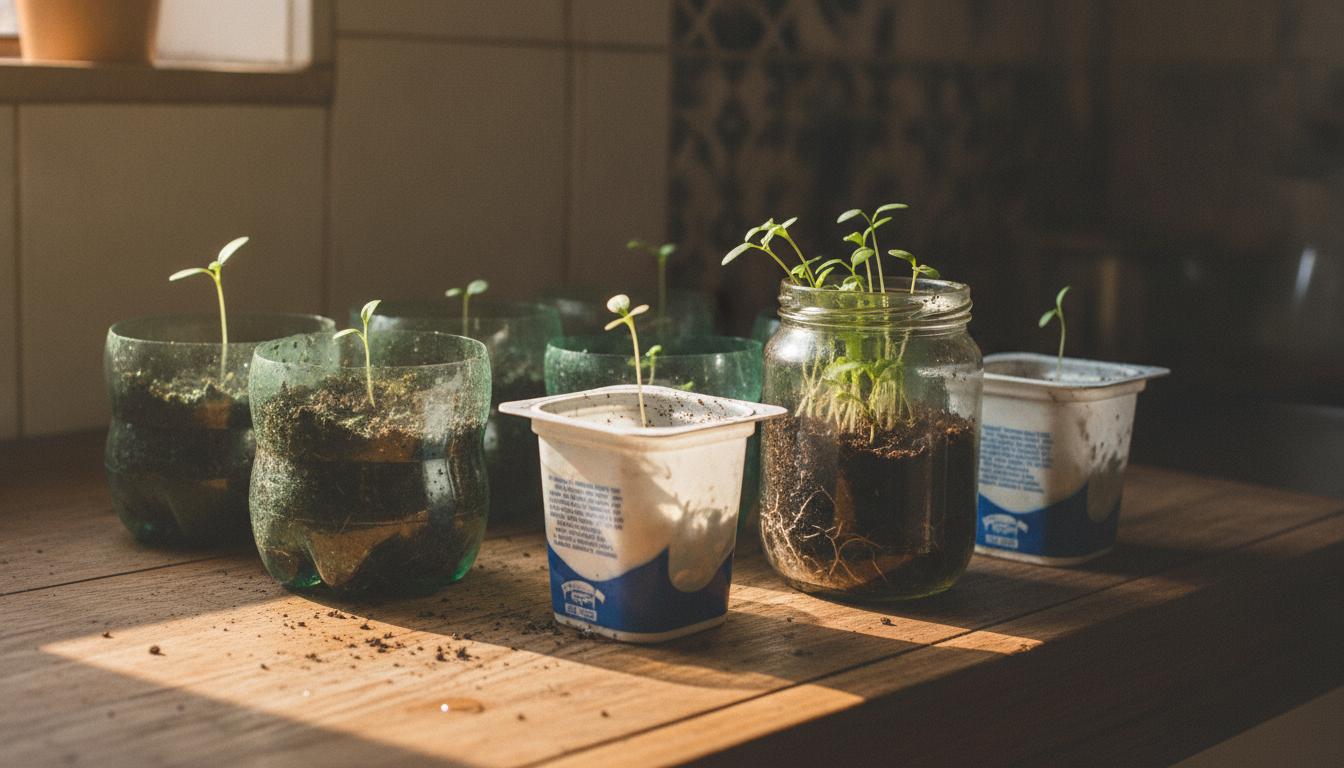
Don’t wait to have the right pot, the perfect substrate, or more time available. Grab an empty milk carton, make two small holes in the bottom, fill it with soil, and plant a chive seedling bought at the market. That’s already a garden.
Each week that passes, you can add a new pot, try a different plant, and refine your care routine. Learning happens alongside cultivation, and the real gain appears in the kitchen, in the bill that stops going to the supermarket to buy packaged herbs, and in the concrete pleasure of harvesting something you planted yourself.
